Blog Posts
High-Quality Wholesale Blankets Manufacturer & Supplier in China with custom design service - Blue Phoenix Blankets
Language
For someone who feels too warm under their bedding, a lightweight blanket that provides sufficient comfort without excessive insulation is a useful starting point. The best choice depends on the finished fabric, room conditions and the other layers on the bed.
There is no single fiber that makes every blanket suitable for every hot sleeper. A thick cotton blanket can provide substantial warmth, while a thin wool throw can serve as a lighter layer. Material names alone cannot identify the best blanket for night sweats.
This guide explains how to compare materials, construction, weight and care requirements. It also outlines what brands, retailers and hospitality buyers should confirm when developing a bedding collection.
Night Sweats and Overheating Are Different
Feeling sweaty because a room or bedding is too warm differs from waking with soaking nightclothes and sheets despite sleeping in a cool room.
The NHS recommends seeking medical advice when night sweats regularly wake you, concern you, or occur with symptoms such as unexplained weight loss or a high temperature. Choosing different bedding can address excessive bedding warmth, but it does not treat an underlying cause of night sweats.NHS
For blanket selection, focus on the practical question: does the bedding provide more insulation than the sleeper needs?
Start with the Whole Bedding Arrangement
A blanket is one part of the sleeping environment. Sheets, duvet filling, mattress protectors, sleepwear and room conditions all contribute to the overall experience.
Before replacing a blanket, review how many layers are being used. A light blanket placed beneath a substantial duvet still becomes part of a heavily insulated arrangement.
For a blanket for hot sleepers, consider a flexible setup:
Use a sheet with one removable blanket.
Keep an additional layer nearby for cooler periods.
Compare comfort with and without the duvet.
Assess the mattress protector and other bedding at the same time.
Choose layers that are easy to adjust during the night.
This approach makes it easier to identify which changes improve comfort.
How to Evaluate a Cotton Blanket
A cotton blanket is one option to sample when developing a lighter bedding arrangement. However, cotton products vary considerably in yarn, weave, thickness and surface finish.
Compare an open woven cotton blanket with a dense brushed cotton blanket and the difference becomes clear. Both contain cotton, but they do not have the same structure or insulation.
When reviewing samples, check:
Whether the fabric is open or densely constructed.
Whether the surface is smooth, brushed or layered.
The finished size and weight.
The approved washing and drying instructions.
Appearance and dimensions after care.
Cotton composition does not, by itself, prove rapid drying, cooling performance or suitability for a particular sleeper.
Can a Wool Blanket Work for Hot Sleepers?
A wool blanket should be evaluated by its construction rather than automatically classified as heavy winter bedding.
Wool’s natural crimp contributes to insulating air spaces, and the fiber can absorb and release moisture vapor. These properties are relevant to comfort, but they do not guarantee that a finished wool blanket will feel cool.www.woolmark.com
For a sleeper who overheats, compare a lighter wool construction with the existing bedding. A substantial brushed wool bed blanket may add more insulation than required, even when its natural-fiber composition is desirable.
For procurement, ask for the actual thickness, piece weight, construction and care specification.
How Should Silk, Cashmere and Blends Be Compared?
A silk cotton blanket, cashmere throw or blended blanket may suit a particular bedding collection, but none should be labeled a solution for night sweats solely because of its fiber content.
Silk-cotton products can range from light woven layers to substantial bed blankets. Cashmere products also differ in weight, finishing and construction.
For blends, confirm the actual fiber percentages. “Cashmere feel,” for example, describes a surface impression rather than proof of cashmere content.
Select these materials for their confirmed characteristics and collection positioning. Evaluate thermal comfort separately through sampling and any testing required to support performance claims.
Are Polyester and Fleece Always Too Warm?
Synthetic materials should also be assessed at the finished-product level.
A lightweight polyester construction differs from a deep-pile fleece blanket, while an unlined fabric differs from one backed with a second insulating layer.
For a lighter bedding brief, ask whether the proposed blanket includes:
Deep pile or heavy brushing.
A bonded backing.
Multiple fabric layers.
Filling or padding.
A dense construction intended for winter warmth.
Do not assume that every synthetic blanket is unbreathable or that every natural-fiber blanket will prevent overheating.
Look Beyond GSM
GSM means grams per square meter. It describes mass per unit area, not a direct cooling or breathability rating.
GSM can help compare weights within similar constructions. Across different fabrics, the same GSM may correspond to different thicknesses, loft and insulation.
When comparing a lightweight blanket, record the dimensions, piece weight, thickness and construction together.
For a finished-product estimate:
Approximate GSM = weight in grams ÷ area in square meters.
If binding, fringe or other trims are included in the weight, identify the result as an approximate finished-product value.
Avoid selecting a universal “ideal GSM for night sweats.” The appropriate construction depends on the complete bedding arrangement and individual preferences.
Breathable, Moisture-Wicking and Cooling Mean Different Things
These terms should not be used interchangeably.
Air permeability describes how readily air passes through a textile under specified conditions.
Water-vapor resistance relates to the passage of moisture vapor through a material.
Moisture-wicking refers to the movement of liquid moisture through a fabric structure.
A cool-to-touch surface describes a contact sensation. It does not establish that a blanket will remain cool throughout the night.
For B2B development, identify the property that matters before requesting a test. Ask for the method, sample construction and test conditions behind any numerical claim.
Choose a Care Process That Fits the Intended Use
A blanket selected for regular bed use needs a practical, clearly defined care specification.
Do not assume that all cotton blankets tolerate the same wash cycle, all wool blankets require dry cleaning, or all polyester blankets can be tumble dried at high temperatures.
During sample approval, assess:
Dimensional change.
Surface appearance.
Color transfer.
Seam and binding condition.
Pilling or shedding where relevant.
Drying requirements under the approved process.
For hospitality blankets, provide the proposed laundry conditions before confirming production. Check the finished sample after that process rather than relying on a general “easy care” description.
What Should Wholesale Buyers Request?
A clear brief helps a wholesale blanket supplier propose appropriate samples.
Include:
Intended use and destination market.
Required composition.
Finished dimensions.
Target weight and construction.
Surface and edge finish.
Preferred care process.
Color and design references.
Quantity, labels and packaging.
Delivery requirements.
Any thermal or moisture-performance tests.
For a private label blanket collection aimed at hot sleepers, define the intended bedding arrangement and the claims you want to make.
Terms such as “lightweight woven blanket” are more useful when supported by a clear specification. Stronger claims such as “reduces sweating” require appropriate evidence and should not be inferred from fiber composition.
Developing an Adjustable Bedding Collection
For brands and hotels, a coordinated selection of removable layers can offer customers more choice than one blanket intended for every season.
Consider developing separate options for:
A lighter bed layer.
A supplementary throw.
A more substantial cold-weather blanket.
Each product should have a clear specification, care label and intended role.
BLUE PHOENIX supports OEM and ODM blanket development for B2B collections. Material, construction, dimensions, weight, finishing and packaging can be evaluated against the buyer’s confirmed requirements.
Conclusion
The best blanket for night sweats cannot be identified by a fiber name alone. For bedding-related overheating, start by comparing lighter constructions and reducing unnecessary layers.
Evaluate the finished blanket’s thickness, structure, coverage, care requirements and performance within the complete bedding arrangement. Cotton, wool, silk-cotton, cashmere and synthetic fabrics all require product-specific assessment.
Choose bedding for comfort and adjustability. Persistent or drenching night sweats require medical assessment rather than a blanket marketed as a cure.
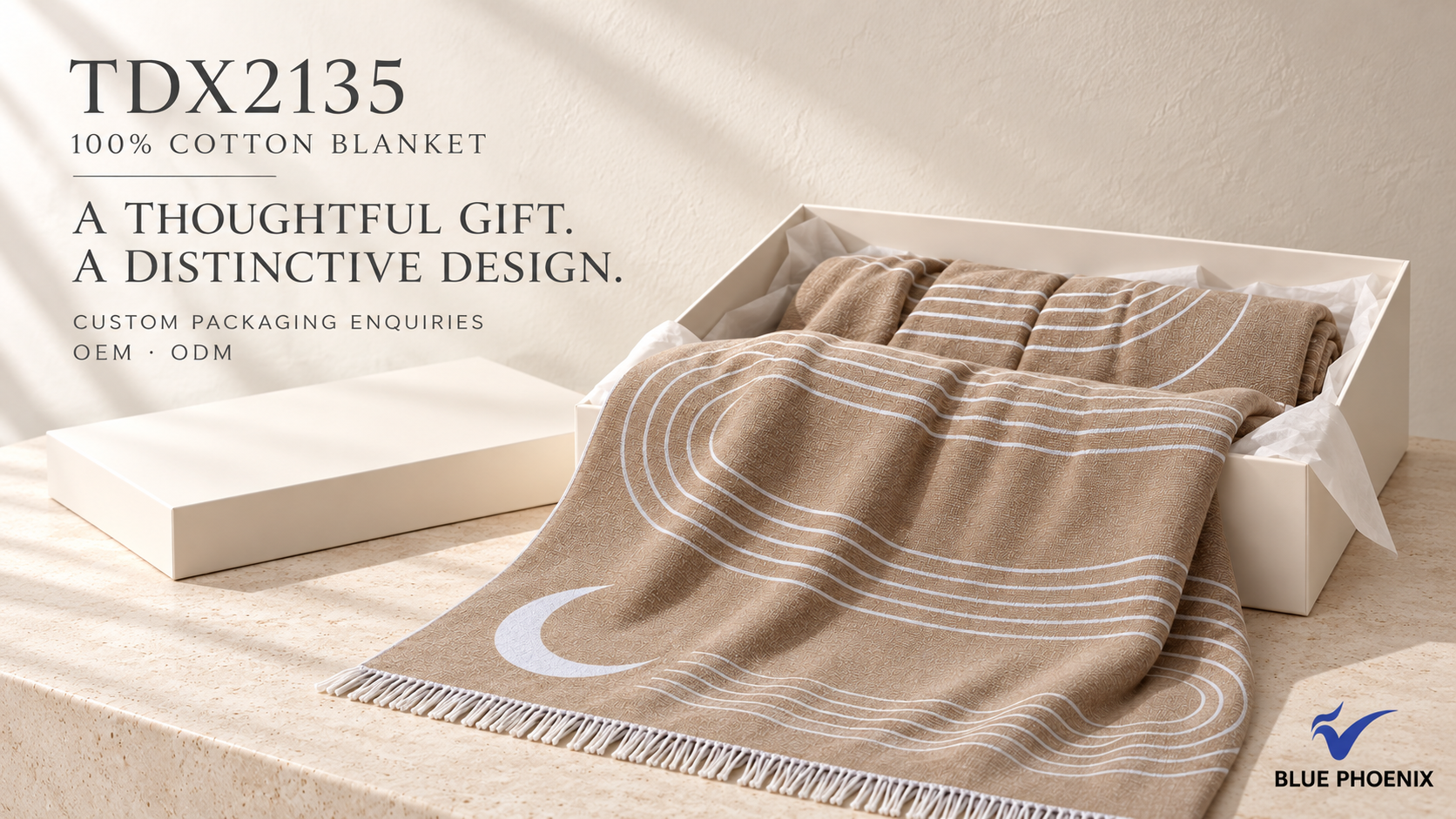
TDX2135 100% Cotton Throw Blanket
Warm beige tones, curved ivory lines and a crescent motif create a distinctive cotton throw for home and gifting collections.
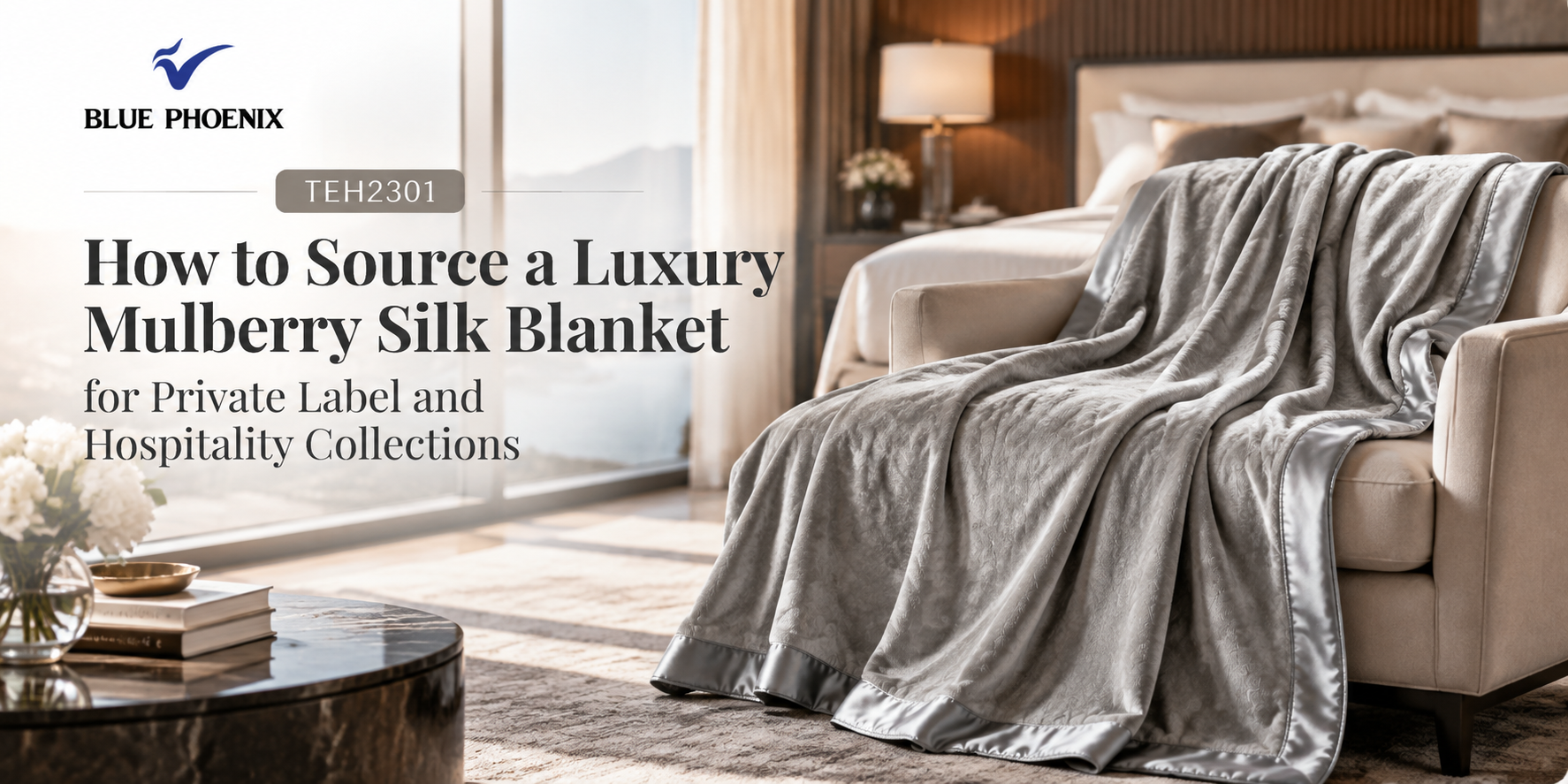
TEH2301 Mulberry Silk and Cotton Bed Blanket
A 75% mulberry silk and 25% cotton woven blanket with tonal satin binding for premium bedding and hospitality collections.
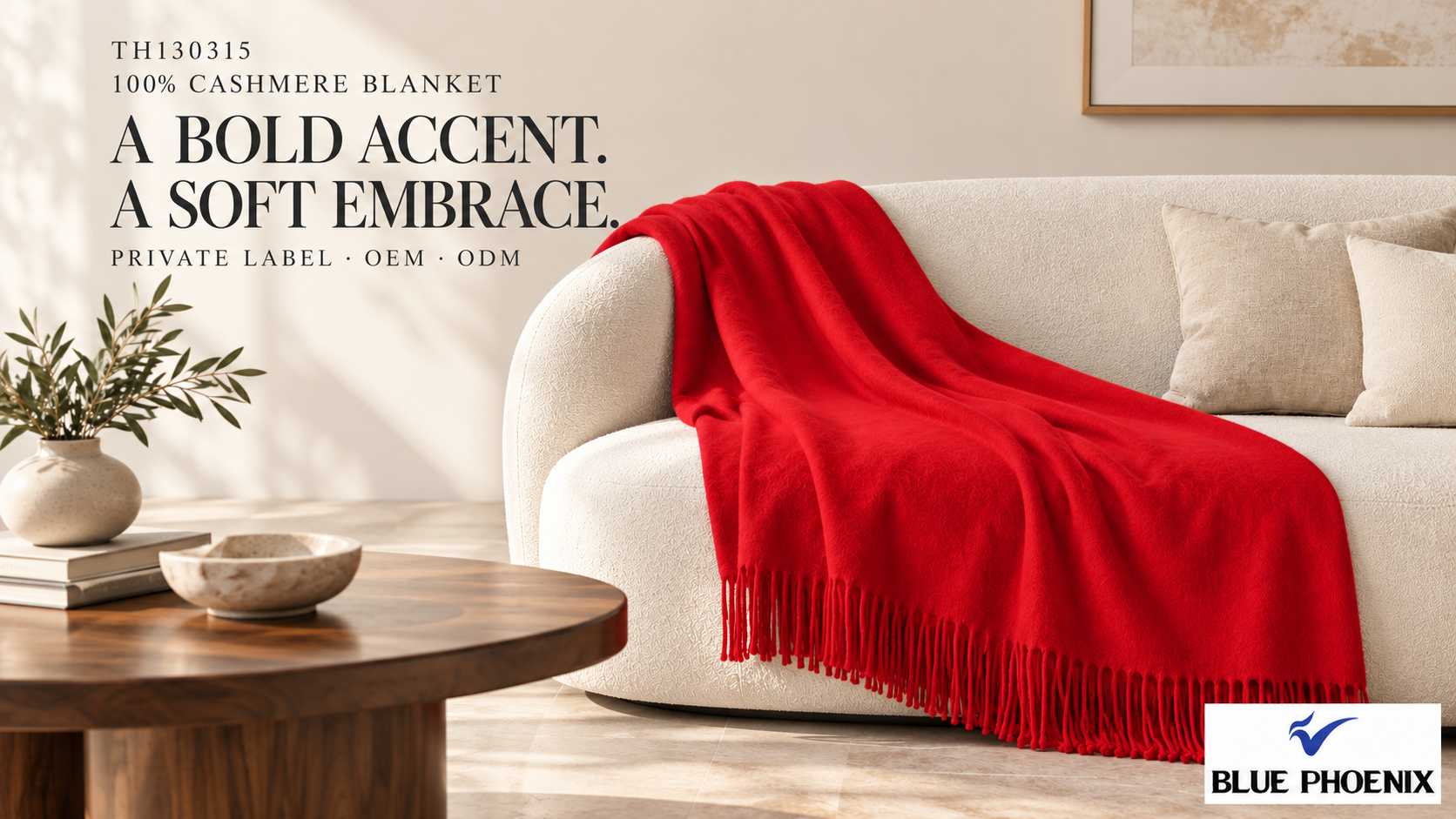
TH130315 100% Cashmere Throw Blanket
A vibrant red cashmere throw with fringe for premium interiors, gifting and private-label collections.
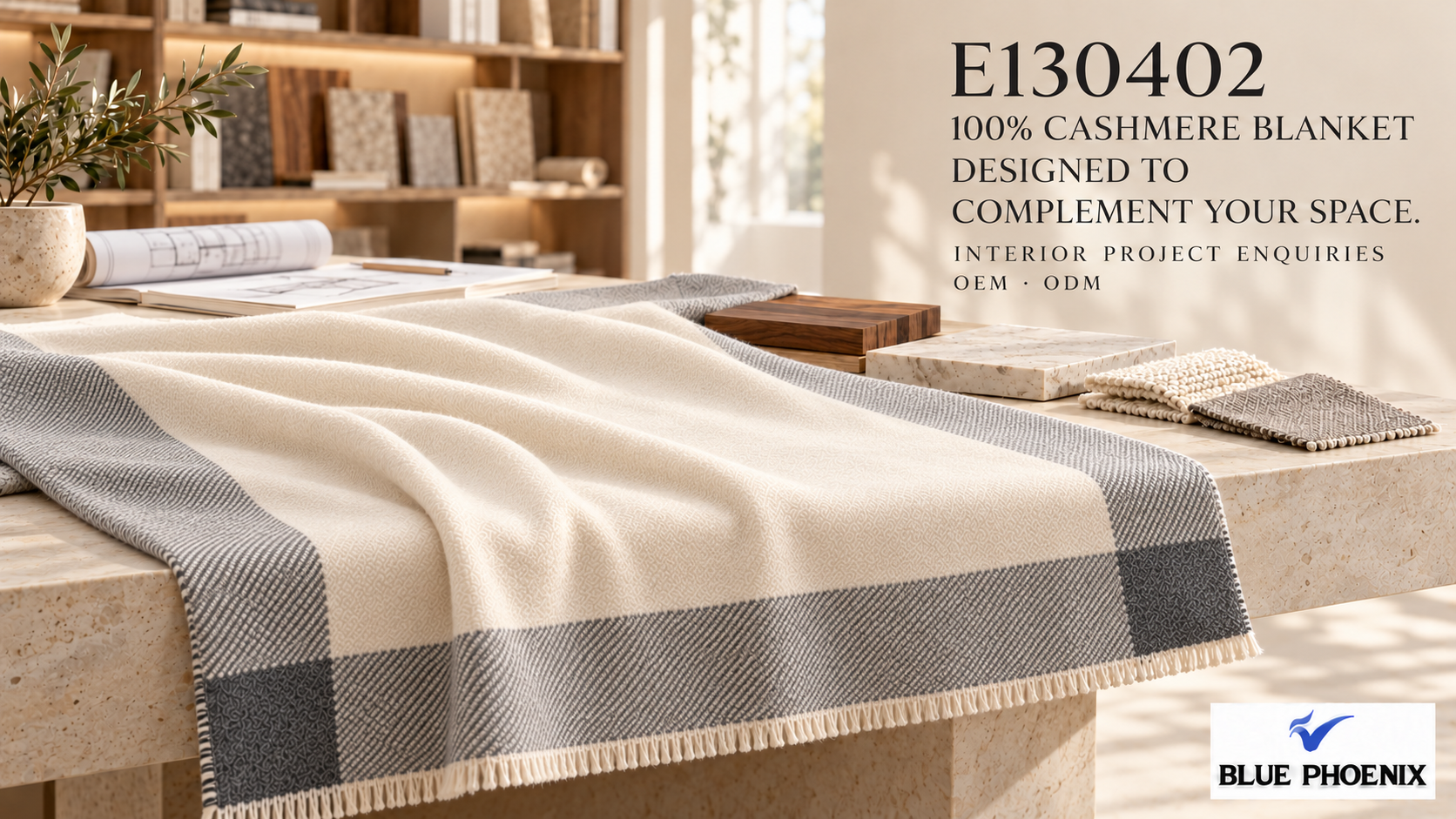
E130402 100% Cashmere Woven Check Blanket
Ivory and grey checks with fine short fringe provide a refined reference for coordinated interior collections.
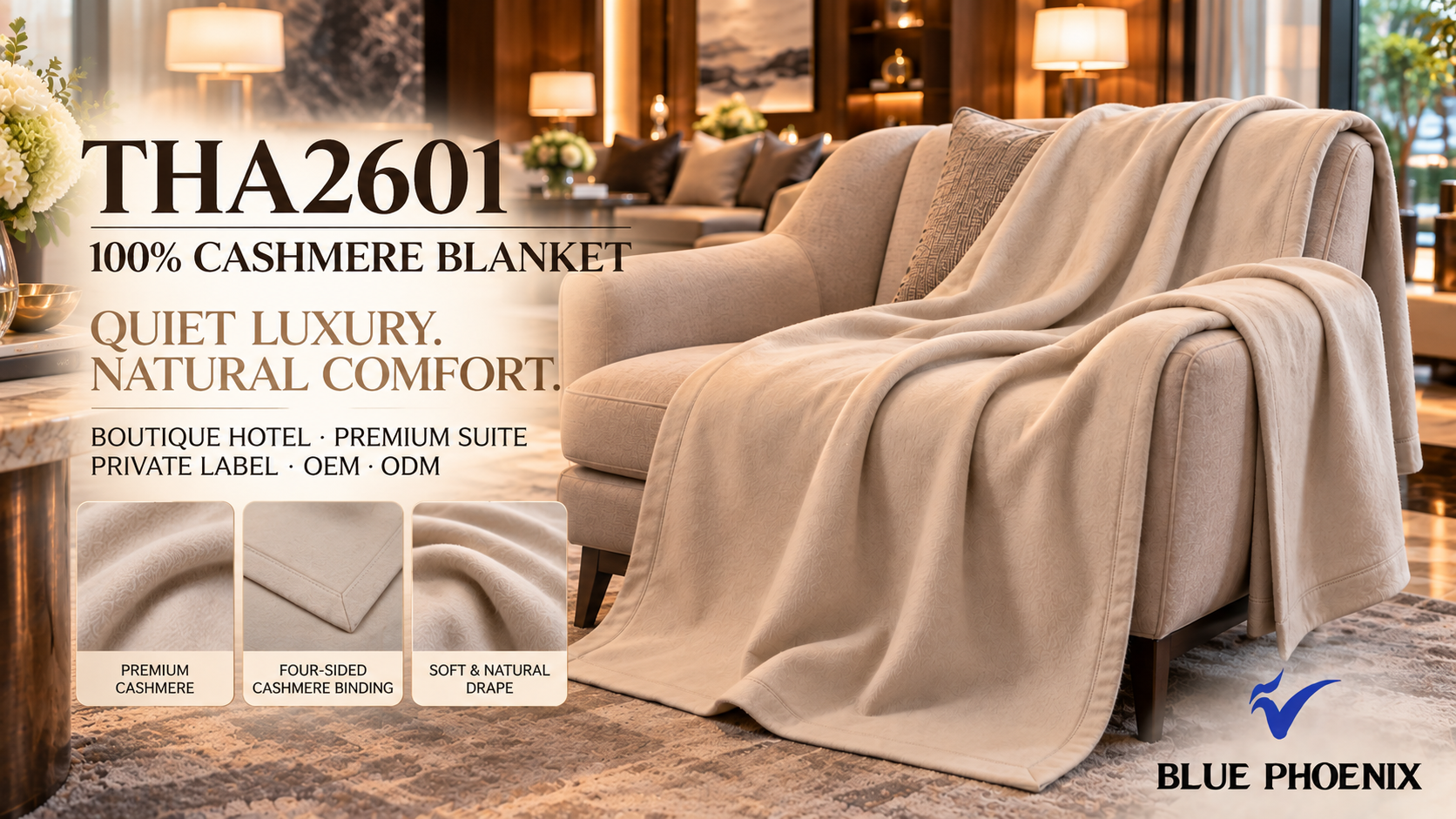
THA2601 100% Cashmere Bed Blanket
A plain woven cashmere blanket with matching four-sided fabric binding for boutique hotels and premium home collections.
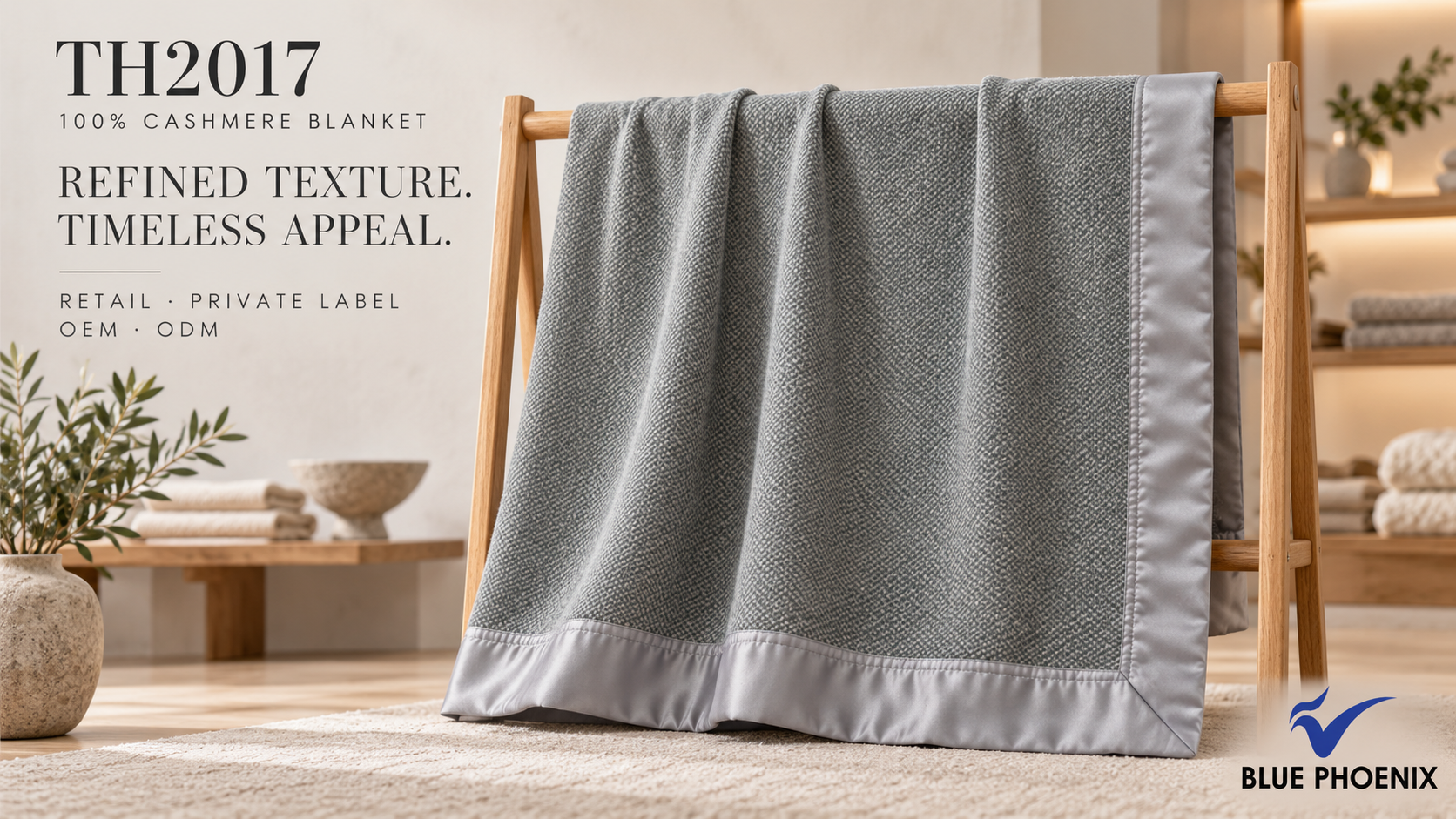
TH2017 Cashmere Blanket with Silk Satin Edge
Fine grey woven cashmere framed by silver-grey silk satin binding for premium retail and private-label bedding.
For bedding-related overheating, start by comparing lighter constructions and removable layers. No blanket material treats the underlying causes of night sweats, and individual comfort varies.
No. Thickness, loft, fabric structure and the surrounding bedding influence warmth. Compare the finished blankets rather than assuming that fiber composition determines comfort.
It may suit some bedding arrangements. Evaluate its construction, weight and thickness with the intended sheets and other layers. Wool composition alone does not establish cooling performance.
No. GSM measures mass per unit area. Different constructions can have the same GSM while differing in thickness, loft and insulation.
A cool initial contact sensation does not prove sustained overnight cooling. Ask what property was tested and under which conditions before making a performance claim.
Seek medical advice if night sweats regularly wake you or concern you, especially if accompanied by unexplained weight loss, a high temperature or other symptoms. Changing bedding does not replace medical assessment.
A blanket should not be presented as preventing or treating night sweats. Adjusting excessive bedding insulation may improve comfort when the bedding is making someone too warm.
Review the complete bedding arrangement, including the duvet, sheets, blanket, mattress protector and room conditions.
Separate layers allow users to adjust their coverage as comfort needs change.
Lightweight describes the product relative to its size and intended use. State the actual dimensions, weight and construction so buyers can compare it accurately.
No. Cotton blankets vary in density, thickness, brushing and backing. Review the actual product specification.
No. Fiber content is only part of the specification. The construction and finishing also need assessment.
No. Polyester fabrics vary in construction. Assess the relevant performance of the finished fabric rather than making a category-wide assumption.
No. Cashmere blankets are generally selected for their fiber character, softness and warmth. Any cooling claim requires separate evidence.
No. Silk and silk-blend blankets can have substantial woven constructions. Check thickness and finished weight.
GSM measures grams per square meter. It is not a direct rating for cooling, breathability or overnight comfort.
No. The appropriate specification depends on fabric construction, room conditions, other bedding and user preferences.
No. Absorbency concerns taking up liquid, while wicking concerns its movement through a textile. Neither term alone proves fast drying.
No. It describes air passage under specified conditions. Thermal and moisture-related properties require their own evaluation.
Yes. Backing, bonding, filling and additional fabric layers change the finished construction and should be included in sample assessment.
No. Surface appearance and hand feel do not replace relevant testing.
Confirm compatibility with the proposed laundry process, dimensional change, appearance after care, drying requirements and edge condition.
Include the intended use, composition, construction, size, target weight, care process, colors, labels, packaging and required performance evidence.
Material, construction, dimensions, colors, finishing, labels and packaging can be evaluated according to project requirements and production feasibility.
Samples and courier delivery are charged. Confirm the costs and sample requirements before dispatch.
They depend on the material, construction, color allocation, quantity and customization. Request project-specific confirmation before planning an order.
Compare cotton constructions by thickness, weight, surface finish and approved care requirements.
Explore wool blankets for different layering requirements, from lighter throws to substantial bedding.
Review silk and silk-blend bedding options, checking the actual composition and finished construction.
Explore premium cashmere throws and bed blankets for collection development and optional layering.
These products offer different collection references. They have not been established as treatments for night sweats or as equivalent cooling blankets. Assess each product against the intended bedding arrangement.
A camel-and-white mélange cotton throw listed at 300 GSM, providing a cotton construction to include in sample comparisons.
A substantial woven silk-cotton bed blanket with a solid grey body and wide tonal satin binding. Evaluate its weight and thickness rather than assuming that silk content makes it a light summer layer.
A solid-color cashmere throw with fringe for premium retail collections and supplementary layering.
A woven cashmere blanket with an ivory-and-grey check design for coordinated home textile collections.
A plain woven cashmere bed blanket with matching four-sided fabric binding. Compare its substantial construction with the intended bedding brief.
A grey woven cashmere blanket with silver-grey silk satin binding for premium bedding and private-label collections.
Planning a layered bedding range or sourcing private label blankets? Send BLUE PHOENIX your intended application, preferred materials, construction, dimensions, target weight, quantity and packaging requirements for project evaluation.
Email: jamesli@shbluephoenix.com
WhatsApp: +86 18017830390
WeChat: bluephoenix66
Website: https://www.shbluephoenix.com/

Blue Phoenix Blankets dedicated to strict quality control of blankets and scarves products and thoughtful customer service, our custom blankets wholesale products are exported to clients in such countries and regions as United states, Europe, Australia, Russia, Germany, Japan.
Copyright © 2026 Shanghai Rainbow Enterprise Development Co., Ltd. - All Rights Reserved.