High-Quality Wholesale Blankets Manufacturer & Supplier in China with custom design service - Blue Phoenix Blankets
Language
A distinctive scarf collection does not always require a bold print or several contrasting colors. Surface details can create a recognizable design within a restrained palette.
The BLUE PHOENIX TH2116 wool scarf combines a peach-pink body with small round perforations arranged across the fabric. Short fringe completes the ends, while the elongated rectangular format supports neck-scarf and shoulder-wrap presentation.
For fashion brands, boutique buyers and accessory importers, the sourcing task is to preserve these details through sampling, specification approval and bulk production. This guide explains what to review before placing a wholesale wool scarf order.
1. Understand the Perforated DesignThe defining feature of TH2116 is its repeated pattern of small round openings.
These are actual perforations distributed across the fabric in staggered rows. Their size, spacing and position create the scarf’s visual character against a single-color background.
During sample review, examine the pattern with the scarf laid flat. Check individual openings, the distance between rows and the relationship between the holes and the finished edges.
Then inspect the scarf when folded or draped. Layers of fabric can change how clearly the perforations appear, so both flat and styled views are useful for approval.
2. Assess Color and Surface Texture TogetherThe reference scarf uses a peach-pink shade with a fine brushed surface.
For collection planning, compare the physical sample with the garments and accessories it is intended to accompany. Look at the color under consistent lighting rather than relying only on a screen image.
Surface brushing also affects the appearance of the openings. Review the fabric close up and at normal viewing distance to assess whether the texture and perforated pattern create the intended balance.
If custom colors are requested, approve a developed color reference before bulk production. A new shade should be treated as a development requirement, with feasibility and commercial terms confirmed separately.
3. Review Proportions in Both Styling FormatsThe rectangular wool scarf can be assessed around the neck or draped across the shoulders.
For a neck-scarf display, review the folds, hanging length and visibility of the perforations. For shoulder-wrap presentation, examine coverage, edge position and the appearance of the fabric across the back.
Use a mannequin or model to evaluate the actual sample. A flat photograph helps show dimensions and pattern placement, while a styled view helps buyers assess proportions within an outfit.
Approve styling that reflects the real product. Do not enlarge the holes, add a central opening or alter the scarf’s shape in lifestyle imagery.
4. Record Body Dimensions and Fringe SeparatelyA clear scarf specification should distinguish the fabric body from the fringe allowance.
For TH2116, the reference body is 58 × 193 cm, with approximately 2 cm fringe at each short end. The reference finished weight is approximately 255 g per piece.
These details should appear consistently in the quotation, sample approval record and purchasing documents. Agree on the measurement method and permissible production tolerances before ordering.
Avoid adding fiber diameter, yarn count or performance classifications unless they have been confirmed for the proposed product.
5. Inspect the Fabric Around Each OpeningFor a perforated wool scarf, the fabric surrounding the openings deserves close attention.
Examine the sample for uneven hole shapes, loose fibers, visible damage or distortion near the openings. Compare different areas of the scarf rather than inspecting only one close-up section.
Check the long edges for straightness and consistency. At the short ends, inspect fringe length, density and the transition into the fabric body.
Handle and fold the sample using the proposed display method, then review its appearance again. Record concerns with photographs and written comments so that any requested revisions are clear.
Visual inspection evaluates appearance and workmanship. It does not establish washing performance, pilling resistance or other test results.
6. Approve Private Labels Without Obscuring the DesignFor private label scarves, the brand label and product information should be reviewed on the actual sample.
Consider how the label appears when the scarf is worn, folded and displayed. Its position should account for the perforation layout and the way the fabric drapes.
Confirm label dimensions, wording, attachment and placement before production. Composition and care information should match the approved product and destination requirements.
If embroidery or another branding method is proposed, assess a developed sample. Branding can affect the local fabric appearance and should not be approved from artwork alone.
7. Prepare Product Images That Match the SampleAccurate scarf photography supports both retail presentation and purchasing communication.
A useful image set includes a full-product view, a styled view, a close-up of the perforations and an edge or fringe detail. A sample-tag photograph can help identify the reference product.
Keep the original hole size, spacing, color and proportions consistent across images. Avoid presenting decorative openings as a functional fastening system.
Captions and Alt text should describe what the photograph shows. A sample tag should be identified as sample information rather than certification.
8. Confirm the Wholesale Order RequirementsBefore requesting a bulk scarf quotation, provide the model, quantity per color, preferred material specification, branding, packaging and destination.
Discuss custom colors, dimensions or pattern changes before sample approval. Altering the reference design may affect feasibility, minimum quantities and development timing.
Samples and courier delivery are chargeable. Confirm these costs, the production schedule and any required testing before proceeding.
Retain an identified reference sample together with the final specification, approved labels and packaging details. This gives both parties a consistent basis for production inspection.
Conclusion: Preserve the Perforated Detail from Sample to ShipmentThe TH2116 perforated wool scarf offers a distinctive design through its peach-pink color, small round openings and short fringe.
For B2B buyers, the priority is to approve the complete product: perforation layout, surface finish, proportions, edges, labels and packaging.
Clear specifications and accurate imagery help carry the approved design into bulk production and the finished retail presentation.
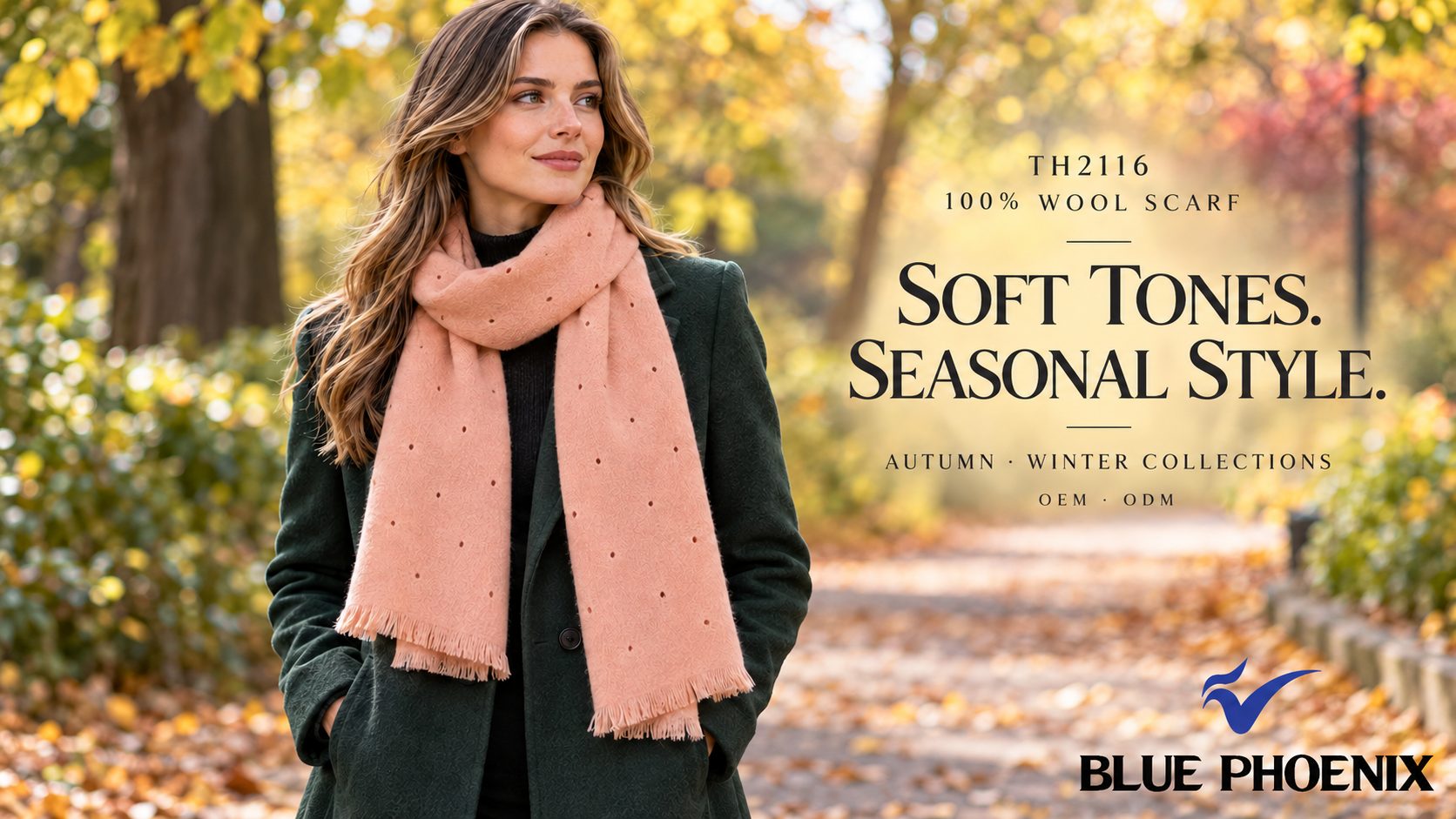
TH2116 Perforated Pink Wool Scarf
Explore a peach-pink wool scarf with small round perforations and short fringe for boutique collections and private label development.
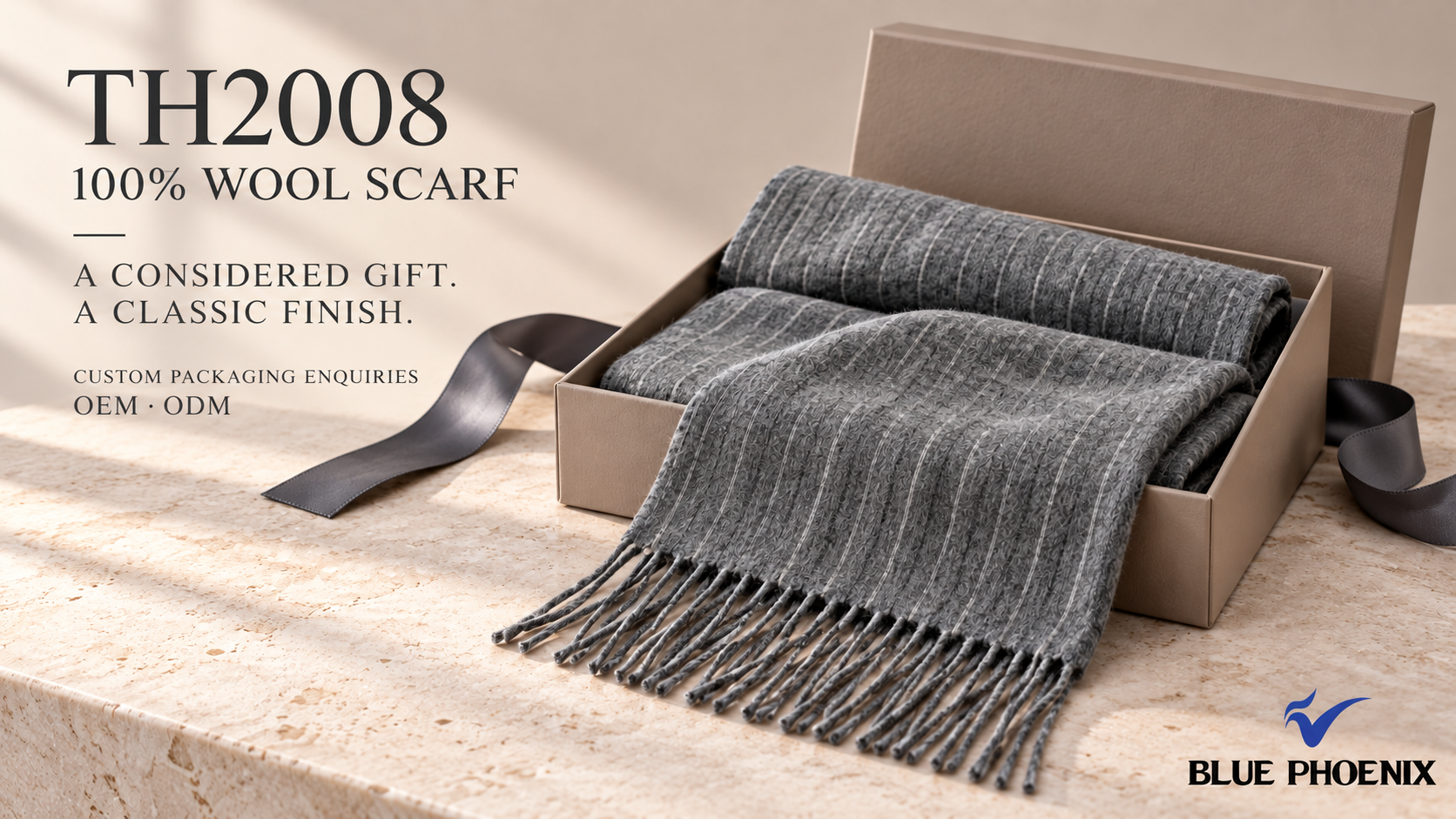
TH2008 Grey Striped Wool Scarf
Review a grey wool scarf with fine stripe detailing and fringed ends for retail assortments and custom gift packaging projects.
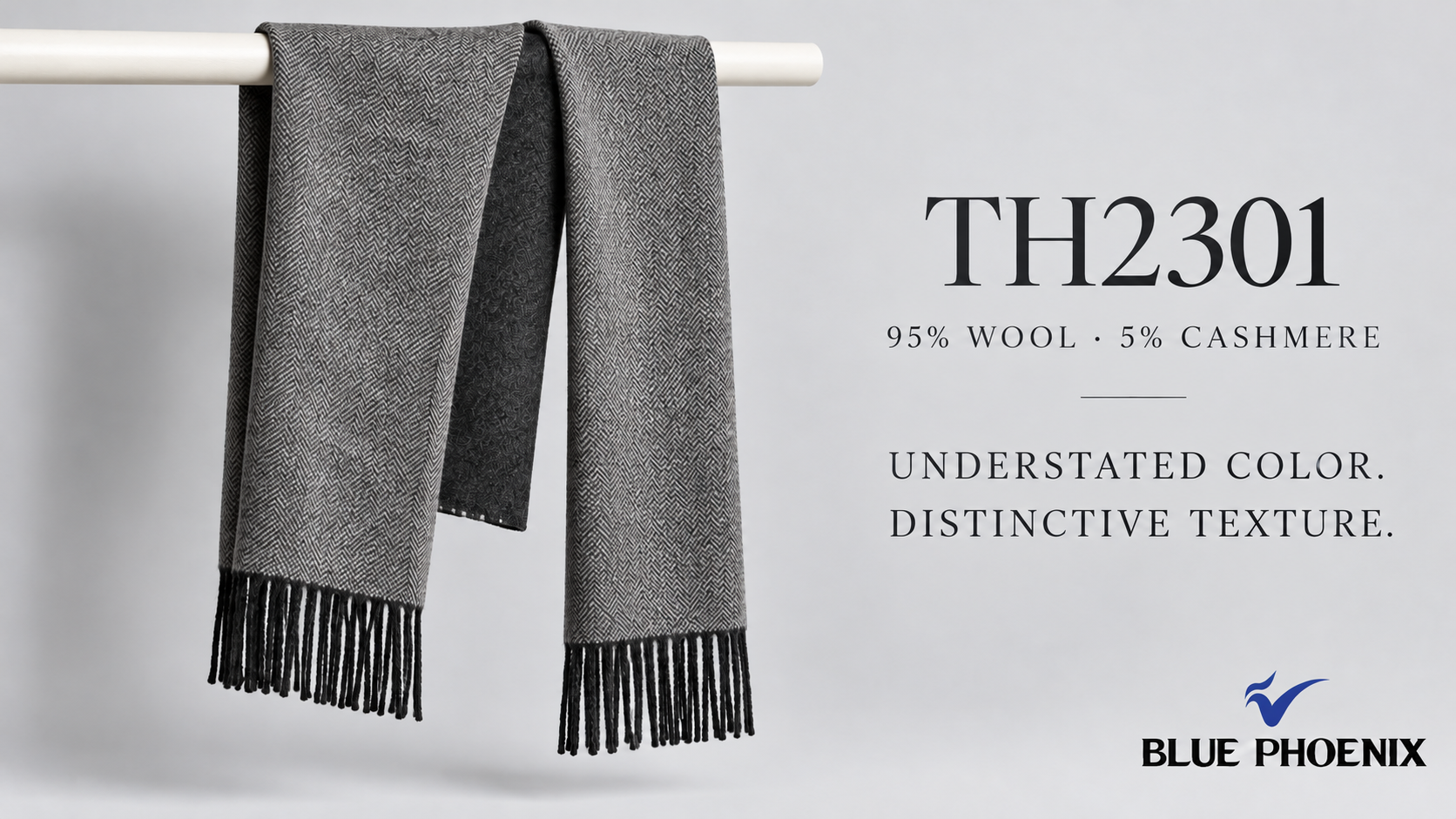
TH2301 Reversible Wool Cashmere Scarf
Compare a grey herringbone scarf with a darker reverse and fringed ends for coordinated winter accessories collections.

WCC2102 Knitted Cashmere Scarf
Discover a light grey knitted cashmere scarf with ribbed ends for understated retail collections and private label sourcing.
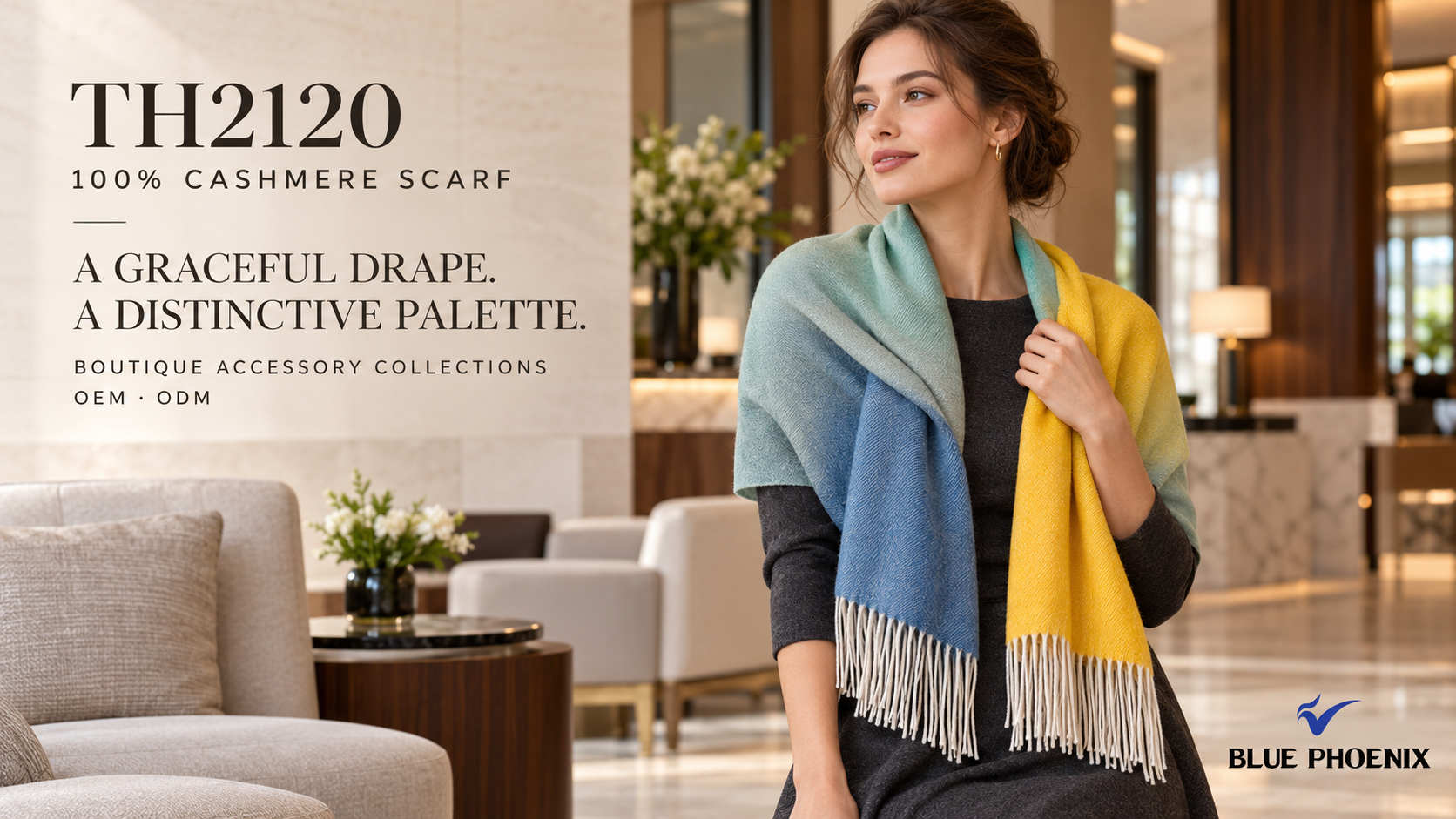
TH2120 Gradient Cashmere Shawl
Explore a blue, green and yellow gradient cashmere shawl with light fringe for boutique collections and color-focused accessories ranges.
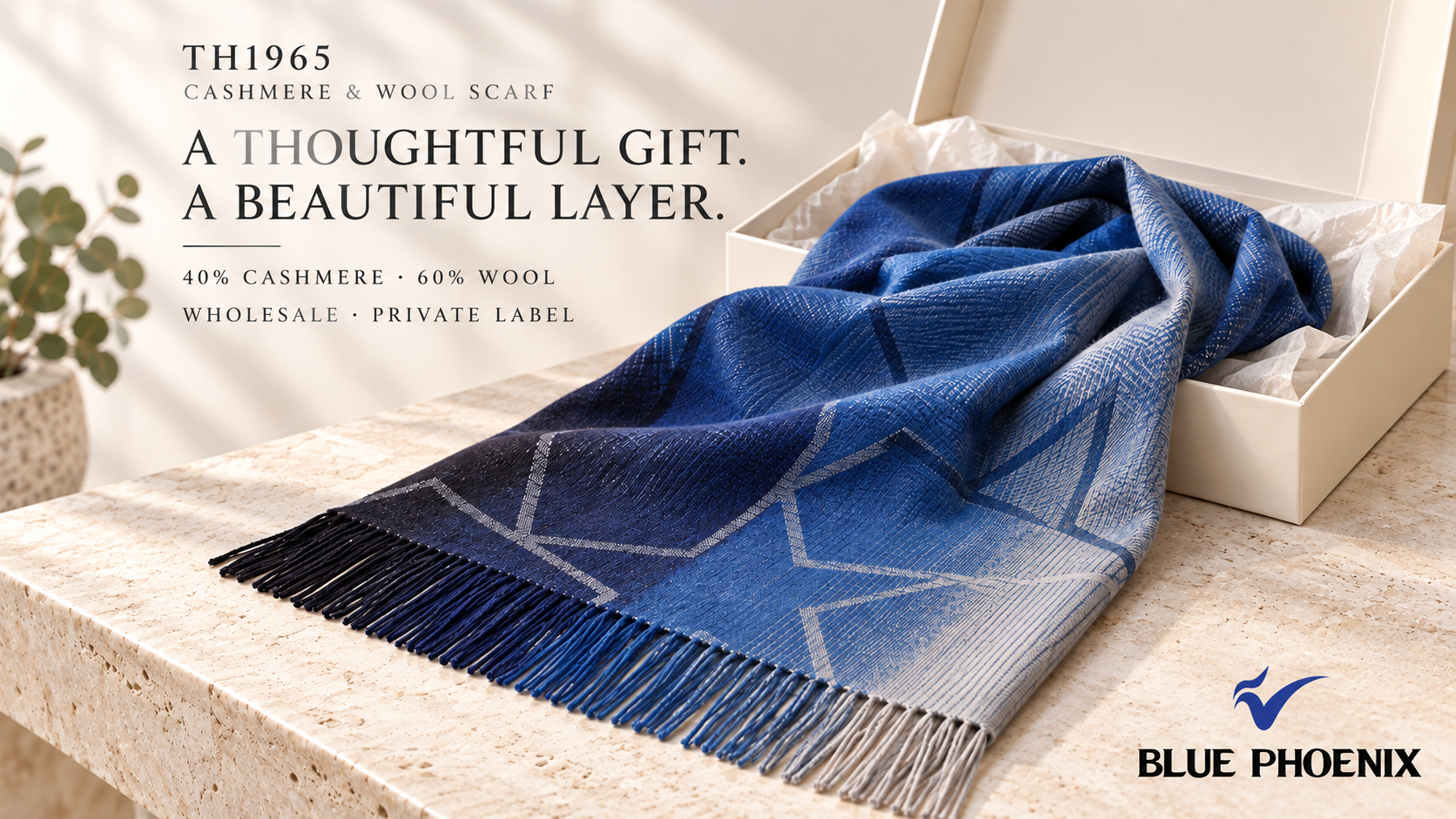
TH1965 Cashmere and Wool Scarf
Consider a blue gradient scarf with outlined star motifs for patterned winter collections and private label gifting projects.
Its peach-pink body features small round perforations arranged in staggered rows, together with a brushed surface and short fringe.
No. The reference design has small decorative openings distributed across the fabric. These should not be described as a central slot or fastening system.
Confirm composition, body dimensions, fringe allowance, finished weight, color, perforation layout and surface finish against the approved sample. Record the measurement methods and agreed tolerances.
Check hole shape, spacing, placement and the condition of the surrounding fabric. Look for loose fibers, visible damage or distortion and compare several areas of the sample.
Custom development and private labels can be reviewed according to the proposed design and quantity. Confirm feasibility, sample requirements, labeling, packaging and costs before production.
Samples and courier delivery are chargeable. Confirm the applicable costs and sample requirements before dispatch.
1. What type of accessory is TH2116?
It is a rectangular wool scarf that can be evaluated for neck-scarf and shoulder-wrap presentation.
2. Are the small dots printed?
No. The reference design uses actual small openings in the fabric.
3. How are the perforations arranged?
They are distributed in staggered rows across the scarf body.
4. What color is the reference sample?
The reference has a peach-pink shade. Final color approval should use a physical sample or agreed reference.
5. What surface finish should buyers assess?
Assess the brushed surface for consistency, hand feel and its appearance around the openings.
6. Why inspect the scarf flat?
A flat view helps buyers assess shape, pattern spacing, edge alignment and overall proportions.
7. Why inspect the scarf on a mannequin?
A mannequin helps show folds, hanging length, shoulder coverage and perforation visibility.
8. Should fringe be included in body dimensions?
Record the body and fringe separately so the measurement basis is clear.
9. Is finished weight the same as GSM?
No. Finished weight is mass per scarf, while GSM is mass per square meter.
10. Can photographs establish fiber diameter?
No. Confirm fiber specifications separately if they are part of the purchasing requirements.
11. What should buyers check near the holes?
Check the surrounding fabric for visible damage, loose fibers, irregular shapes and distortion.
12. What should buyers inspect on the long edges?
Inspect straightness, finishing consistency and the relationship between the edges and perforation layout.
13. What should buyers inspect on short fringe?
Compare length, density, appearance and the transition from the fabric body.
14. Does visual inspection establish pilling resistance?
No. Agree on an appropriate evaluation or test if pilling performance is required.
15. Does a sample tag count as certification?
No. It records declared sample information and should not be presented as an independent certificate.
16. Where should a private label be placed?
Approve its position on the physical sample, considering the openings, folds and intended styling.
17. Can embroidery be approved from artwork alone?
Review a developed sample because embroidery can affect the fabric's appearance and handling.
18. What should product images preserve?
Preserve the approved color, proportions, texture, hole size, spacing and fringe appearance.
19. What information is needed for a quotation?
Provide the model, quantity per color, customization, labels, packaging, destination and required delivery date.
20. What should be retained after approval?
Retain the identified reference sample, final specification, approved artwork, label details, packaging requirements and written approval.
Wool Scarves — Explore additional colors, patterns and finishing options for your collection.
Cashmere Scarves — Compare another material direction for premium accessories sourcing.
Blended Scarves — Review different fiber combinations against your product brief.
Knitted and Woven Scarves — Compare constructions and design directions for a coordinated assortment.
TH2116 Perforated Pink Wool Scarf
Review the featured scarf's small round perforations, brushed surface and short-fringe finishing.
TH2008 Grey Striped Wool Scarf
Explore a grey striped design as a more linear pattern direction for winter accessories.
TH2301 Reversible Wool Cashmere Scarf
Compare a herringbone and darker reverse presentation for a coordinated collection.
WCC2102 Knitted Cashmere Scarf
Consider a light grey knitted scarf with ribbed ends when comparing construction options.
TH2120 Gradient Cashmere Shawl
Explore a blue, green and yellow gradient design for a color-focused accessories range.
TH1965 Cashmere and Wool Scarf
Review a blue gradient scarf with outlined star motifs for a patterned collection direction.
Send BLUE PHOENIX your preferred design, material requirements, dimensions, quantity per color, label artwork, packaging brief and delivery destination. We can discuss wholesale, OEM/ODM and private label development according to your project.
Samples and courier delivery are chargeable. Confirm the final specification, quotation, minimum quantities, production schedule and any required testing before proceeding.
Email: jamesli@shbluephoenix.com
WhatsApp: +86 18017830390
WeChat: bluephoenix66
Website: www.shbluephoenix.com

Blue Phoenix Blankets dedicated to strict quality control of blankets and scarves products and thoughtful customer service, our custom blankets wholesale products are exported to clients in such countries and regions as United states, Europe, Australia, Russia, Germany, Japan.
Copyright © 2026 Shanghai Rainbow Enterprise Development Co., Ltd. - All Rights Reserved.