Blog Posts
High-Quality Wholesale Blankets Manufacturer & Supplier in China with custom design service - Blue Phoenix Blankets
Language
Selecting luxury wholesale scarves requires more than choosing an attractive color or a soft sample. Buyers need to understand how material, fabric construction, dimensions and finishing work together within a collection.
Silk scarves and yak hair scarves offer different visual and tactile directions. Silk can support collections built around pattern, surface sheen and fluid styling. A brushed yak hair scarf can bring a more textured appearance to a winter accessories range. Neither material should be selected by fiber name alone.
For boutique buyers, accessory importers and private label brands, the practical task is to turn a collection idea into a specification that can be sampled, approved and reproduced.
1. Start with the Collection Brief
Before comparing suppliers, define the role the scarf will play in your collection.
A patterned scarf intended as a decorative accent may need different proportions and finishing from a broad winter wrap. Similarly, a corporate gift project may place greater emphasis on packaging dimensions, label presentation and delivery dates.
A useful scarf sourcing brief includes:
Intended customer and sales channel.
Preferred material and fabric construction.
Finished dimensions and measurement method.
Target weight or fabric-weight specification.
Color palette or artwork reference.
Edge finishing and fringe requirements.
Quantity per design and color.
Private label and packaging requirements.
Destination market and delivery deadline.
Providing the same brief to each supplier makes quotations easier to compare.
2. Silk Scarves: Review the Fabric Behind the Pattern
A silk scarf should be assessed as a complete textile, including its weave, weight, surface finish and edges.
The fiber description alone does not establish whether a scarf will be sheer, substantial, glossy or matte. Different constructions can produce different results, even when the declared fiber composition is the same.
For a patterned silk scarf, inspect the design both flat and when worn. Check the relationship between the main pattern, border and visible reverse. Look at whether important design elements disappear when the scarf is folded or tied.
The WEC2203 silk scarf shown in this article provides a reference for a soft, multicolored design. Use its physical sample to assess color placement, transparency, drape and edge finishing before making a purchasing decision.
For custom development, confirm whether the design will be printed, painted or produced using another agreed process. A watercolor-style appearance does not, by itself, establish the manufacturing method.
3. Yak Hair Scarves: Review Texture, Construction and Finishing
For yak hair scarf sourcing, begin with the composition declaration and the proposed fabric specification.
Examine the surface under consistent lighting. Check the brushed finish, visible texture, weave consistency and how the scarf folds around the neck or shoulders. Compare both sides and inspect the full length rather than relying on one small area.
The TH15K2302 yak hair scarf shown in this article offers a neutral-toned reference for a textured accessories collection. Its sample can help buyers discuss hand feel, proportions, surface finishing and fringe presentation.
Do not infer fiber diameter, geographic origin or processing history from a photograph. If a purchasing brief requires a specific micron range, undyed material or documented origin, request evidence that applies to the proposed product.
4. Silk vs. Yak Hair Scarves: What Should Buyers Compare?
The most useful comparison connects the sample to the intended collection.
These are inspection priorities, not universal performance rankings. The approved construction determines the characteristics of the finished scarf.
5. Build a Clear Technical Specification
A wholesale scarf specification should separate measurable requirements from descriptive language.
State the model reference, composition, dimensions, weight, construction, color and edge finish. Identify whether the quoted dimensions include fringe and agree on measurement tolerances.
For silk, clarify the fabric-weight unit. Momme is used for silk fabric weight; it should not be presented as a millimeter thickness measurement. If a quotation uses an abbreviation such as “6 mm,” ask the supplier to clarify the intended unit before approval.
For yak hair scarves, record the finished weight per piece separately from any fiber-diameter requirement. Weight, thickness, hand feel and micron value describe different characteristics.
If a requirement matters to the buying decision, put it in the specification rather than leaving it as a general sales description.
6. Inspect Samples Before Approving the Bulk Order
A practical scarf sample inspection should cover appearance, measurements, construction and presentation.
First, lay the scarf flat and review its overall shape. Measure it using the agreed method, then inspect the surface, edges and corners. For fringed designs, compare fringe length and consistency across both ends.
Next, assess the scarf in the intended styling position. A mannequin display helps buyers evaluate scale and drape, while a flat view makes pattern placement and edge alignment easier to inspect.
Check the proposed label and packaging as part of the same approval process. A label that looks suitable on paper may pull, show through or sit awkwardly on the actual fabric.
Record requested changes with photographs and written comments. Keep the final approved sample clearly identified so that it can serve as a reference for production inspection.
7. Separate Sample Information from Verification
A handwritten sample tag can help identify a model, composition declaration, dimensions and weight. It is not a laboratory report or independent certification.
When verification is required, agree on the appropriate documentation or testing before placing the order. Check that any report identifies the relevant sample and states the test method and results.
Avoid treating softness, sheen or drape as proof of fiber composition. These observations are useful for product evaluation, but they do not independently establish fiber percentages.
Likewise, claims such as organic, undyed, hypoallergenic or sustainably sourced should only be used when the proposed product has an appropriate supporting basis.
8. Plan Private Labels, Packaging and Commercial Terms
For private label scarves, confirm the artwork, label size, placement and attachment method before production. Review composition and care information against the actual product and destination requirements.
Packaging should suit the selling format. A boutique display sleeve, individual gift box and bulk wholesale pack can have different dimensions and handling requirements.
Request an order-specific quotation covering quantity per color, sample charges, branding, packaging and any required testing. Confirm MOQ, production timing and delivery terms for the selected design.
Samples and courier delivery are chargeable. Agree on these costs before arranging sample dispatch.
Conclusion: Choose the Material, Then Approve the Complete Scarf
Successful silk and yak hair scarf sourcing connects the collection brief with a clear specification and an approved physical sample.
Compare the actual construction, appearance, proportions and finishing. Use documentation or testing where verification is required, and keep product claims within the evidence available.
Before bulk production, approve the scarf, labels, packaging and commercial terms together. This gives both buyer and supplier a clear reference for the finished order.
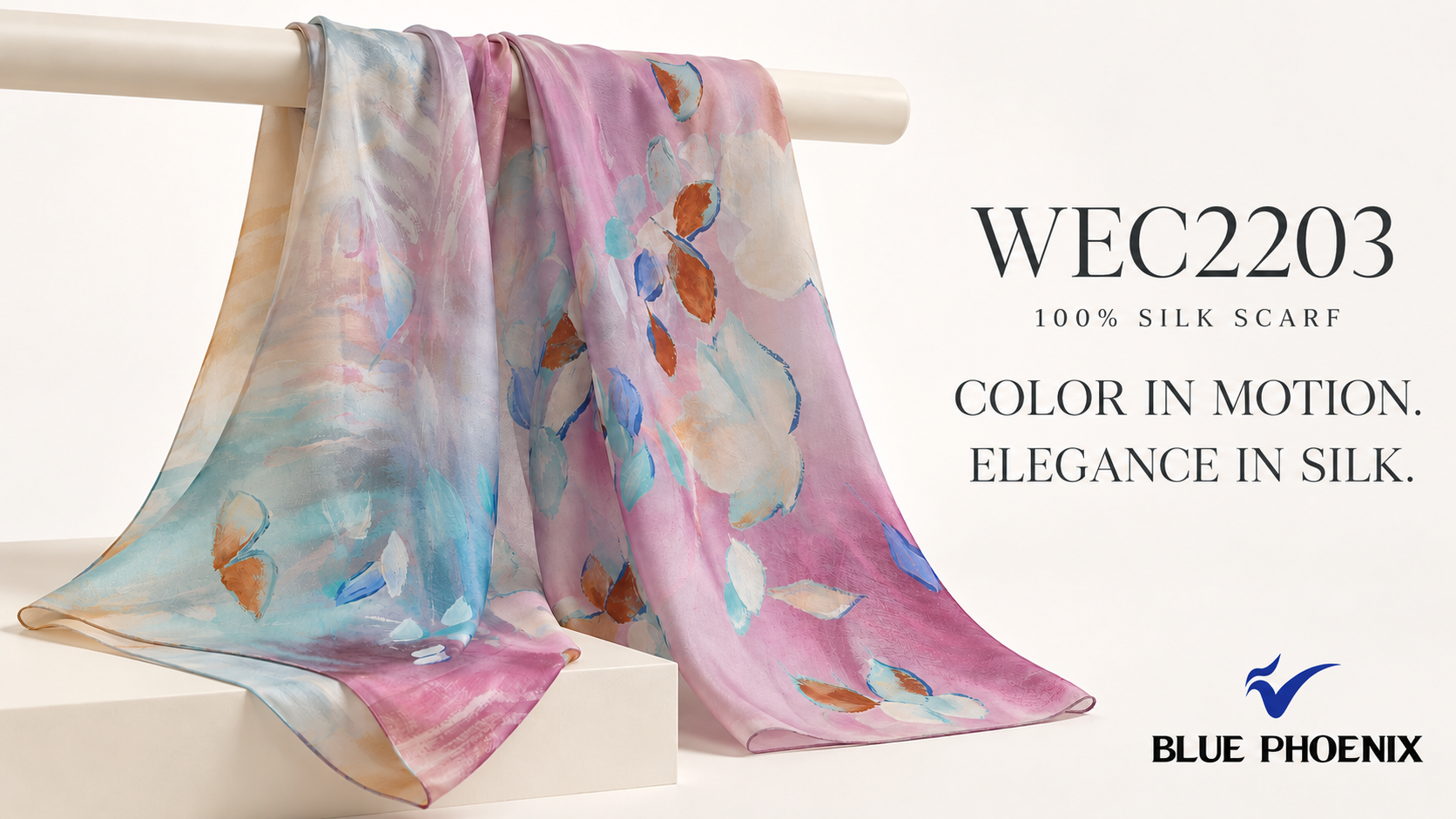
WEC2203 Patterned Silk Scarf
Explore a pastel-patterned silk scarf for boutique collections, wholesale sourcing and private label development.
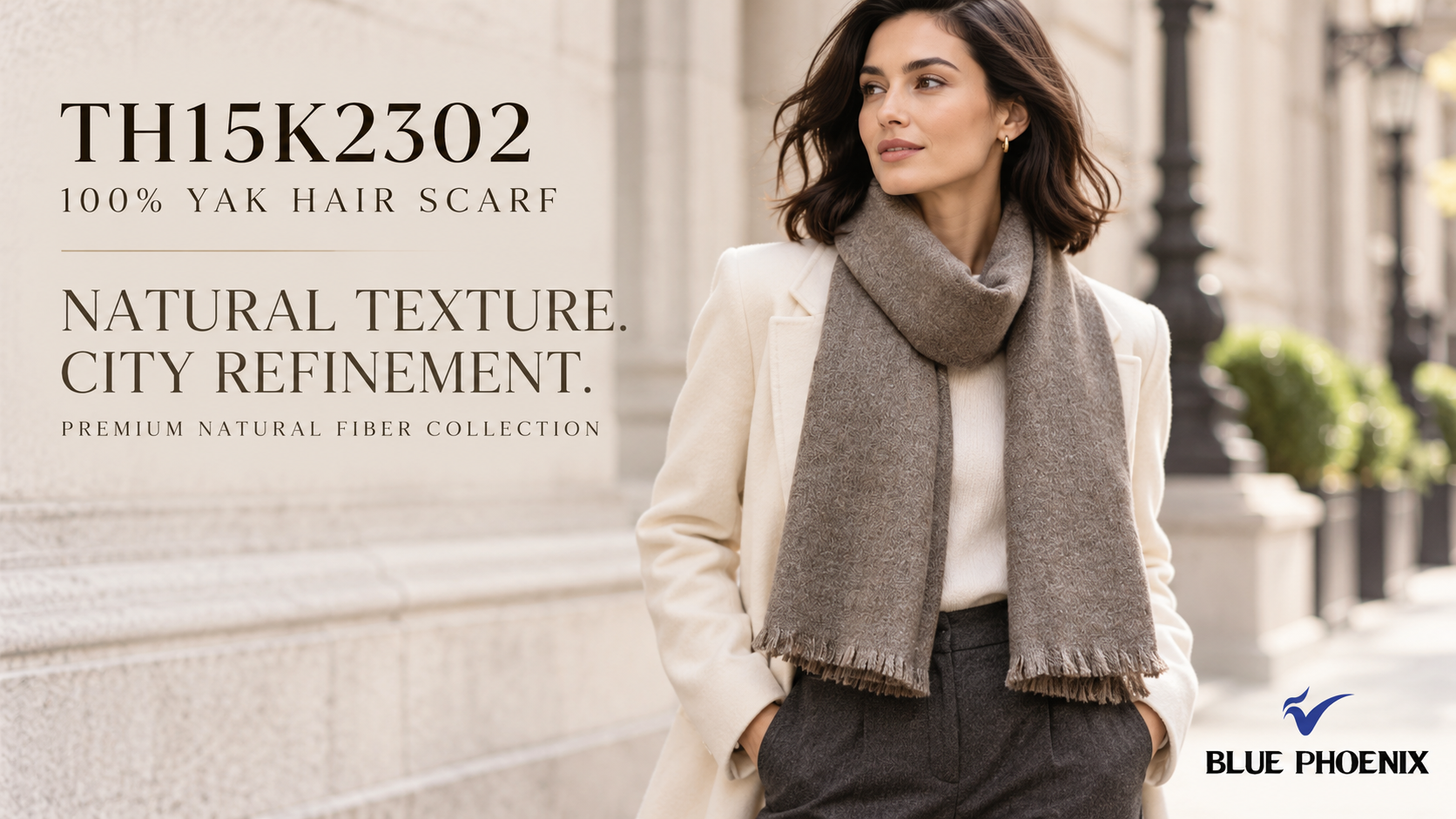
TH15K2302 Yak Hair Scarf
Compare a neutral-toned yak hair scarf with a brushed surface and short fringe for premium winter accessories collections.

TH2120 Gradient Cashmere Shawl
Explore a blue, green and yellow gradient cashmere shawl with light fringe for color-focused accessories collections.

TH1963 Blue Checked Scarf
Compare a blue checked scarf with fringed ends for coordinated winter accessories and wholesale collection planning.
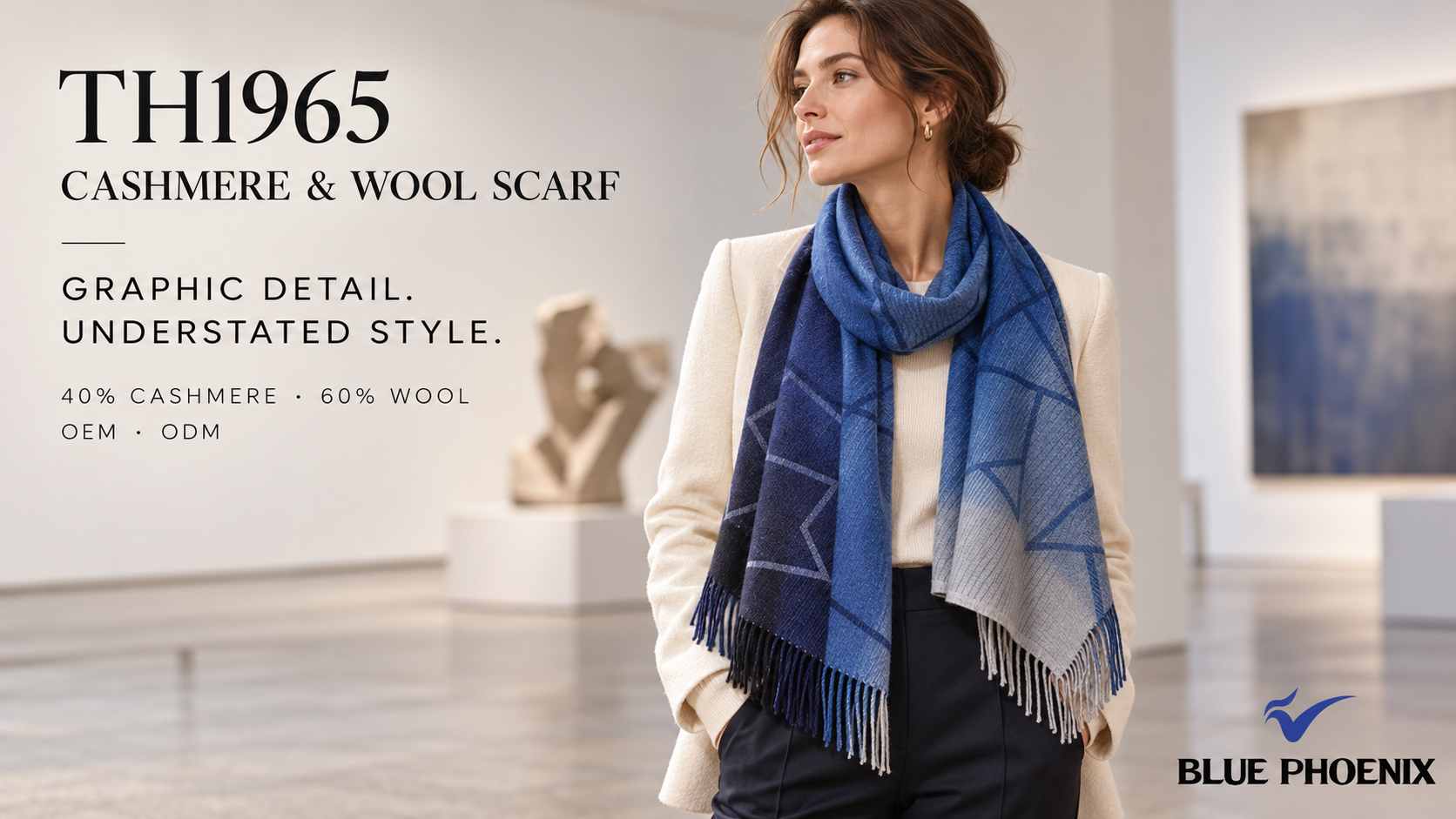
TH1965 Cashmere and Wool Scarf
Discover a blue gradient cashmere and wool scarf with outlined star motifs for patterned winter accessories collections.
Start with the intended collection, styling requirements and target price. Compare physical samples for appearance, dimensions, construction, hand feel and finishing rather than choosing by fiber name alone.
No. Sheen, transparency and drape are useful observations, but they do not independently verify fiber composition. Request appropriate documentation or testing when verification is required.
No. A sample tag records declared product information. It should not be described as independent certification or a laboratory test report.
Discuss label artwork, placement, packaging dimensions and quantity requirements before quotation. Confirm feasibility, costs and approval requirements for the selected product.
Samples and courier delivery are chargeable. Confirm the applicable charges and sample requirements before dispatch.
MOQ and production timing are confirmed for the actual material, construction, quantity per color, branding and packaging requirements. Request an order-specific quotation and schedule.
1. What information should a scarf sourcing brief include?
Include the intended market, material, construction, dimensions, weight, colors, quantities, finishing, branding, packaging and delivery requirements.
2. What should buyers inspect on a patterned silk scarf?
Inspect pattern placement, color, reverse appearance, transparency, drape and edge finishing.
3. Does watercolor styling mean a scarf is hand-painted?
No. Appearance does not establish the production method. Confirm the actual process with the supplier.
4. What should buyers inspect on a yak hair scarf?
Inspect the declared composition, dimensions, weight, weave consistency, surface finish and edge or fringe construction.
5. Can fiber diameter be judged from a photograph?
No. A photograph cannot establish a micron value. Request relevant supporting information if fiber diameter is specified.
6. Does a neutral color prove a scarf is undyed?
No. Confirm the material's processing history before describing it as undyed.
7. Is momme a measurement of silk thickness?
No. Momme describes silk fabric weight. Clarify the unit if a quotation uses an ambiguous abbreviation.
8. Is finished weight the same as fiber fineness?
No. Finished weight measures the mass of the scarf, while fiber fineness describes a fiber characteristic.
9. Should dimensions include fringe?
Agree on the measurement method and explicitly state whether fringe is included.
10. How can buyers approve scarf colors?
Use an agreed physical sample or color reference and assess it under consistent lighting.
11. Why inspect a scarf both flat and on a mannequin?
A flat view helps assess shape and pattern placement, while a mannequin view helps assess scale and drape.
12. What should be checked on scarf hems?
Check the specified construction, stitching consistency, alignment and corner finishing against the approved sample.
13. What should be checked on fringe?
Check length, consistency, attachment and appearance across both ends.
14. Can softness confirm 100% composition?
No. Hand feel is subjective and does not independently verify fiber percentages.
15. What makes a test report relevant to an order?
Its sample identification, test scope and reported results should be checked against the proposed product and purchasing requirements.
16. What should a private label approval include?
Approve artwork, dimensions, placement, attachment, composition information and care information for the actual product.
17. When should packaging be approved?
Approve packaging before bulk production so that dimensions, presentation and packing requirements form part of the order specification.
18. Can MOQ differ between designs?
Yes. Material sourcing, construction, color quantity and customization can affect minimum order requirements.
19. What helps suppliers quote accurately?
A complete specification, quantity per color, destination, packaging brief and delivery requirements help establish a comparable quotation.
20. What should buyers retain after sample approval?
Retain an identified reference sample, approved artwork, final specifications and written approval records.
Silk Scarves — Explore designs and compare fabric construction, pattern presentation and finishing.
Yak Down Scarves — Review product options for textured accessories collections and winter sourcing briefs.
Cashmere Scarves — Extend your material comparison with additional premium scarf options.
Wool Scarves — Compare wool scarf designs for coordinated wholesale collections.
WEC2203 Silk Scarf
Explore a multicolored silk scarf and assess its pattern, drape and finishing through a physical sample.
TH15K2302 Yak Hair Scarf
Review a neutral-toned yak hair scarf as a reference for surface texture, proportions and fringe presentation.
WCC2102 Knitted Cashmere Scarf
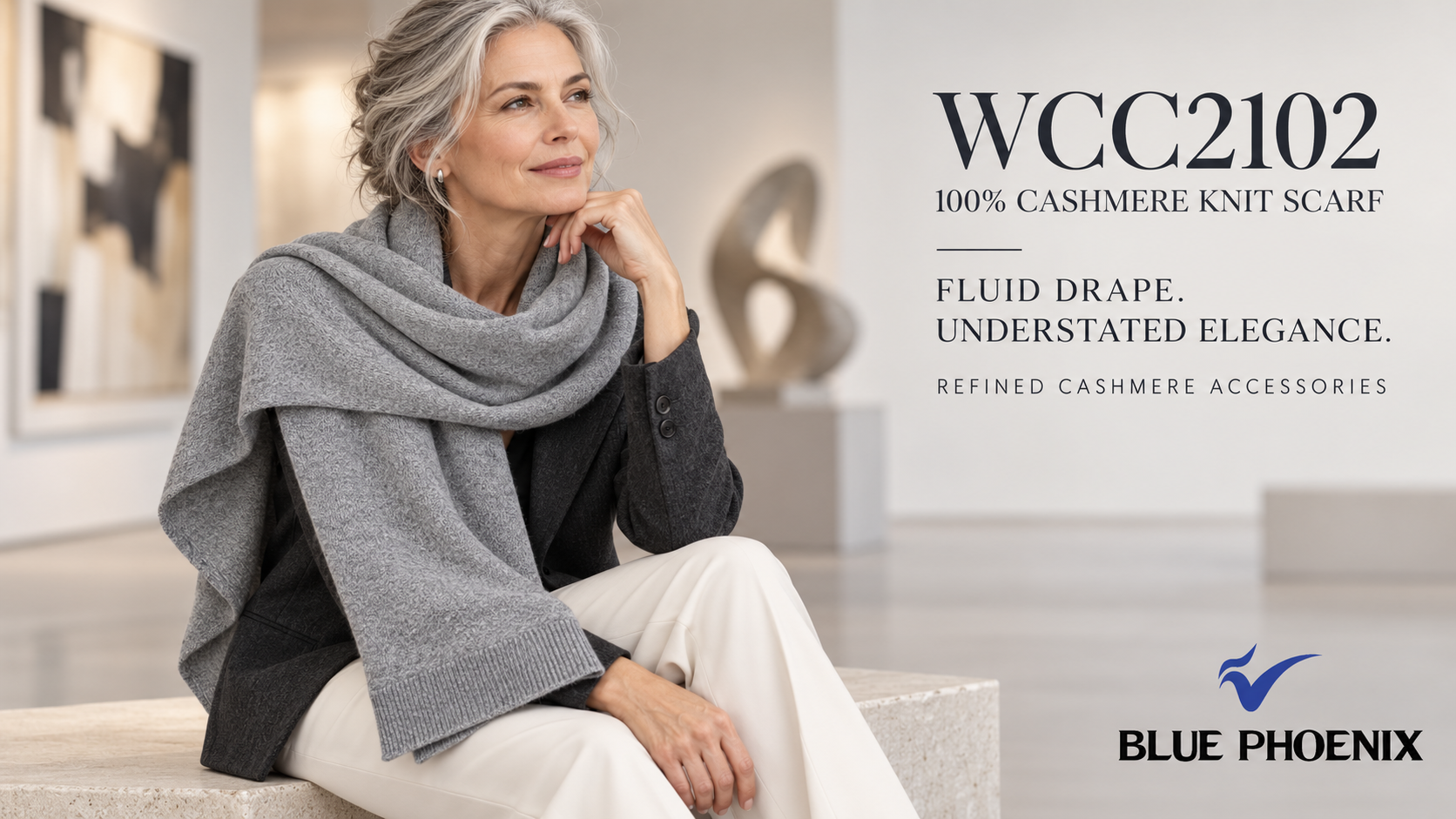
Consider a light grey knitted cashmere design with ribbed ends when comparing different scarf constructions.
TH2120 Gradient Cashmere Shawl
Explore a blue, green and yellow gradient design for a color-focused accessories collection.
TH1963 Wool Scarf
Compare a blue checked design with a plain navy reverse for a coordinated winter collection.
TH1965 Cashmere and Wool Scarf
Consider a blue gradient scarf with outlined star motifs when comparing patterned blended-fiber options.
Send BLUE PHOENIX your preferred material, design direction, dimensions, quantity per color, label artwork, packaging requirements and delivery destination. We can discuss suitable options for wholesale, OEM/ODM and private label development.
Samples and courier delivery are chargeable. Confirm sample costs, MOQ, production timing and any required testing before proceeding.
Email: jamesli@shbluephoenix.com
WhatsApp: +86 18017830390
WeChat: bluephoenix66
Website: www.shbluephoenix.com

Blue Phoenix Blankets dedicated to strict quality control of blankets and scarves products and thoughtful customer service, our custom blankets wholesale products are exported to clients in such countries and regions as United states, Europe, Australia, Russia, Germany, Japan.
Copyright © 2026 Shanghai Rainbow Enterprise Development Co., Ltd. - All Rights Reserved.