High-Quality Wholesale Blankets Manufacturer & Supplier in China with custom design service - Blue Phoenix Blankets
Language
A cashmere blanket is made using cashmere fiber, the fine undercoat of cashmere-producing goats. In a 100% cashmere blanket, the declared blanket fabric is made from cashmere rather than a mixture of cashmere and other textile fibers.
However, not every product described with the word “cashmere” has the same composition. Some blankets use cashmere blends, while others combine a cashmere fabric body with separately added binding or other finishing components.
To understand the complete product, check three things: fiber composition, fabric construction and edge finishing.
Cashmere comes from a goat's fine insulating undercoat, which is different from the coarser outer hair. Collection and processing separate the desired fine fiber from other material before textile production.
It is therefore inaccurate to describe cashmere as ordinary sheep wool or to suggest that a blanket is made directly from an unprocessed fleece.
For sourcing, ask for the confirmed material description and supporting information. A product's appearance or country-themed marketing does not establish its exact fiber origin.
A simplified production route moves from collected fiber to prepared material, yarn and finished fabric. The exact sequence depends on the yarn system, color requirements and blanket design.
Preparation includes cleaning and separating unwanted coarse hair from the fine material. Buyers should discuss the required fiber quality and any supporting specifications with the supplier.
The prepared fiber is spun into yarn suitable for the intended construction. Yarn specifications form part of the development brief and should be considered alongside the finished sample.
Cashmere yarn can be woven or knitted into a blanket. These constructions create different surfaces, patterns and handling characteristics.
Finishing establishes the approved surface and edge appearance. Final inspection should connect the sample with the agreed composition, dimensions, weight, workmanship, labels and packaging.
A cashmere blend blanket contains cashmere mixed with one or more other fibers. The percentages matter: a product containing a small cashmere proportion should not be treated as equivalent to a pure cashmere fabric.
Blends may be developed for a particular price, construction or collection brief. Their performance should be evaluated through the actual sample rather than assumed from the word “blend.”
| Description | What Buyers Should Confirm |
|---|---|
| 100% cashmere fabric | The composition of the blanket fabric and any separately specified finishing components. |
| Cashmere and wool blend | The actual percentage of each fiber in the fabric. |
| Cashmere and silk blend | Whether silk is blended into the fabric yarn or used only as a separate edge binding. |
| Cashmere-feel blanket | The declared fiber composition; a feel description does not establish cashmere content. |
| Recycled cashmere | The declared material, recycled-content information and supporting documentation. |
Woven fabrics are formed by interlacing warp and weft yarns. Designs can include plain surfaces, checks, stripes and woven decorative patterns.
When reviewing a woven sample, inspect pattern alignment, both faces, drape and the edge finish.
Knitted fabrics are formed from interconnected yarn loops. Designs may include plain knitting, ribbed sections or textured pattern blocks.
A knitted cashmere blanket is not the same construction as a woven blanket, even when the fiber composition is identical. Review the finished dimensions, shape and handling against the intended use.
Not necessarily. The fabric body, binding, sewing thread and attached labels can be different components.
For example, a blanket may have a cashmere fabric body with separately specified silk satin binding. That is different from blending silk into the cashmere yarn throughout the fabric.
Fringe, stitched edges and attached binding should also be described accurately. Ask the supplier to identify each relevant component, then confirm the appropriate product description and label for the destination market.
Undyed describes the dye status of the material. It does not mean that the fiber has undergone no cleaning, spinning, fabric formation or finishing.
Do not infer undyed status from a beige, grey or brown photograph alone. Confirm it in the product specification.
Likewise, undyed should not be used as a substitute for evidence supporting broader environmental claims.
A soft hand feel is useful for sample selection, but it does not prove fiber composition. Packaging, price and marketing language are also insufficient on their own.
Where verification is required, use an experienced textile laboratory. Specialist methods can identify and assess cashmere and other animal fibers; the laboratory should select the appropriate approach for the sample and purchasing requirement.
Connect the report with the relevant sample, specification and order. Ask whether it covers the fabric body, a blend or other components being evaluated.
Two products described as 100% cashmere can still differ in their construction and finished appearance.
Compare:
Available fiber and yarn information
Woven or knitted construction
Finished dimensions and piece weight
Surface feel and drape
Pattern and color consistency
Binding, fringe or stitched edges
Care instructions
Labels and packaging
A material percentage does not, by itself, establish a warmth rating, laundering lifespan or suitability for every user.
For responsible sourcing, review the evidence relating to fiber origin, animal welfare, land management and supply-chain traceability. Check the scope and validity of any certification relevant to your order.
For maintenance, follow the finished-product care label. Do not assume that every cashmere blanket permits the same washing or drying method, especially when the product includes another material at the edges.
A cashmere blanket begins with fine goat undercoat fiber, but the complete product is defined by its composition, yarn, construction and finishing.
Confirm whether the fabric is pure cashmere or a blend, distinguish woven from knitted construction and identify separate binding materials. For a dependable purchasing decision, connect the written specification with a representative finished sample and any required verification.
.
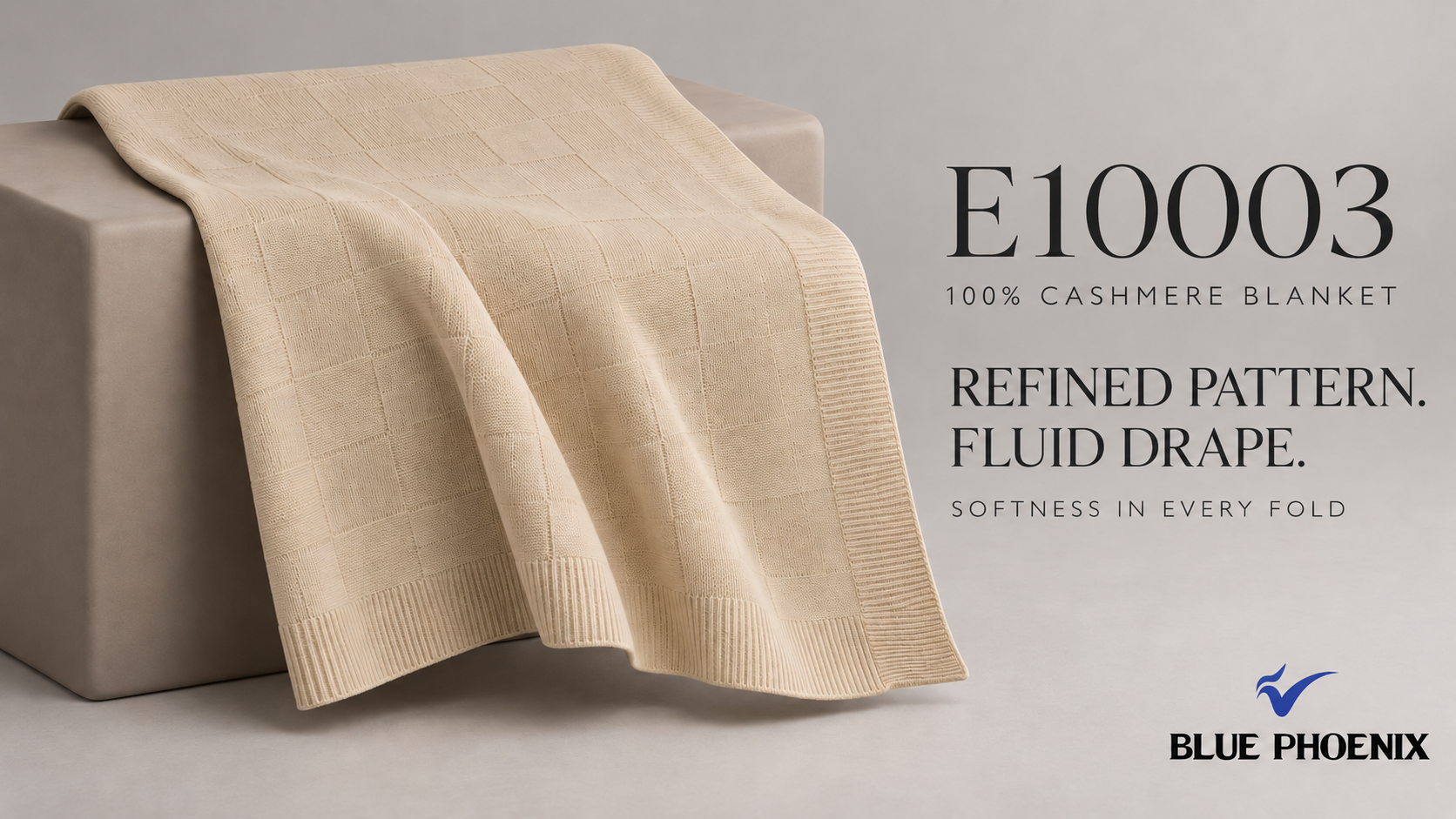
E10003 Knitted Cashmere Blanket
Ivory rectangular knit blocks and ribbed edges highlight the blanket’s textured construction and natural drape.
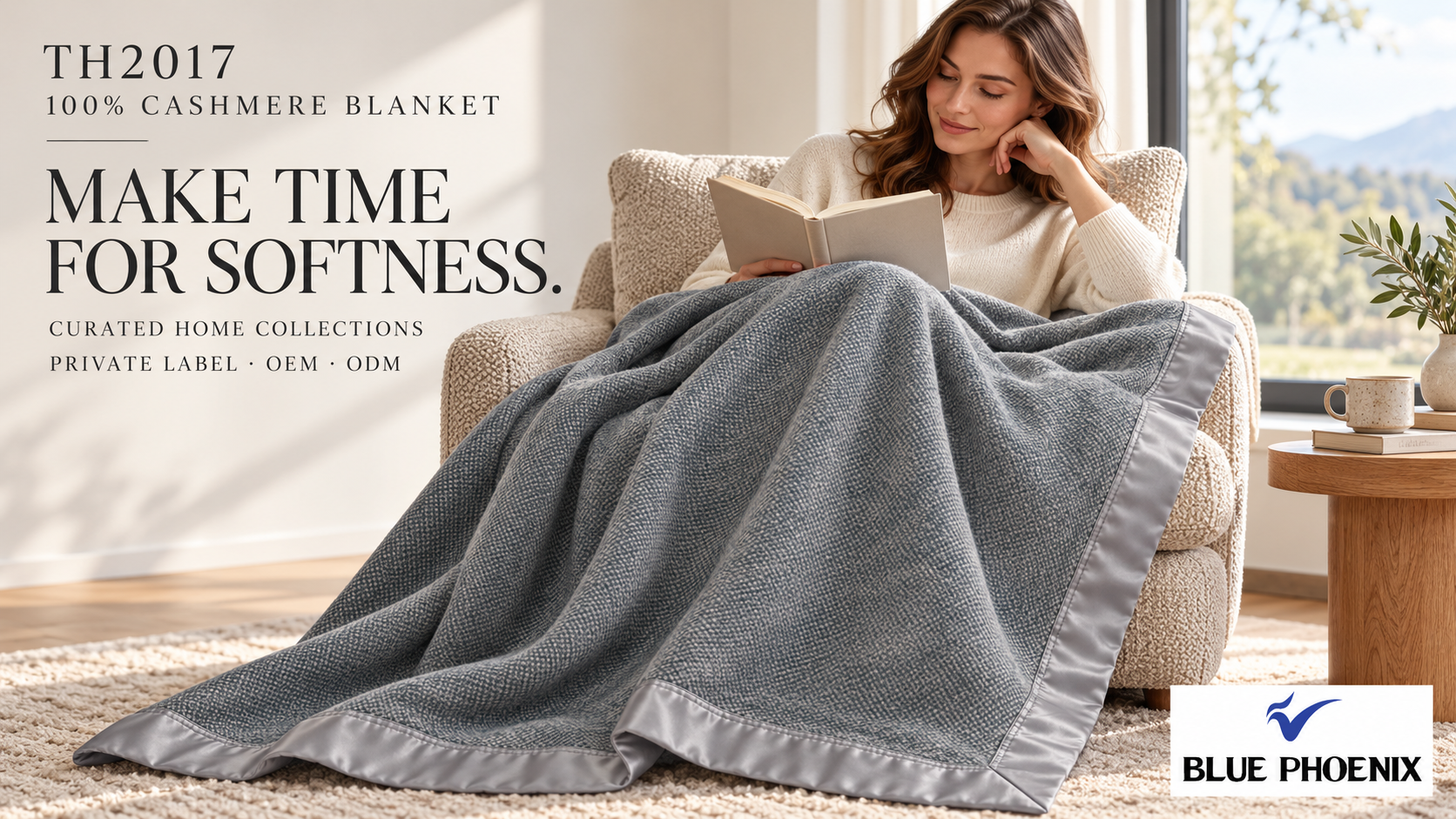
TH2017 Cashmere Blanket with Silk Binding
A blue-grey woven cashmere body and smooth silk satin binding combine two distinct materials in one finished blanket.
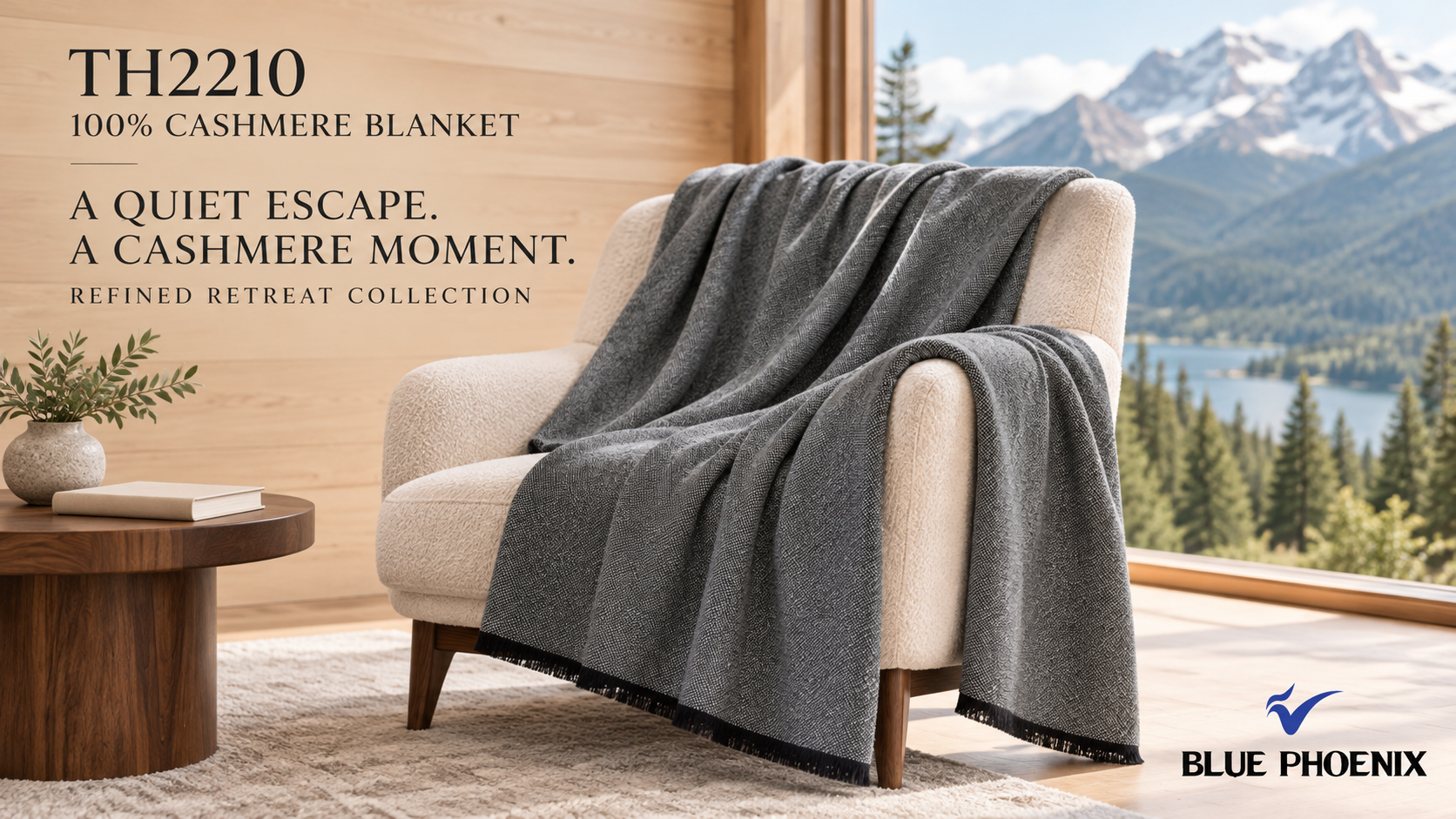
TH2210 Cashmere Blanket
A dark-grey cashmere blanket with understated woven texture offers a refined layer for reading chairs and bedroom interiors.
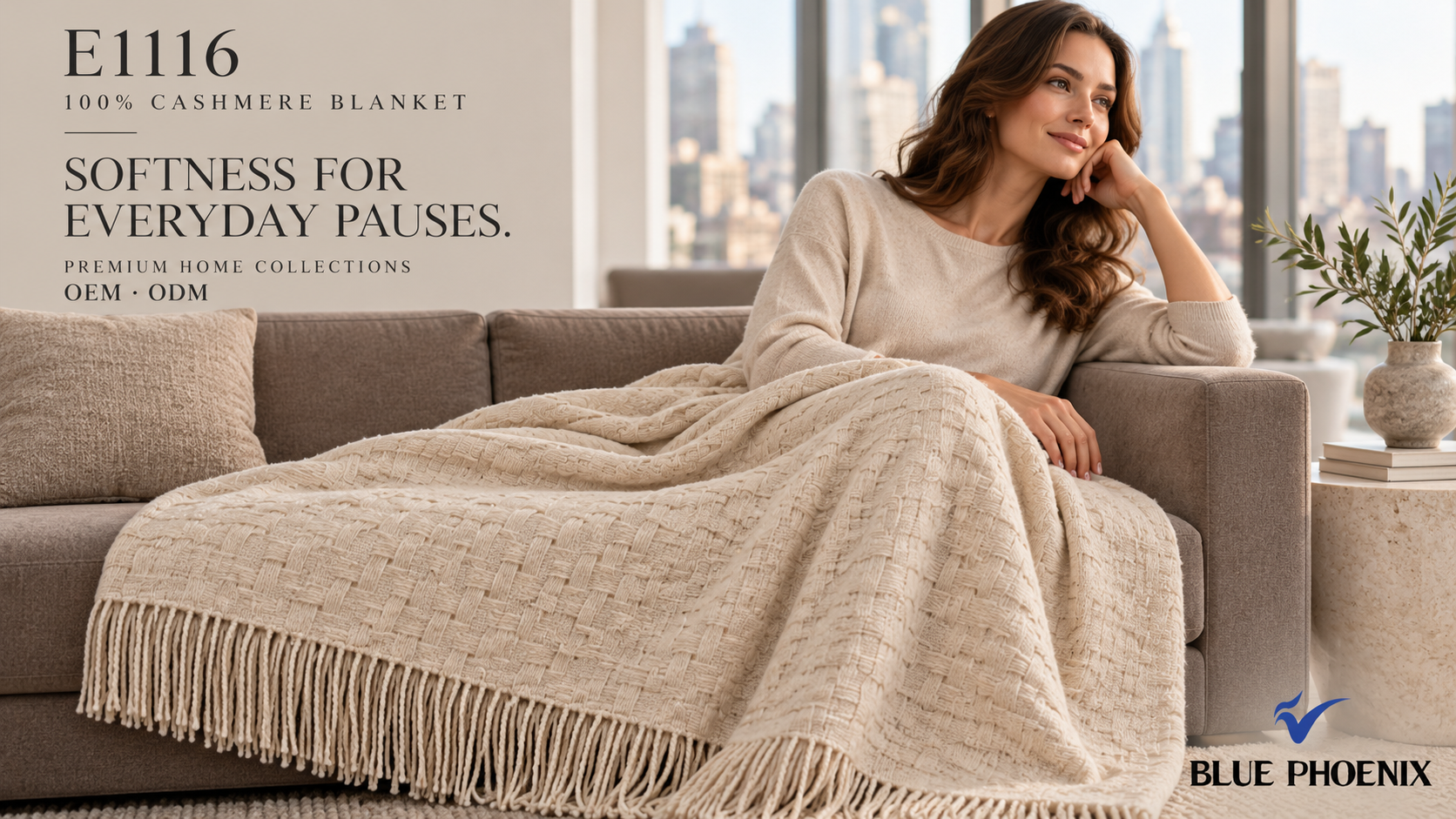
E1116 Textured Cashmere Throw
An ivory textured surface and fringed ends create a distinctive cashmere throw for relaxed living spaces.
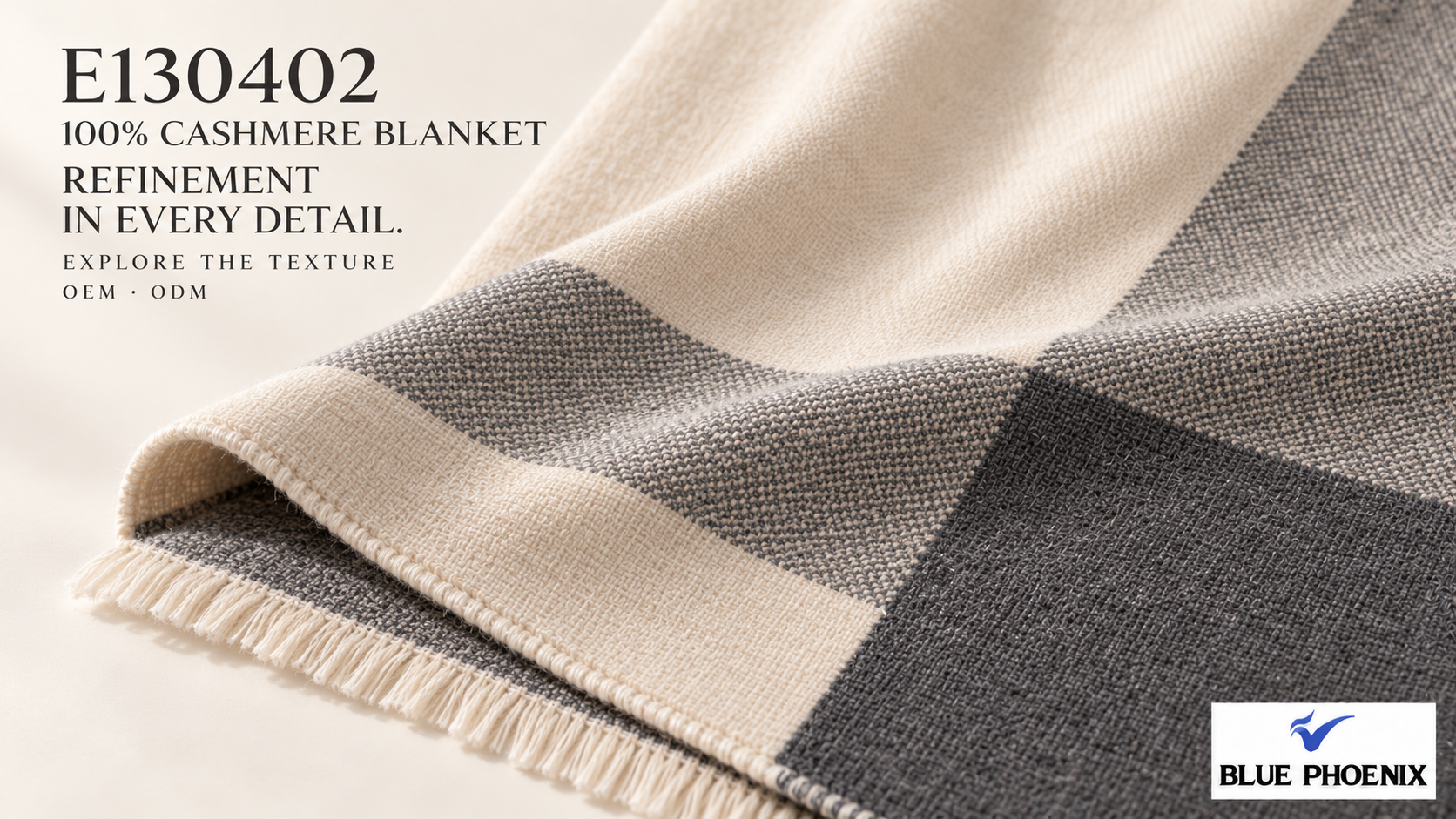
E130402 Woven Cashmere Blanket with Grey Borders
Contrasting grey border bands, fine woven texture and a short fringed edge reveal the blanket’s finishing details.
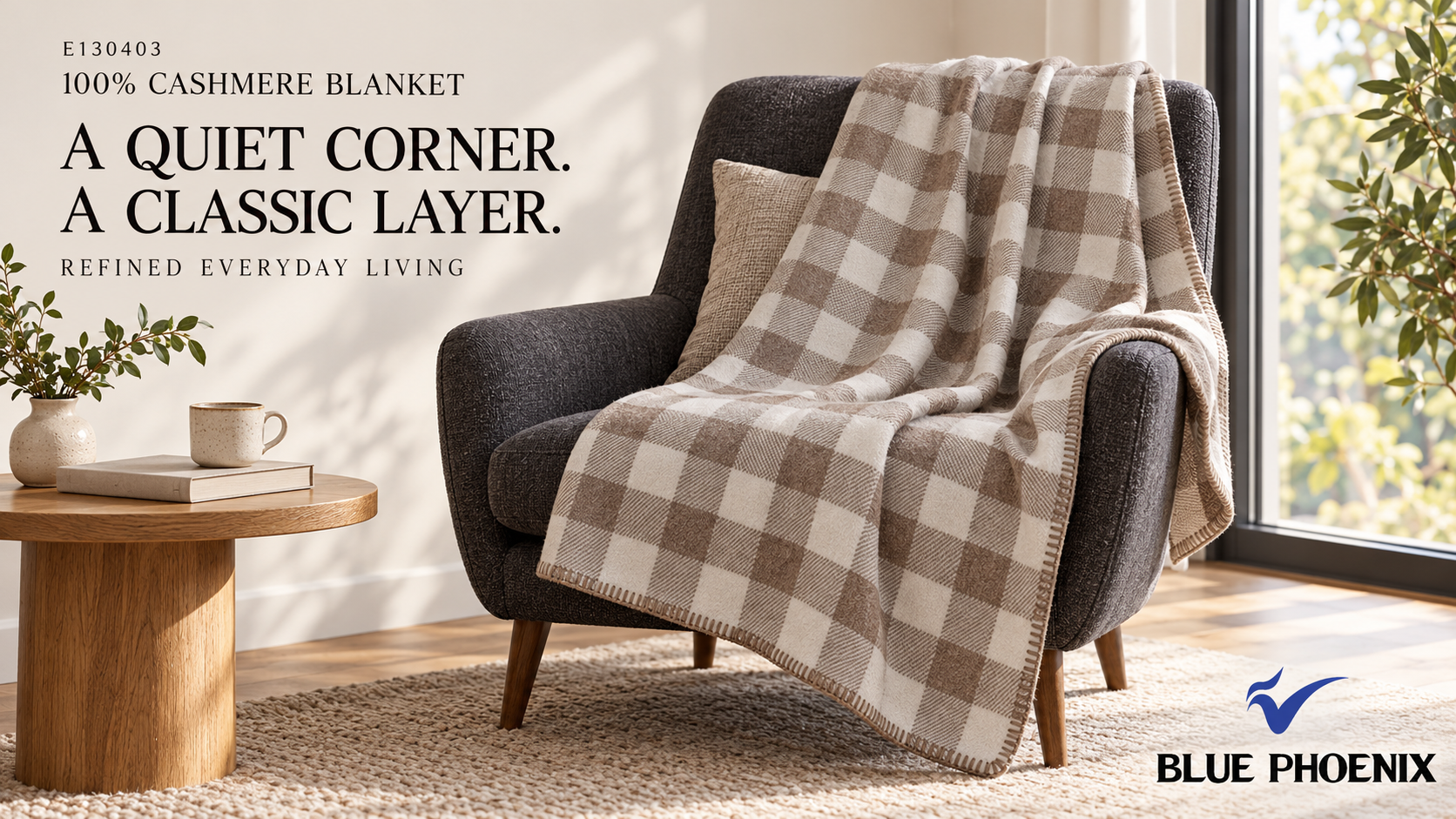
E130403 Natural Undyed Cashmere Throw
Ivory-and-taupe checks, rounded corners and coordinating stitched edges frame a fringe-free throw for everyday interiors.
It is made using cashmere fiber from the fine undercoat of cashmere-producing goats. Confirm whether the fabric is 100% cashmere or a declared blend.
No. Cashmere and sheep wool are different animal fibers and should be identified accurately in product specifications.
No. Cashmere blankets can be woven or knitted, depending on the design.
Yes. A cashmere fabric body with separate silk binding is different from a fabric made with cashmere-and-silk blended yarn.
No. Check the declared composition and request verification when needed.
Review the specification, approved sample and supporting documents. Arrange suitable laboratory analysis where composition verification is required.
The fine undercoat, rather than the coarse outer hair.
No. The material is prepared and made into yarn and fabric.
A process used to separate unwanted coarse hair from the desired fine fiber.
The declared fabric composition and relevant separate finishing components.
A textile containing cashmere mixed with one or more other fibers.
Yes. Record the actual composition in the purchasing specification.
No. Separate binding and blended fabric yarn are different constructions.
Interlacing warp and weft yarns.
Interconnected yarn loops.
No. Pattern and fiber composition are separate characteristics.
Fiber diameter, not blanket thickness or piece weight.
No. GSM describes mass per square metre.
No. Confirm the dye status in the specification.
No. Undyed fiber can still undergo textile preparation and manufacture.
No. Use appropriate verification when composition is a purchasing requirement.
No. Follow the care instructions for the finished product.
Submit the requirement for development review, sampling and quotation.
The tested sample, method, results and relevant scope.
No. Verify the current documentation and its applicability to the order.
Composition, construction, dimensions, target weight, quantity, colors, finishing, care, labels, packaging and destination.
CashmereBlanket, CashmereFiber, PureCashmere, CashmereBlend, WovenCashmereBlanket, KnittedCashmereBlanket, CashmereBinding, BlanketMaterials, WholesaleCashmereBlankets, PrivateLabelBlankets
Compare size, weight, construction and care before selecting a finished blanket.
Read the Cashmere Blanket Selection Guide
Check the care label before choosing a cleaning and drying method.
Read the Cashmere Blanket Care Guide
Explore the connection between material selection, construction, finishing and inspection.
Review woven and knitted cashmere options for premium textile collections.
Compare individual blend compositions against your product brief.
Explore another animal-fiber collection with different designs and bedding formats.
Review yak-fiber product specifications when comparing alternative natural materials.
A cream-ivory knitted design with rectangular textured blocks and ribbed edges. Use it to compare knitted construction with woven cashmere samples.
View E10003 Knitted Cashmere Blanket
A woven cashmere body with separately specified silk satin binding. This model illustrates why fabric composition and edge materials should be described separately.
A dark-grey cashmere option for buyers comparing a restrained woven surface, drape and folded presentation.
An ivory textured throw with fringed ends. Compare its surface relief and finishing with plain woven and ribbed knitted samples.
A light-ground woven design with contrasting grey border bands. Review pattern alignment and perimeter workmanship during sample approval.
View E130402 Woven Cashmere Blanket
An ivory-and-taupe checked design with rounded corners and coordinating stitched edges. Compare its fringe-free finish with fringed and separately bound blankets.
BLUE PHOENIX supports wholesale cashmere blankets, OEM/ODM development and private-label collections for brands, retailers and hospitality buyers.
Send your required composition, woven or knitted construction, dimensions, target weight, colors, edge finish, quantity, care requirements, labels, packaging and delivery destination.
Specify the blanket fabric and any separate binding materials clearly. Sample arrangements, development feasibility and quotation are confirmed against the final purchasing brief.
Website: www.shbluephoenix.com
Email: jamesli@shrainbow.cn
WhatsApp: +86 18017830390
WeChat: bluephoenix66
Learn about cashmere's origin and the fiber characteristics considered when evaluating the material.
Read the CFDA Cashmere Fiber Guide
Explore specialist purchasing information and the role of testing in checking luxury-fiber products.
Read the CCMI Purchasing Guide
Understand how specialist laboratory examination can help distinguish cashmere from other animal fibers.
Read About Cashmere Identification
Review responsible cashmere-production topics. Any certification claim requires current documentation applicable to the relevant supply chain and scope.

Blue Phoenix Blankets dedicated to strict quality control of blankets and scarves products and thoughtful customer service, our custom blankets wholesale products are exported to clients in such countries and regions as United states, Europe, Australia, Russia, Germany, Japan.
Copyright © 2026 Shanghai Rainbow Enterprise Development Co., Ltd. - All Rights Reserved.