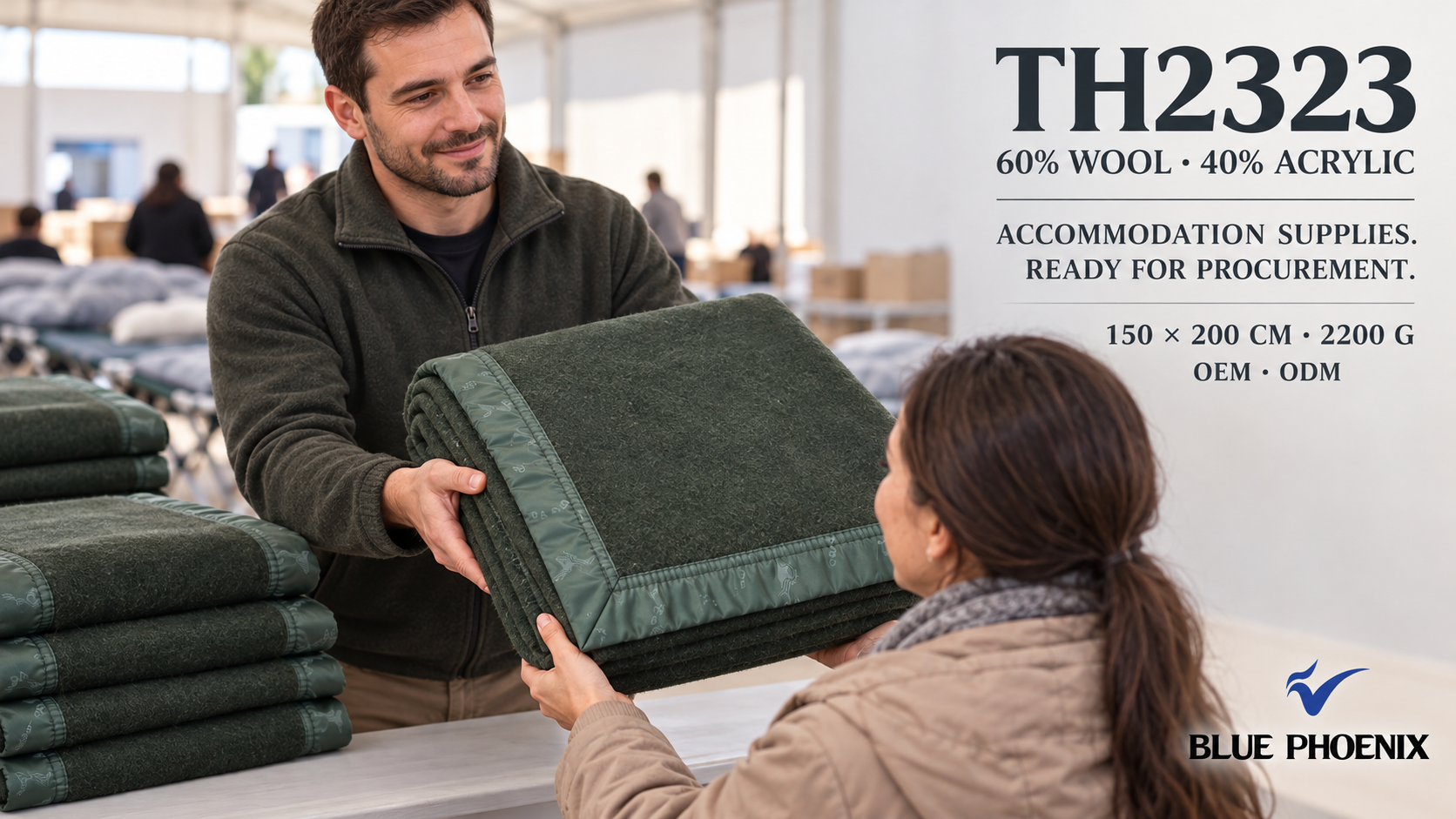
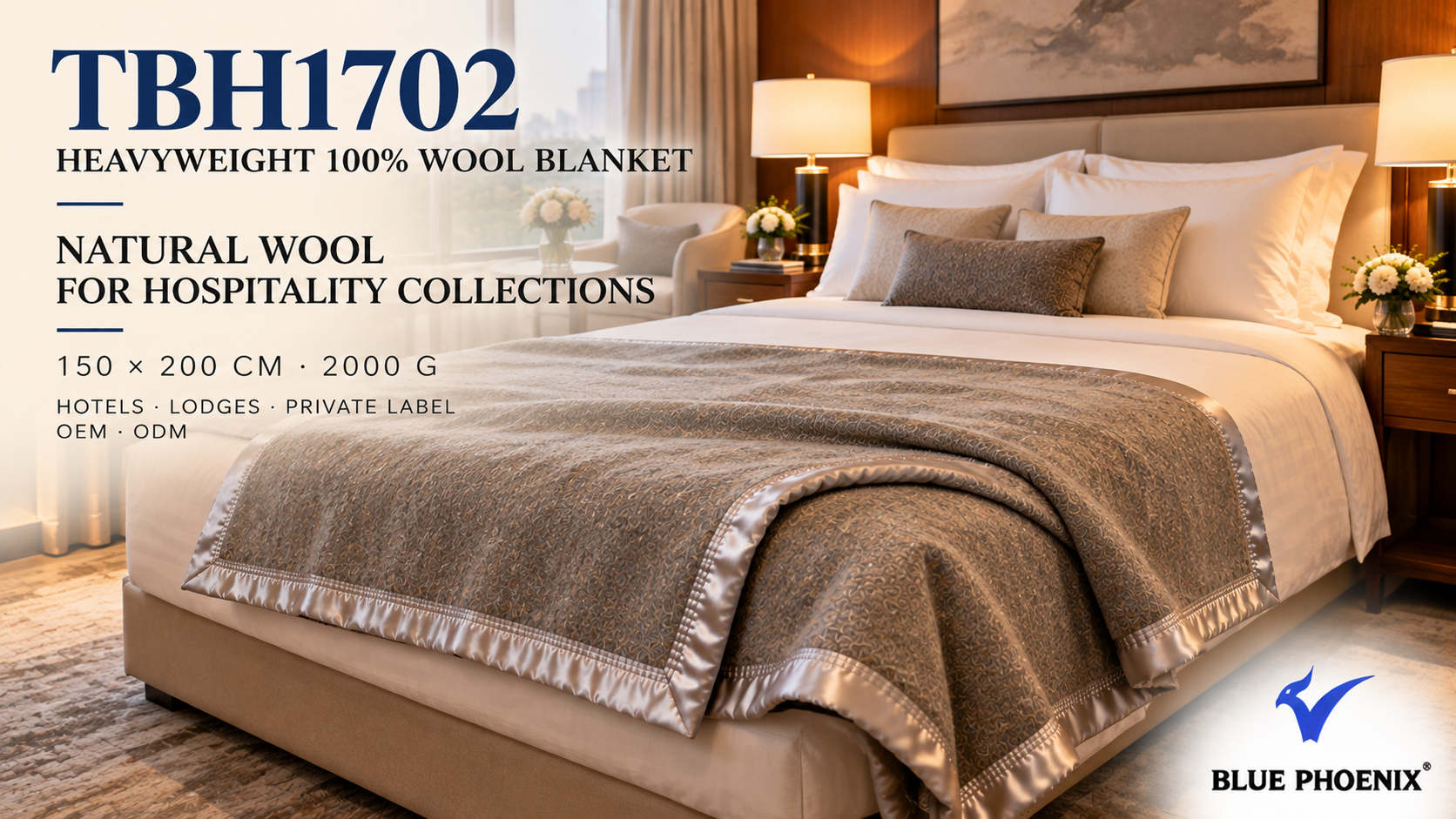
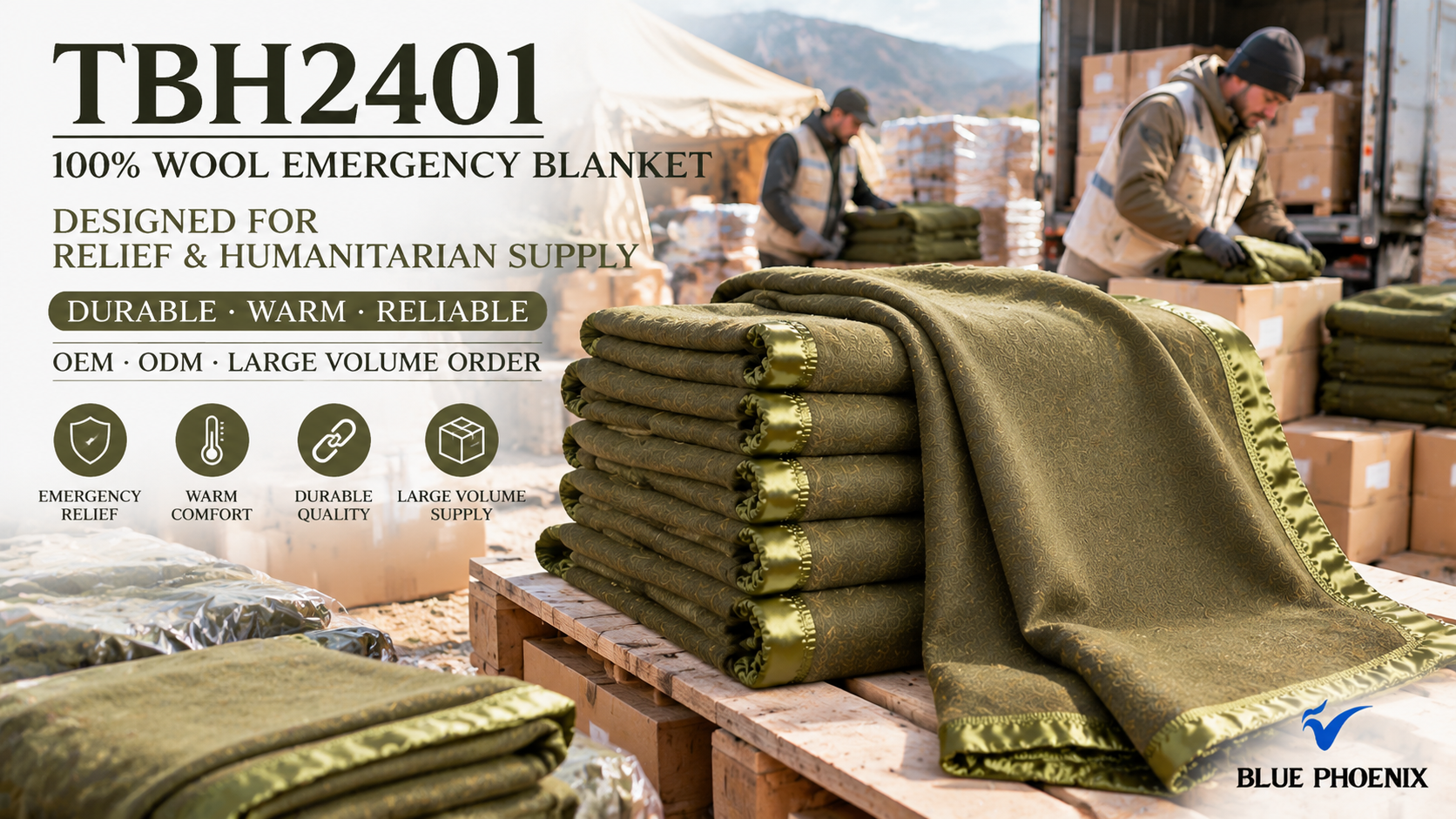
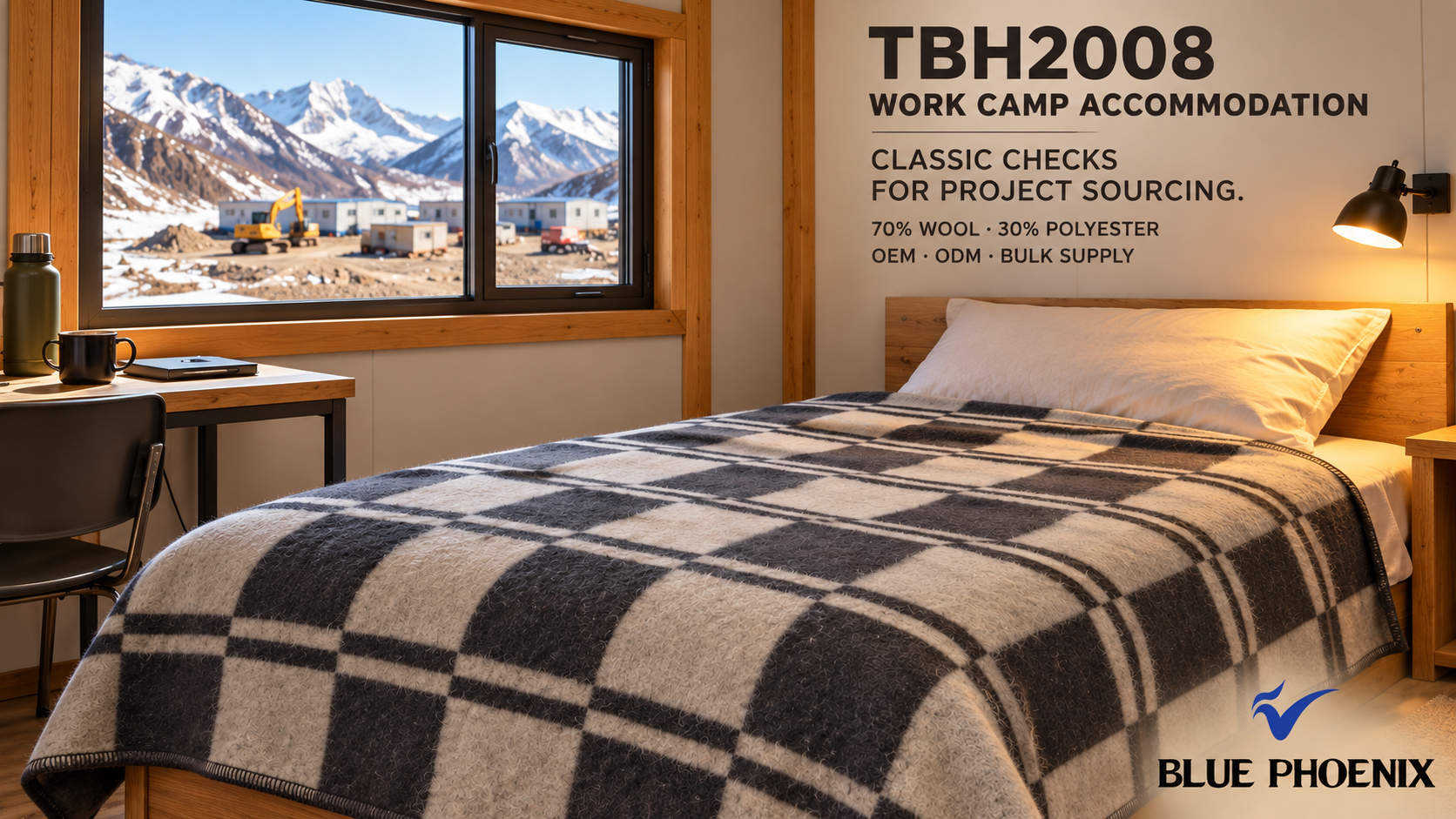
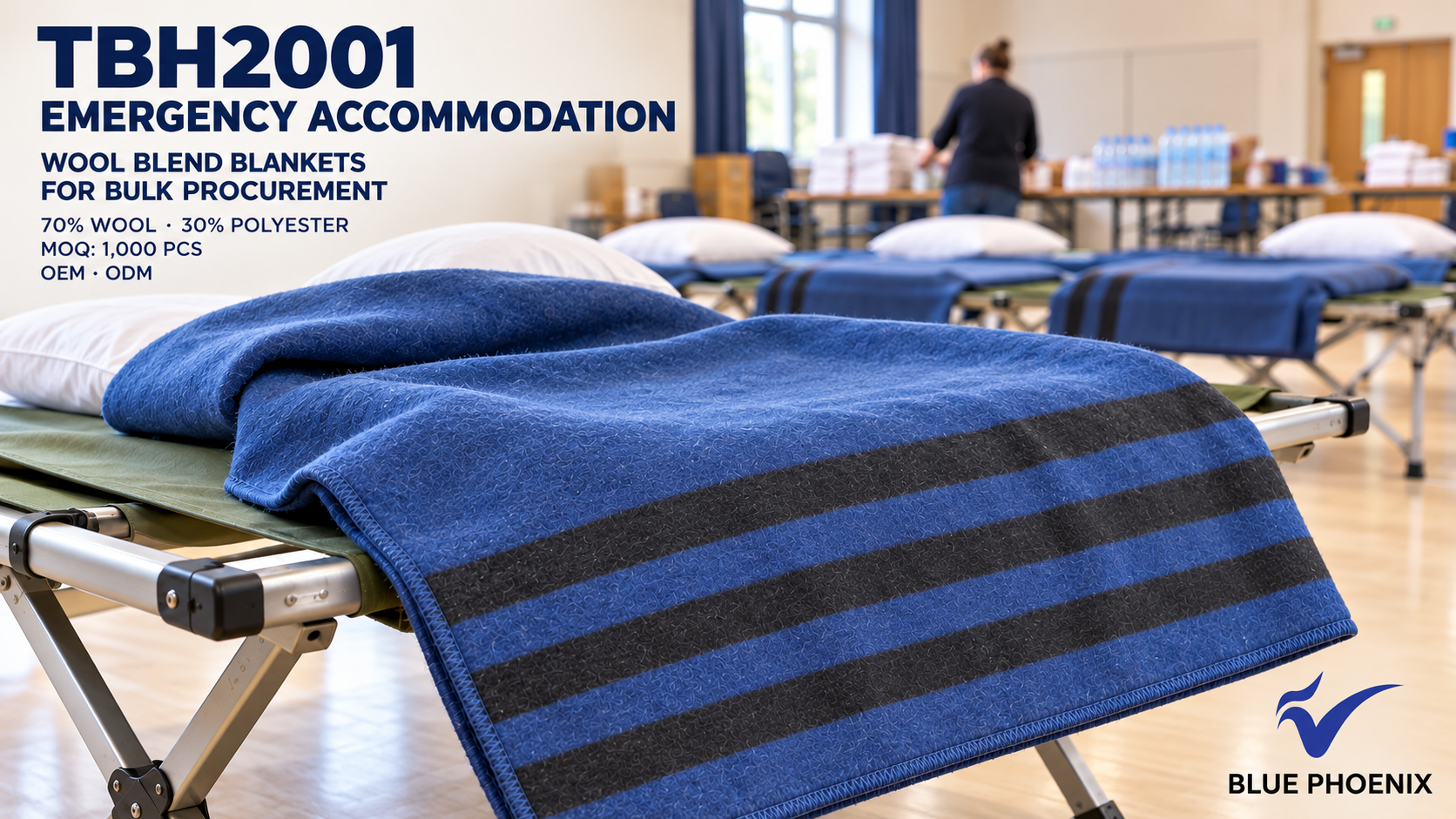
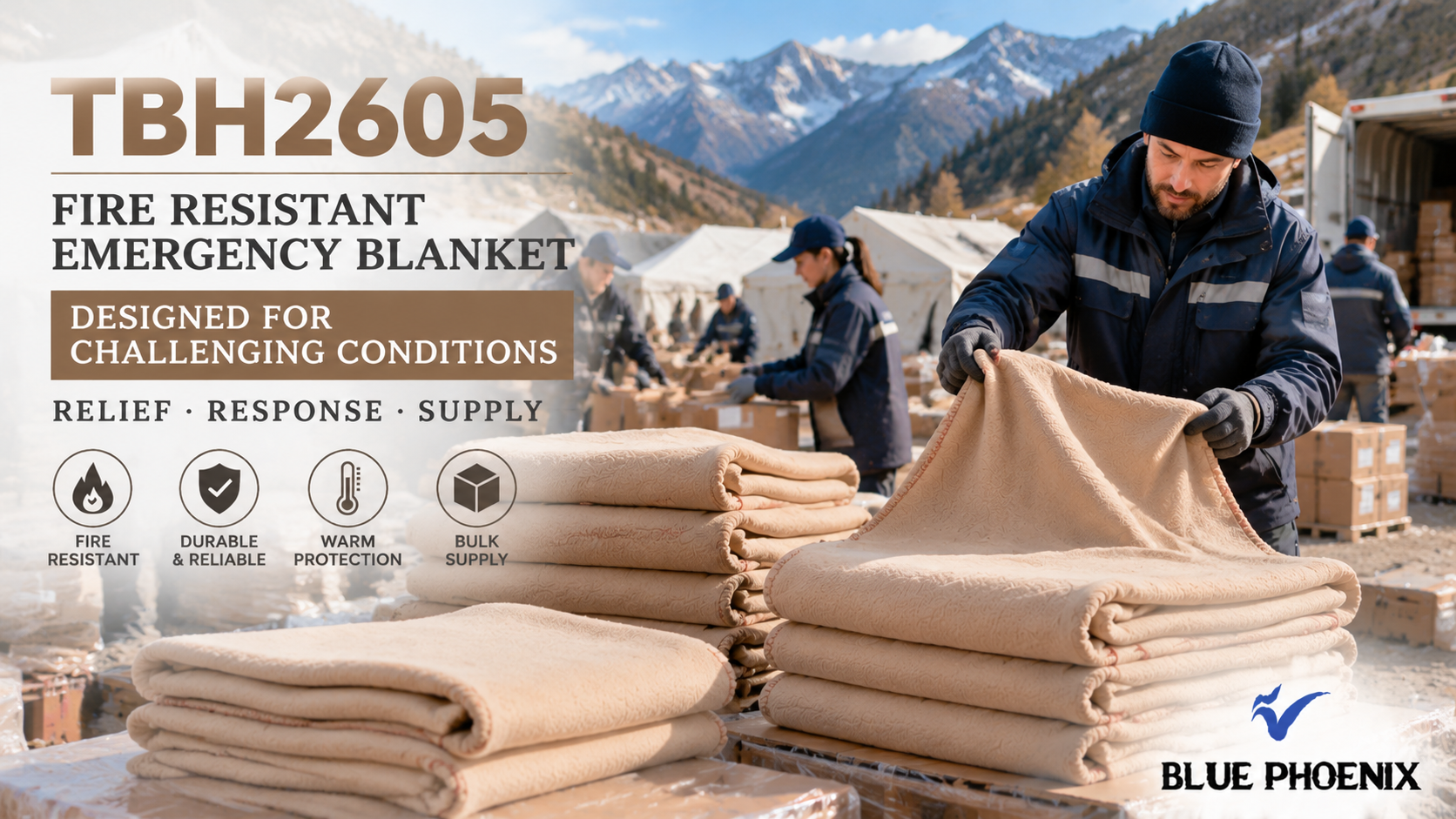
The best military blanket depends on how you travel. For car camping and base-camp accommodation, a substantial wool or wool-blend blanket may be a practical choice. For hiking and backpacking, carried weight and packed volume deserve closer attention. Before choosing, compare the actual blanket dimensions, finished weight, material, edge construction and care requirements.
This guide explains how to evaluate military-style blankets for different outdoor uses and how to prepare a clear specification when buying for retail collections, field accommodation or institutional supply.
Quick Comparison: Which Blanket Fits Your Trip?
| Activity | Main Priorities | What to Check |
|---|---|---|
| Car camping | Coverage, comfort and convenient care | Finished size, surface feel and storage space |
| Base camps and field accommodation | Consistent bedding specifications and handling | Cot coverage, edge finishing, cleaning and packing |
| Day hiking | Manageable weight and pack space | Actual carried weight and intended use during stops |
| Overnight backpacking | Compatibility with the complete sleeping system | Packed volume, total kit weight and documented performance |
What Is a Military Blanket?
A military-style blanket is generally a practical bedding textile associated with field accommodation, barracks, institutional use or outdoor collections. Depending on the product, it may use wool, a wool blend or synthetic fibers, with a plain, striped or checked appearance.
The word “military” does not describe one universal construction. It also does not establish waterproofness, flame resistance, a temperature rating or compliance with a particular procurement standard. These details must come from the individual product specification and any relevant supporting documentation.
Best Military Blankets for Car Camping
Car camping allows more flexibility because the blanket is transported in a vehicle rather than carried throughout the day. This makes larger or heavier blankets worth considering when coverage and surface comfort are priorities.
Start with the sleeping arrangement. A blanket for a camp cot should provide enough usable coverage without excessive fabric trailing onto the ground. A blanket for sitting outside may need different dimensions from one intended for bedding.
Check finished dimensions: Compare the blanket with the cot, mattress or seating area.
Handle a sample: Assess surface feel, flexibility and edge construction.
Review care instructions: Choose a product that fits your cleaning arrangements.
Plan dry storage: Keep the blanket protected during transport and between uses.
Choosing a Blanket for Hiking
For hiking, begin with a simple question: will you carry the blanket for the entire route? A substantial blanket that works well at a vehicle-access campsite may occupy too much space in a day pack.
Request the finished piece weight and packed dimensions rather than relying on photographs or descriptions such as “lightweight.” Check how much room remains for clothing, water and other equipment after the blanket is packed.
If the blanket is intended for short rest stops, consider how it will be carried and kept clean. For trips ending at a fixed camp, it may be more practical to keep heavier bedding at the destination.
Are Military Blankets Suitable for Backpacking?
Some military-style blankets may fit a particular backpacking plan, but suitability depends on the individual product and the rest of the equipment. Many substantial wool and wool-blend blankets are better matched to vehicle transport, fixed accommodation or short carrying distances.
Evaluate the complete load rather than the blanket alone. Compare total pack weight, usable coverage, packed volume and compatibility with your sleeping equipment. Do not infer a cold-weather temperature rating from blanket weight, wool percentage or the word “military.”
Wool, Wool Blend or Polyester?
100% Wool Blankets
A 100% wool blanket may appeal to buyers seeking an all-wool composition and a traditional textile appearance. However, wool blankets vary in yarn, weave, surface finishing, weight and care requirements. Compare approved samples rather than assuming that every all-wool blanket will feel or perform the same.
Wool-Blend Blankets
Wool-blend blankets combine wool with another fiber, such as polyester or acrylic. Record the exact percentages in the purchasing specification. The blend ratio alone does not establish softness, laundering performance or service life; construction and finishing also need evaluation.
Polyester Blankets
Polyester blankets provide another material option for accommodation and supply programs. Compare finished weight, surface construction, cleaning requirements and packaging. Where a project requires a particular performance claim, request documentation relevant to the offered product.
How to Compare Blanket Weight Correctly
GSM and finished piece weight describe different things. GSM is fabric weight per square meter, while finished piece weight describes the weight of an individual blanket.
For example, a 150 × 200 cm blanket has a surface area of 3 square meters. At 500 GSM, the estimated fabric-body weight is 1,500 g. Binding, stitching and production tolerances can affect the finished weight, so buyers should confirm the actual piece weight separately.
For carrying decisions, use finished weight. For textile specification comparisons, review GSM together with size, construction and finishing. Neither figure alone establishes a temperature rating.
Edge Finishing and Practical Details
Satin binding and overlock stitching create different edge constructions and appearances. Neither should be selected on appearance alone. Inspect the actual sample for secure stitching, consistent coverage, neat corners and comfortable handling.
Also check whether labels are readable, whether the blanket folds conveniently and whether its packaging suits the intended distribution method. For repeated orders, retain an approved sample as a reference.
A Checklist for Wholesale Buyers
Retailers, outdoor suppliers and institutional buyers can make quotations easier to compare by sending the same requirements to each supplier:
Intended application and transport method
Exact fiber composition
Finished dimensions and agreed tolerances
Fabric GSM and finished piece weight, where applicable
Color, pattern and surface finish
Binding or overlock construction
Care labels and any required performance documentation
Individual packaging, carton quantities and delivery requirements
Before approving bulk production, review the sample against the agreed specification. Discuss any project-specific testing, labeling and inspection requirements during development.
Conclusion
The best military blanket for camping, hiking or backpacking is the one that fits the intended activity and a clearly defined specification. For car camping and fixed accommodation, coverage and handling may take priority. For hiking and backpacking, actual carried weight and packed volume become more significant.
Compare materials, dimensions, finished weight, edge construction and care instructions together. For bulk sourcing, use an approved sample and a written specification to keep purchasing decisions consistent.