High-Quality Wholesale Blankets Manufacturer & Supplier in China with custom design service - Blue Phoenix Blankets
Language
Two thin blankets are often the more flexible choice when you want adjustable layers. One thick blanket may be more convenient when you prefer a single covering with a consistent feel. Neither option is automatically warmer, lighter or more breathable.
The better choice depends on the actual blankets: their materials, construction, dimensions, combined weight and care requirements. Bedroom conditions and personal preferences also matter.
This guide compares two thin blankets vs. one thick blanket for everyday bedding, seasonal layering, hotel purchasing and private-label collection development.
Adding a second blanket can increase insulation, but the result depends on the complete arrangement. Fabric structure, coverage, gaps, compression and the way the layers sit together all influence performance.
Two thin blankets can provide a useful additional layer of warmth. However, they should not automatically be described as warmer than every thick blanket. A substantial, well-suited single blanket may provide more insulation than a particular pair of lighter products.
Blanket count is not a warmth rating. Compare actual products under similar conditions rather than relying on the number of layers.
The clearest advantage of layering blankets is adjustment. You can use one blanket on a milder night and add the second when more warmth is needed.
This can be practical in rooms where temperatures vary between seasons or where users prefer to change their bedding arrangement without replacing the entire set.
A suitable lightweight blanket may be used separately on a sofa, in a reading chair or as an additional bed layer. Two coordinated blankets can therefore serve more than one purpose.
Check dimensions carefully. A small decorative throw may not provide the same coverage as a full bed blanket, even if its material feels warm.
Two individual pieces may be easier to move or fold separately. However, do not assume that their combined storage volume or cleaning cost will be lower.
Each blanket has its own care requirements. A thin wool blanket may still require professional cleaning.
A thick bed blanket offers one main covering to position and adjust. This may suit users who prefer a straightforward bed setup or find that multiple layers shift during the night.
Some users enjoy a more substantial drape. A suitable heavier blanket may provide the feel they want without combining separate pieces.
However, weight and warmth are different characteristics. A heavier blanket is not automatically more insulating, and a substantial bed blanket should not be confused with a specially designed weighted blanket.
For hotels or retail collections, one blanket can offer a simpler specification to document and replenish. Buyers still need to confirm its dimensions, construction, care and packaging.
The convenience of one item should be evaluated alongside the cost and practicality of maintaining it.
| Buying Factor | Two Thin Blankets | One Thick Blanket |
|---|---|---|
| Adjustment | One layer can be removed or added. | One main covering to manage. |
| Warmth | Depends on both products and their arrangement. | Depends on material, structure and coverage. |
| Weight | Assess the combined weight. | Assess the finished piece weight. |
| Cleaning | Two products with separate care requirements. | One product that may require greater handling capacity. |
| Storage | Two pieces; combined volume varies. | One piece; folded bulk varies. |
| Durability | Depends on each blanket’s construction and use. | Thickness alone does not establish durability. |
Two thin blankets are not automatically more breathable than one thick blanket. Air permeability and moisture behavior depend on the materials and fabric structures in the complete bedding system.
Layering provides an adjustment advantage: removing a blanket changes the amount of covering. That is different from proving that two layers inherently allow more airflow.
If the bed feels too warm, evaluate the total covering, room conditions and individual comfort. Adding another layer should not be presented as a guaranteed way to reduce overheating.
Wool blankets are available in many woven and brushed constructions. Wool’s natural crimp helps create insulating air spaces, while its interaction with moisture contributes to comfort.
However, a lightweight wool throw and a dense wool bed blanket should not be treated as interchangeable. The finished construction remains important.
Cotton, polyester and blended blankets also vary widely. A loose knit, a dense weave and a pile fabric can behave differently even when products share the same fiber description.
Before comparing blanket systems, record:
Composition: The declared materials of each product.
Construction: Woven, knitted, pile or another specified structure.
Dimensions: Actual width and length.
Weight: Piece weight and GSM where available.
Care: The approved cleaning and drying process.
These details make comparisons more useful than descriptions such as “thin,” “thick” or “extra warm” alone.
GSM means grams per square meter. It measures fabric mass per unit area, not thermal insulation directly.
For example, two blankets listed at 250 GSM each have a combined nominal fabric mass of 500 grams per square meter where they overlap. This does not prove that they provide the same warmth, thickness or feel as one 500 GSM blanket.
Different yarns, structures and finishing processes can produce different results. Buyers who require a thermal performance specification should agree on an appropriate evaluation method rather than using GSM as a substitute.
Start with suitable bed coverage. Check that the main blanket is large enough for the intended bed and user.
Add a compatible layer. Choose another blanket that drapes comfortably without excessive bunching.
Review combined weight. Two lightweight products may feel surprisingly substantial together.
Check movement. Assess whether the layers slide, pull or become difficult to adjust.
Adjust to comfort. Remove a layer when less covering is preferred.
There is no universal rule that every wool blanket must be placed above or below another blanket. Use an arrangement that suits the fabrics, care requirements and personal comfort.
Do not assume thinner blankets are always machine washable or that a thick blanket is always dry-clean-only. Follow the care label for each finished product.
Compare the cost of maintaining the complete arrangement. Two pieces may allow separate replacement, but they also create two items to label, track, clean and store.
Likewise, a thick blanket is not automatically more durable. Yarn, weaving, edge construction, finishing, friction and cleaning all influence service life.
Blanket value comes from suitability and practical use, not thickness alone.
For hotel blanket sourcing, decide whether the room requires one standard blanket, an optional additional layer or a coordinated seasonal system.
Evaluate guest comfort, bed coverage, laundry compatibility, storage space and replenishment. Trial the proposed arrangement before ordering in bulk.
A collection may include both lightweight wool blankets and substantial bed blankets, provided their intended uses are clearly explained.
For private-label blankets, distinguish decorative throws from full bed coverings. Product photography should show realistic coverage, while descriptions should state actual dimensions and care requirements.
For wholesale wool blankets, define the required material, dimensions, weight, construction, edge finish, labels and packaging.
If two products will be sold or used together, approve the pair as a system. Compare their combined feel, appearance, handling and cost rather than approving each one in isolation.
Choose two thin blankets when adjustable layering is your priority. Choose one thick blanket when you prefer a single covering that provides the required comfort and coverage.
Neither arrangement is automatically warmer, more breathable, easier to clean or more durable. Evaluate the actual products, their combined weight and their maintenance requirements.
For homes, hotels and private-label collections, the best blanket arrangement is the one that fits the intended conditions and is practical to use and maintain.
.
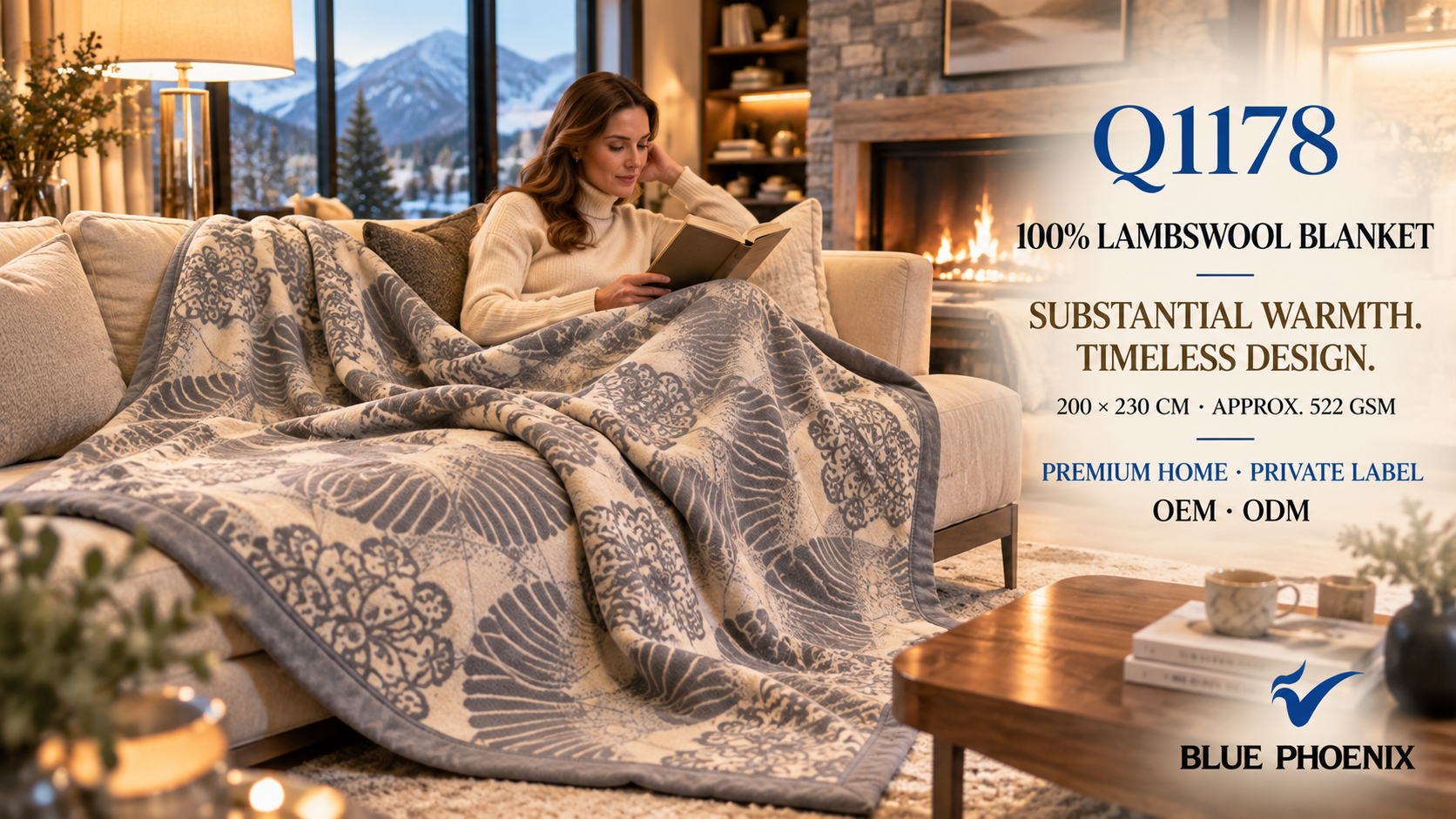
Q1178 Lambswool Jacquard Bed Blanket
A substantial 100% lambswool blanket with grey-and-ivory jacquard and grey suede binding for comfortable home settings and premium bedding collections.
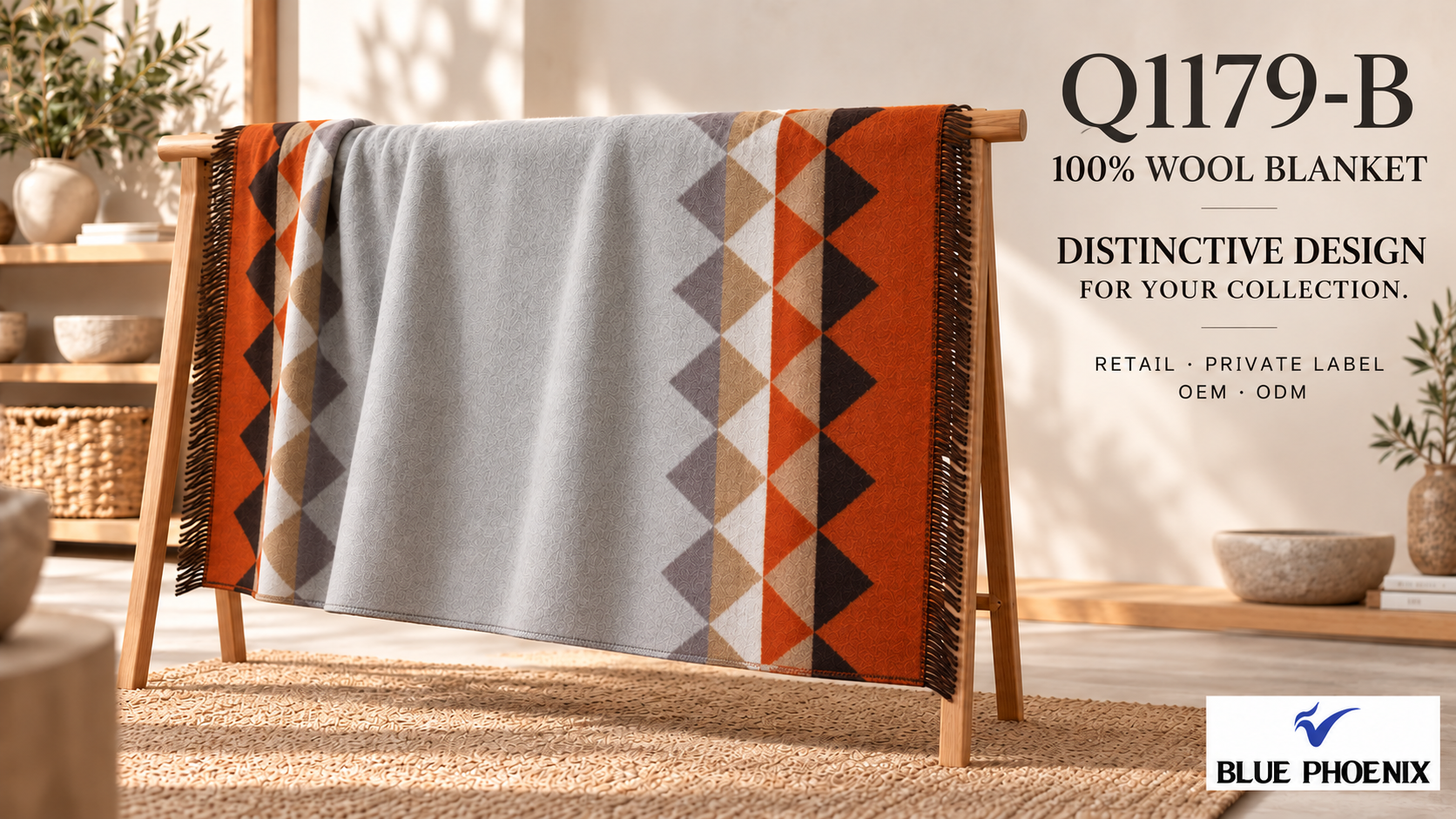
Q1179-B Wool Geometric Throw Blanket
A 100% wool throw with a light-grey center, orange geometric end bands and dark fringe for decorative layering and private-label retail collections.
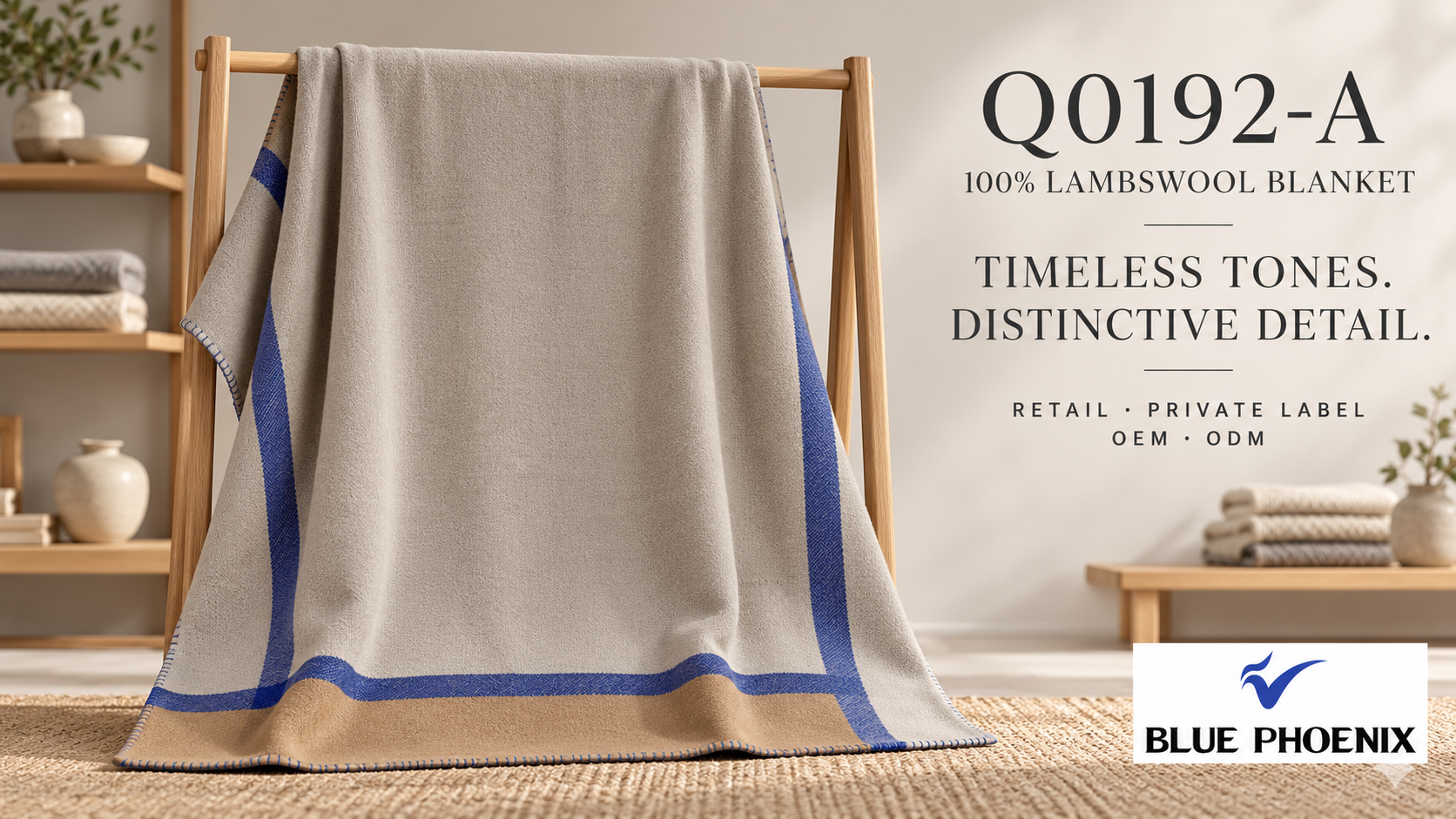
Q0192-A Lambswool Bed Blanket
A 100% lambswool blanket with neutral tones, blue border lines and camel-colored bands for coordinated bedding and natural-fiber retail collections.
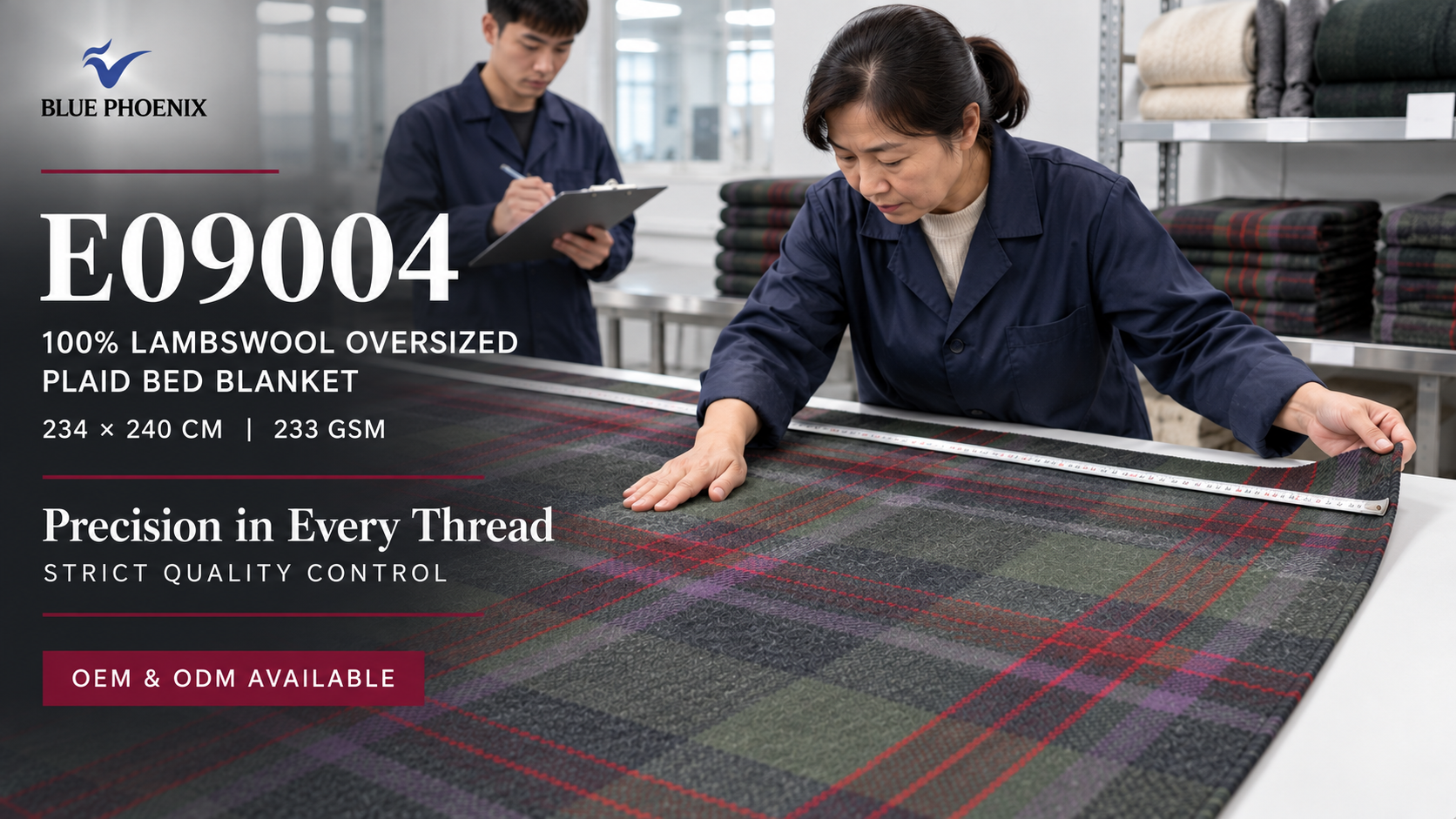
E09004 Oversized Lambswool Plaid Blanket
An oversized lambswool plaid blanket offering generous bed coverage, with dark green, charcoal and muted-purple tones accented by fine burgundy lines.
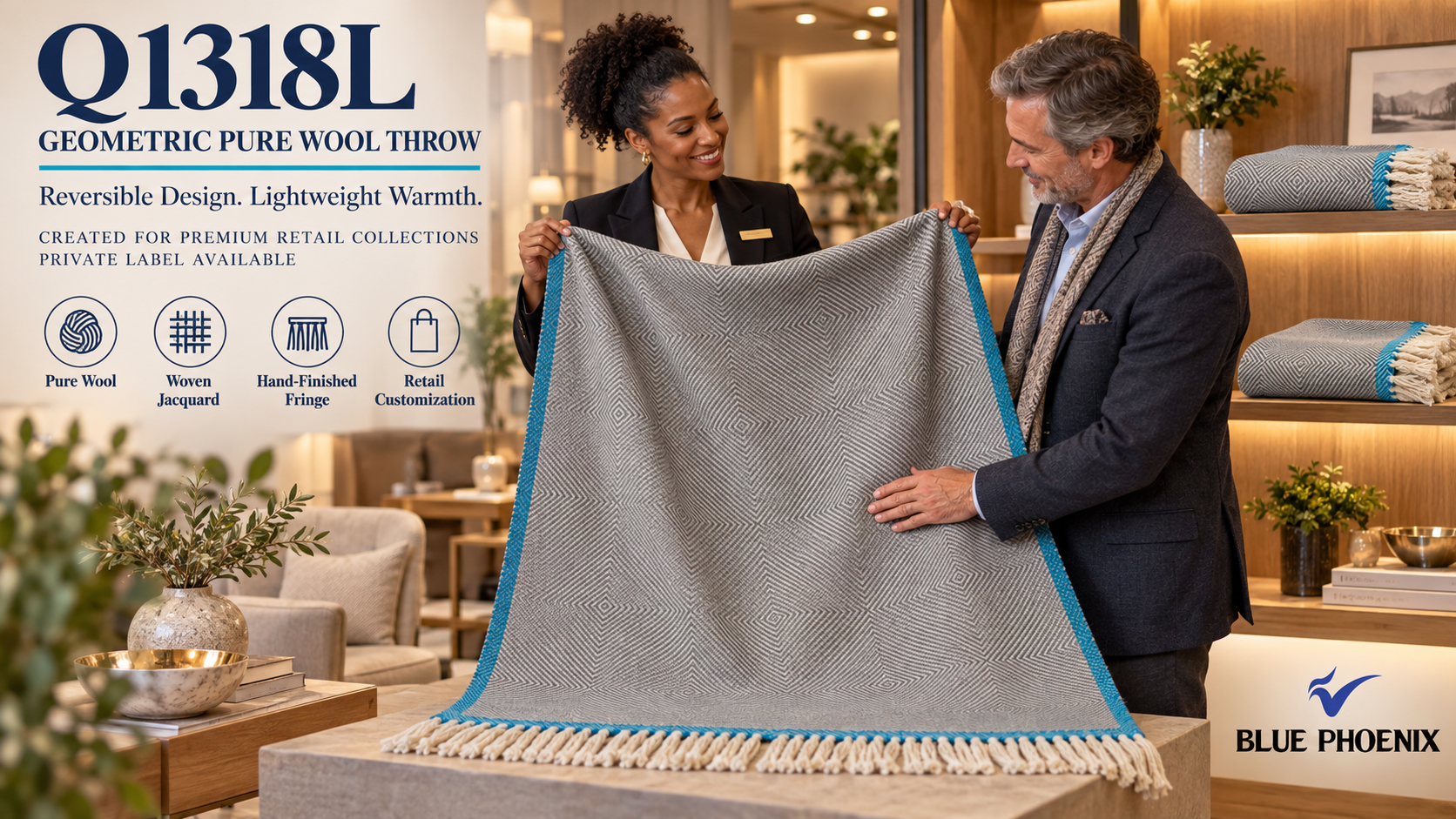
Q1318L Wool Geometric Jacquard Throw
A lightweight 100% wool jacquard throw with a grey geometric design, contrasting blue border and ivory fringe for flexible decorative layering.
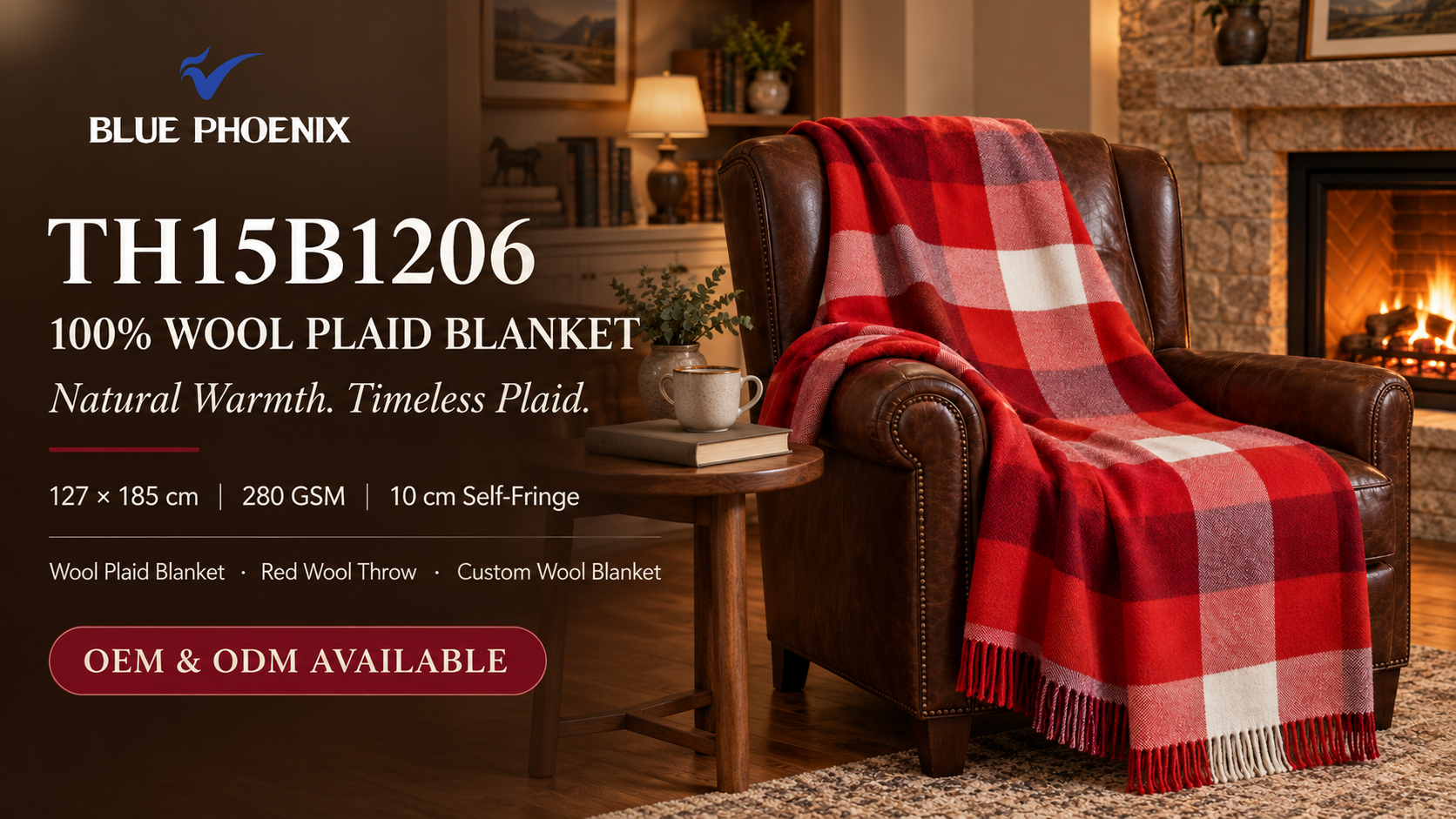
TH15B1206 Wool Plaid Fringe Blanket
A 100% wool blanket with red, burgundy and natural-white plaid and traditional fringe for reading corners, seasonal interiors and retail collections.
Two thin blankets offer more adjustment because one layer can be removed. One thick blanket provides a simpler arrangement. The better choice depends on the actual products, bedroom conditions and user preferences.
They can be warmer than some single blankets, but there is no universal result. Material, construction, coverage and the way the layers sit together influence insulation.
Not automatically. Breathability depends on the materials and fabric structures of the whole arrangement. The ability to remove a layer is an adjustment benefit, not proof of greater airflow through two layers.
Yes, if their combined weight, coverage and feel suit the user. Check that the layers remain comfortable and manageable, and follow each product’s care instructions.
Thickness alone does not establish durability. Yarn, fabric construction, finishing, edges, cleaning and use all affect service life.
Hotels should evaluate the proposed bedding system against room conditions, guest comfort, laundry procedures, storage and replacement planning. Approve samples before bulk purchasing.
Q1: What is the main advantage of two thin blankets?
A: One layer can be added or removed as covering needs change.
Q2: What is the main advantage of one thick blanket?
A: It provides one main covering to position and manage.
Q3: Does blanket count determine warmth?
A: No. Materials, construction, coverage and arrangement also matter.
Q4: Does a heavy blanket always provide more insulation?
A: No. Weight and thermal performance are different characteristics.
Q5: What does GSM measure?
A: Fabric mass in grams per square meter.
Q6: Are two 250 GSM blankets equivalent to one 500 GSM blanket?
A: Their nominal fabric mass adds up where they overlap, but warmth, bulk and feel may differ.
Q7: Can a decorative throw replace a bed blanket?
A: Only if its actual dimensions and performance meet the required use.
Q8: Are thin blankets always machine washable?
A: No. Check each finished product’s care label.
Q9: Does using two blankets reduce cleaning costs?
A: Not necessarily. Compare the maintenance cost of both pieces.
Q10: Do two thin blankets take less storage space?
A: Not automatically. Compare their combined folded volume.
Q11: Can layered blankets slide during use?
A: Yes. Assess the interaction of the actual fabrics and finishes.
Q12: Must wool always be the top layer?
A: No. Choose an arrangement that suits the products and user.
Q13: Is a thick blanket a weighted blanket?
A: Not necessarily. A specially weighted product is a different category.
Q14: Can two blankets support seasonal use?
A: They can provide separate and combined options when the products suit the conditions.
Q15: Does one thick blanket guarantee less overheating?
A: No. Comfort depends on the complete bedding system and surroundings.
Q16: What should buyers check about bed coverage?
A: Actual width, length and the desired drape on the intended bed.
Q17: How should brands describe lightweight blankets?
A: State the dimensions, construction, weight and intended use clearly.
Q18: What should hotels evaluate before ordering?
A: Guest comfort, coverage, laundry compatibility, handling and storage.
Q19: Should a two-blanket combination be sampled together?
A: Yes. Review the combined feel, weight, appearance and movement.
Q20: What makes a blanket system worthwhile?
A: Suitable comfort, practical care and a clear fit with its intended use.
#BlanketLayering #TwoThinBlankets #ThickBlanket #WoolBlankets #LightweightWoolBlanket #WoolBedBlanket #HotelBlankets #WholesaleBlankets #PrivateLabelBlankets #BluePhoenix
Explore practical considerations for assessing changes in wool blanket feel and choosing an appropriate care approach.
Review why care instructions and sample evaluation matter when selecting blankets for retail or hospitality use.
Wool Blankets— Compare different constructions for bed layering, decorative use and collection development.
Cashmere Blankets— Explore another natural-fiber direction for premium bedding and gifting collections.
Yak Down Blankets— Review yak-fiber products for a broader natural-fiber assortment.
Camel Blankets— Compare individual camel-fiber blanket specifications for your intended collection.
Use these products as starting points for sample comparison. They are not presented as having equivalent warmth, dimensions or care requirements.
View Q1178 Lambswool Jacquard Bed Blanket— A substantial bed-blanket direction for buyers evaluating a single main covering.
View Q1179-B Wool Geometric Throw Blanket— A decorative throw direction for assessing accent layering and interior styling.
View Q0192-A Lambswool Bed Blanket— Review its specification when comparing bed coverage, drape and coordinated design.
View E09004 Oversized Lambswool Plaid Blanket— An oversized option for projects where generous bed coverage is a priority.
View Q1318L Wool Geometric Jacquard Throw— A decorative wool throw to compare with more substantial bedding constructions.
View TH15B1206 Wool Plaid Fringe Blanket— A traditional plaid direction for seasonal retail and coordinated interior collections.
Choosing between a substantial bed blanket and a coordinated layering collection? Contact BLUE PHOENIX to discuss wholesale wool blankets, hospitality sourcing and private-label blanket development.
Provide your intended use, required dimensions, material preference, target weight, estimated quantity, care requirements, packaging and delivery destination.
Company: Shanghai Rainbow Enterprise Development Co., Ltd.
Brand: BLUE PHOENIX
Website:www.shbluephoenix.com
Email:jamesli@shbluephoenix.com
WhatsApp:+86 18017830390
WeChat: bluephoenix66

Blue Phoenix Blankets dedicated to strict quality control of blankets and scarves products and thoughtful customer service, our custom blankets wholesale products are exported to clients in such countries and regions as United states, Europe, Australia, Russia, Germany, Japan.
Copyright © 2026 Shanghai Rainbow Enterprise Development Co., Ltd. - All Rights Reserved.