High-Quality Wholesale Blankets Manufacturer & Supplier in China with custom design service - Blue Phoenix Blankets
Language
A wool blanket can be a better choice for flexible layering and a visible woven textile finish. A duvet can be a better choice for someone who prefers a filled bedding construction. Neither category is automatically warmer, lighter, more comfortable or easier to maintain.
The decision depends on the actual products: their materials, construction, dimensions, weight, care requirements and intended use. A substantial wool bed blanket should not be compared with a lightweight decorative throw as though they provide the same coverage and performance.
It is also important to distinguish material from product type. Wool describes a fiber, while duvet describes a bedding construction. A duvet can contain natural fibers, including wool or camel hair, rather than only down or synthetic filling.
This guide compares wool blankets vs. duvets and explains what home users, retailers, hotels and private-label bedding buyers should evaluate.
A wool blanket uses wool-containing fabric as its main body. The fabric may be woven or knitted and can have a plain, checked, striped or jacquard design.
Common edge finishes include folded hems, blanket stitching, binding and fringe. These details contribute to appearance, handling and product positioning.
A wool bed blanket can be used as a main covering or an additional layer, depending on its specification and the surrounding conditions.
A duvet contains filling within an outer shell. The filling, shell fabric and stitching or quilting should be specified separately.
Many duvets are used inside removable duvet covers. However, a separate duvet cover is different from the shell enclosing the filling, and not every zippered opening indicates a removable-shell system.
For accurate purchasing, identify the actual construction rather than relying on the product name alone.
There is no universal warmth ranking between wool blankets and duvets. A lightweight blanket may provide less insulation than a particular duvet, while a substantial blanket may suit conditions where a lighter duvet does not.
Relevant factors include:
Material composition.
Fabric or filling structure.
Thickness and loft.
Finished dimensions and coverage.
The bedding layers used together.
Room temperature and individual preferences.
Weight alone does not establish warmth. For blankets, GSM describes fabric mass per unit area. For duvets, net filling weight and total finished weight are different measurements. These figures should not be treated as interchangeable insulation ratings.
A woven blanket and a filled duvet can feel different even when both suit the same room.
A woven wool blanket may appeal to someone who enjoys a defined textile surface and a closer drape. A duvet may appeal to someone who prefers the feel of a filled covering.
However, not every duvet is highly lofty, and not every wool blanket is heavy. Evaluate the actual sample rather than assigning one feel to an entire category.
For shared bedding, also consider whether the covering moves comfortably when either person changes position. Dimensions and drape can matter as much as fiber content.
Wool’s interaction with moisture contributes to its appeal in bedding. Nevertheless, the comfort of a finished bed depends on the complete arrangement.
A wool blanket should not be described as guaranteeing that a sleeper will never overheat. A duvet’s filling, shell and separate cover also influence its feel in use.
Compare products in a realistic arrangement. If a duvet will be used inside a cover, include that cover during evaluation. If a blanket will be used over a sheet, assess it in that configuration.
| Factor | Wool Blanket | Duvet |
|---|---|---|
| Construction | Wool-containing fabric with a finished perimeter. | Filling enclosed within an outer shell. |
| Appearance | The blanket’s weave, pattern and edges can remain visible. | Presentation depends on the shell or separate duvet cover. |
| Warmth | Depends on fabric structure, thickness and coverage. | Depends on filling, loft, shell and coverage. |
| Care | Follow the finished blanket’s care label. | Check the filled product and any separate cover individually. |
| Layering | Can serve as a main covering or additional layer. | Can serve as a main covering within a coordinated bedding system. |
| Buying specification | Composition, construction, dimensions, weight and edge finish. | Filling, shell, dimensions, filling weight, quilting and finishing. |
Neither category is automatically easier to maintain.
Some wool blankets permit a specified washing process; others require professional cleaning. A washable wool model does not establish washability for other wool products.
For a duvet, distinguish between washing the removable cover and cleaning the filled insert. A washable cover does not mean the insert can be cleaned using the same process.
Always follow the approved instructions for each component. A cotton shell alone does not establish that a complete filled duvet is machine washable.
Before purchasing, consider equipment capacity, drying arrangements, professional-cleaning availability and the practical cost of care.
A wool blanket can replace a duvet when it provides suitable coverage and comfort for the intended conditions. This should be assessed through actual use rather than a fixed rule.
A decorative throw may work as an accent but be too small for full bed coverage. Conversely, a substantial bed blanket may be more appropriate as the main covering.
Check the mattress dimensions and desired side drop. Size names such as queen or king vary between markets, so exact measurements are more useful.
Yes. A blanket can provide an optional additional layer or a decorative bed-end finish.
Review the combined warmth and weight. Adding a blanket should be a deliberate adjustment, not an assumption that more bedding always improves comfort.
Also check whether the layers stay in place and remain easy to arrange. A coordinated bedding system should be practical to handle as well as attractive in photographs.
BTH2502 is a camel hair duvet with 100% camel hair filling and a 100% cotton shell. Its filling retains its natural undyed color.
This illustrates why the comparison should not be framed as “natural wool blanket versus synthetic duvet.” A filled duvet can also be developed around natural fibers.
The filling and shell remain separate specification items. Buyers should confirm finished dimensions, net filling weight, total finished weight and approved care instructions before ordering.
BTH2502 should not be described as a sheep-wool blanket. Its camel hair filling and quilted construction represent a different product direction for natural-fiber bedding collections.
Retailers can offer both wool bed blankets and natural-fiber duvets when each product has a clear purpose. Explain construction, dimensions, care and intended use accurately.
A range can include substantial bed blankets, lighter layering blankets, reversible woven designs and filled duvets. This gives customers meaningful alternatives instead of several products with the same description.
For hotel bedding, evaluate guest comfort alongside laundry compatibility, bed-making procedures, storage and replenishment.
Test the proposed product in the intended room setup and review maintenance before approving a bulk order. A premium material name does not establish compatibility with every commercial laundry operation.
For private-label bedding, start with a purchasing brief covering the target customer, material, dimensions, desired feel, care requirements, quantity and packaging.
Approve representative samples and keep the final specifications linked to labels and product descriptions. Compare quotations on equivalent requirements rather than product names alone.
A wool blanket is better when its woven feel, visible design and layering flexibility suit the user. A duvet is better when the preferred solution is a filled covering with an appropriate shell and filling specification.
Neither category wins automatically on warmth, comfort, cleaning or value. Compare actual construction, coverage, weight and maintenance.
For home users, hotels and bedding brands, the best choice is a clearly specified product that suits the intended conditions and is practical to use and care for.
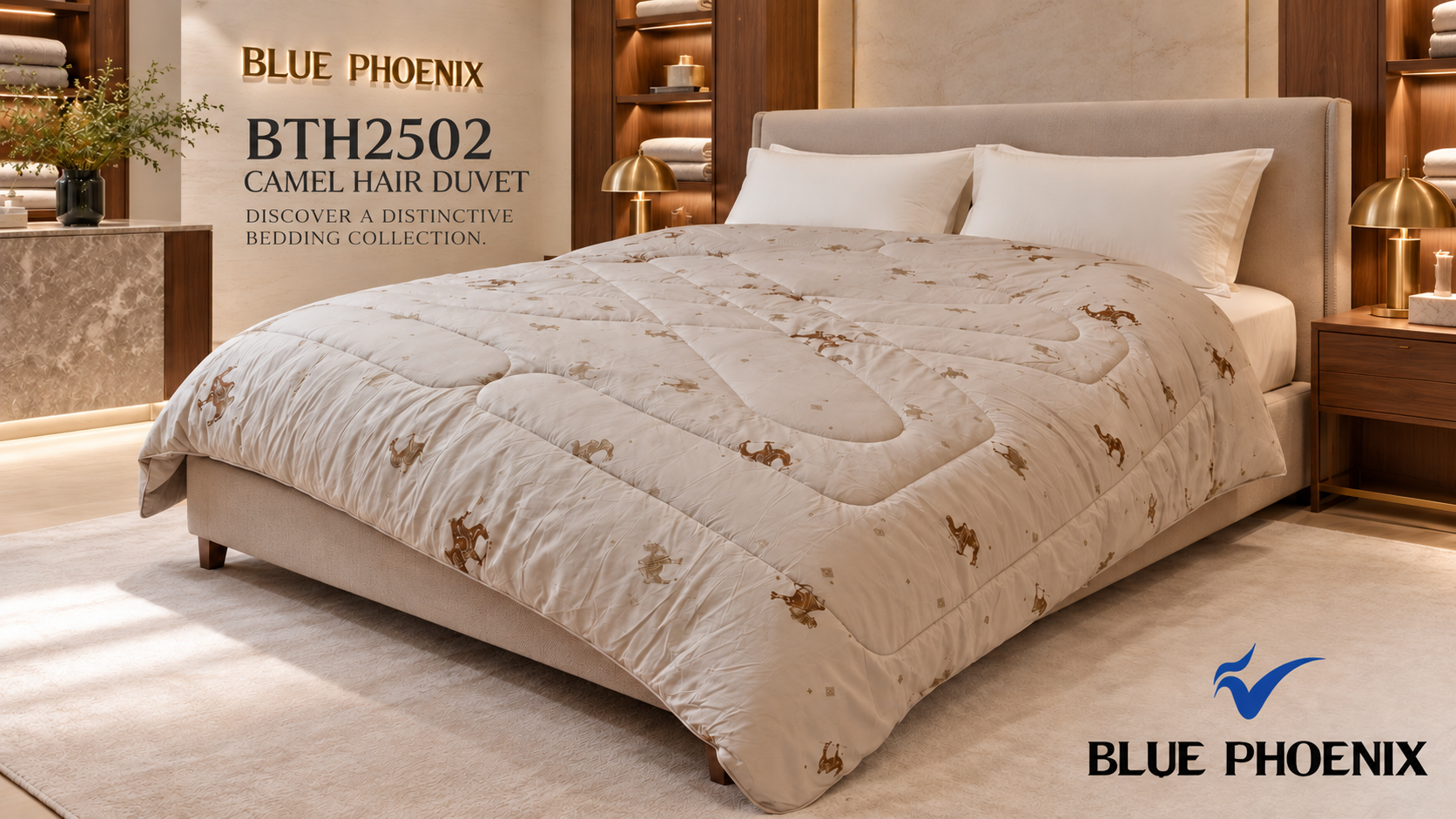
BTH2502 Camel Hair Duvet
A quilted duvet with 100% natural undyed camel hair filling and a printed 100% cotton shell for natural-fiber bedding collections.
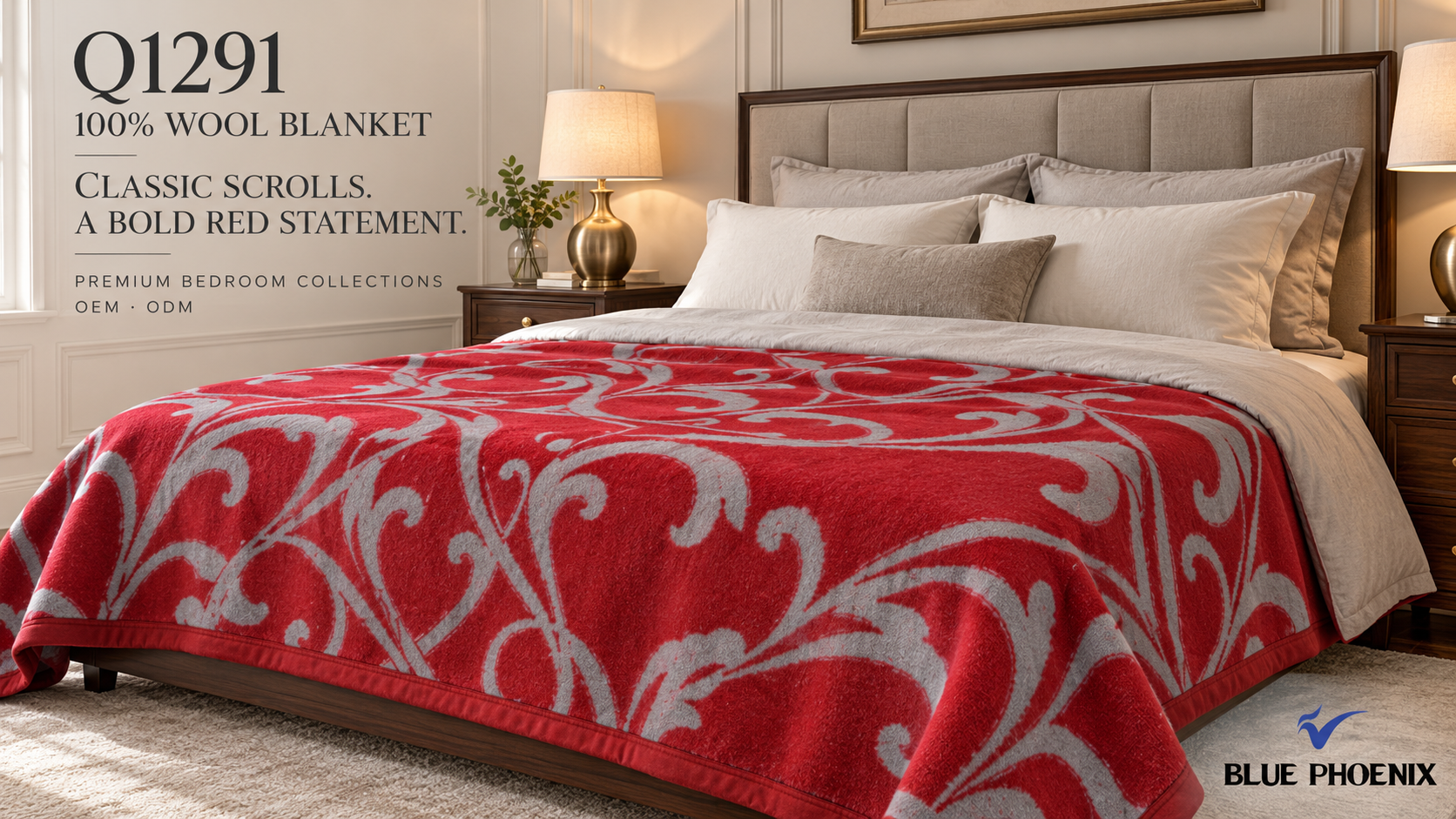
Q1291 Double-Sided Wool Jacquard Bed Blanket
A substantial 100% wool bed blanket with reversible burgundy-red and silver-grey floral jacquard and coordinated red binding.
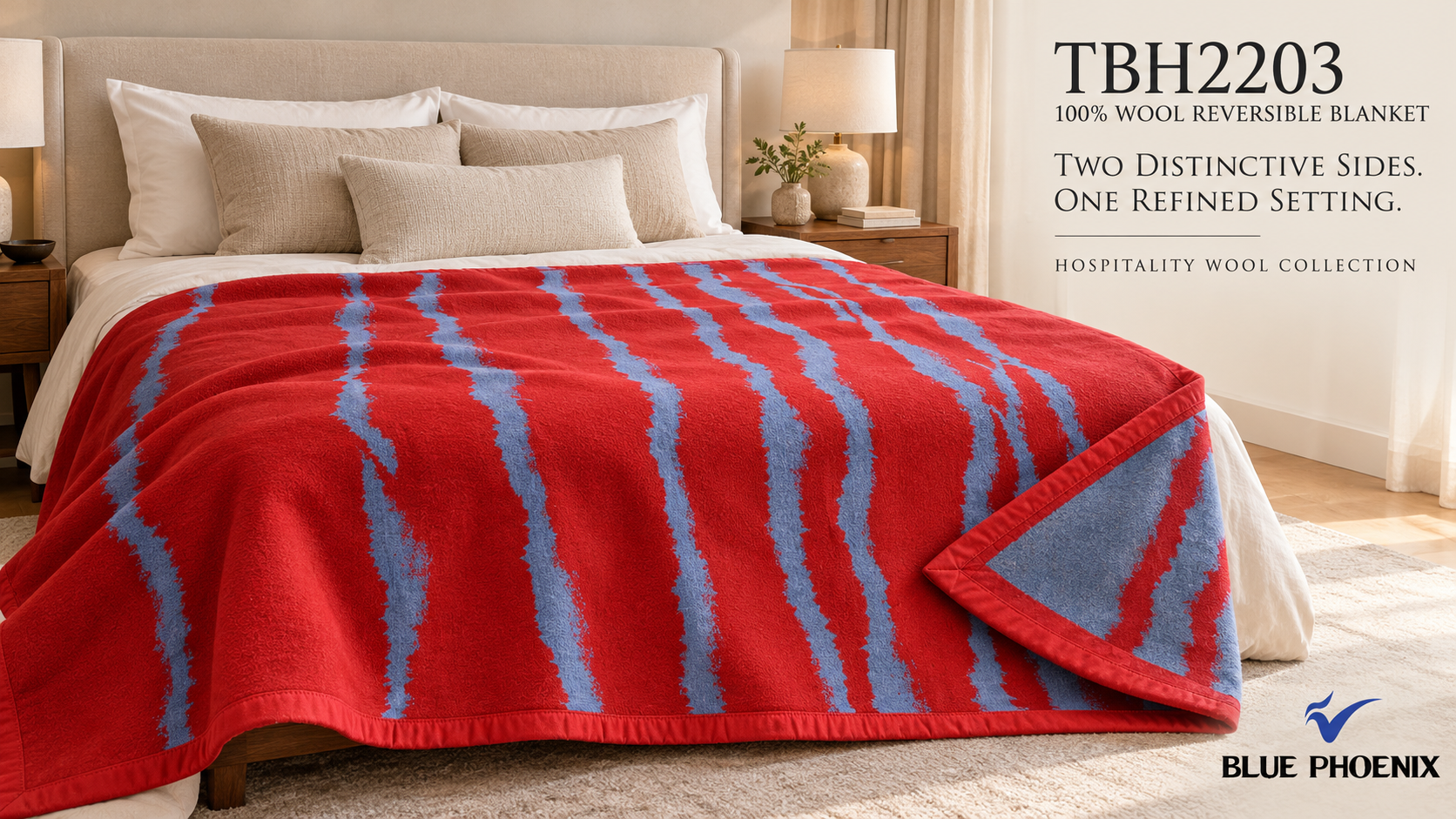
TBH2203 Reversible Wool Blanket
A 100% wool woven blanket with reversible red and blue-grey stripe effects and red fabric binding for coordinated home collections.
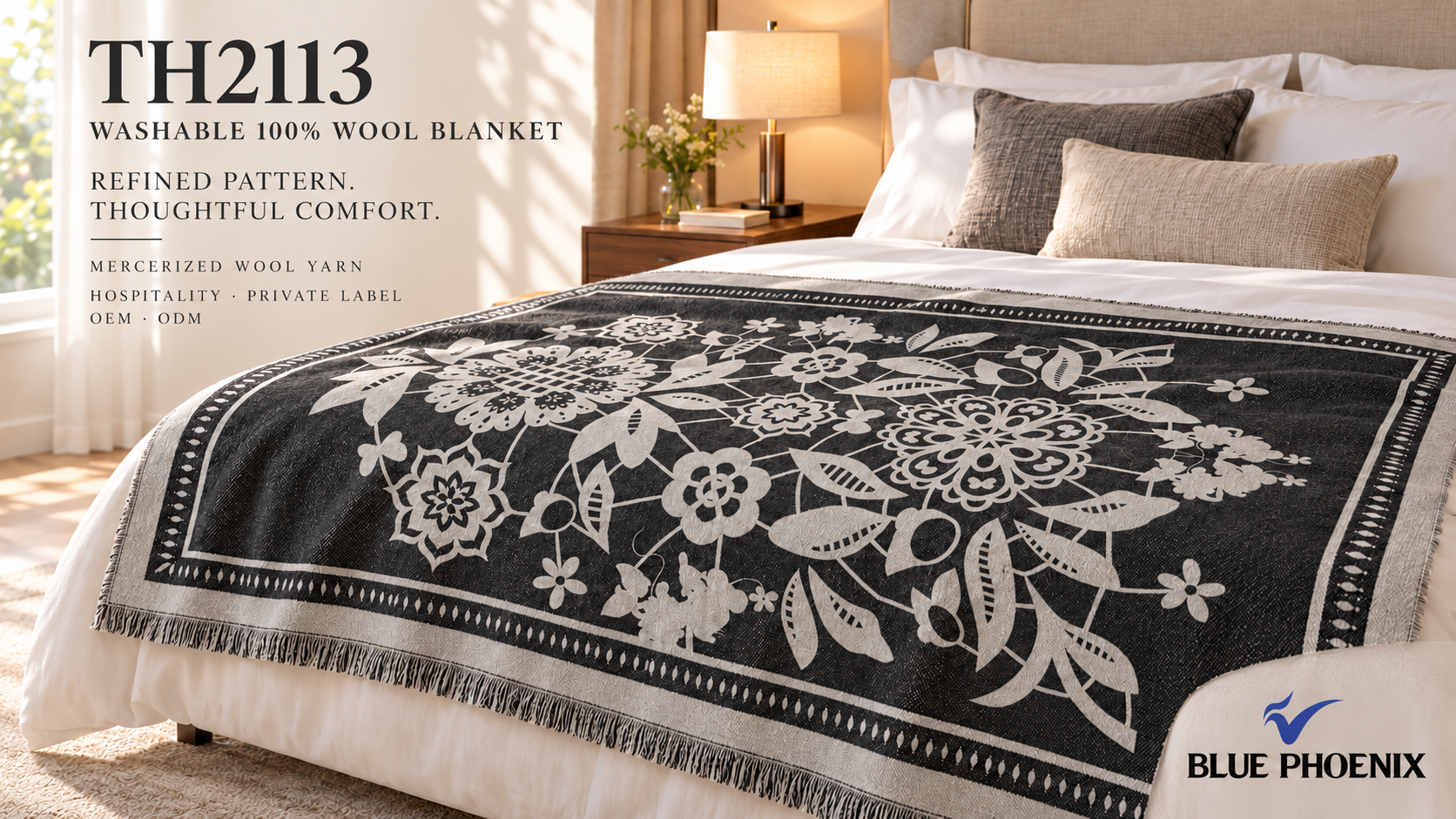
TH2113 Washable Wool Floral Jacquard Blanket
A 100% wool floral jacquard blanket with a decorative border and fringe, washable according to its approved care instructions.
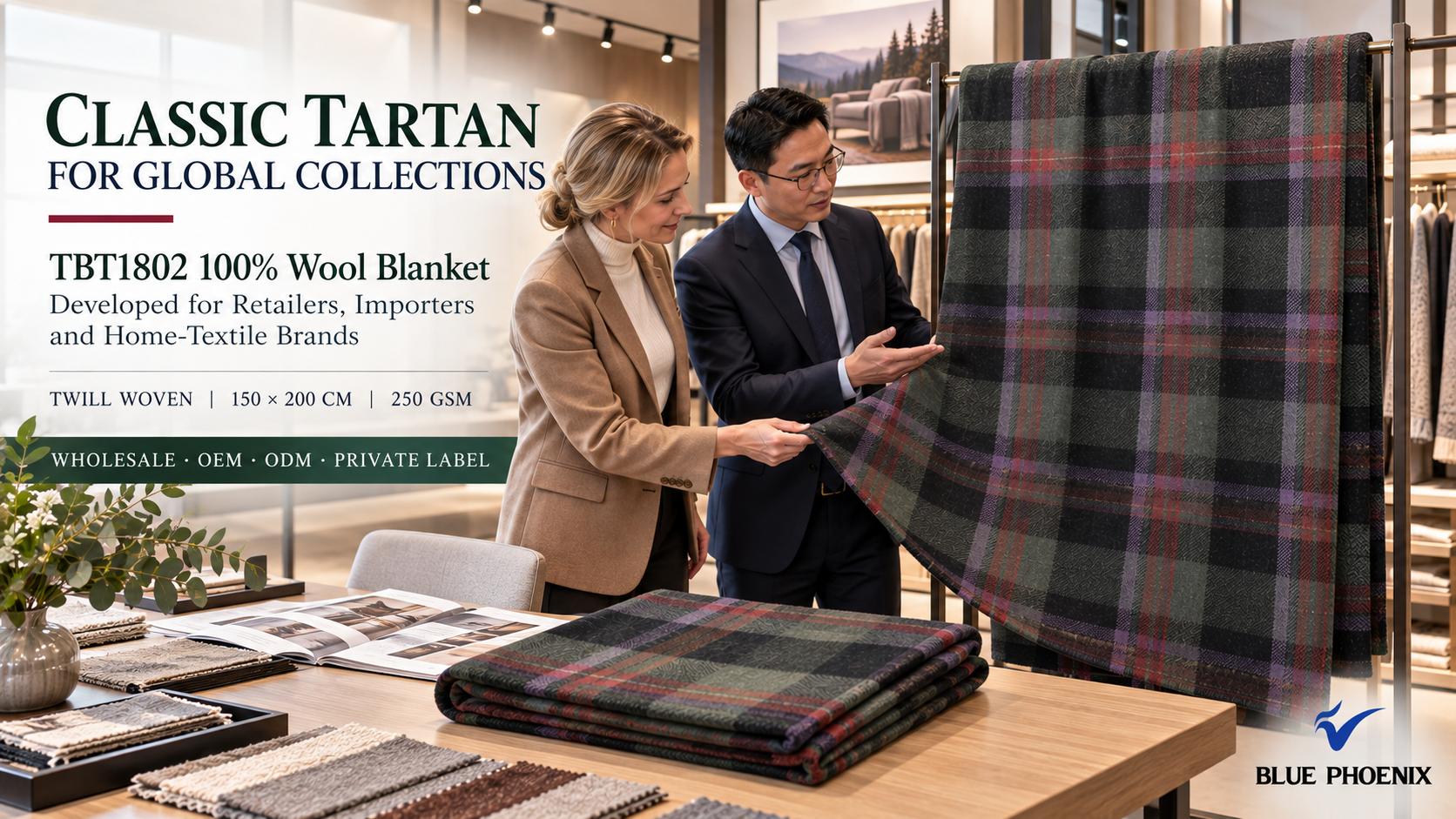
TBT1802 Wool Tartan Plaid Blanket
A 100% wool twill-woven blanket with dark tartan colors and clean folded edges for classic home-textile and retail collections.

Q1178 Lambswool Jacquard Bed Blanket
A substantial lambswool blanket with grey-and-ivory jacquard and grey suede binding for premium bedding and hospitality collections.
.
It depends on the intended use. A wool blanket offers a visible textile surface and flexible layering. A duvet offers a filled construction. Compare actual samples, coverage, comfort and care requirements.
Not necessarily. Warmth depends on construction, thickness, filling or fabric structure, coverage and other bedding layers. Product category alone does not establish thermal performance.
Yes. Duvets can contain natural fillings as well as synthetic materials. BTH2502, for example, uses camel hair filling within a cotton shell.
Yes, if the selected blanket provides the required coverage and comfort. Check its actual dimensions and intended application rather than assuming a decorative throw can replace a full bed covering.
There is no universal answer. Follow the care label for the finished blanket. For duvets, distinguish the care requirements of the filled insert from those of any separate cover.
Yes. Hotels can evaluate them as separate options or coordinated layers. Approval should consider guest comfort, laundry procedures, handling, storage and replacement planning.
Q1: What is the main construction difference?
A: A blanket uses fabric as its main body; a duvet contains filling within a shell.
Q2: Is wool a product construction?
A: No. Wool identifies a fiber, while duvet identifies a bedding construction.
Q3: Can a duvet contain wool?
A: Yes. The filling specification should identify the actual material.
Q4: Is camel hair the same as sheep wool?
A: No. State the actual fiber clearly in product descriptions.
Q5: What is inside BTH2502?
A: It has 100% camel hair filling and a 100% cotton shell.
Q6: Does 100% camel hair describe the whole duvet?
A: No. It describes the filling; the shell is specified separately.
Q7: Does greater weight always mean greater warmth?
A: No. Weight and insulation are different characteristics.
Q8: What does blanket GSM measure?
A: Fabric mass in grams per square meter.
Q9: Is duvet filling weight the same as total weight?
A: No. Record net filling weight and total finished weight separately.
Q10: Can a small wool throw replace a bed duvet?
A: Only if it provides the required coverage and comfort for the intended use.
Q11: Does a wool blanket prevent overheating?
A: No product should guarantee this for every user or room condition.
Q12: Is every duvet highly lofty?
A: No. Loft varies with filling and construction.
Q13: Can a blanket be layered over a duvet?
A: Yes, if the combined weight and warmth suit the user.
Q14: Is every wool blanket washable?
A: No. Follow the finished product’s approved care instructions.
Q15: Does a washable duvet cover mean the insert is washable?
A: No. The insert has its own care requirements.
Q16: Does a zipper always indicate a removable shell?
A: No. Confirm the opening’s intended function with the supplier.
Q17: How should bed size be specified?
A: Use exact width and length together with the desired coverage.
Q18: What should hospitality buyers test?
A: The intended bedding arrangement and its compatibility with maintenance procedures.
Q19: How can brands compare supplier quotations?
A: Use equivalent materials, dimensions, construction, finishing and packaging requirements.
Q20: What makes a good bedding choice?
A: A suitable balance of comfort, coverage, construction, care and cost.
#WoolBlanketVsDuvet #WoolBedBlanket #NaturalFiberBedding #CamelHairDuvet #BeddingComparison #HotelBedding #WholesaleBlankets #PrivateLabelBedding #CustomDuvets #BluePhoenix
Explore the distinction between the camel hair filling and cotton shell, together with the product’s original construction details.
Review the specifications, sample approval and packaging information needed for a clearer duvet sourcing inquiry.
Compare adjustable layers with a single main covering when planning a practical bedding arrangement.
Wool Blankets— Compare bed blankets, woven patterns and layering options.
Duvets & Comforters— Explore filled bedding as a separate product direction.
Cashmere Blankets— Review another natural-fiber direction for premium bedding and gifting.
Camel Blankets— Explore camel-fiber blanket products alongside filled duvet options.
View BTH2502 Camel Hair Duvet— A filled bedding option combining 100% natural undyed camel hair filling with a 100% cotton shell. Evaluate it separately from woven wool blankets.
View Q1291 Wool Jacquard Bed Blanket— A substantial 100% wool bed blanket with reversible burgundy-red and silver-grey jacquard and coordinated red binding.
View TBH2203 Reversible Wool Blanket— A 100% wool woven blanket with red and blue-grey reversible stripe effects and red woven-fabric binding.
View TH2113 Washable Wool Floral Jacquard Blanket— A floral jacquard wool blanket for buyers evaluating a product-specific washable option. Follow its approved care instructions.
View TBT1802 Wool Tartan Plaid Blanket— A 100% wool twill-woven tartan design with folded edges, offering a different construction from bound jacquard bed blankets.
View Q1178 Lambswool Jacquard Bed Blanket— A substantial lambswool blanket with grey-and-ivory jacquard and grey suede binding for comparing woven bedding options.
Developing wholesale wool blankets, a natural-fiber duvet collection or private-label bedding? Contact BLUE PHOENIX to discuss the product direction and sample requirements.
Provide your target market, intended use, composition, dimensions, preferred construction, quantity, care requirements, packaging and delivery destination. For duvets, specify the shell, filling and required filling weight separately.
Company: Shanghai Rainbow Enterprise Development Co., Ltd.
Brand: BLUE PHOENIX
Website:www.shbluephoenix.com
Email:jamesli@shbluephoenix.com
WhatsApp:+86 18017830390
WeChat: bluephoenix66

Blue Phoenix Blankets dedicated to strict quality control of blankets and scarves products and thoughtful customer service, our custom blankets wholesale products are exported to clients in such countries and regions as United states, Europe, Australia, Russia, Germany, Japan.
Copyright © 2026 Shanghai Rainbow Enterprise Development Co., Ltd. - All Rights Reserved.