High-Quality Wholesale Blankets Manufacturer & Supplier in China with custom design service - Blue Phoenix Blankets
Language
Custom dyeing a wool blanket starts with checking the material, existing color and finished construction. Choosing a shade is only one part of the process. The blanket must also tolerate the proposed treatment without unacceptable changes to its dimensions, texture or finishing.
This guide covers two different projects: recoloring an existing blanket and developing a custom-color blanket for a new collection. Both benefit from sampling, but they require different approval decisions.
Read the fiber-composition and care labels. Identify the blanket body, sewing thread, binding, fringe and decorative details separately. A wool body does not establish that every component will respond to dye in the same way.
Check the blanket’s condition and record its original dimensions. For a valuable, fragile or dry-clean-only item, ask the manufacturer or a textile-dyeing specialist to assess the project before proceeding.
A care label permitting washing does not automatically approve a hot dyeing process.
The existing shade is part of the starting material. Adding dye does not create the same blank canvas as working with white fabric, and a patterned blanket may retain visible differences between its colored areas.
Prepare a physical reference for the intended result. For a personal project, decide how much variation you can accept. For a commercial order, specify the target shade and agree how samples will be assessed.
Do not assume that a dark blanket can simply be dyed to a pale shade. Discuss major color changes with a specialist before treating the complete item.
Use a dye product whose manufacturer specifically lists wool as a suitable fiber. Acid dyes are one established option for protein fibers, but the selected product’s instructions determine the required preparation and processing conditions.
Follow that manufacturer’s directions for quantities, water, additives, temperature, timing, rinsing and equipment. Do not combine instructions from different dye systems or add a generic fixative automatically.
For blends, obtain advice covering the complete fiber mixture rather than selecting a dye from the wool percentage alone.
Where available, use a spare piece of the same fabric, including its finishing and trims. A sample made from unrelated wool cannot establish how the finished blanket will behave.
Evaluate the sample after it has been rinsed and dried according to the approved process. Record the result, including appearance, dimensions, texture and trim condition.
A satisfactory color is only one approval point. Reject a process that produces the desired shade while damaging the fabric or construction.
Prepare and wet the textile as directed by the dye manufacturer. Use suitable equipment for the blanket’s size and follow the product’s handling instructions throughout the process.
Wool requires particular care during temperature changes. Avoid transferring hot wool directly into cold water. Use the dye manufacturer’s wool-specific instructions rather than improvising a heating or cooling schedule.
If the blanket cannot be handled properly with the available equipment, stop at the trial stage and discuss professional processing.
For a new wholesale collection, begin with a development brief instead of assuming finished stock blankets should be recolored.
Provide the intended fiber composition, construction, dimensions, weight, pattern, edge finish, color references and quantity by color. Ask the manufacturer to propose a suitable development route and confirm feasibility before ordering samples.
For plaid and jacquard designs, approve each color together with the complete pattern. A single color reference does not define the width, sequence or placement of woven bands.
Review the final blanket sample, labels and packaging together. Keep the approved physical reference and a written record of any changes required before production.
Successful custom color development requires a suitable textile, a defined target and an approved sample. For an existing wool blanket, confirm process compatibility before attempting a full treatment. For a new collection, define the material, pattern and finishing requirements at the start of development.
Sampling provides a practical basis for deciding whether the proposed result meets the project’s expectations.
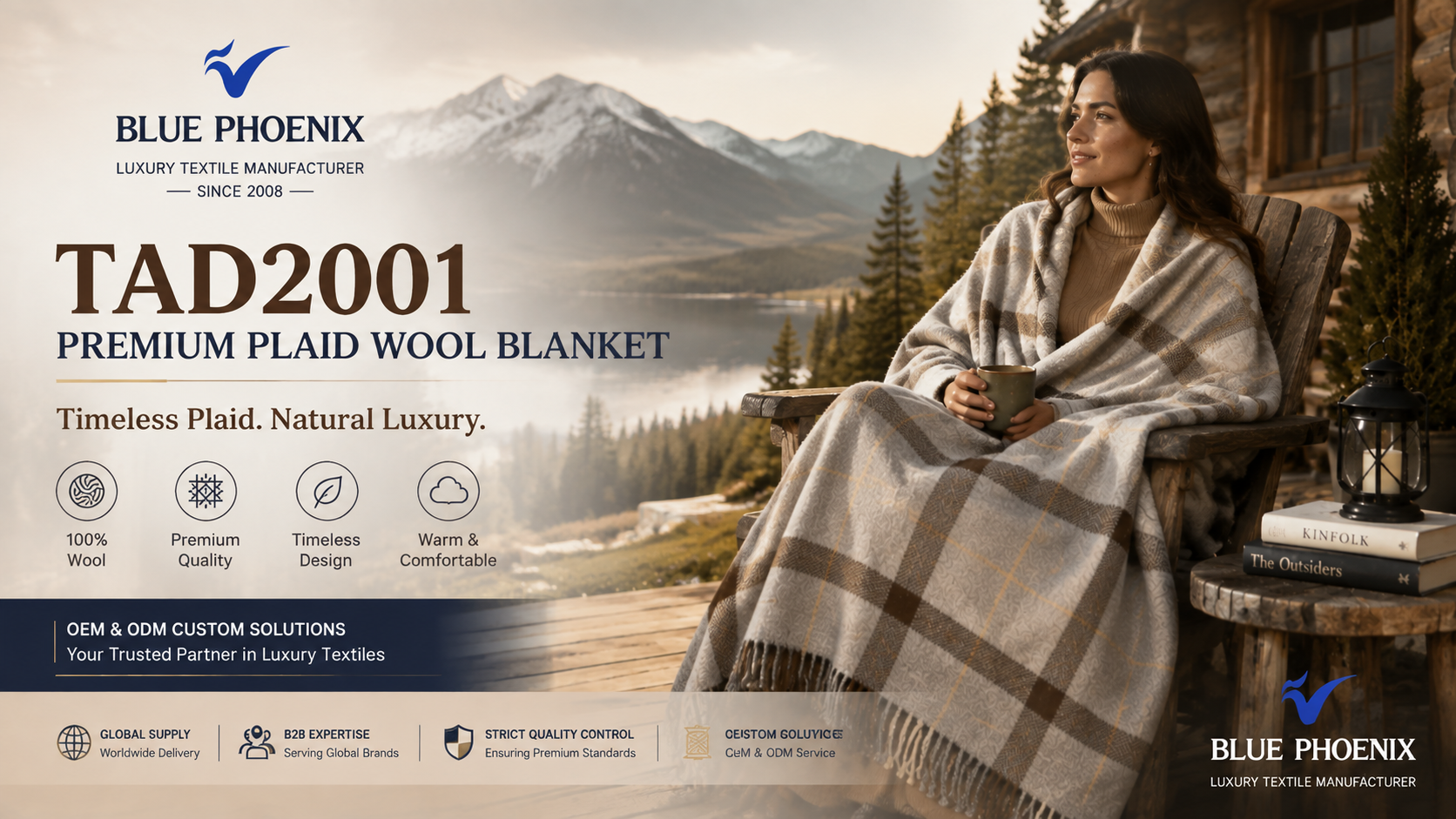
TAD2001 Plaid Wool Throw
Woven wool throw with a classic plaid pattern and fringed ends for home textile and private-label collections.
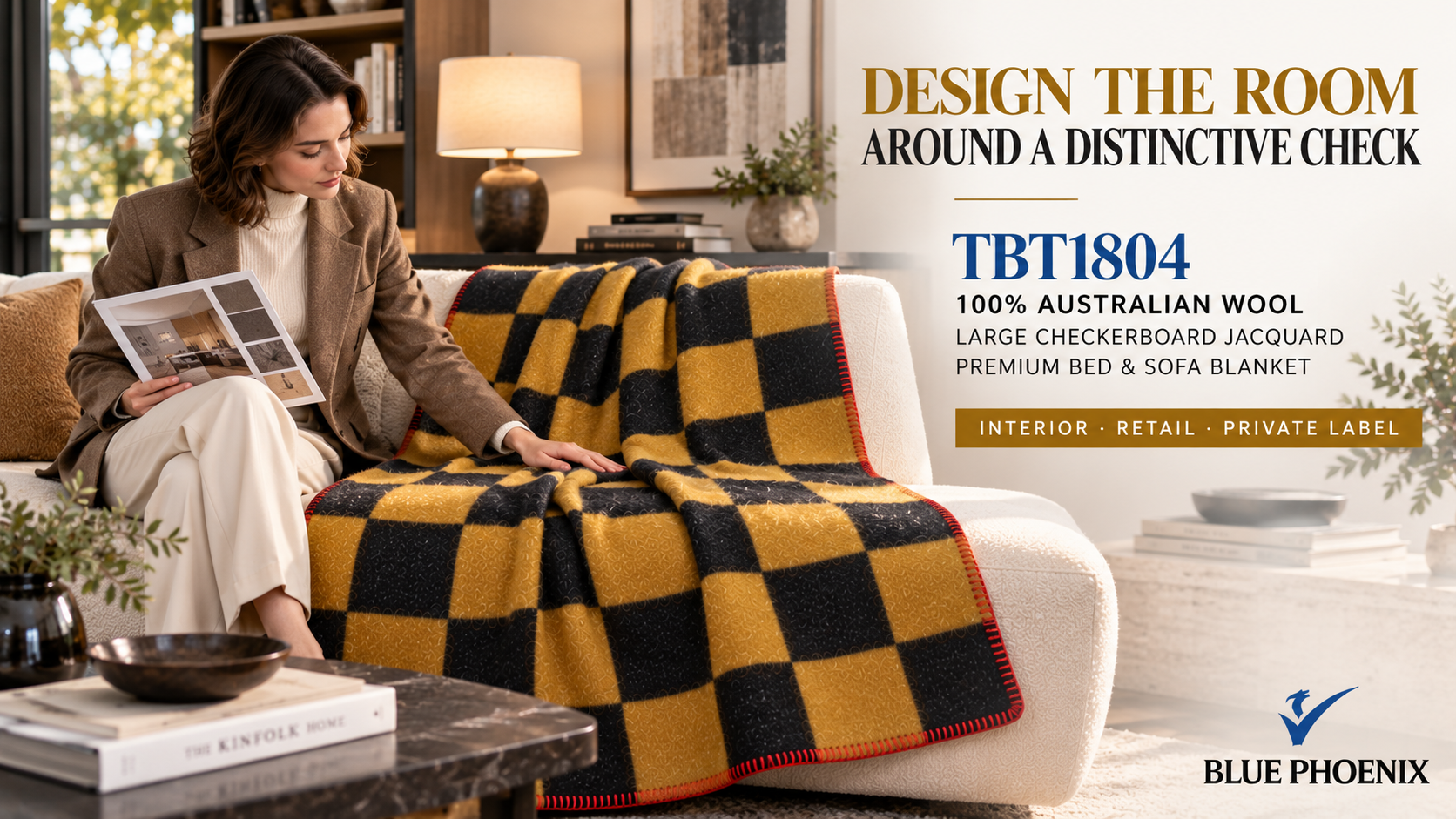
TBT1804 Australian Wool Checkerboard Blanket
Australian wool bed blanket with mustard-yellow and black checkerboard jacquard and contrasting red overlock edges.
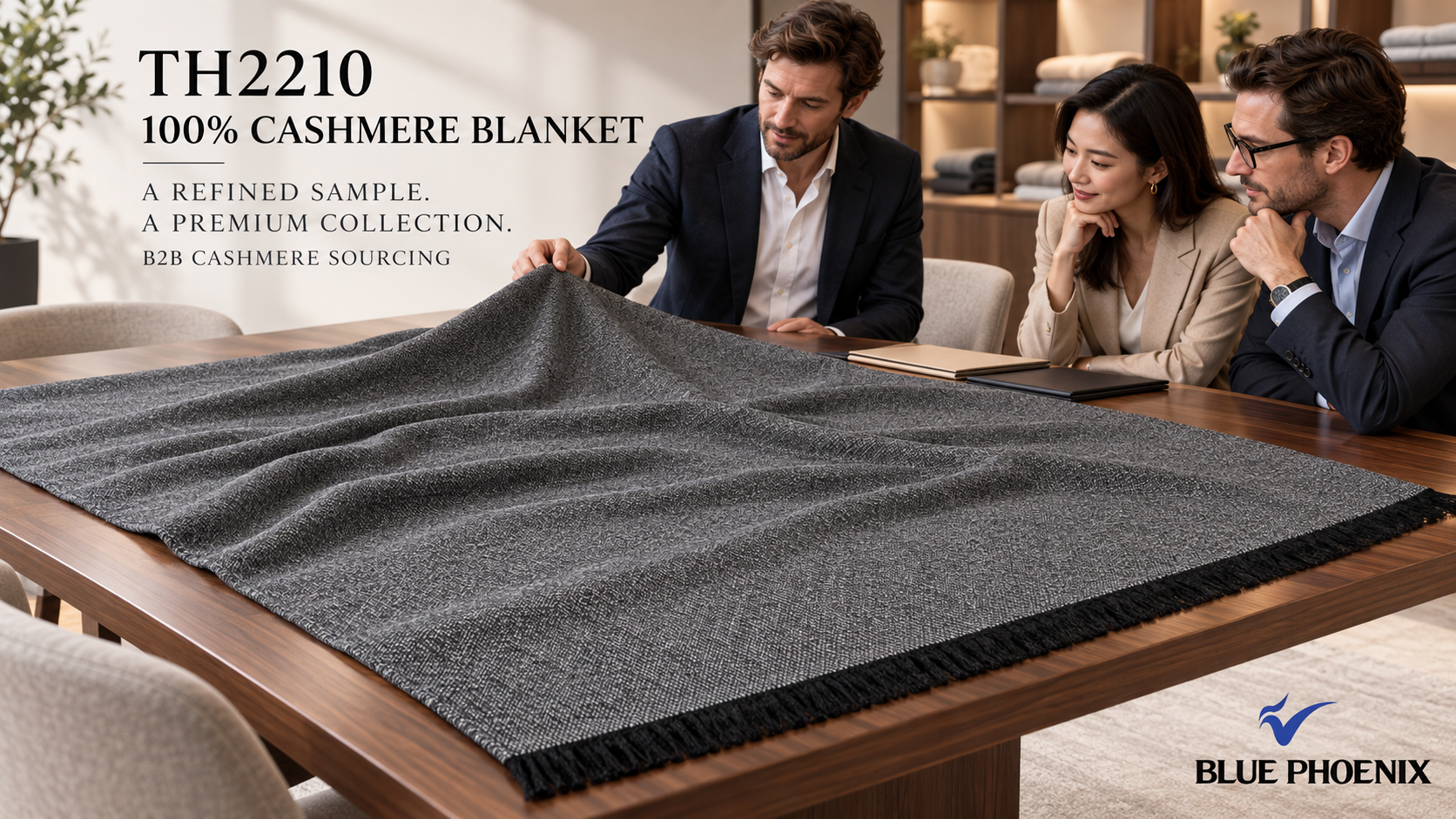
TH2210 Lightweight Cashmere Blanket
Lightweight cashmere blanket in dark-grey melange for premium home textile and gifting collections.
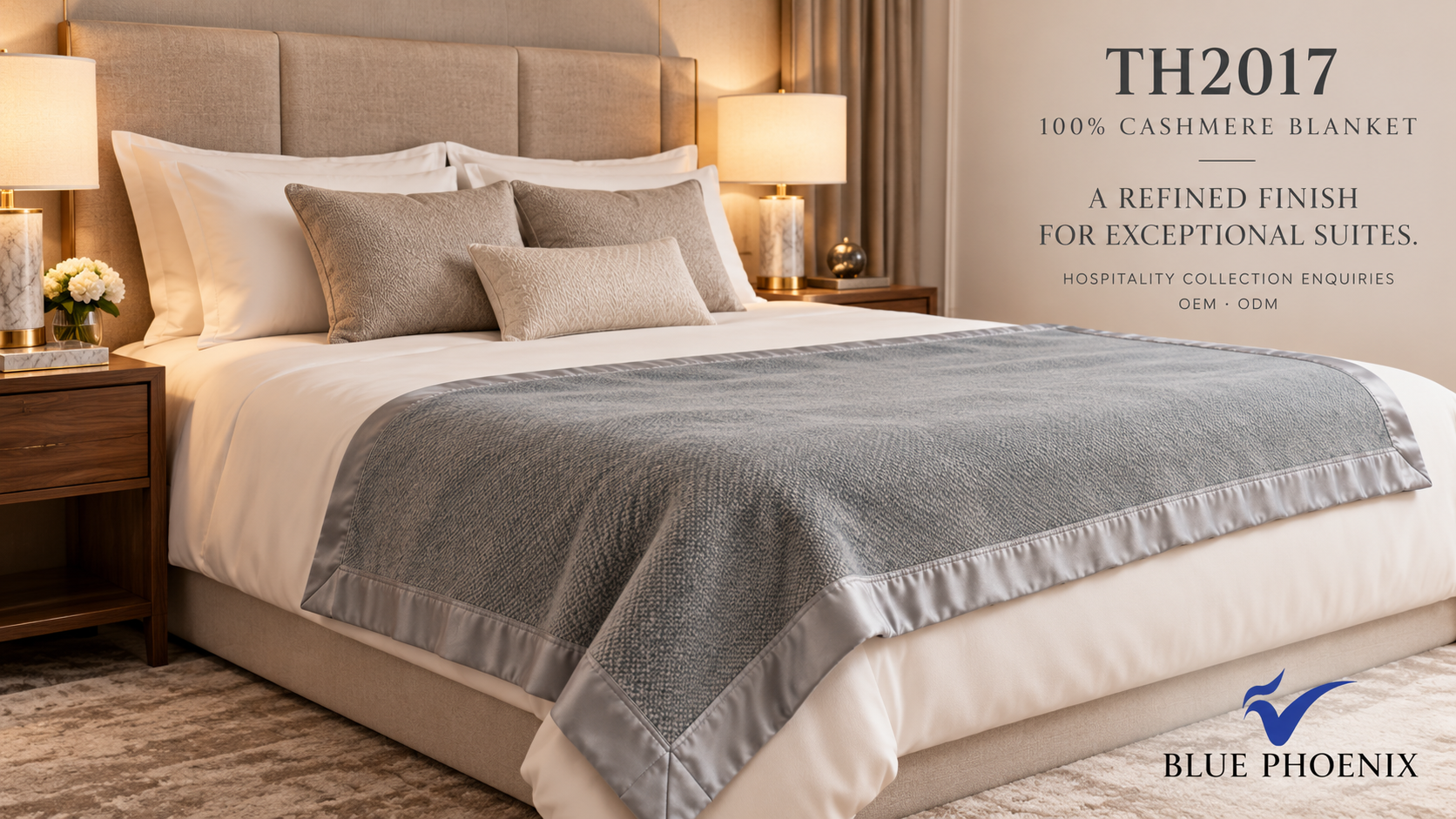
TH2017 Cashmere Blanket with Silk Satin Edge
Fine cashmere blanket with a blue-and-white melange appearance and smooth silk satin binding.
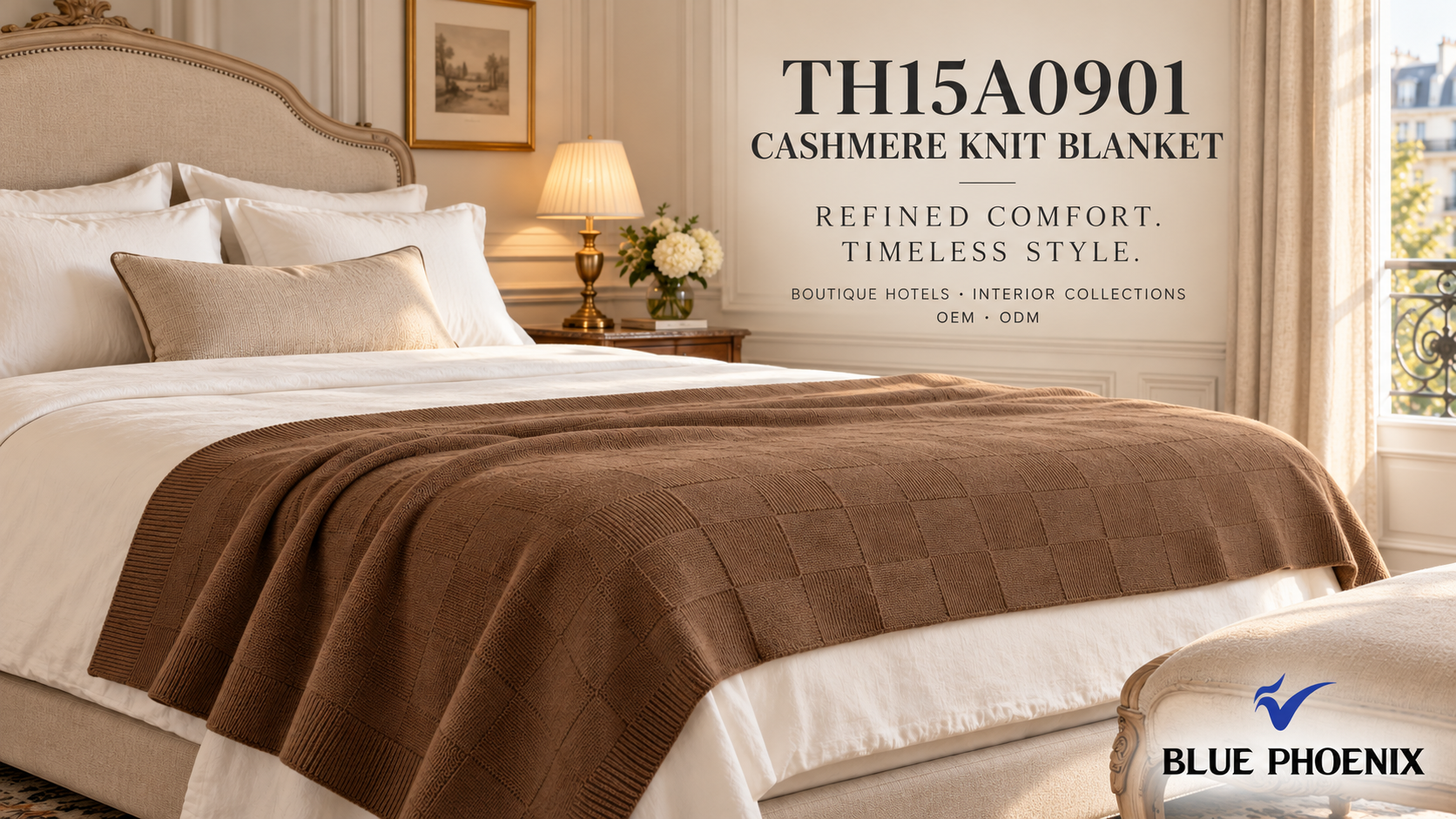
TH15A0901 Knitted Cashmere Throw
Camel check cashmere throw with a knitted construction and ribbed edges for lounge and gift collections.
No. Assess the fiber composition, care instructions, condition and complete construction before choosing a process. Obtain specialist advice when compatibility is uncertain.
Select a dye explicitly intended for wool and follow its manufacturer’s instructions. Acid dyes are one established option, but the correct process depends on the selected product and textile.
Do not expect a uniform result. Existing colors influence the final appearance, and different areas of the pattern may remain visible after overdyeing.
A photograph can communicate a general direction. Use a physical reference and an approved textile sample when the project requires a defined color target.
Ask a textile-dyeing specialist to assess it first. Consider whether an uncertain result would be acceptable before making an irreversible change to a valuable item.
Provide the fiber composition, construction, dimensions, weight, pattern, edge finish, physical color reference and quantity by color. Request feasibility confirmation and sample approval before production.
Q1. What is the first decision?
A. Establish whether the project concerns an existing blanket or a newly manufactured collection.
Q2. What information identifies the starting textile?
A. Its composition, construction, original color, finishing, trims and condition.
Q3. Does a washable label approve dyeing?
A. No. Confirm compatibility with the proposed dye process separately.
Q4. Can a wool blend be treated as pure wool?
A. Obtain instructions covering the complete fiber mixture.
Q5. Is a color name enough for a wholesale order?
A. Provide a physical reference and agree a sample-approval method.
Q6. What should a plaid brief include?
A. Individual colors, band widths, sequence, repeat dimensions and placement.
Q7. What should a jacquard brief include?
A. Artwork, pattern scale, color placement and requirements for both faces.
Q8. Which sample should establish the final appearance?
A. A representative finished sample reflecting the approved construction and finishing.
Q9. What should be recorded before a trial?
A. The starting dimensions, appearance, condition and relevant material information.
Q10. What should be checked after the trial?
A. Color, dimensions, texture, pattern appearance and trim condition.
Q11. Should color be approved while the sample is wet?
A. Complete the prescribed finishing and drying process before final assessment.
Q12. Can a screen image replace a physical approval sample?
A. Use screen images for discussion and physical samples for final textile approval.
Q13. Should bindings be included in the development brief?
A. Yes. Specify their material, color, width and construction.
Q14. Should sewing-thread color be approved?
A. Include visible stitching in the sample review and specification.
Q15. What quantity information does the supplier need?
A. The planned quantity for each design, size and color.
Q16. When should packaging be reviewed?
A. Review it with the proposed blanket fold before final approval.
Q17. What should happen after a requested color change?
A. Record the change and confirm whether a revised sample is required.
Q18. How should production approval be documented?
A. Keep the approved reference sample and the agreed written specification.
Q19. Should care information be reviewed again for a new product?
A. Confirm care-label wording for the final approved construction and finishing.
Q20. How can buyers begin a BLUE PHOENIX project?
A. Send the intended application, reference design, specifications, color requirements and quantities for review.
#CustomWoolBlanket #WoolBlanketDyeing #CustomBlanketColors #WoolColorDevelopment #TextileSampling #PrivateLabelBlankets #WholesaleWoolBlankets #CashmereBlankets #BlanketManufacturer #BluePhoenixBlankets
Explore wool blankets for plaid, jacquard, bed-covering and decorative throw collections.
Compare cashmere designs across woven, knitted, lightweight and patterned collection directions.
Discover a different material direction for premium bedding and home textile assortment planning.
Review blended options and confirm the composition, construction and care requirements of each selected product.
These products illustrate different collection directions. Custom-color availability and processing feasibility require separate confirmation for each project.
A woven plaid wool throw with fringed ends. Consider this design when developing a decorative sofa, armchair or gift collection.
A 100% Australian wool bed blanket with mustard-yellow and black checkerboard jacquard and contrasting red overlock edges. It introduces a bold pattern direction into the assortment.
View TBT1804 Wool Checkerboard Blanket
A lightweight 100% cashmere blanket in dark-grey melange. Review this model for collections requiring a restrained color direction and compact presentation.
A fine cashmere blanket combining a blue-and-white melange appearance with silk satin binding. Its contrasting surface and edge materials offer a distinctive finishing direction.
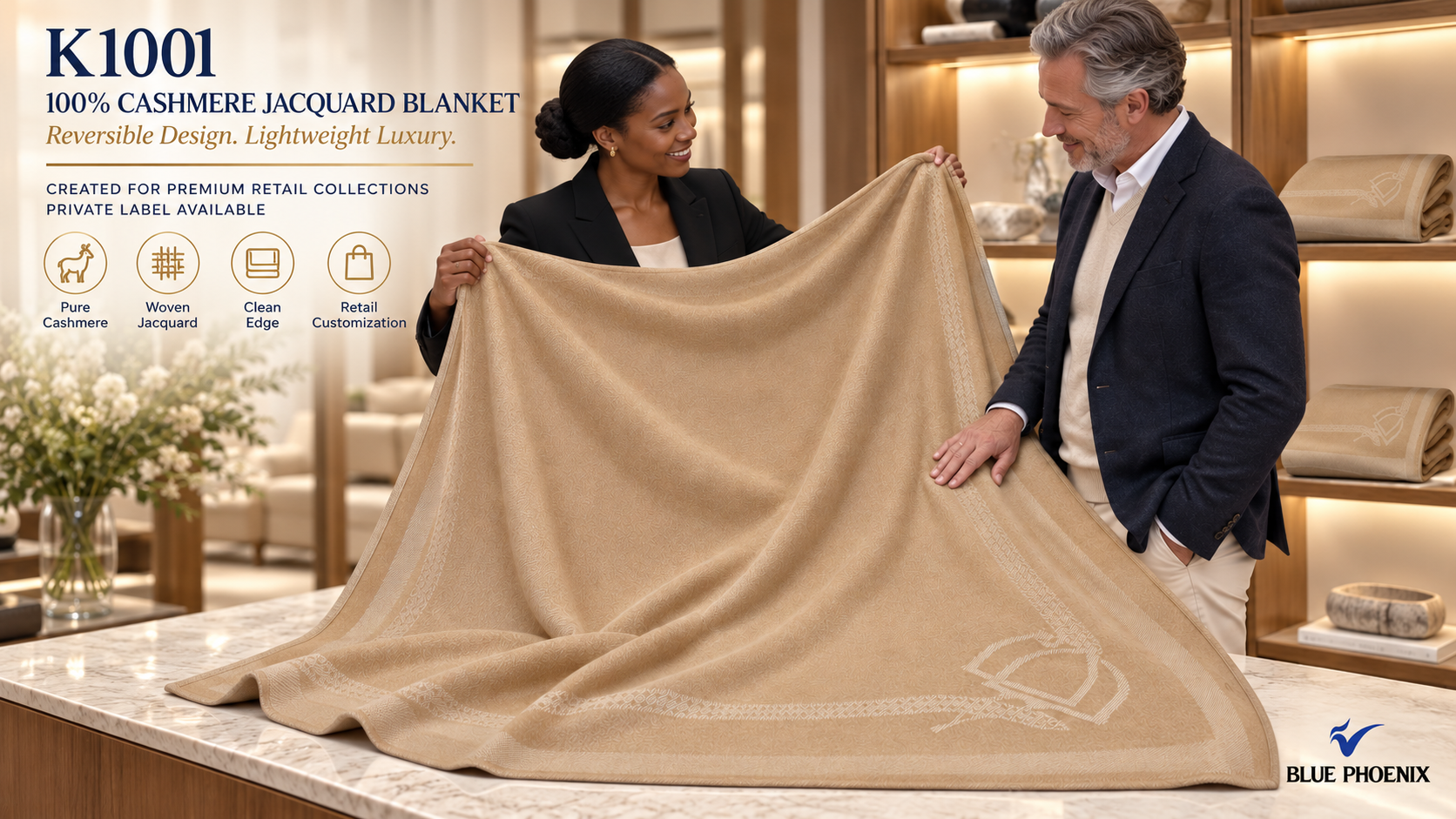
A reversible 100% cashmere blanket with tonal equestrian motifs and a woven border. Consider both faces when planning the collection’s styling and presentation.
View K1001 Cashmere Jacquard Blanket
A 100% cashmere knitted throw with a camel check design and ribbed edges. This model adds a knitted option alongside the woven blankets in the selection.
View TH15A0901 Knitted Cashmere Throw
Planning a wool or cashmere blanket collection? Send BLUE PHOENIX your reference design, material requirements, dimensions, target weight, colors, edge finish and quantity by design.
We can review the project requirements and discuss sampling, OEM, ODM and private-label development. Custom specifications and production arrangements are confirmed for each project.
Website: www.shbluephoenix.com
Email: jamesli@shrainbow.cn

Blue Phoenix Blankets dedicated to strict quality control of blankets and scarves products and thoughtful customer service, our custom blankets wholesale products are exported to clients in such countries and regions as United states, Europe, Australia, Russia, Germany, Japan.
Copyright © 2026 Shanghai Rainbow Enterprise Development Co., Ltd. - All Rights Reserved.