High-Quality Wholesale Blankets Manufacturer & Supplier in China with custom design service - Blue Phoenix Blankets
Language
The blanket’s construction, size, surface finishing, colors and edge materials all matter. A woven throw, a knitted blanket and a cashmere blanket with separate binding may need different handling.
This guide explains how to choose a cleaning route, what to consider when hand washing is permitted, and how to plan drying, storage and care instructions for a premium blanket collection.
Locate the label and review washing, bleaching, drying, ironing and professional-cleaning instructions. If symbols are unclear, ask the supplier to explain them before proceeding.
Do not treat hand washing as an automatic alternative to “dry clean only.” Likewise, a washing machine’s wool or delicate program does not make every cashmere blanket machine washable.
If the label is missing, contact the manufacturer or an experienced textile cleaner. Describe the blanket’s construction, colors, trims and any previous cleaning problems.
| Care Information | Practical Decision |
|---|---|
| Hand washing permitted | Follow the specified temperature, detergent, handling and drying instructions. |
| Machine washing permitted | Use only the approved settings and confirm the machine can accommodate the blanket appropriately. |
| Professional cleaning specified | Give the cleaner the label information and details of stains or damage. |
| Missing or unclear instructions | Obtain advice before attempting a full wash or stain treatment. |
Cashmere blanket care should respond to actual use and condition. A lightly used decorative throw and a frequently handled hospitality blanket do not need an identical maintenance schedule.
Check for visible soiling, spills, odors and surface changes. Gentle airing may help refresh a dry blanket, but it does not remove every stain or replace necessary cleaning.
For a localized spill, follow the approved treatment instructions. Avoid rubbing the area or experimenting with several household products. Tell a professional cleaner what caused the stain and what treatment has already been attempted.
Lay the blanket flat on a clean surface. Check both faces, the edges, corners and any fringe or binding.
Loose stitching: identify areas that may need attention before cleaning.
Snags or holes: avoid pulling loose yarns or cutting them away.
Color and pattern: note contrasting sections and separate trims.
Surface condition: record existing pilling, thinning or flattened areas.
For a valuable item or one with uncertain construction, discuss these observations with a suitable cleaner. Cleaning should not be assumed to repair structural damage.
For business sample trials, photograph the blanket and record its dimensions before care. Use the same measurement method afterward.
Plan the entire process before wetting a large blanket. Confirm that you have a clean washing space, a way to support the wet textile and sufficient flat drying space.
Use the temperature and detergent specified for the product. Measure detergent according to its instructions rather than relying on an arbitrary number of drops. Dissolve it before introducing the blanket.
A small sink may be unsuitable for a large bed blanket. If the available space would require compressing, dragging or repeatedly lifting the wet textile, seek an appropriate professional service.
Remove jewelry or accessories that could catch the fabric, and keep the working area free of rough surfaces.
When the care instructions permit hand washing, use controlled, gentle handling. Avoid scrubbing, twisting or stretching the blanket.
Do not select a soaking time from a generic online recipe. Follow the product’s instructions, including any limits on soaking and agitation.
Support the whole blanket when changing its position. Wet textile can be difficult to handle, especially when the blanket is large. Avoid lifting the entire weight from a corner, fringe or narrow section of fabric.
Washing is not a reliable method for removing pills or repairing a roughened surface. Address surface maintenance separately using a method suitable for the finished construction.
Follow the approved rinsing procedure and handle the blanket with full support. Remove detergent adequately without subjecting the fabric to unnecessary repeated movement.
Do not twist the blanket to force water out. If towel pressing is appropriate for the product, use clean towels and gentle pressure rather than tight twisting or forceful rolling.
Avoid dragging the wet blanket between the washing and drying areas. Prepare the transfer route in advance and use assistance where necessary to support a large item.
Drying is part of the care process. If flat drying is specified, use a clean supporting surface with suitable airflow. Arrange the blanket gently without pulling it to a larger size.
Do not assume tumble drying, direct heat or ironing is permitted. Follow the label for each operation.
Check that the blanket is fully dry before folding or packing it. If towels beneath the blanket remain damp, manage them appropriately so the textile is not left resting against persistent moisture.
After drying, compare the blanket’s shape, surface and edges with their condition before cleaning. Do not promise that stretching or steaming will reverse shrinkage or felting.
Use professional cleaning when required by the label, when suitable home facilities are unavailable, or when stains and construction details need specialist assessment.
Give the cleaner useful information:
The care label and declared composition.
The location and likely cause of stains.
Any separate binding, decorative trim or contrasting colors.
Previous cleaning attempts or known damage.
Any concerns about dimensions, surface texture or shape.
Professional cleaning is not a guarantee against every change. Discuss the proposed process and realistic expectations before treatment, particularly for damaged or previously mishandled textiles.
Fold the blanket neatly and choose clean protective packaging suited to delicate textiles and the storage environment. Avoid unnecessary pressure, damp locations and prolonged exposure to strong sunlight.
No storage bag automatically guarantees protection against insects or moisture. Inspect stored blankets periodically and investigate any signs of damage.
The important questions are whether the blanket is clean, fully dry and stored in suitable conditions. Avoid blanket claims that every plastic package damages cashmere or that any cotton bag is moth-proof.
For wholesale cashmere blankets, cleaning requirements should be discussed during development rather than added after production.
A private-label care plan should address the complete product, including its yarn, construction, finishing, colors, trim and packaging. Instructions for one sample should not automatically be copied to a different design.
Define the use: decorative throw, household bedding, premium gift or hospitality accessory.
State the care expectations: explain the proposed cleaning and drying process.
Evaluate representative samples: use the actual construction and finishing.
Review results: check dimensions, color, surface, seams, binding and fringe.
Approve the wording: ensure care labels and product pages communicate the same instructions.
Keep records: retain the approved sample, specification and relevant evaluation results.
For hotels, confirm compatibility with the proposed housekeeping routine before ordering. A cashmere suite throw should not be assumed suitable for frequent institutional laundering.
BLUE PHOENIX supports OEM, ODM and private-label cashmere blanket development. Share the intended application and care requirements when requesting a sample or quotation.
How do you wash a 100% cashmere blanket? Start with the finished product’s care label. Use the permitted cleaning route, plan how to support the blanket and follow the approved drying instructions.
Composition alone does not establish washability. Careful handling, appropriate facilities and clear instructions provide a better foundation than a universal washing recipe.
For professional collections, evaluate the intended care process on representative samples and approve accurate care information before bulk production.

E10003 Cashmere Knitted Blanket
An ivory cashmere blanket with a tonal block-knit texture and coordinated ribbed edges.

TH2210 Dark Grey Cashmere Blanket
A solid dark-grey cashmere blanket for premium home, gifting and private-label collections.

TH2207 Lightweight Cashmere Throw
A light-grey woven cashmere throw with short fringe and a restrained solid-color design.

TH130315 Red Cashmere Blanket
A red woven cashmere blanket with matching fringe for premium home and gifting collections.
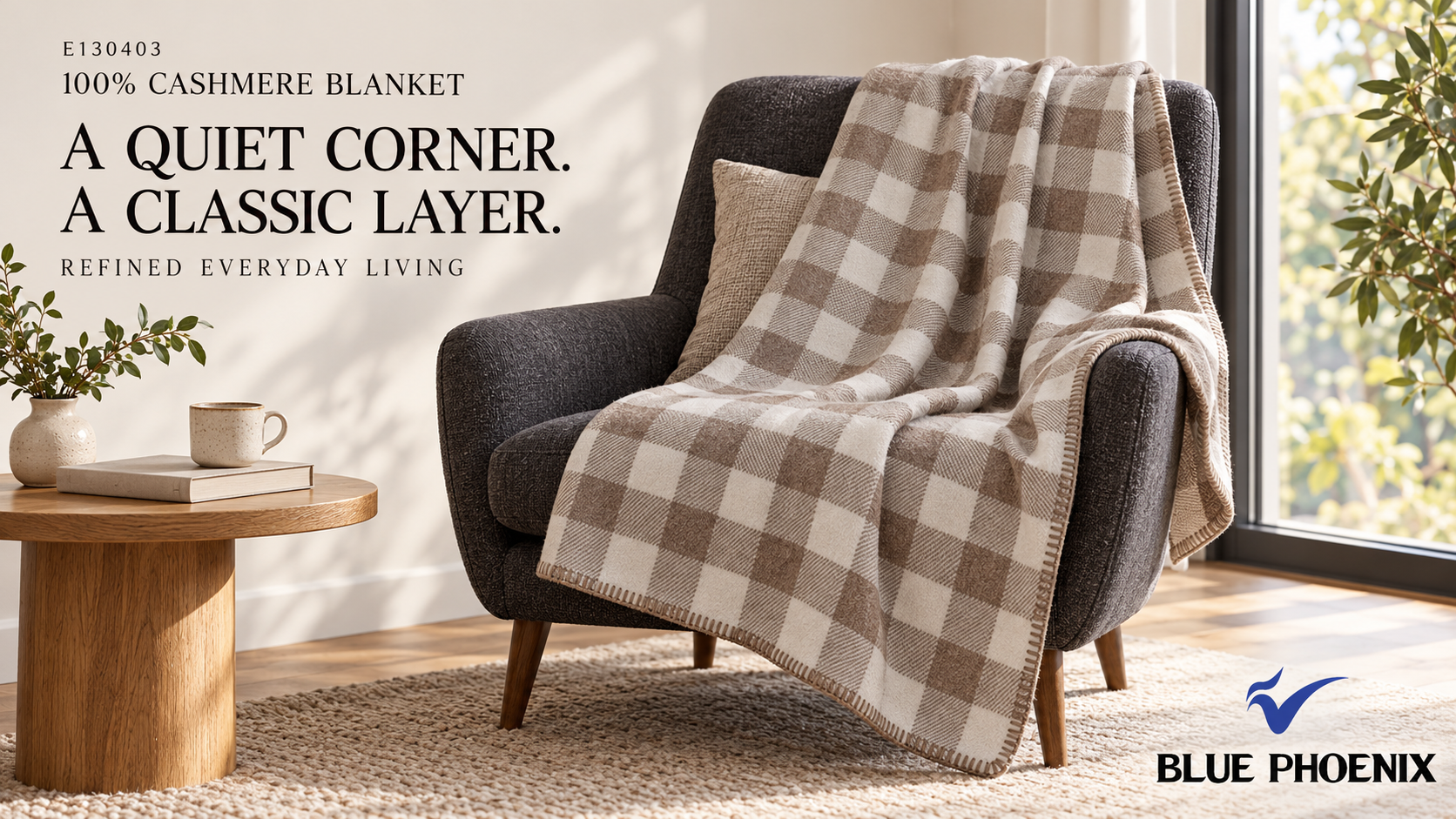
E130403 Natural Undyed Cashmere Throw
An ivory and taupe checkerboard cashmere throw with coordinated edge stitching and rounded corners.
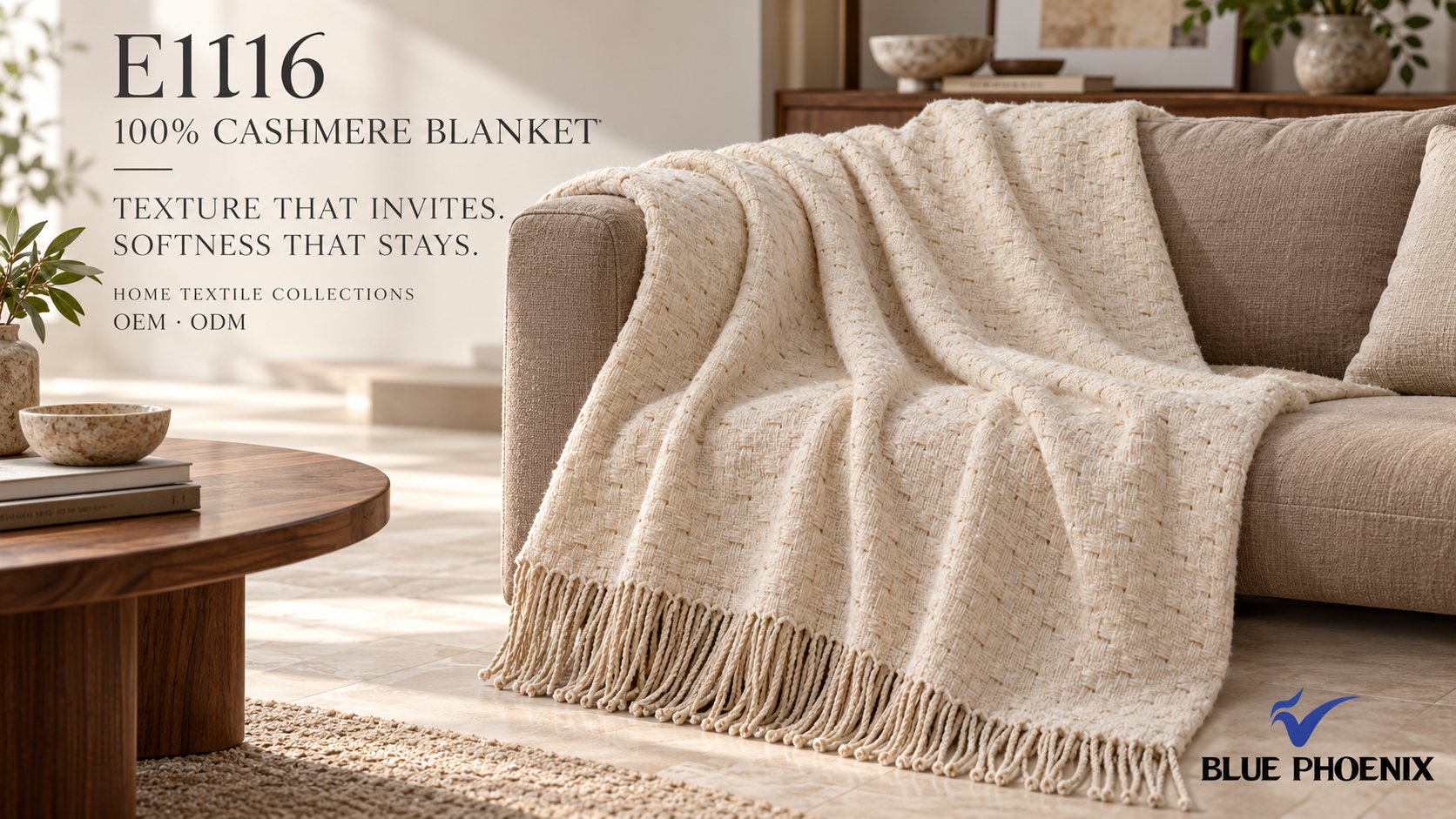
E1116 Ivory Textured Cashmere Throw
A warm-ivory cashmere throw with a distinctive textured surface for refined home collections.
No. Follow the instructions for the finished blanket. Fiber composition does not establish whether hand washing, machine washing or professional cleaning is appropriate.
No. The appropriate process depends on the product. Hand washing should not replace a professional-cleaning instruction without suitable confirmation from the supplier.
Only when the finished product’s care instructions permit it. Use the specified settings and suitable equipment. A wool or delicate program does not make every cashmere blanket machine washable.
Use a detergent suitable for cashmere and compatible with the approved care process. Follow its dosage instructions. Do not assume that a household shampoo, conditioner or stain-removal mixture is suitable.
Follow the care label. Where flat drying is specified, support the blanket on a suitable clean surface and avoid stretching it. Tumble drying and direct heat should not be assumed permissible.
Confirm the cleaning and drying process for the actual construction, including trims. Evaluate representative samples and approve consistent instructions for labels, packaging and product pages.
What should I check before cleaning a cashmere blanket?
Read the care label and inspect the fabric, edges and any separate trims.
Does 100% cashmere mean hand washable?
No. Composition and washability are separate product characteristics.
What if the care label is missing?
Ask the supplier or an experienced cleaner before attempting a full wash.
Can I choose a water temperature from a generic guide?
Use the temperature specified for the actual blanket.
Should detergent be measured?
Yes. Follow the detergent instructions and approved care method.
Can I use fabric conditioner to make cashmere softer?
Do not add it unless it is specifically approved for the product and care process.
Should a stain be rubbed?
Avoid vigorous rubbing. Use the approved treatment or seek professional advice.
Can a small basin accommodate every blanket?
No. The washing space must allow appropriate handling of the actual blanket size.
How long should a cashmere blanket soak?
Follow product-specific instructions rather than assuming a universal soaking time.
Can I lift a wet blanket by one corner?
Avoid concentrating the wet weight on a small section. Support the blanket adequately.
Can a wet cashmere blanket be wrung out?
Avoid twisting and wringing. Follow the approved water-removal method.
Can towels help remove moisture?
Gentle towel pressing may be appropriate where compatible with the product’s instructions.
Can I hang a wet cashmere blanket over a rail?
Do not improvise a hanging method when flat drying is specified.
Is tumble drying allowed?
Only when explicitly permitted by the finished product’s care instructions.
Will washing remove pilling?
Do not rely on washing to remove pills. Use suitable surface maintenance separately.
Can steaming reverse shrinkage?
Restoration should not be assumed. Seek assessment before attempting further treatment.
Does airing replace all cleaning?
No. It may refresh a dry blanket but does not remove every stain or replace necessary cleaning.
When can the blanket be stored?
When it is clean and fully dry, using packaging and conditions suitable for the textile.
Can hotels use ordinary laundry procedures for cashmere?
Only if the proposed process has been confirmed suitable for that finished product.
What should a supplier and buyer approve before production?
The specification, sample, care process, label wording and any relevant evaluation requirements.
#CashmereBlanket #CashmereBlanketCare #CashmereCleaning #CashmereWashing #CashmereDrying #CashmereStorage #PureCashmereBlanket #LuxuryHomeTextiles #PrivateLabelCashmere #WholesaleCashmereBlankets
Explore how construction, friction, maintenance and storage influence useful life, and how to assess repair or replacement.
Read the Cashmere Blanket Lifespan Guide →
Review dimensions, weight, weave, composition and finishing when selecting a blanket for home, retail or private-label collections.
Read the Cashmere Blanket Buying Guide →
Compare cashmere throws and blankets by construction, finish, dimensions and approved maintenance requirements.
Review wool throws and bedding options. Confirm the care requirements of each finished product rather than applying cashmere instructions automatically.
Consider woven and knitted yak-fiber options for natural-fiber assortments. Assess handling, finishing and the approved care process individually.
Explore camel-fiber products for coordinated home, gifting and retail collections. Evaluate the actual sample and maintenance requirements.
These products offer different surfaces, patterns and finishing details. Inclusion in this guide does not mean that a product is approved for home washing. Confirm the care instructions for the selected model and order.
E10003 is a 100% cashmere knitted blanket with an ivory tonal block texture and coordinated ribbed edges. It provides a knitted construction to compare with woven cashmere throws.
During sample evaluation, review the knit definition, edge construction and shape. Confirm the approved care process and assess the sample after that process before finalizing a private-label program.
Explore the E10003 Cashmere Knitted Blanket →
TH2210 is a 100% cashmere blanket in dark grey, offering a restrained solid-color option for premium home and retail collections.
Assess the surface consistency, drape and edge finishing on the actual sample. Discuss any appearance and dimensional requirements after care as part of the purchasing specification.
Explore the TH2210 Cashmere Blanket →
TH2207 offers a light-grey pure cashmere throw with short fringed ends. Its simple woven presentation suits sample comparisons focused on handling, drape and finishing.
Review the body fabric and fringe separately, and confirm how the blanket should be supported during any permitted cleaning and drying process.
Explore the TH2207 Pure Cashmere Throw →
TH130315 combines 100% cashmere with a solid red woven body and matching fringed ends. It provides a stronger color direction for home, gifting and premium retail assortments.
For commercial approval, agree on the color reference and any relevant colorfastness evaluation. A cleaning process should be confirmed for the finished colored product.
Explore the TH130315 Red Cashmere Blanket →
E130403 features 100% cashmere, an ivory and taupe checkerboard design, coordinated edge stitching and rounded corners.
Its undyed specification does not establish washability. Review the complete sample, including its pattern, corners and edge finishing, and confirm suitable care instructions for the finished blanket.
Explore the E130403 Natural Undyed Cashmere Throw →
E1116 offers a warm-ivory pure cashmere throw with a distinctive textured surface. It adds another surface treatment to a coordinated cashmere collection.
Inspect the texture, handling and finished edges before approval. Evaluate any proposed maintenance method on the actual construction rather than transferring instructions from a plain blanket.
Explore the E1116 Textured Cashmere Throw →
CFDA: Fiber Guide — Cashmere →
General background on cashmere. Always follow the care instructions applicable to the finished blanket.
Planning a wholesale cashmere blanket order or a private-label home-textile collection? Share your intended use, quantity, target dimensions, construction, color direction, edge finishing, care expectations and delivery destination.
BLUE PHOENIX can review sample development, labeling, packaging and quotation requirements. Include any housekeeping process or performance evaluation that the product must meet.
Approve the physical sample, final specification and care information before bulk production.
Website:www.shbluephoenix.com
Email:jamesli@shrainbow.cn
WhatsApp:+86 18017830390
WeChat: bluephoenix66

Blue Phoenix Blankets dedicated to strict quality control of blankets and scarves products and thoughtful customer service, our custom blankets wholesale products are exported to clients in such countries and regions as United states, Europe, Australia, Russia, Germany, Japan.
Copyright © 2026 Shanghai Rainbow Enterprise Development Co., Ltd. - All Rights Reserved.