High-Quality Wholesale Blankets Manufacturer & Supplier in China with custom design service - Blue Phoenix Blankets
Language
Cashmere blankets can release loose surface fibers, but the amount varies between finished products. A few fibers on clothing, small balls attached to the blanket and a pulled thread are different observations. Identifying the change correctly helps you decide whether to adjust everyday handling, follow the approved care instructions or contact the supplier.
For buyers asking “Do cashmere blankets shed?”, the useful questions are how the blanket behaves during its intended use, whether its surface remains intact and whether its performance matches the agreed sample.
| Surface Change | What You May Notice | What to Check |
|---|---|---|
| Shedding or fiber transfer | Loose fibers separate from the blanket and appear on clothing, seating or bedding. | Whether transfer continues, increases or accompanies visible thinning. |
| Pilling | Small tangled fiber balls remain attached to the fabric surface. | Where rubbing occurs and whether the surrounding fabric remains sound. |
| Snagging | A loop or thread is pulled out of position. | Possible contact with jewelry, zippers, rough furniture or other catching surfaces. |
| Fabric damage | Holes, broken yarns, opening edges or areas becoming noticeably thinner. | Stop further treatment and ask the supplier to assess the affected area. |
These changes can occur together, but they should not be treated as interchangeable. Removing a pill does not resolve the cause of continuing fiber loss, and pulling a snag can make the damage worse.
A blanket’s appearance and handling depend on more than its fiber label. Yarn, woven or knitted construction and finishing all contribute to the finished surface. A softly raised finish should therefore be assessed as part of the complete product.
Do not assume that a softer or fluffier blanket will automatically perform better. Compare the feel with the surface stability required for its intended use.
Consider where the blanket is used. Rough upholstery, exposed fasteners and accessories that catch the fabric can create demanding contact points. Inspect these areas when investigating recurring fuzz, pills or pulled threads.
For example, a throw used on a textured sofa may encounter different contact conditions from a blanket placed over smooth bed linen.
Before washing, brushing or removing pills, read the care label. If the instructions are missing or unclear, ask the supplier for guidance that applies to the actual blanket, including any binding or decorative finish.
Repeated washing, vigorous rubbing or aggressive surface grooming should not be used as an experiment to stop shedding.
A plain woven blanket, a textured throw and a reversible jacquard blanket should each be evaluated in their finished form. A sample from one design cannot establish the performance of every cashmere product in a collection.
There is no single household fiber count or fixed number of days that defines acceptable shedding for every cashmere blanket. A few visible fibers alone do not establish a defect, but ongoing loss should not automatically be dismissed as normal.
Instead, observe the condition and direction of change:
Does the blanket leave fibers repeatedly during ordinary use?
Is the amount increasing under similar conditions?
Are particular areas becoming thinner or uneven?
Are yarns, edges or bindings beginning to open?
Does the behavior differ noticeably from the approved sample?
For wholesale orders, agree on the assessment conditions and acceptance criteria before production. This is more dependable than relying on a general promise that a blanket “will stop shedding.”
Photograph the blanket surface and any affected areas before applying treatments. Note when the transfer occurs, what the blanket contacts and whether it has been cleaned. Keep the care label and order information available.
Check nearby zippers, jewelry, exposed furniture fittings and rough upholstery. Move the blanket away from surfaces that repeatedly catch it. Avoid pulling loose loops or threads.
Use the method stated on the product’s care label. Do not assume that every cashmere blanket is machine washable, hand washable or suitable for the same professional cleaning process.
If cleaning is permitted, follow the stated washing, drying and detergent instructions. Washing should be routine care when needed, rather than a guaranteed treatment for fiber loss.
Tools used for pill removal are not automatically suitable for every blanket surface. Ask the supplier whether a particular tool and technique are appropriate, especially for textured fabrics, loose structures and decorative details.
Do not repeatedly comb or shave an area that is becoming thin. Seek an assessment instead.
Follow the product’s storage guidance. Fold without catching fringe or decorative edges, and check the blanket periodically for damage. Do not pack it away while damp.
Contact the supplier if fiber transfer remains substantial, the problem worsens, or the blanket develops visible damage. Useful information includes:
Product model and purchase or order reference.
Clear photographs of the full blanket and affected areas.
Photographs showing the fibers or surface change.
A description of ordinary use and contact surfaces.
The cleaning method, products and tools already used.
Keep the blanket available for inspection. Avoid further surface treatments until the supplier has reviewed the issue.
Shedding alone cannot confirm or disprove cashmere content. Surface behavior and fiber identification are different questions.
If composition is important to a purchasing decision, request the written specification and appropriate verification. A qualified laboratory can advise on a suitable identification method for the material or blend. A home rubbing test cannot replace that process.
For wholesale cashmere blankets, evaluate a representative finished sample against the intended application. A retail sofa throw, a gifting blanket and a bedroom collection may have different priorities.
Composition: Confirm the declared fibers and identify separate binding materials.
Construction: Record whether the blanket is woven or knitted and describe its finish.
Sample comparison: Review surface appearance, feel, edges and fiber transfer under consistent conditions.
Care evaluation: Where agreed, compare the sample before and after the approved care process.
Performance assessment: Discuss suitable tests with the supplier or laboratory. A pilling result should not be presented as proof of zero shedding.
Acceptance criteria: Document the agreed requirements and retain an approved reference sample.
A claim such as “100% cashmere” describes composition. It should not be treated as a guarantee of zero pilling, zero fiber transfer or suitability for every cleaning method.
Cashmere blankets can shed, but the finished product and its condition need to be assessed individually. Distinguish loose fiber transfer from attached pills, pulled loops and fabric damage before choosing a response.
For everyday care, follow the label and avoid aggressive treatments. For purchasing, compare representative samples, agree on clear specifications and investigate continuing fiber loss rather than relying on broad assurances.
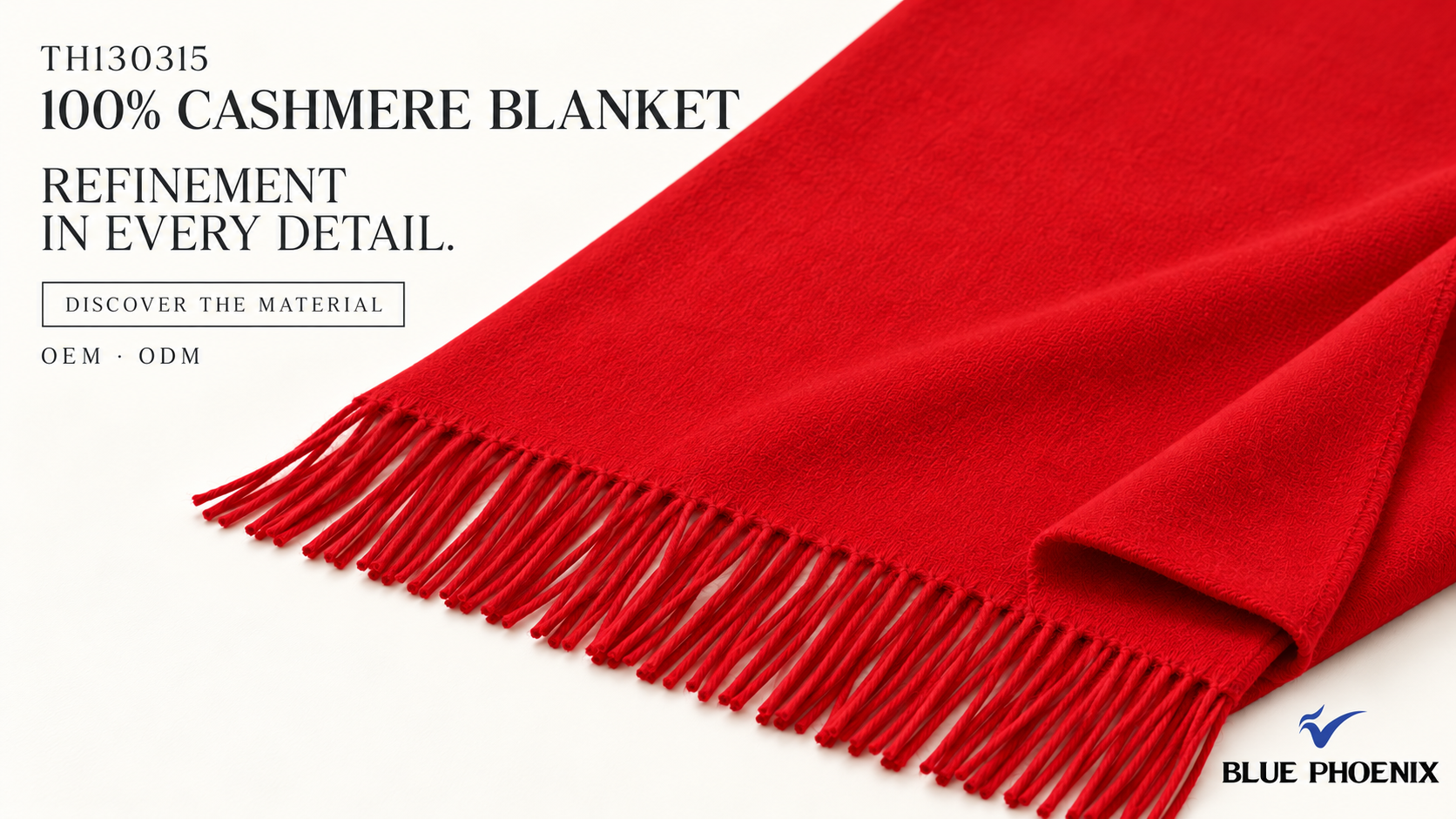
TH130315 Red Woven Cashmere Blanket
A red cashmere blanket with matching fringe and a softly folded edge.
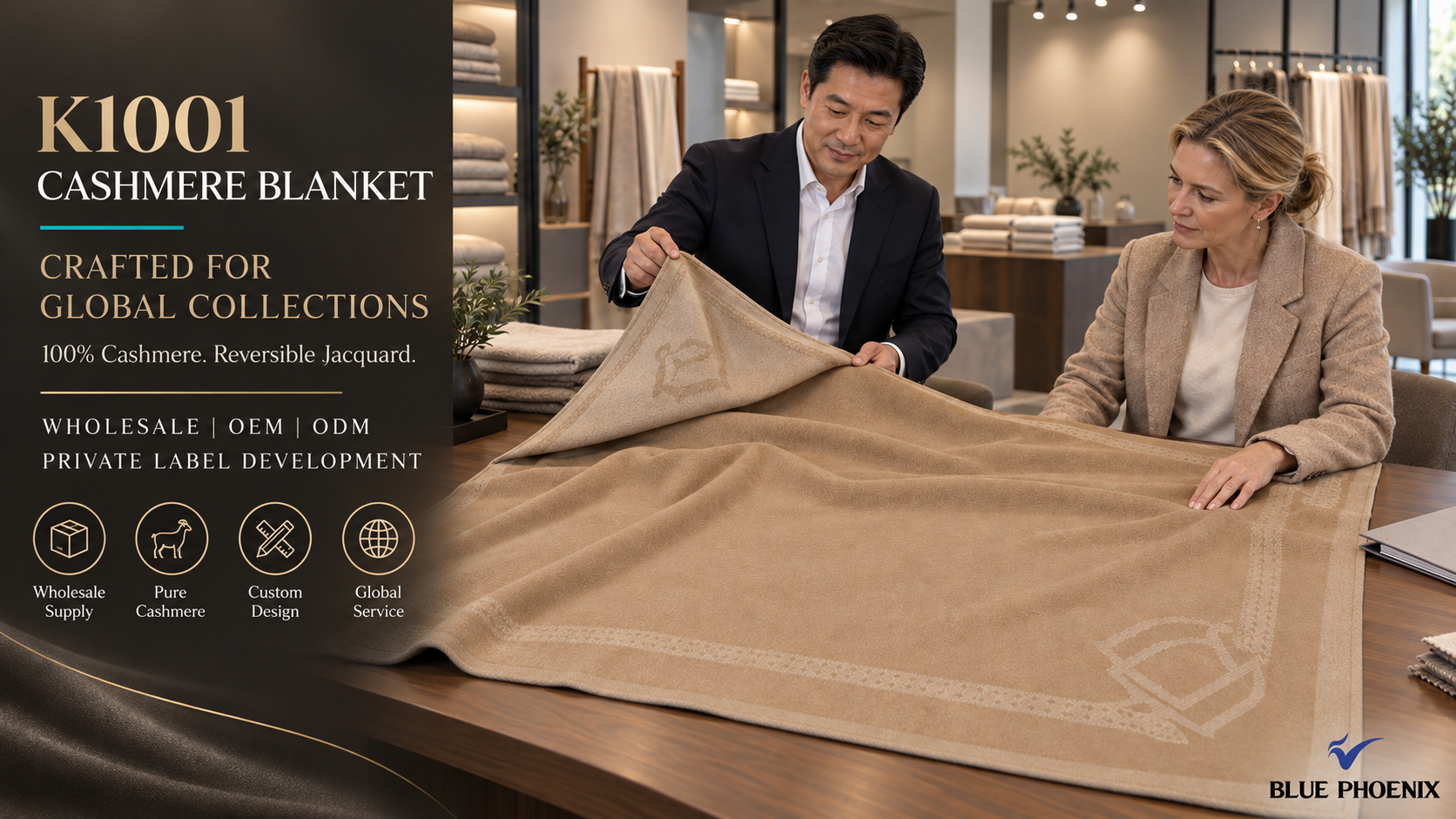
K1001 Reversible Equestrian Cashmere Blanket
Buyers examine a reversible equestrian jacquard blanket in a textile showroom.

TH2207 Lightweight Cashmere Blanket
A light grey cashmere blanket draped around the shoulders on a sunlit terrace.
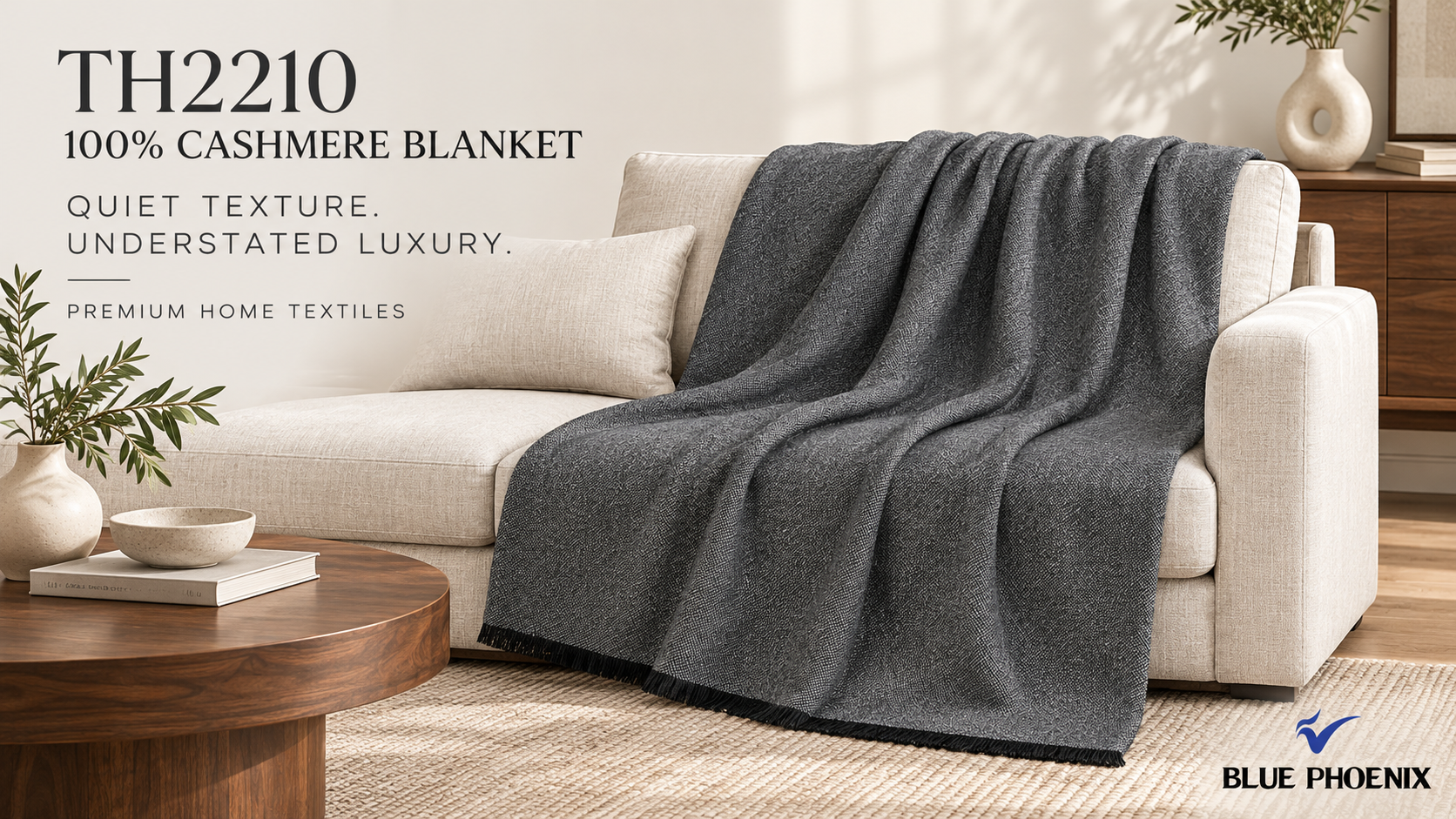
TH2210 Grey Cashmere Blanket
A dark grey cashmere blanket with short fringe draped over an ivory sofa.
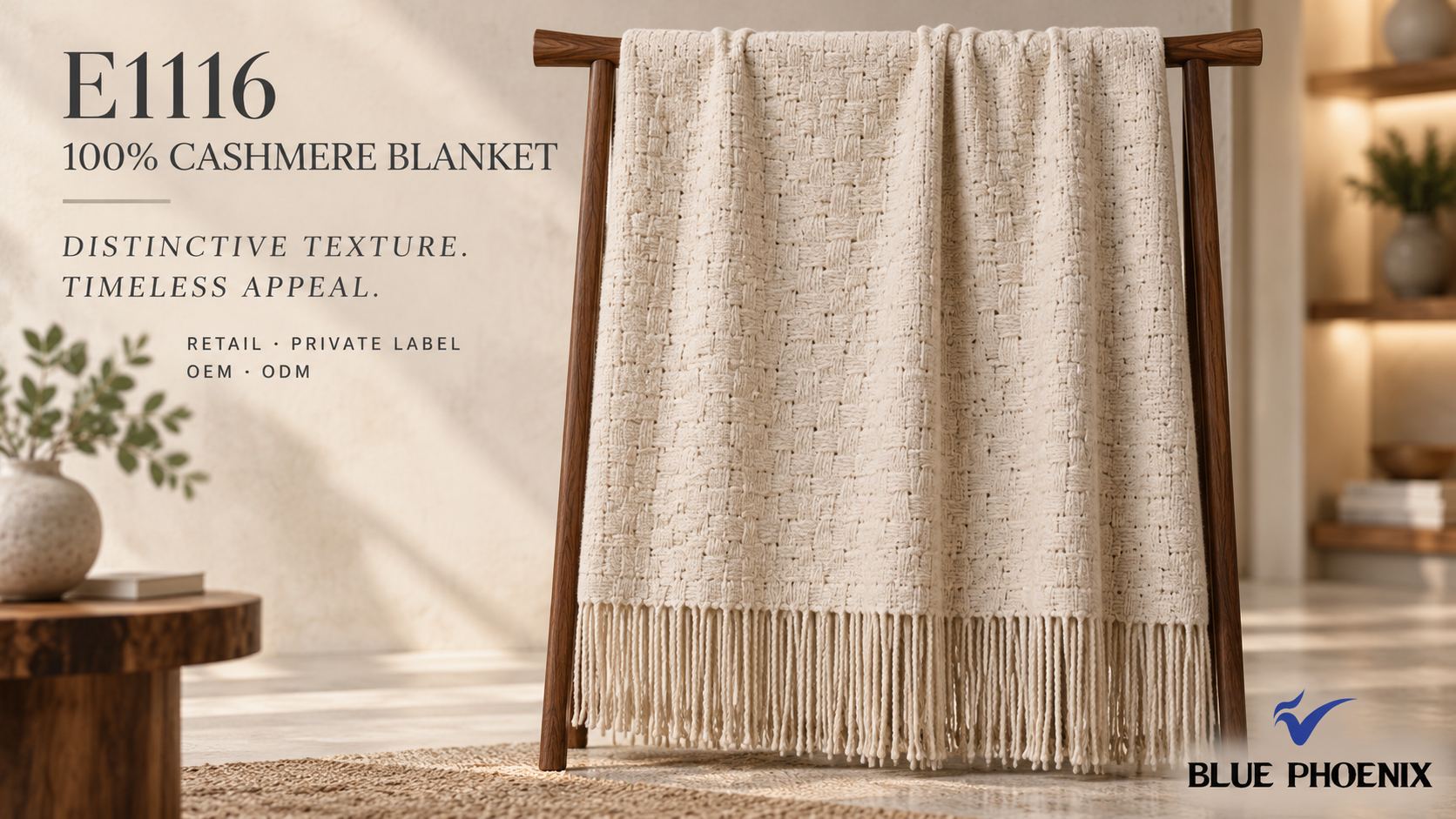
E1116 Textured Cashmere Throw
An ivory cashmere throw displayed on a wooden stand, revealing its texture and fringe.

E130403 Natural Undyed Check Cashmere Blanket
An ivory and taupe check blanket draped over an armchair beside a mountain-view window.
No. Surface behavior varies between finished products. Heavy or continuing fiber loss should be assessed rather than assumed to be unavoidable.
No. Shedding involves fibers separating from the blanket. Pilling produces tangled fiber balls that remain attached to its surface.
Washing is not a guaranteed solution. Follow the product’s care label and ask the supplier before using cleaning as a treatment for continuing fiber loss.
Ask the supplier whether the tool and technique suit the particular fabric and finish. Avoid repeated grooming of thin or damaged areas.
No. Shedding cannot establish fiber composition. Use appropriate documentation and laboratory verification when composition needs to be confirmed.
Record the issue with photographs, keep the care label and order details, and contact the supplier before applying further treatments.
Loose surface fibers may transfer during contact. Review the amount, whether it continues and whether the blanket remains intact.
They may be pills: tangled fibers attached to the surface. Check them separately from loose fiber transfer.
A pulled loop is a snag. Do not pull it further; ask the supplier how it should be handled.
It can, but newness alone does not establish whether the amount is acceptable. Inspect its condition and monitor the change.
There is no fixed period that applies to every product. Continuing or worsening loss deserves a supplier assessment.
No. Assess the complete blanket, including composition, construction, finishing and suitability for the intended use.
Rough or catching surfaces can create demanding contact points. Check where the blanket repeatedly rubs or catches.
Do not introduce a brushing routine without product-specific guidance. Repeated grooming is not a substitute for investigating fiber loss.
Only use machine washing if the actual product’s care label permits it, following the stated settings and drying instructions.
Ask the supplier for an approved method. An unsuitable tool or technique can damage the fabric.
Photograph the full blanket, affected areas, transferred fibers and care label. Include the model and order reference.
Increasing fiber loss, visible thinning, broken yarns, opening edges and holes are reasons to request an assessment.
No. Evaluate the particular finished blend rather than assuming that a fiber percentage predicts its performance.
A construction label alone is insufficient. Compare representative finished samples with the required use and care conditions.
No. Fiber identity requires a separate assessment using suitable documentation and, when needed, specialist testing.
No. Ask what the selected method evaluates. Do not use a pilling result as a universal shedding guarantee.
Use consistent comparison conditions, record observations and agree on acceptance criteria with the supplier.
Where relevant, agree on an evaluation after the approved care process and compare it with the original sample.
Yes. Discuss product-specific instructions, label wording and any required verification before approving the order.
Provide the intended use, composition, size, target weight, construction, finish, quantity, care requirements and destination.
CashmereBlanketShedding, CashmereBlanketCare, CashmerePilling, CashmereFiberTransfer, PureCashmereBlanket, WovenCashmereBlanket, CashmereThrowBlanket, WholesaleCashmereBlankets, PrivateLabelBlankets, BlanketQualityControl
What Is a Cashmere Blanket Made Of? Fibers, Blends and Construction
Understand composition claims, fabric construction and separate binding materials before comparing blankets.
How to Wash a 100% Cashmere Blanket: Cleaning, Drying and Care
Review a label-led approach to choosing the appropriate cleaning and drying method.
How Long Does a Cashmere Blanket Last?
Explore how use, care and the condition of the finished blanket inform maintenance and replacement decisions.
How to Choose a Cashmere Blanket: Size, Weight, Weave and Care
Compare the specifications that matter when selecting a blanket for a home or commercial collection.
Cashmere Blankets — Explore cashmere designs for retail, gifting and private label inquiries.
Wool Blankets — Compare additional materials, patterns and constructions.
Yak Down Blankets — Review yak fiber options for natural fiber collections.
Camel Blankets — Explore another natural fiber category for sample comparison.
These products offer different designs and finishes for consideration. Their inclusion is not a claim of zero shedding or zero pilling. Request representative samples and confirm the requirements for your project.
A red cashmere woven blanket with fringe. Include the fabric surface and fringe in your sample review.
View TH130315 Cashmere Blanket
A reversible equestrian jacquard design. Review both faces, the pattern and the edge finishing when assessing the sample.
A light grey cashmere blanket with short fringe. Compare its feel, coverage and care requirements with the intended application.
A dark grey cashmere blanket with short fringe. Review the finished surface alongside other plain and patterned samples.
An ivory cashmere throw with a textured surface and fringe. Examine the texture and discuss suitable care before selecting it for a collection.
An ivory and taupe check cashmere blanket with rounded corners and stitched edges. Compare its finish with fringed alternatives.
For wholesale cashmere blankets, private label collections and OEM/ODM development, start with a clear description of the intended use and the samples you want to compare.
Please provide your preferred composition, size, target weight, construction, colors, edge finish, quantity, care requirements, labeling, packaging and delivery destination. Sample arrangements, verification, quotations and production schedules should be confirmed for the specific project.
Website: www.shbluephoenix.com
Email: jamesli@shrainbow.cn
WhatsApp: +86 18017830390
WeChat: bluephoenix66
Woolmark: What Is Pilling?
An explanation of surface pill formation and contributing factors, useful for distinguishing pilling from loose fiber transfer.
CCMI: Cashmere and Superfine Wool Garment Care
Background guidance on garment cleaning and storage; use your blanket’s own care label for product-specific instructions.
SGS: Cashmere Identification and Testing
An introduction to specialist fiber identification, which addresses composition rather than predicting shedding performance.

Blue Phoenix Blankets dedicated to strict quality control of blankets and scarves products and thoughtful customer service, our custom blankets wholesale products are exported to clients in such countries and regions as United states, Europe, Australia, Russia, Germany, Japan.
Copyright © 2026 Shanghai Rainbow Enterprise Development Co., Ltd. - All Rights Reserved.