High-Quality Wholesale Blankets Manufacturer & Supplier in China with custom design service - Blue Phoenix Blankets
Language
Some camel hair blankets can be washed, while others require professional cleaning. The correct method depends on the finished product, including its fabric construction, surface finish, colors and edging. Always check the blanket’s care label before adding water or detergent.
If the label is missing or unclear, ask the manufacturer for product-specific instructions. A description such as “100% camel hair” identifies the material; it does not automatically mean that the blanket is hand washable or machine washable.
Camel hair blankets can differ in weight, weave, finishing and edge construction. Some have fringe, while others use a separate binding material. These details should be considered together when deciding how to clean the product.
Also distinguish a camel hair blanket from a camel hair-filled duvet. A duvet has an outer shell and an internal filling, so instructions for an unfilled woven blanket should not be transferred to it.
| Care Instruction | What to Do |
|---|---|
| Hand wash permitted | Follow the stated temperature, detergent and handling instructions. |
| Machine wash permitted | Use the specified program and confirm that the machine can accommodate the blanket appropriately. |
| Do not wash | Do not substitute hand washing. Check the separate professional cleaning instructions. |
| Professional cleaning specified | Show the complete label to the cleaner, including any instructions for trim or binding. |
| Missing or unreadable label | Ask the supplier before attempting a full clean. |
A washing machine’s wool program does not establish that a particular camel hair blanket is washable. The permission must come from the product’s own care instructions.
Lay the blanket on a clean surface and check its condition. Look for stains, pulled threads, thinning areas, loose fringe and opening seams or bindings.
For a large or delicate blanket, consider the practical handling requirements before starting. You need an appropriate washing space if washing is permitted, a way to support the wet textile and sufficient space for the approved drying method.
If the blanket is already damaged, ask the supplier or a suitable professional cleaner to assess it before treatment.
Blot a fresh spill gently with a clean, absorbent cloth without scrubbing the fabric. Before applying water or a stain remover, check whether local treatment is permitted.
If the supplier approves spot cleaning, follow the recommended product and method, testing a concealed area first. A successful small test does not establish that the entire blanket can be immersed.
For an unfamiliar stain, persistent discoloration or a blanket marked against washing, seek advice rather than trying several cleaning products in succession.
If the blanket is specifically approved for hand washing, use its stated temperature and a detergent recommended for the material and finish. Follow the detergent dosage rather than assuming that more product will clean more effectively.
Handle the blanket gently. Avoid vigorous rubbing, twisting or wringing, and support it when moving it while wet. Follow the approved rinsing and water-removal instructions.
Do not apply a universal soaking time to every camel hair blanket. If the label does not provide enough detail, request clarification before washing.
Only consider machine washing when the actual blanket is labeled for it. Follow the specified settings, including any restrictions on mechanical action or spinning.
Check both the appliance instructions and the blanket’s size. A blanket that must be forced into the drum is not a suitable load. Do not assume that a larger commercial machine or an industrial laundry process is automatically acceptable.
For hospitality projects, confirm the proposed laundry process during product development and evaluate a representative sample before approving bulk production.
Use the drying method stated on the label. Flat drying, line drying and tumble drying are separate instructions and should not be substituted without approval.
When flat drying is specified, prepare a clean, adequately supported surface and arrange the blanket without stretching it. Allow airflow and make sure it dries throughout before folding.
Avoid using a radiator, hair dryer or other improvised heat source to speed up the process. Do not tumble dry unless the product’s instructions expressly permit it.
For a large wet blanket that you cannot support or dry properly at home, consult a professional cleaner before beginning the wash.
Use professional cleaning when required by the label or when the blanket’s condition, size or stain makes home treatment unsuitable.
Give the cleaner the care label, fiber information and details of any separate binding material. Explain the stain and disclose any previous cleaning attempts.
Professional wet cleaning and dry cleaning are different processes. The cleaner should select a suitable permitted method after reviewing the finished article.
Keep the blanket away from surfaces that repeatedly catch its yarns or fringe. Follow the supplier’s guidance for airing and surface maintenance; do not introduce vigorous brushing as a routine treatment.
Clean when needed according to the approved method rather than following an arbitrary annual schedule. Before storage, inspect the blanket and ensure it is clean and fully dry.
Fold it without compressing decorative details unnecessarily, store it in suitable dry conditions and check periodically for damage or pest activity.
For wholesale camel hair blankets, agree on care requirements alongside composition, dimensions, target weight and finishing.
Intended use: Retail throw, bedroom blanket, gifting collection or hospitality application.
Complete construction: Blanket body, fringe, stitching and any separate binding materials.
Care instructions: The permitted cleaning and drying processes for the finished product.
Sample evaluation: Appearance, dimensions, feel and edge condition before and after the agreed care process.
Acceptance criteria: Documented requirements and an approved reference sample.
Do not promise commercial washability, a fixed service life or allergy-related benefits based solely on camel fiber content.
Can you wash camel hair blankets? Only when the specific product’s care instructions allow it. Confirm the permitted cleaning method, plan the drying process and consider the complete blanket, including its edging.
For buyers developing a collection, establish care expectations before ordering. A representative finished sample and clear written instructions provide a more dependable basis for selection than general assumptions about natural fibers.
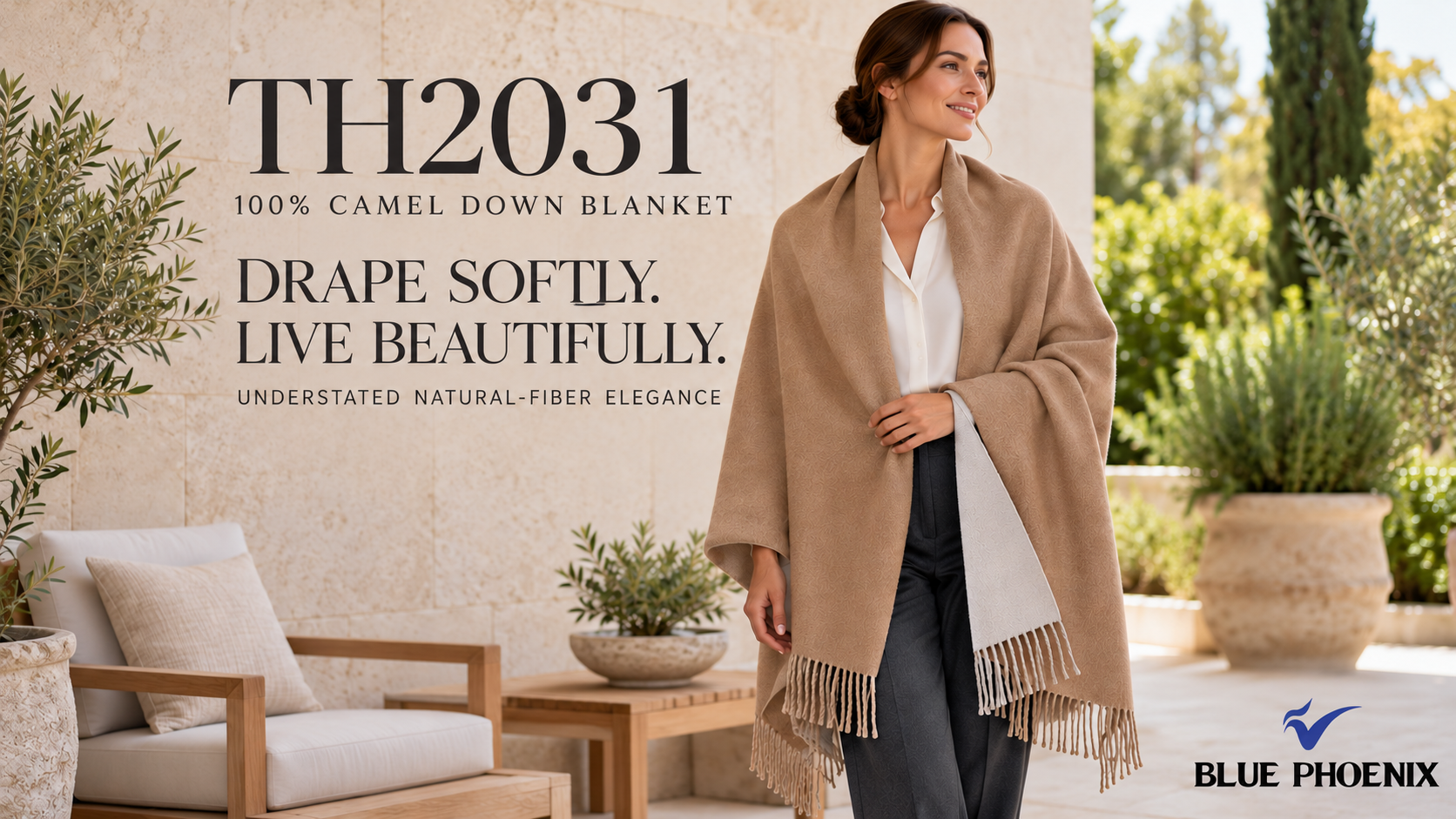
TH2031 Camel Down Throw Blanket
A camel-toned fringed blanket draped around the shoulders on a sunlit terrace.

TTH2601 Camel Down Plaid Blanket
A camel and ivory plaid blanket with bound edges displayed across a hotel bed.
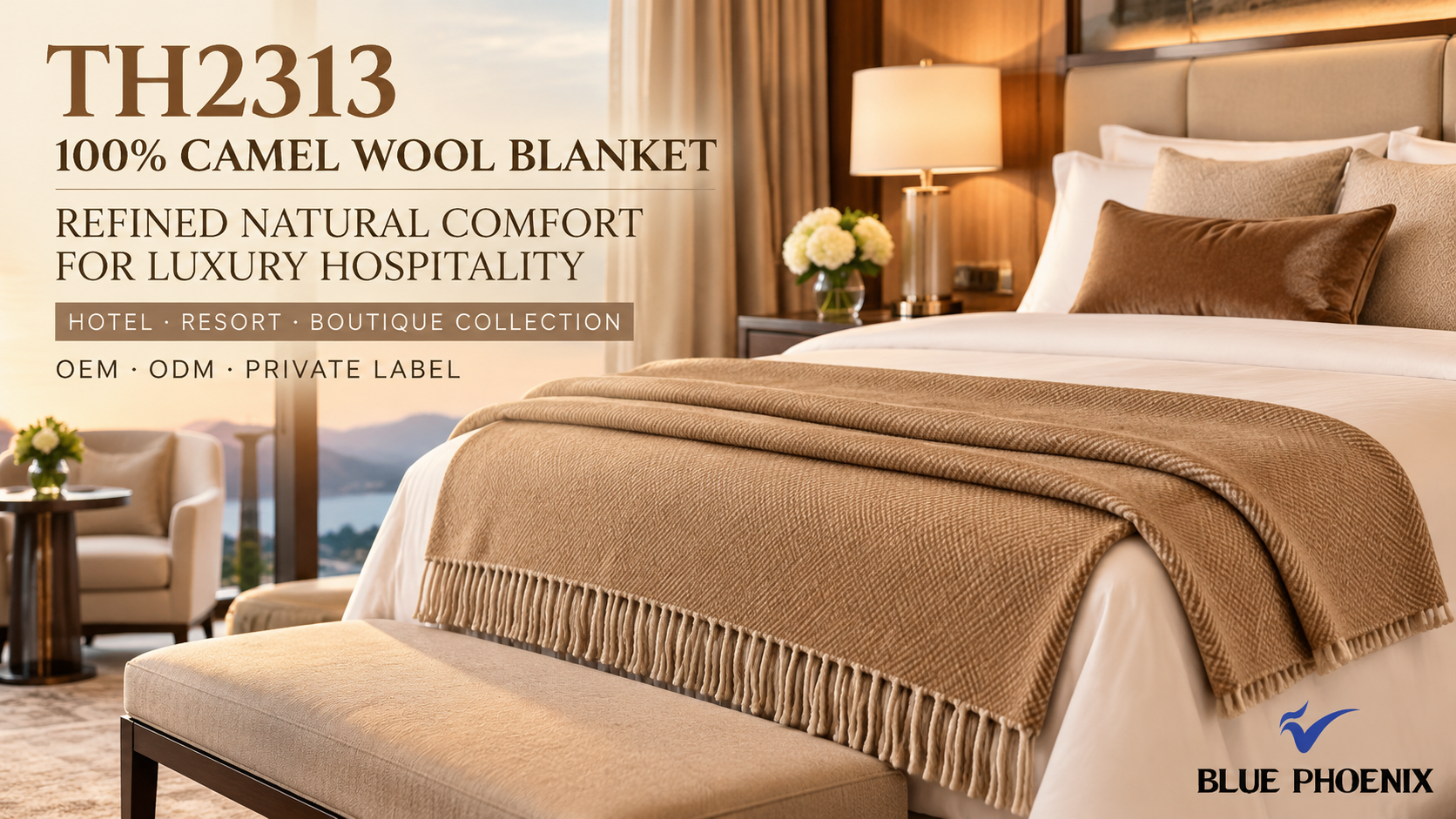
TH2313 Camel Wool Blanket
A camel-toned woven blanket with fringe layered over white bedding in a hotel suite.
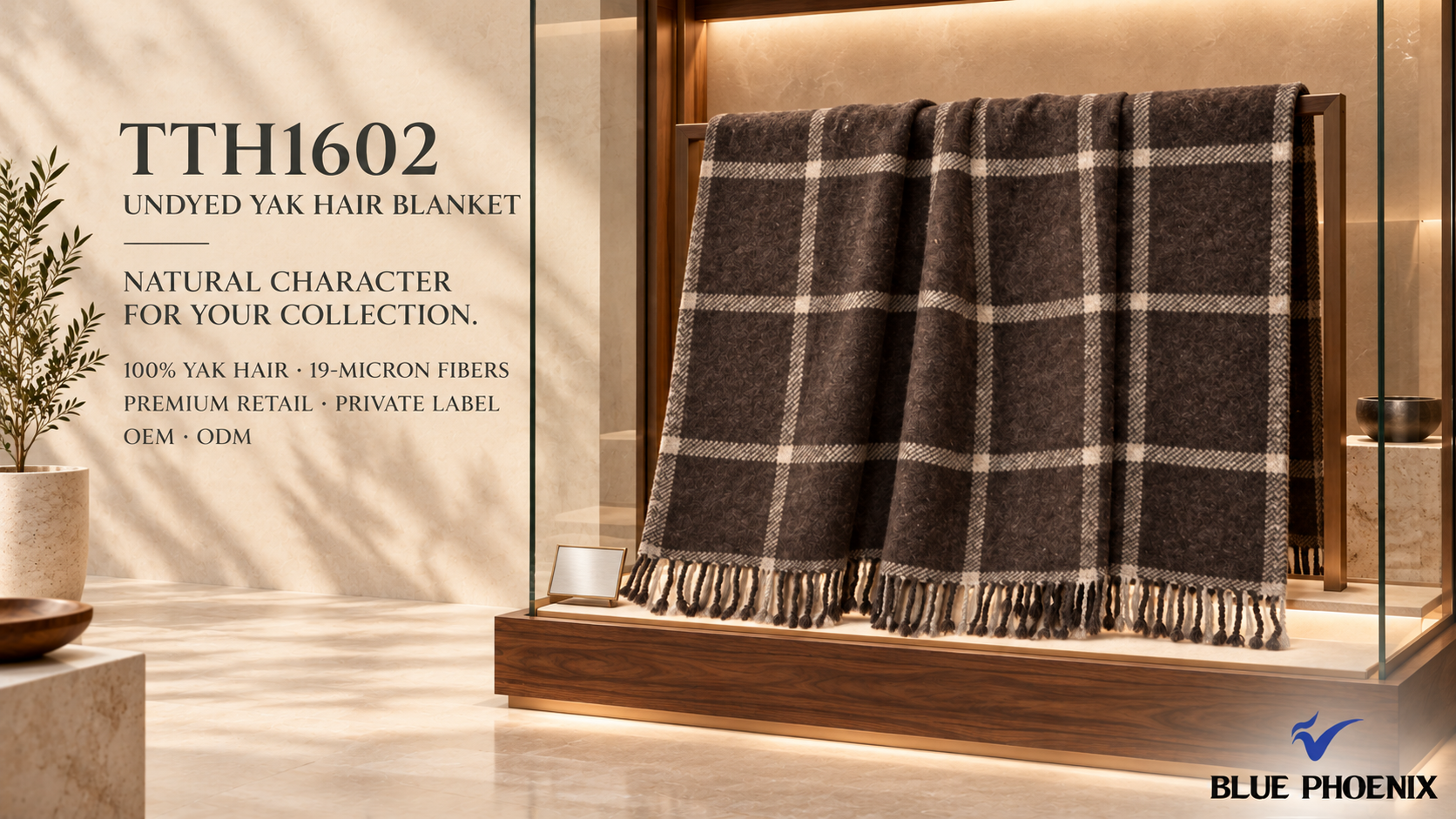
TTH1602 Undyed Yak Hair Blanket
A brown windowpane-check blanket with fringe displayed in a glass showroom cabinet.
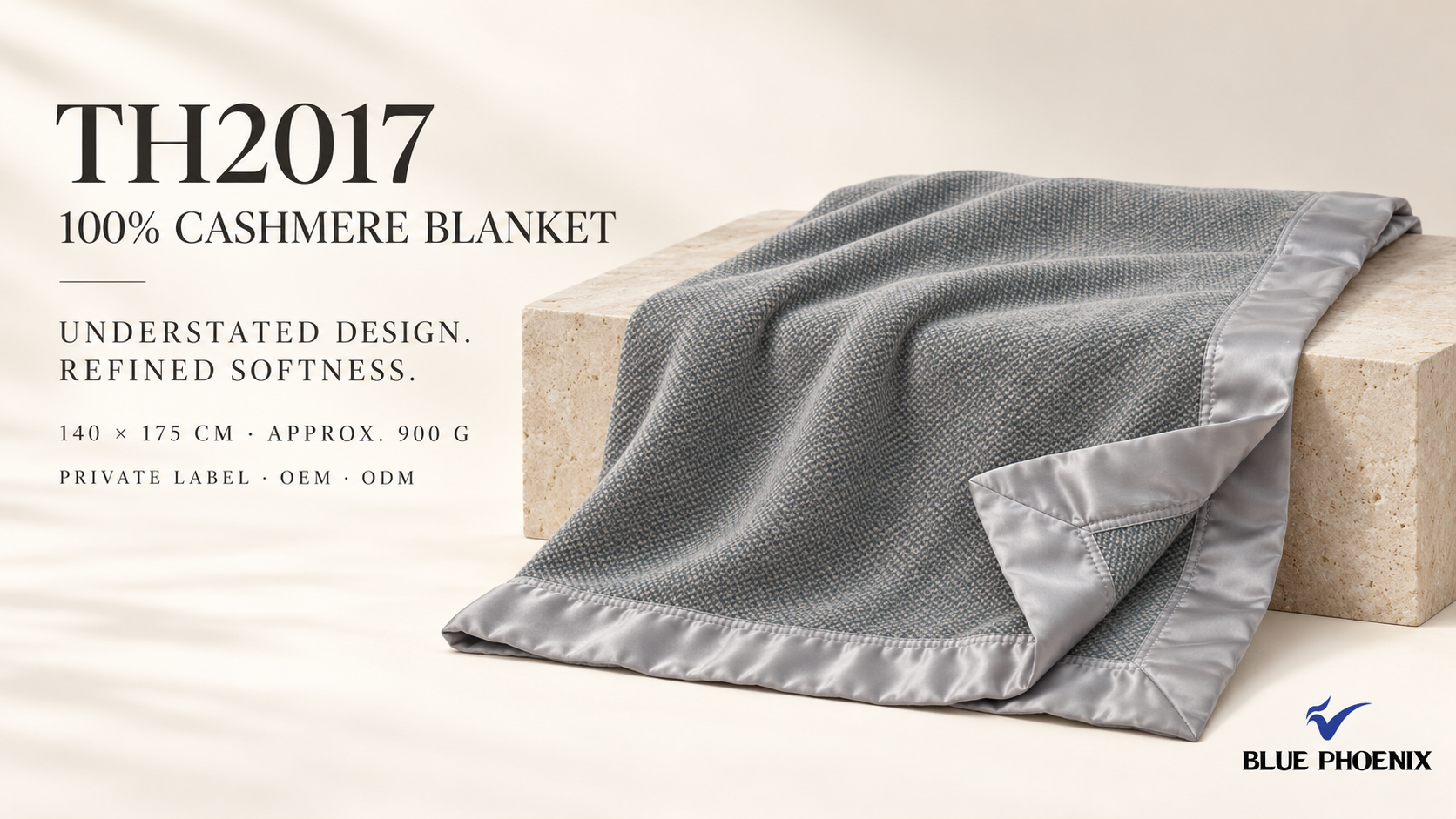
TH2017 Cashmere Blanket with Silk Binding
A blue-grey cashmere blanket draped over a pale stone block, revealing its satin-bound corner.

Q0192-A Lambswool Blanket
Neutral color blocks and blue stripes bring a refined finish to a hotel bed.
.
No. Follow the specific product’s care instructions. If they are missing, ask the supplier before starting.
No. Composition and washability are separate product characteristics.
No. Hand washing is still washing. Check the permitted professional cleaning process instead.
Use the drying method specified for the product. Do not replace a flat-drying instruction with hanging.
Base cleaning on its condition, use and care instructions. There is no single schedule suitable for every blanket.
Not automatically. A filled duvet has a different construction and needs its own care instructions.
Check the care label, existing damage, stains, edge construction and the space available for the approved drying method.
No. A machine setting cannot establish washability for a product that has not been approved for that process.
Contact the manufacturer using the model number, purchase details and photographs of the blanket.
No. Local stain treatment and full immersion are different procedures. Approval for one does not establish approval for the other.
Gently blot without scrubbing, then check the care instructions before applying a cleaning solution.
Use a product compatible with the supplier’s approved care method, including any requirements for the blanket’s trim.
Do not introduce prolonged soaking without explicit product-specific approval.
Avoid wringing or twisting. Follow the approved method for removing water and supporting the textile.
Low heat is not automatic permission. Use a dryer only when the blanket’s instructions allow it.
Discuss it with a suitable professional cleaner before beginning a wash.
No. An undyed description does not establish the permitted cleaning process.
Yes. The finished product includes its binding, stitching and other components, which should be considered together.
Ask the supplier whether brushing is appropriate for the particular surface and finish.
Do not treat steaming as a universal cleaning method. Confirm whether steam is suitable for the product.
Provide the complete label, known composition, binding details, stain information and previous treatment history.
No. It is a professional process using appropriate equipment and controls.
Only use a process confirmed as suitable for the finished product. Evaluate the proposed method before purchasing in volume.
Compare dimensions, shape, surface appearance, feel, fringe and binding condition with the original reference.
Fiber content alone does not justify an allergy-protection claim. Avoid making such promises without appropriate supporting evidence.
Include intended use, composition, dimensions, target weight, finishing, quantity, care requirements, labels, packaging and destination.
CamelHairBlanket, CamelBlanketCare, WashingCamelBlankets, CamelDownBlanket, NaturalFiberBlankets, BlanketCleaning, BlanketDrying, WholesaleCamelBlankets, PrivateLabelBlankets, TextileCareLabels
How to Wash a 100% Cashmere Blanket: Cleaning, Drying and Care
Compare care considerations for another fine animal fiber, while keeping each product’s instructions separate.
What Is a Cashmere Blanket Made Of? Fibers, Blends and Construction
Understand why composition, fabric structure and separate binding materials all belong in a finished-product specification.
Do Cashmere Blankets Shed? Causes, Care and Buying Tips
Learn to distinguish loose fiber transfer, pilling and pulled threads when reviewing blanket condition.
Camel Blankets — Explore camel fiber designs and request product-specific care information.
Cashmere Blankets — Compare different finishes, patterns and constructions.
Yak Down Blankets — Review yak fiber options for natural textile collections.
Wool Blankets — Explore additional woven blanket designs for sample comparison.
The first three products are camel fiber blankets. The remaining products provide yak, cashmere and lambswool alternatives. Each requires its own care instructions; inclusion here does not establish home or commercial washability.
A camel and raw-white throw with fringe. Review both faces, the drape and the finished edges when comparing samples.
View TH2031 Camel Down Blanket
A reversible camel down blanket combining a plaid design with a lighter reverse and bound edges. Confirm the approved care method for the complete construction.
View TTH2601 Camel Down Blanket
A natural camel-toned blanket with twill woven construction and fringe. Include the fabric surface and fringe condition in sample evaluation.
View TH2313 Camel Wool Blanket
A brown windowpane-check yak hair blanket with fringe, offering a different material and pattern for collection planning.
A blue-grey cashmere blanket with a separate silk binding. Its construction illustrates why the body fabric and edge material should both be considered during care planning.
A lambswool blanket combining neutral color blocks, blue stripes and blanket-stitched edges. Compare its finish and intended use alongside the other natural fiber samples.
View Q0192-A Lambswool Blanket
For wholesale camel blankets, private label collections and OEM/ODM development, begin with the intended application and the care requirements your customers need.
Please provide your preferred composition, dimensions, target weight, colors, construction, edge finish, quantity, labels, packaging and delivery destination. Sample arrangements, care evaluation, quotations and production schedules should be confirmed for the project.
Website: www.shbluephoenix.com
Email: jamesli@shrainbow.cn
WhatsApp: +86 18017830390
WeChat: bluephoenix66
GINETEX: Textile Care Symbols Explained
An authoritative reference for interpreting washing, drying and professional cleaning instructions.
Woolmark: Washing Instruction Symbols Explained
A practical explanation of common care claims for wool products; use the actual camel blanket label to determine its permitted treatment.
CCMI: Cashmere and Superfine Wool Garment Care
Background reading on caring for fine animal fiber garments, rather than a substitute for blanket-specific instructions.

Blue Phoenix Blankets dedicated to strict quality control of blankets and scarves products and thoughtful customer service, our custom blankets wholesale products are exported to clients in such countries and regions as United states, Europe, Australia, Russia, Germany, Japan.
Copyright © 2026 Shanghai Rainbow Enterprise Development Co., Ltd. - All Rights Reserved.