High-Quality Wholesale Blankets Manufacturer & Supplier in China with custom design service - Blue Phoenix Blankets
Language
Yes—cashmere blankets can be an excellent choice when softness, refined drape and a premium natural-fiber feel are priorities. However, the word “cashmere” alone does not establish the quality, warmth or suitability of a finished blanket.
A well-chosen cashmere blanket should match its intended use, dimensions, construction and care requirements. For retailers, home-textile brands and hospitality buyers, evaluating these details creates a stronger purchasing basis than relying on a luxury description alone.
Cashmere comes from the fine undercoat of cashmere goats. It is a different fiber from sheep’s wool, although both appear in premium natural-fiber textile collections.
Distinguish between a 100% cashmere blanket, a cashmere blend and a product described only as “cashmere feel.” A blend should identify the actual fiber percentages. A softness description does not establish cashmere content.
Professional buyers should request composition information and discuss appropriate verification for their market and purchasing requirements. Confirm separate binding and trim materials where applicable.
Cashmere is valued for its fine feel, but a blanket’s final character also depends on yarn, weaving or knitting, surface finishing and edge construction.
A lightweight woven throw, a textured knitted blanket and a substantial reversible jacquard offer different experiences. Compare them as finished products rather than assuming they are interchangeable because they share the same composition.
Evaluate the sample opened flat, naturally draped and folded. These three views help reveal its construction, flexibility and presentation.
Do not choose a blanket’s winter or year-round role from its material name alone. Review its construction, thickness, dimensions and weight alongside the room conditions and other bedding.
A compact cashmere throw may suit an armchair or decorative bedroom layer. Full bed coverage requires a separate dimension check against the mattress and desired side drop.
For hospitality projects, provide the actual bed dimensions, intended placement and maintenance requirements before selecting a sample.
Inspect the blanket under consistent lighting. Look for an even appearance, unwanted marks, loose yarns, distorted patterns and uneven edges.
For checks and stripes, review alignment and color balance. For jacquard, inspect the complete repeat and both faces. For knitted designs, examine the stitch structure and edge shape without pulling the fabric out of proportion.
Softness on first touch is only one quality indicator. Fiber characteristics and construction also matter when assessing shape retention and surface behavior. Do not treat a cashmere label as a guarantee against pilling.
Choose a blanket whose approved care requirements fit the intended use. Follow the instructions for the finished product, including its binding and other components.
Do not assume that every cashmere blanket can be machine washed or tumble dried. Retail buyers should review care-label wording before packaging approval, while hospitality buyers should discuss their actual cleaning process during development.
For seasonal storage, ensure the blanket is clean and completely dry. Fold it carefully and use appropriate protection against moth damage.
Cashmere is one collection choice, rather than the automatic answer to every blanket requirement.
A buyer may shortlist cashmere for a premium gift collection, patterned wool for decorative bedding, or camel down for a different natural-fiber story. Compare representative samples against the same requirements: coverage, appearance, handle, care, packaging and project budget.
Keep material descriptions accurate. A wool blanket should retain its own product identity rather than being described as cashmere merely because it feels soft.
For a wholesale cashmere blanket inquiry, provide the intended application, fiber composition, construction, dimensions, target piece weight, colors, pattern and edge finish.
Add quantities by design and color, label artwork, packaging requirements, destination and requested delivery date. Identify which details describe an existing model and which require custom development.
Before production, approve a representative sample and record the agreed specification. Confirm any required testing methods and acceptance criteria separately.
Cashmere blankets are a good choice when their material, construction and care requirements suit the customer’s priorities. Their value should be assessed through accurate composition information, a representative physical sample and clear product specifications.
For a balanced collection, compare different constructions and natural-fiber options. Give each selected blanket a clear role rather than treating every premium throw as the same product.
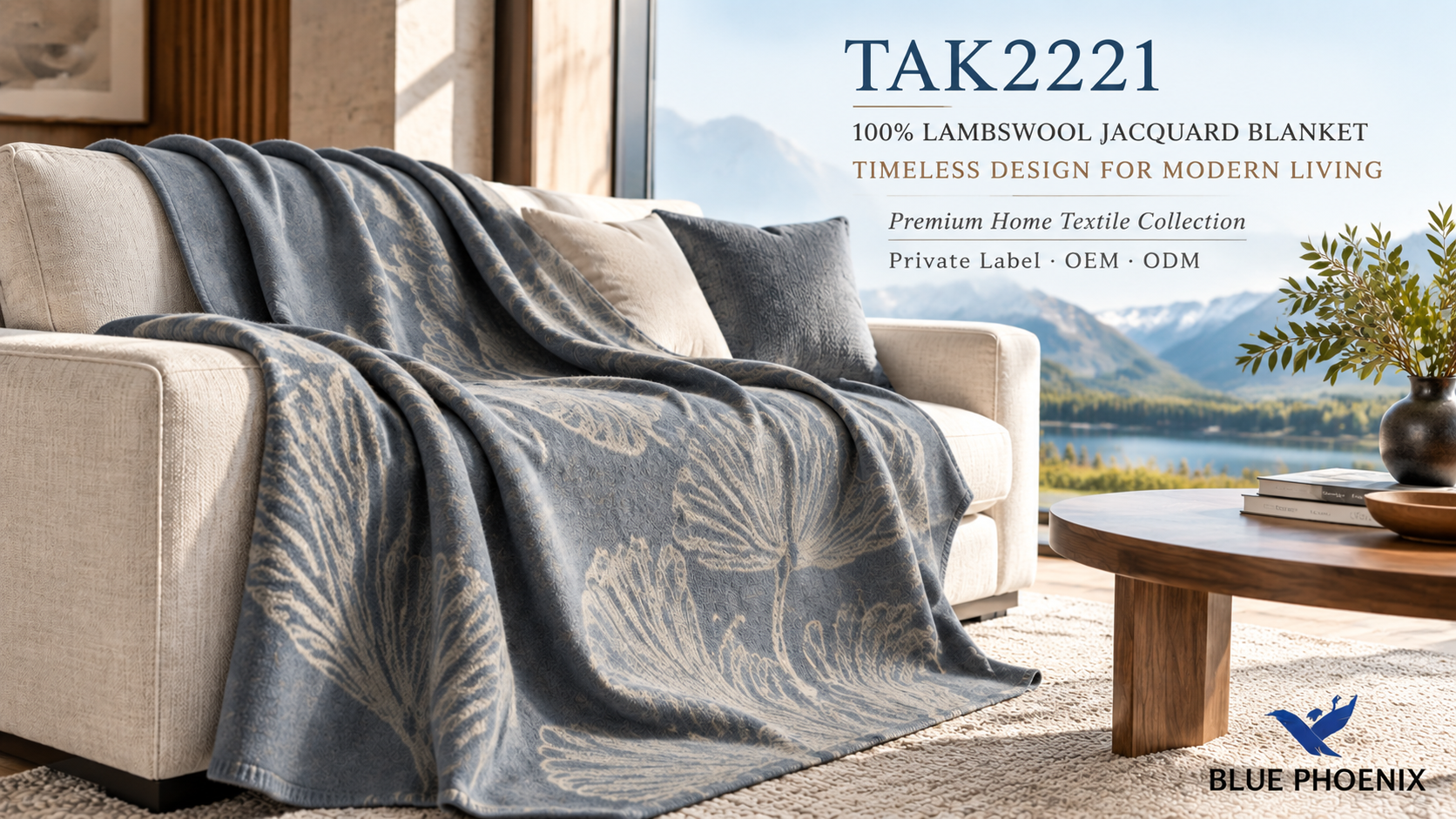
TAK2221 Ginkgo Leaf Wool Jacquard Blanket
Blue-tone wool jacquard blanket with a woven ginkgo leaf pattern and clean self-folded edges.
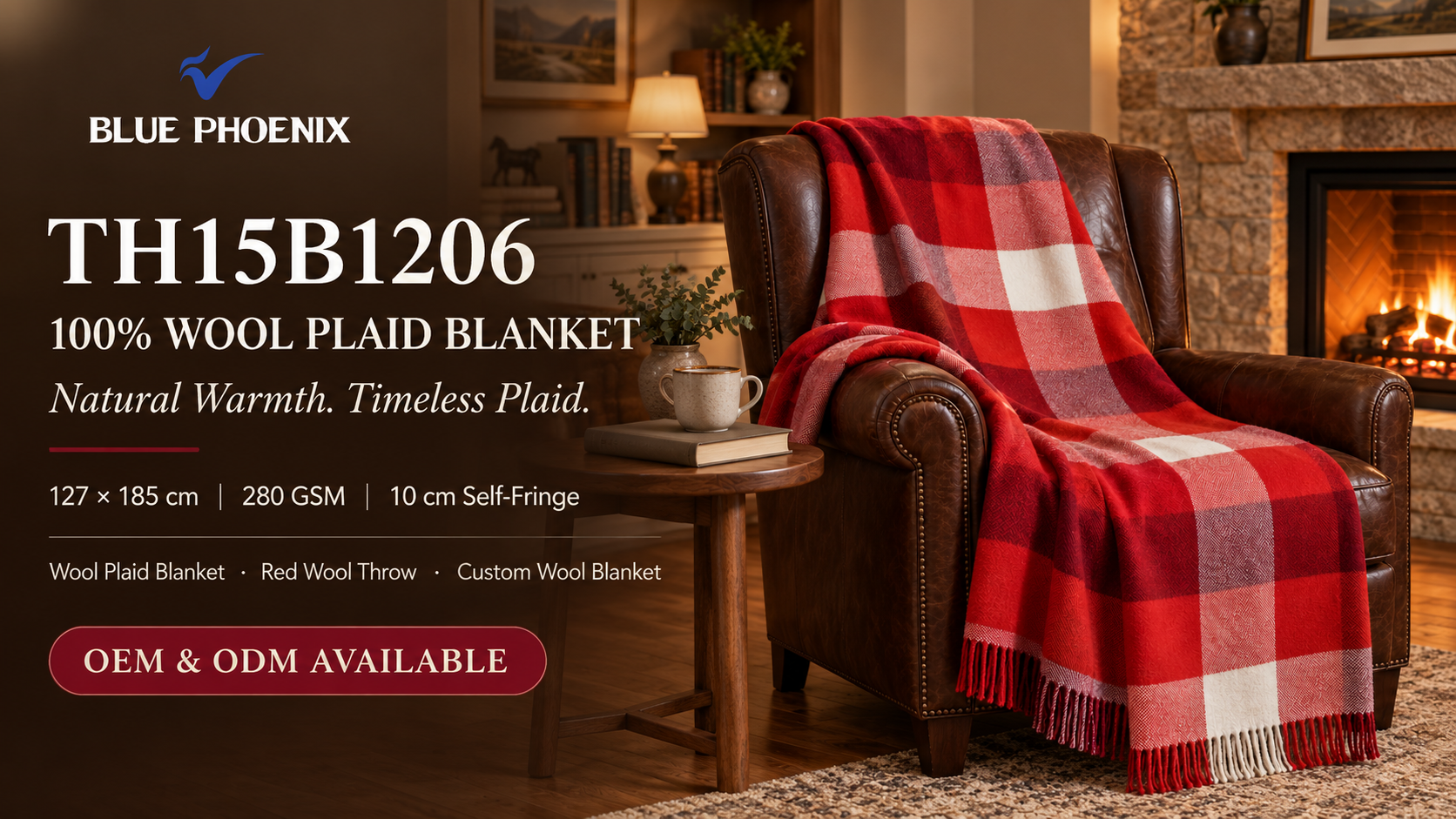
TH15B1206 Red Plaid Wool Throw
Woven wool throw with red, burgundy and natural-white checks, finished with coordinated self-fringe.
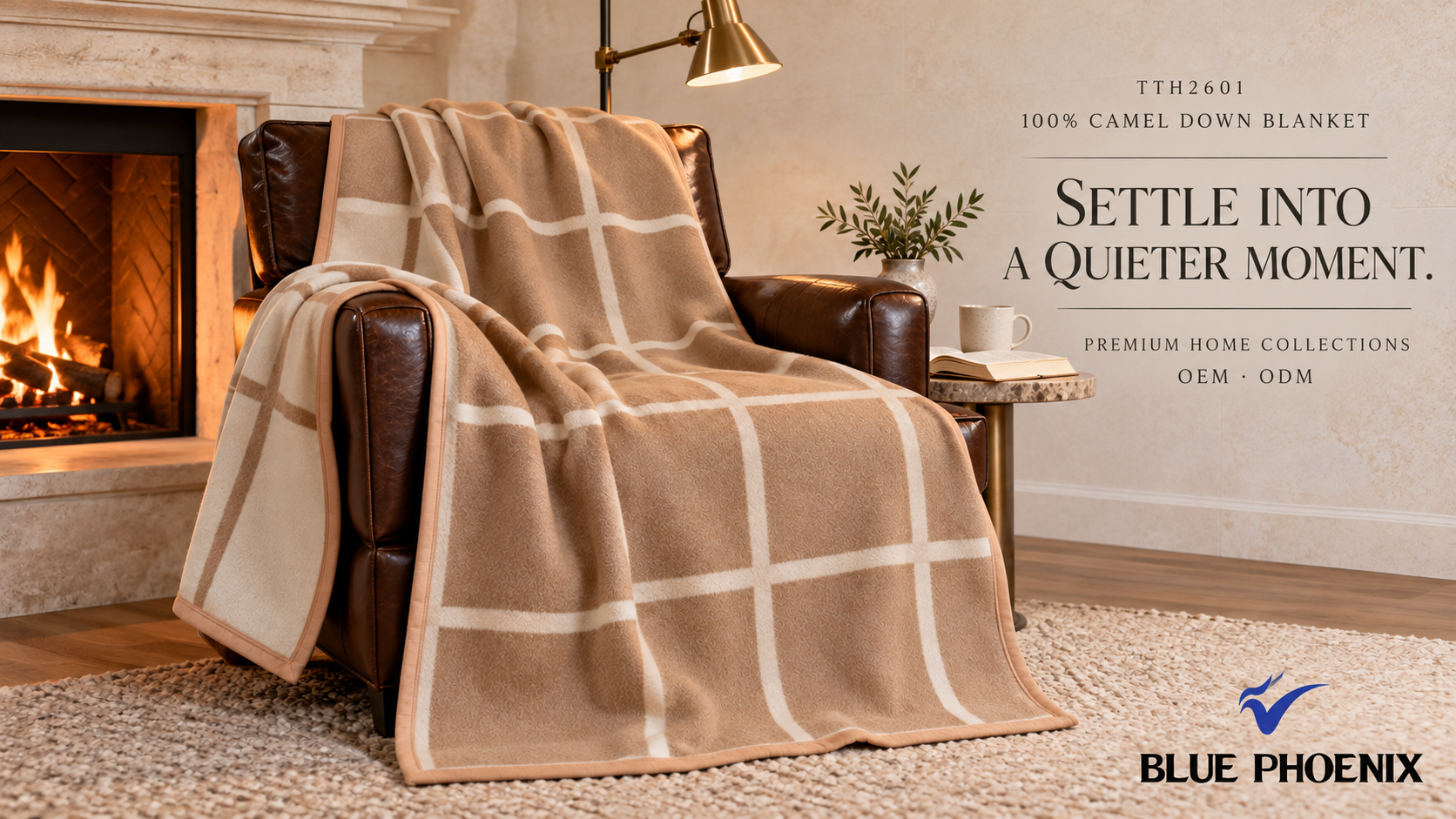
TTH2601 Reversible Camel Down Blanket
Natural undyed camel-down blanket combining a plaid face, a light-camel reverse and suede binding.
They can be worthwhile when a refined feel, natural-fiber composition and premium presentation suit the intended use. Evaluate the actual construction, dimensions, workmanship and care requirements before deciding.
No. Softness does not establish fiber composition. Distinguish between 100% cashmere, declared cashmere blends and products described only as having a cashmere-like feel.
No single warmth level applies to every cashmere blanket. Compare the finished construction, thickness, coverage and weight within the intended bedding arrangement.
A cashmere label does not guarantee a pill-free surface. Fiber characteristics, construction, friction and handling should be considered when evaluating appearance during use.
Follow the finished blanket’s approved care label. Do not assume that instructions for one cashmere product apply to another with a different construction, binding or finish.
Confirm composition, construction, dimensions, piece weight, colors, pattern, edge finish, care labeling and packaging. Approve a representative sample and document the final specification.
Q1. What makes a cashmere blanket suitable for a collection?
A. It should serve a defined customer need and meet the collection’s material, design, care and presentation requirements.
Q2. What is the difference between cashmere and sheep’s wool?
A. Cashmere comes from the fine undercoat of cashmere goats. Sheep’s wool is a different fiber and should be identified separately.
Q3. Does “cashmere feel” mean 100% cashmere?
A. No. Request the actual composition rather than treating a feel description as a material specification.
Q4. How should a cashmere blend be specified?
A. Record every fiber and its percentage consistently in the quotation, approved specification and product information.
Q5. Can a photograph confirm cashmere content?
A. A photograph cannot establish composition. Obtain appropriate product information and discuss verification requirements.
Q6. Should buyers compare woven and knitted blankets?
A. Yes. Review their appearance, drape, dimensions and handling as different finished constructions.
Q7. Is the heaviest blanket automatically the best?
A. No. Select weight together with coverage, construction and the intended application.
Q8. How should throw and bed sizes be compared?
A. Check actual centimetre measurements against the intended seating area or mattress and required drop.
Q9. Should fringe be included in published dimensions?
A. State the measurement basis clearly. Record body dimensions and fringe allowance separately where appropriate.
Q10. What should buyers inspect on a check design?
A. Review pattern scale, intersections, alignment, color balance and its appearance when folded.
Q11. What should buyers inspect on reversible jacquard?
A. Examine both faces, the complete repeat, border placement and edge finishing.
Q12. Should binding material be confirmed?
A. Yes. Specify its composition, color, width and construction separately from the blanket body.
Q13. How should samples be reviewed?
A. Open them flat, drape them naturally and check the proposed retail or gift fold.
Q14. Can an initial sample establish every performance claim?
A. Visual inspection has limits. Agree separate testing where the purchasing specification requires measured performance.
Q15. Is cashmere always the best hospitality choice?
A. Evaluate it against room positioning, cleaning procedures, replacement planning and project requirements.
Q16. How can a buyer broaden a natural-fiber collection?
A. Compare cashmere with clearly identified wool, yak-down and camel-down options, giving each product a distinct role.
Q17. What information helps with a custom quotation?
A. Supply the reference design, specifications, quantities by option, labels, packaging and delivery destination.
Q18. What should happen when a sample is revised?
A. Record the requested changes and confirm which revised sample becomes the approval reference.
Q19. When should care labels be finalized?
A. Confirm them for the approved finished product before labels and packaging enter production.
Q20. How can buyers begin a BLUE PHOENIX inquiry?
A. Send the selected model or design reference, intended application and purchasing requirements for review.
#CashmereBlankets #CashmereBlanketQuality #PureCashmereBlanket #LuxuryCashmereThrow #WholesaleCashmereBlankets #NaturalFiberBlankets #WoolBlankets #CamelDownBlankets #PrivateLabelBlankets #BluePhoenixBlankets
Explore cashmere designs for premium home textiles, decorative throws, gifting and private-label collections.
Compare wool constructions, patterns and finishing options for bed blankets and decorative throw collections.
Review yak-down products as a different natural-fiber direction, with specifications confirmed for each selected model.
Discover camel-fiber designs for collections seeking a distinct material story and natural color direction.
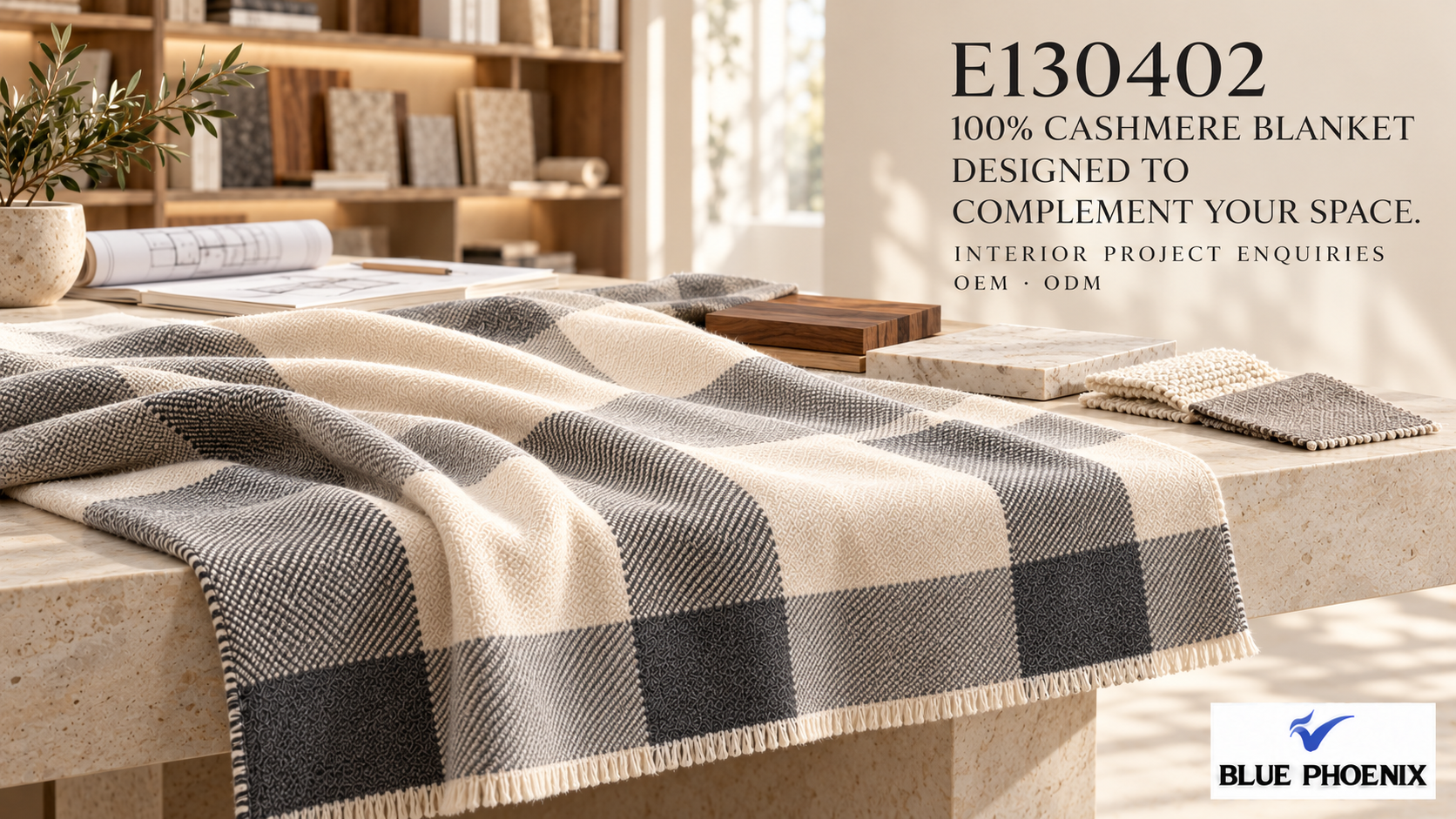
E130402 introduces a restrained woven cashmere direction. Its white and melange-grey rectangular border check design and short eyelash fringe offer an alternative to solid-color cashmere throws.
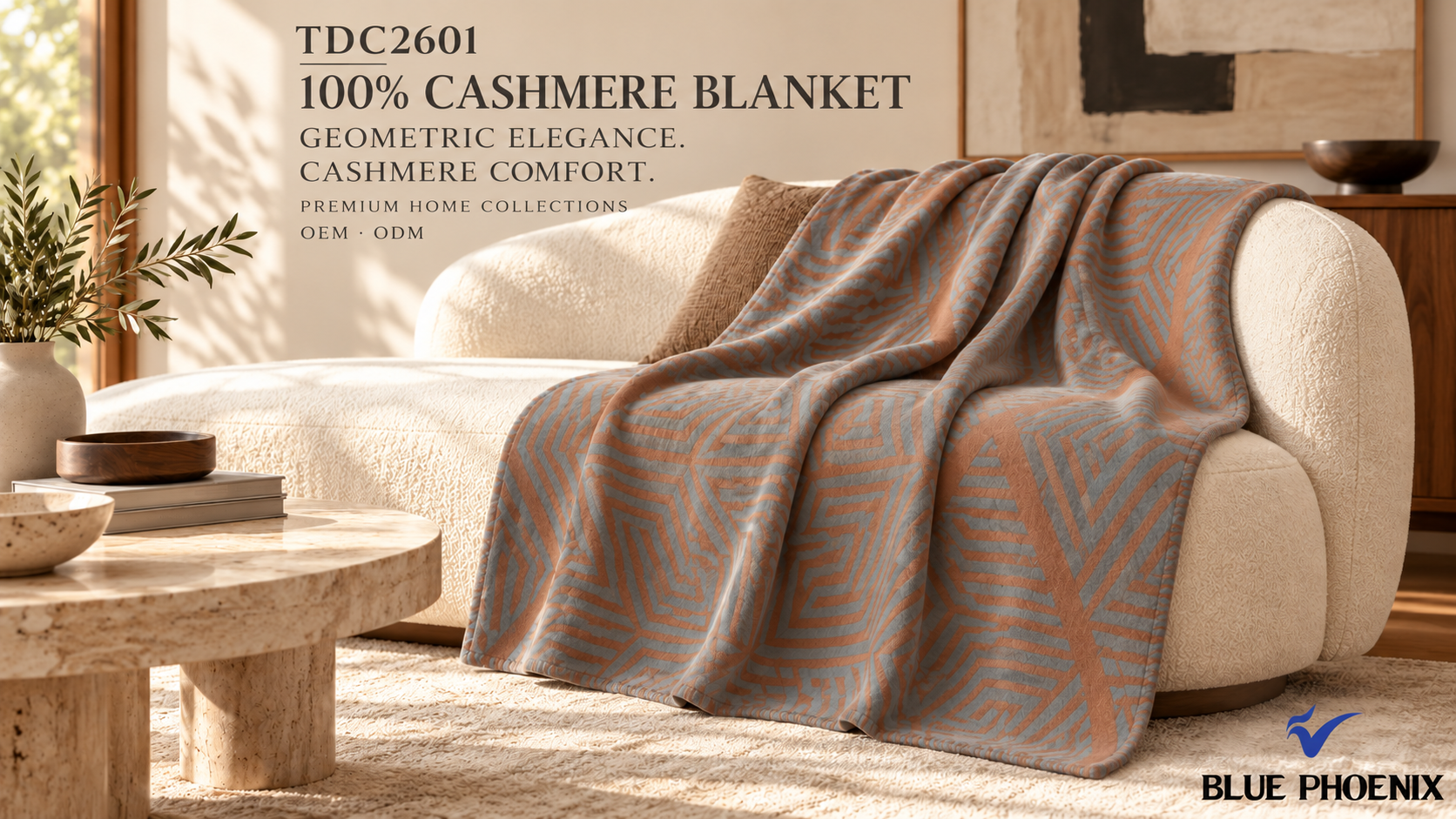
TDC2602 provides a geometric reversible jacquard direction for buyers seeking a visually distinctive cashmere piece. Review both faces and the complete pattern when planning the collection.
View TDC2602 Cashmere Jacquard Blanket
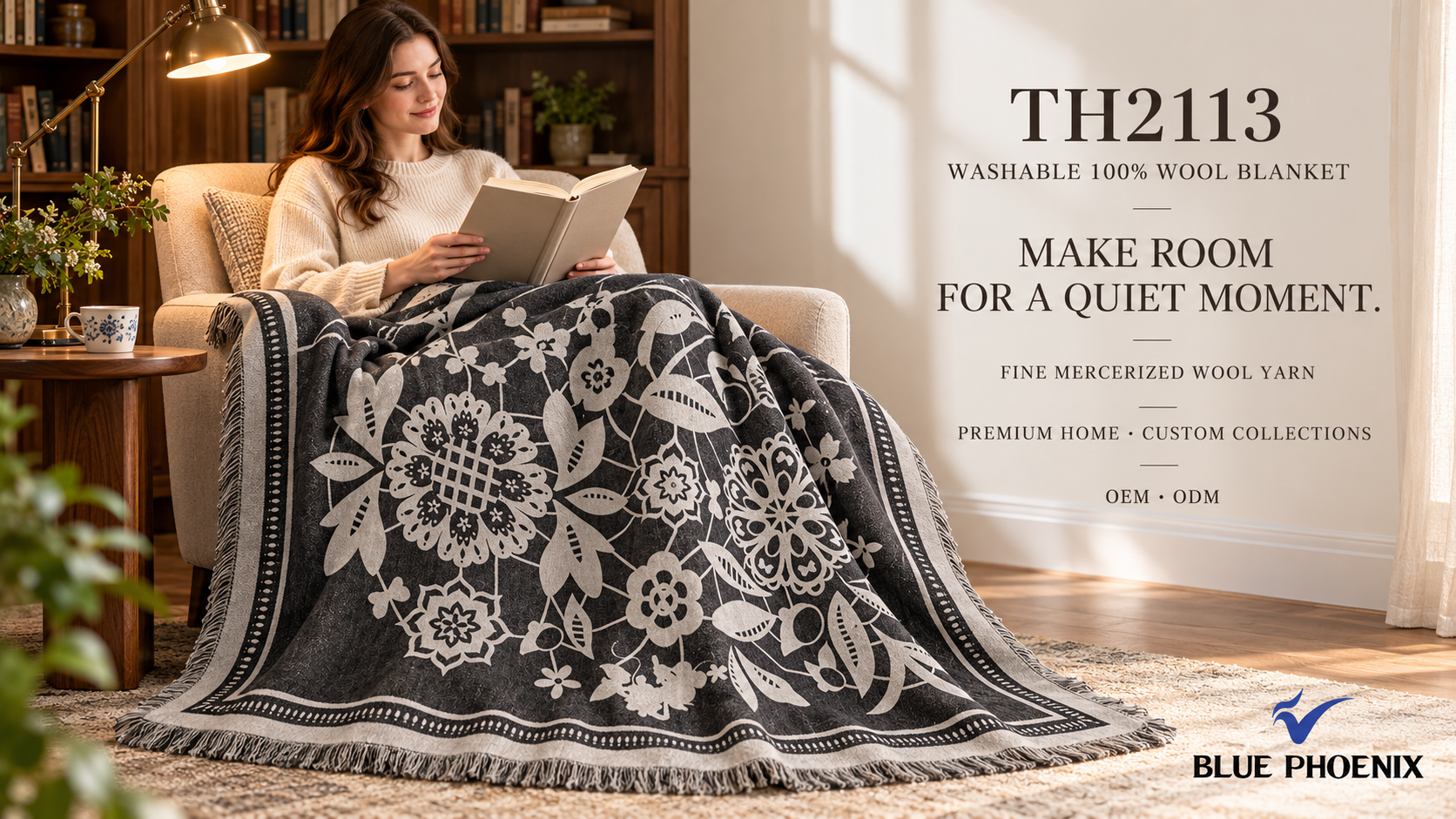
TH2113 adds charcoal and light-grey floral jacquard, a decorative woven border and fringed finishing. Its listed whole-blanket water washability should be used only with the approved care instructions.
View TH2113 Wool Floral Blanket
TAK2221 brings a blue-tone ginkgo leaf pattern into the selection. Its woven jacquard construction and self-folded edges give it a different decorative identity from floral and checked designs.
View TAK2221 Wool Jacquard Blanket
TH15B1206 combines red, burgundy, muted-red and natural-white checks with coordinated self-fringe. Its woven throw format introduces a warm-toned, heritage-inspired option for sofa and seasonal collections.
View TH15B1206 Plaid Wool Throw
TTH2601 expands the material selection with natural undyed camel down. A plaid face, light-camel reverse and suede binding provide another direction for premium natural-fiber collection planning.
View TTH2601 Camel Down Blanket
Looking for cashmere, wool or camel-fiber blankets for your brand? Send BLUE PHOENIX your selected model, intended application, material requirements, dimensions, target weight, colors and order quantities.
Include label artwork, packaging requirements and destination details so that sampling and quotation can be discussed against a clear brief. OEM, ODM and private-label specifications are confirmed for each project.
Website: www.shbluephoenix.com
Email: jamesli@shrainbow.cn

Blue Phoenix Blankets dedicated to strict quality control of blankets and scarves products and thoughtful customer service, our custom blankets wholesale products are exported to clients in such countries and regions as United states, Europe, Australia, Russia, Germany, Japan.
Copyright © 2026 Shanghai Rainbow Enterprise Development Co., Ltd. - All Rights Reserved.