High-Quality Wholesale Blankets Manufacturer & Supplier in China with custom design service - Blue Phoenix Blankets
Language
To choose an appropriate blanket, compare its material, construction, dimensions, weight and tested performance. Also consider whether it will be used in sheltered accommodation, temporary facilities or an outdoor sleeping system.
Blankets provide insulation by helping reduce heat loss. Air held within a textile’s structure contributes to its insulating performance.
Wool’s crimp can help create air spaces, but the finished fabric remains important. Yarn selection, weaving or knitting, surface raising and overall construction affect the product that reaches the user.
A thick-looking surface is not a substitute for a thermal test. Evaluate the actual blanket rather than relying on photographs alone.
Available products include wool blankets, wool blends and synthetic constructions. Their compositions should be stated precisely.
Wool blankets: confirm the stated wool percentage and the finished construction.
Wool blends: identify every fiber and its percentage, such as wool and polyester.
Synthetic blankets: review the actual material, fabric structure and test requirements.
Do not assume that every military-style blanket is made from virgin wool, contains the same blend or has an identical finish.
No. GSM describes mass per unit area, not a complete thermal rating. Two blankets with similar GSM can have different structures and thermal resistance.
GSM is still useful when comparing specifications, provided the measurement basis is consistent. Review it alongside dimensions, composition, construction and thermal test results where required.
For a straightforward rectangular blanket, approximate mass per unit area can be calculated as:
GSM = blanket body weight in grams ÷ blanket body area in square meters.
Confirm whether the quoted weight includes binding, labels or packaging before comparing suppliers.
A blanket should provide the coverage required by its intended users and bedding arrangement. A heavy blanket that is too short or narrow may not suit the application.
Compare the finished dimensions with bed or cot sizes. For bulk orders, agree dimensional tolerances and confirm how measurements are taken.
Do not compare total piece weight without checking area: a larger blanket can weigh more simply because it contains more fabric.
A blanket used on a bed inside a sheltered room faces different conditions from one used outdoors. Wind, precipitation, ground contact and the rest of the sleeping equipment affect the overall arrangement.
For outdoor overnight use, plan appropriate shelter, season-suitable sleeping equipment and an insulated sleeping pad. Do not assume that an ordinary army blanket replaces all of these components.
There is no single minimum temperature that applies to all army blankets. Avoid assigning a temperature limit without relevant supporting evidence.
Do not treat a textile blanket as a waterproof shelter. Protect bedding from rain and ground moisture and follow the product’s drying instructions.
Broad claims such as “fully warm when soaked” should not replace an assessment of the actual conditions and equipment.
Warmth and flame-related performance are different specifications. A blanket’s wool content, weight or military-style appearance does not establish compliance with a particular flame-resistance requirement.
If a project requires flame-related testing, state the applicable test method and acceptance criteria. Review the report for the specified product. Do not interpret “FR” as meaning fireproof.
Exact fiber composition.
Finished dimensions and agreed tolerances.
GSM, piece weight and measurement basis.
Fabric construction and surface finish.
Edge finishing and stitching requirements.
Thermal test method and results, where required.
Approved care instructions.
Performance after the specified laundering process.
Labels, packing quantities and carton dimensions.
Sample approval, inspection criteria and delivery terms.
For tenders, use the buyer’s actual specification. An organization’s published blanket standard is a reference document, not evidence that an unrelated supplier’s product complies.
Army blankets can be warm, but choose by specification rather than category name. Compare material, construction, coverage, weight and tested performance against the intended use.
For wholesale and institutional purchasing, an approved sample and clear acceptance criteria provide a stronger basis for selection than unsupported claims about extreme-cold performance.
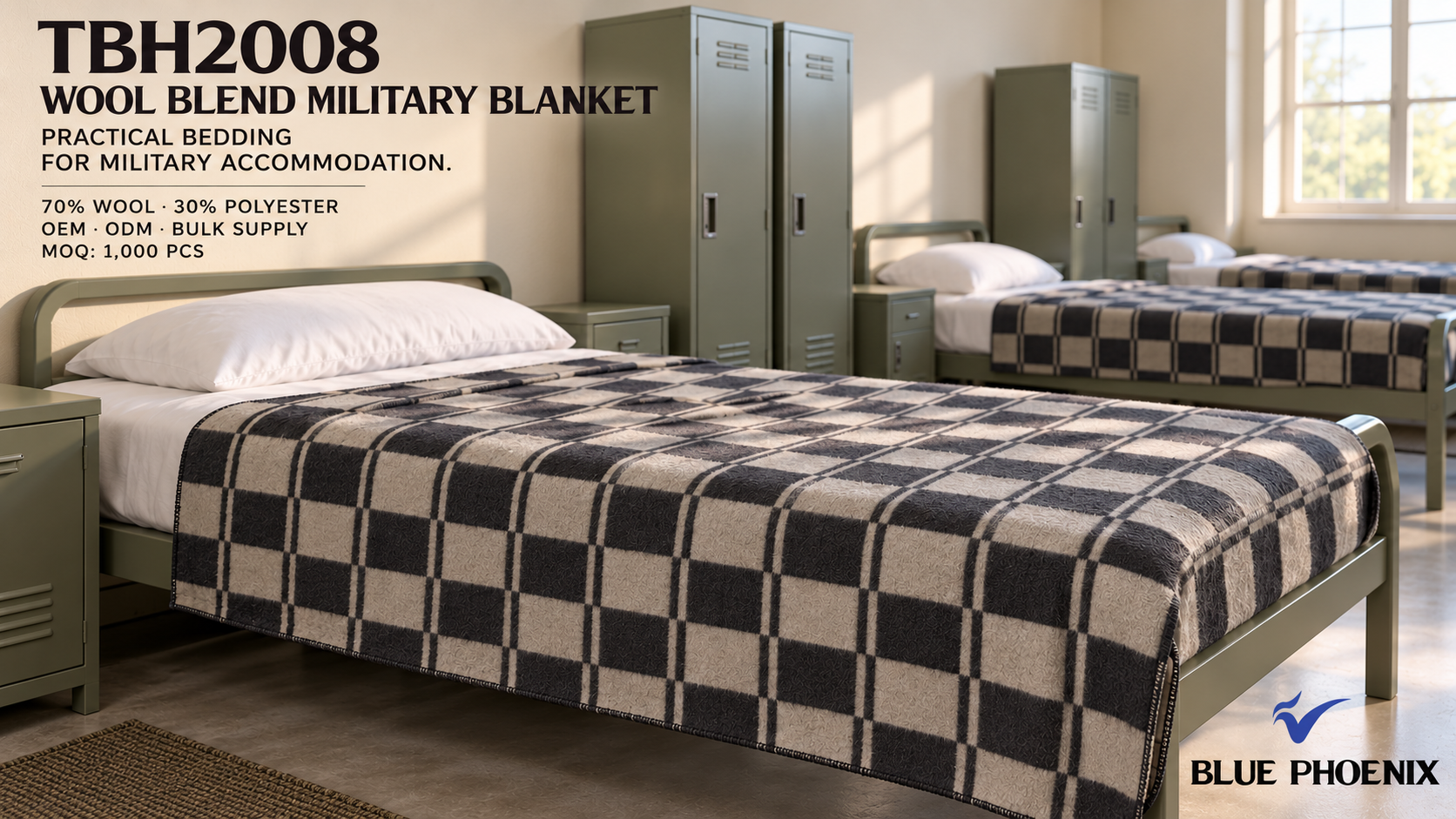
TBH2008 | Checked Wool Blend for Bulk Procurement
A 70% wool and 30% polyester blanket featuring charcoal-gray and light gray-beige checks with fine intersecting stripes. Its brushed surface and overlock finishing provide clear details for sample evaluation.
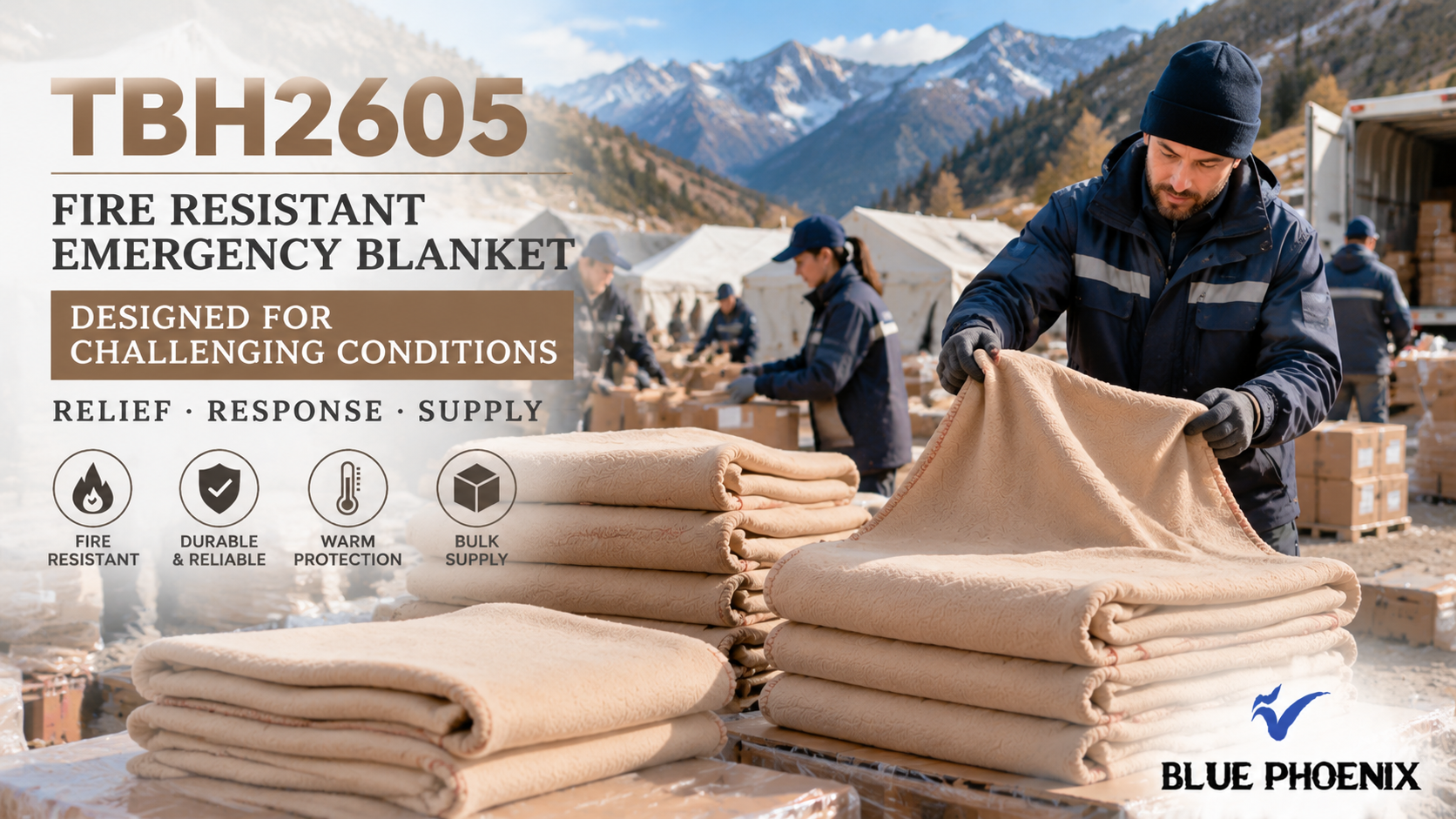
TBH2605 | Polyester Blanket for Project Evaluation
A sand-beige polyester blanket with overlock edges, listed at 150 × 200 cm and approximately 500 GSM. For projects specifying FR performance, confirm the applicable test method and supporting report before approval.
They can provide insulation, but performance varies. Compare the actual material, construction, coverage and relevant test results.
No. Available constructions include wool, wool blends and synthetic materials. Check the stated composition.
No. GSM measures mass per unit area. Thermal performance also depends on the finished structure.
There is no universal temperature limit for the category. Any specific claim needs an appropriate supporting basis and defined conditions.
Do not assume so. Outdoor planning should include suitable shelter, sleeping equipment and ground insulation.
Confirm composition, dimensions, weight, finishing, care requirements, required tests, packaging and inspection criteria before ordering.
1. Does “army blanket” identify one material?
No. It is a product or application description.
2. Does military styling prove performance?
No. Appearance does not replace a written specification.
3. Are all wool military blankets virgin wool?
Do not assume this; confirm the actual material specification.
4. What does GSM mean?
Grams per square meter of blanket area.
5. Is piece weight the same as GSM?
No. Piece weight also depends on dimensions and finishing.
6. Why compare blanket dimensions?
Coverage must suit the users and bedding arrangement.
7. Can two equal-GSM blankets differ?
Yes. Their structures and finished performance can differ.
8. Does a brushed surface establish a thermal rating?
No. A rating requires an appropriate test basis.
9. What does Rct describe?
Thermal resistance measured under a specified test method.
10. Does a published relief specification certify a product?
No. The actual product must be assessed against the requirements.
11. Are ordinary textile blankets waterproof shelters?
No. Do not treat them as a substitute for weather protection.
12. Should outdoor bedding include ground insulation?
Plan a season-appropriate sleeping pad as part of the equipment.
13. Can every army blanket be machine washed?
Follow the specific finished-product care instructions.
14. Should buyers assess laundering compatibility?
Yes. Confirm the intended process and any required testing.
15. Does warmth establish flame resistance?
No. These are separate performance requirements.
16. Does FR mean fireproof?
No. Review the defined claim and applicable test evidence.
17. What is TBH2001 made from?
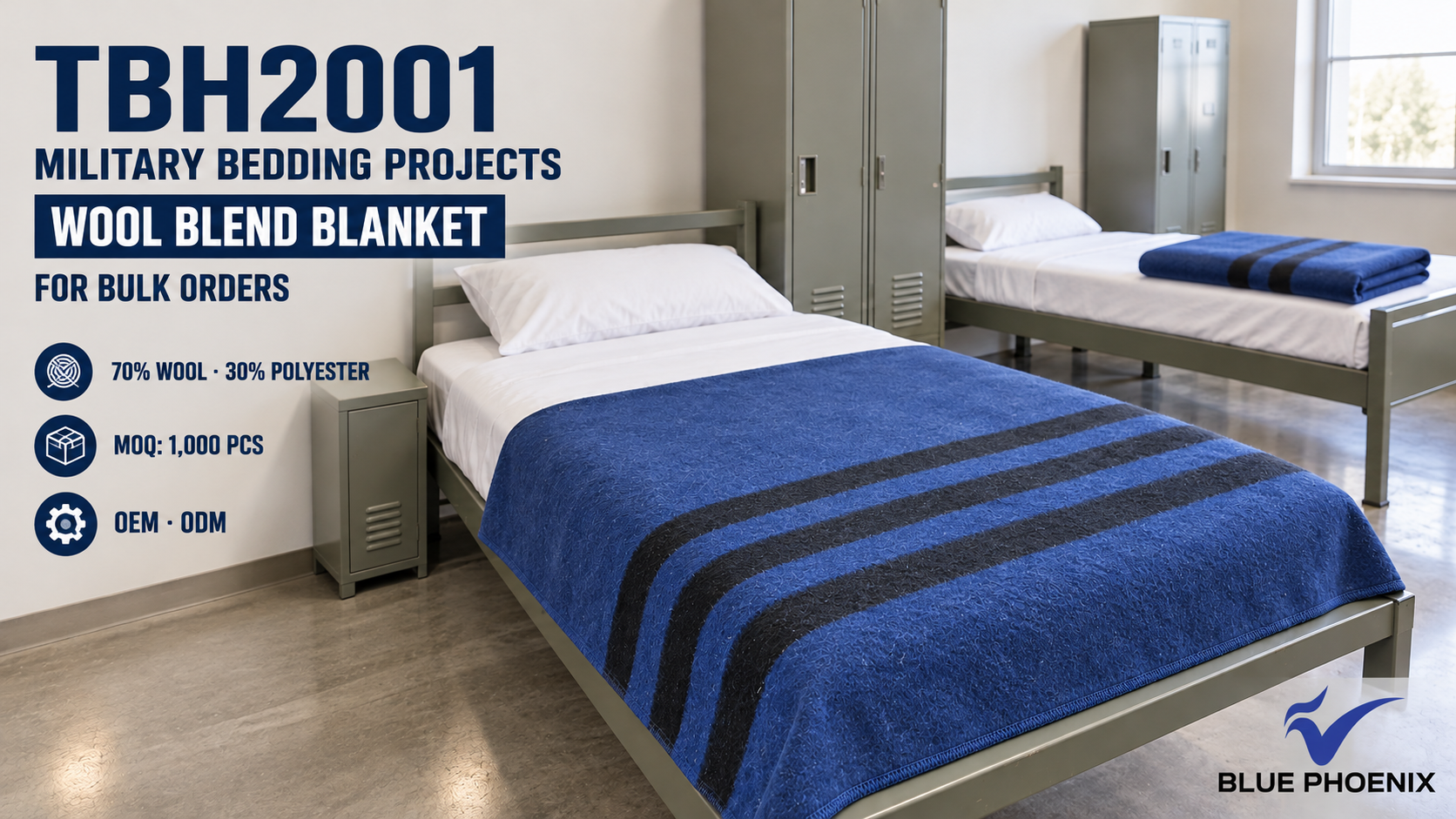
Its stated composition is 70% wool and 30% polyester.
18. What is TH2323 made from?
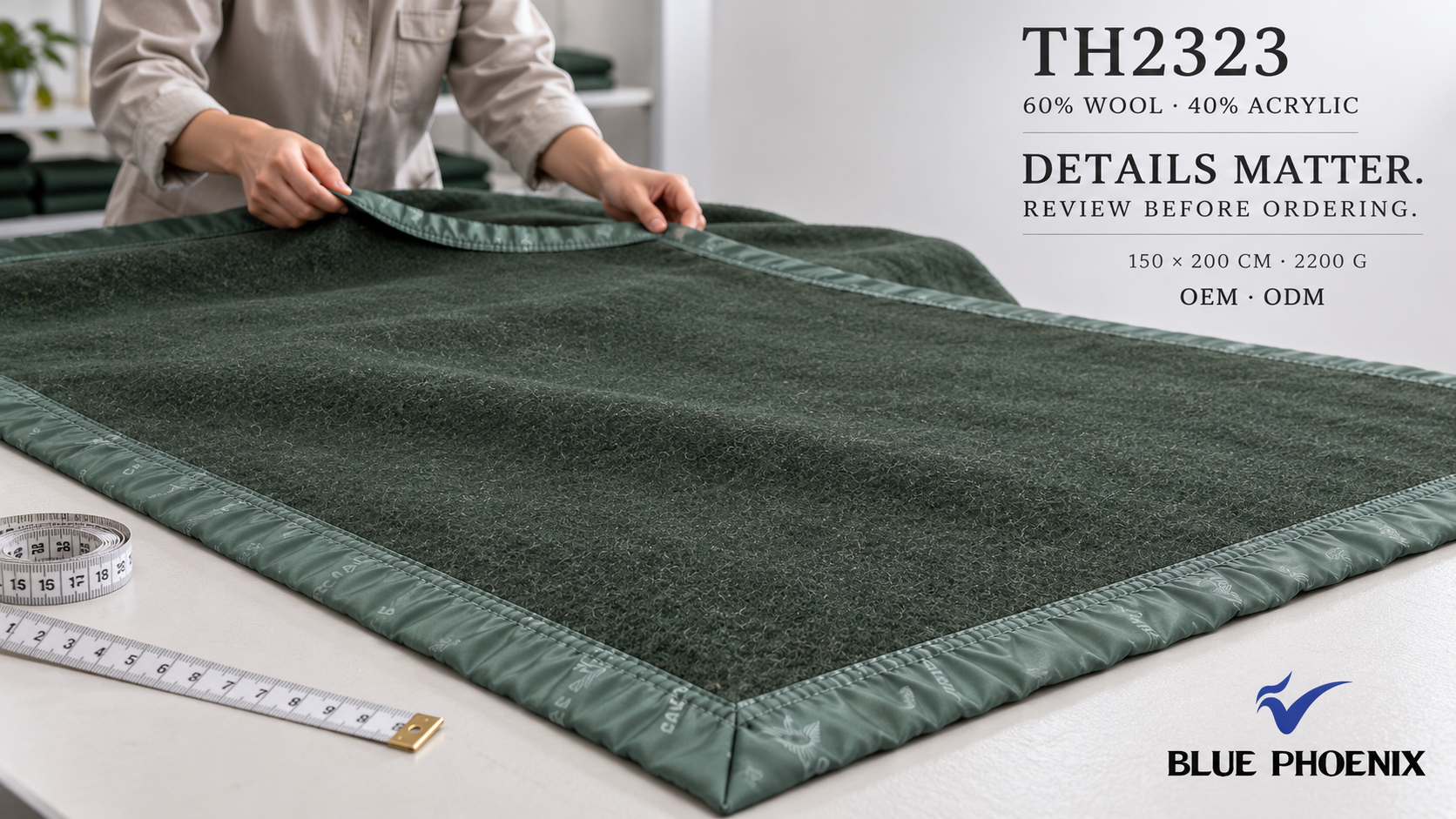
Its stated composition is 60% wool and 40% acrylic.
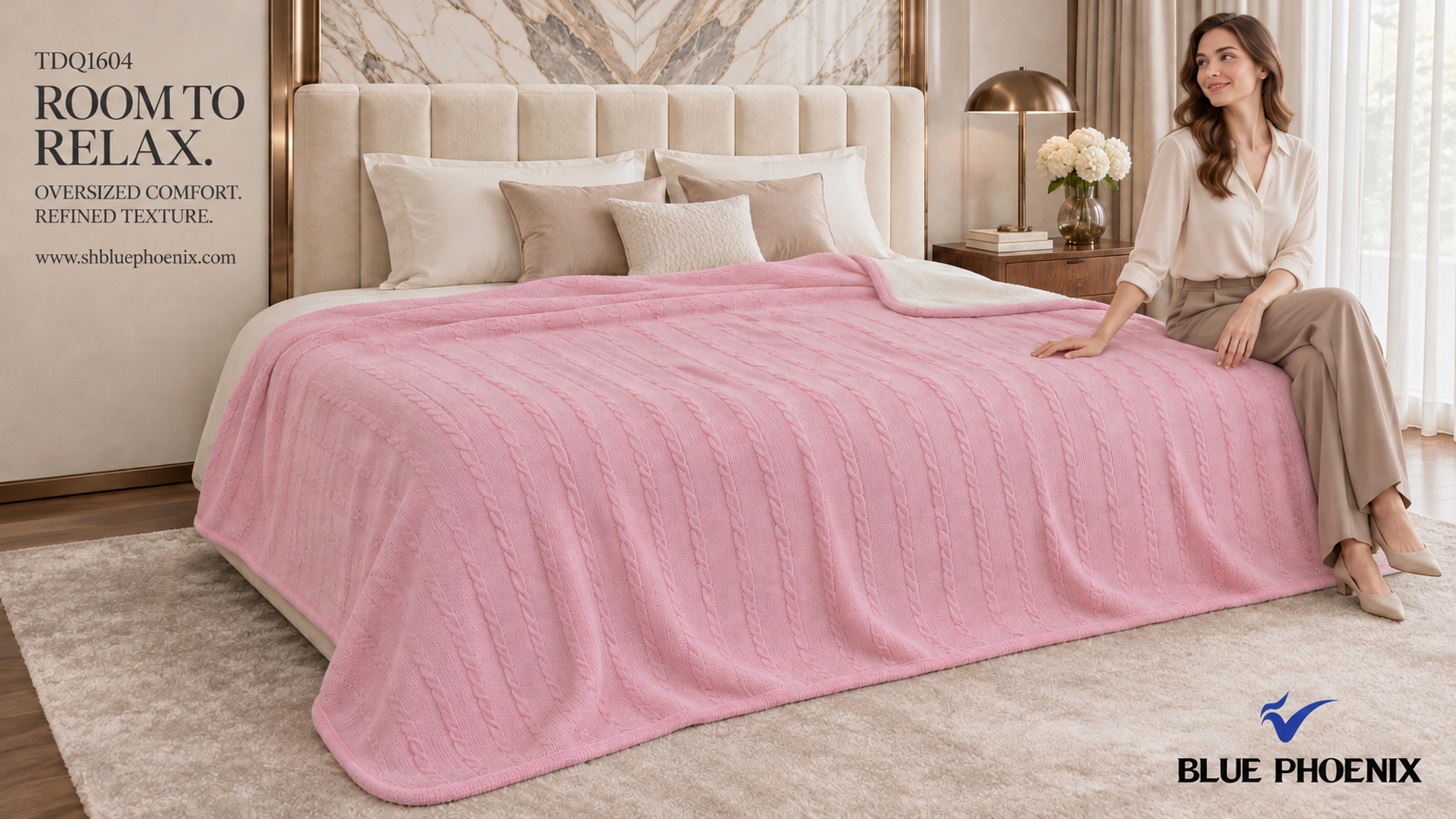
19. Are K1003 and TDQ1604 equivalent military products?
No. They are home-textile comparisons with different constructions.
20. What information helps a supplier quote?
Provide quantity, dimensions, composition, weight,
testing, packaging and destination requirements.
Explore further material and buying guides in the BLUE PHOENIX Blog.
For cleaning guidance, read How to Wash 100% Wool Blankets. Always follow the care label for the actual blanket.
Military Blankets — Review products for specification-led military accommodation supply.
Relief & Refugee Blankets — Compare blanket options for humanitarian procurement.
Institutional Blankets — Evaluate products against facility and cleaning requirements.
Wool Blankets — Explore additional wool designs and finishing options.
TBH2001 Wool Blend Military Blanket — Blue body, three black stripes and overlock edges.
TBH2008 Checked Wool Blend Blanket — A checked construction for military, relief and institutional evaluation.
TH2323 Wool and Acrylic Blend Blanket — Olive-green fabric with green satin binding.
TBH2605 Polyester Emergency Blanket — Confirm project-specific FR testing requirements and reports.
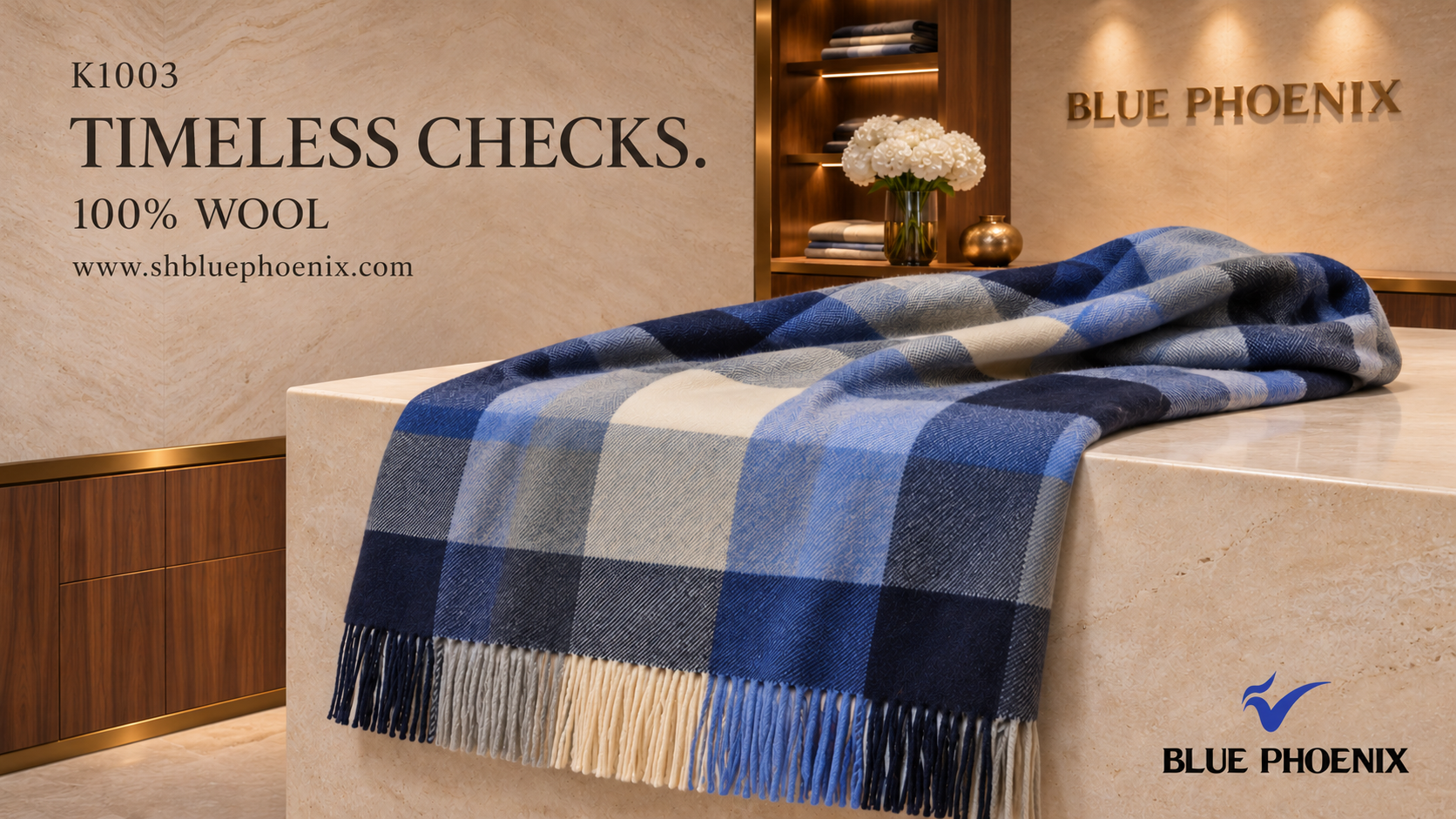
K1003 Blue Checked Wool Blanket — A home-textile comparison featuring checks and multicolored fringe.
TDQ1604 Cable Knit Sherpa Blanket — A layered home-bedding design with acrylic knit and polyester Sherpa.
These references explain procurement or equipment considerations. They do not establish approval or certification of the products above.
Sourcing blankets for military accommodation, institutional facilities or relief supply? Send BLUE PHOENIX your required composition, dimensions, GSM or piece weight, quantity and delivery destination. Include testing, care, labels and packaging requirements.
Share the tender specification or acceptance criteria so the proposed product can be reviewed against your actual requirements.
REQUEST A QUOTATION OR DISCUSS SAMPLES
Website: www.shbluephoenix.com
Email: jamesli@shrainbow.cn
WhatsApp: +86 180 1783 0390
WeChat: bluephoenix66
ArmyBlanketWarmth, MilitaryBlankets, WoolBlendBlankets, ThermalResistance, BlanketGSM, InstitutionalBlankets, ReliefBlankets, BulkBlanketSupply, BlanketProcurement, BluePhoenix

Blue Phoenix Blankets dedicated to strict quality control of blankets and scarves products and thoughtful customer service, our custom blankets wholesale products are exported to clients in such countries and regions as United states, Europe, Australia, Russia, Germany, Japan.
Copyright © 2026 Shanghai Rainbow Enterprise Development Co., Ltd. - All Rights Reserved.