High-Quality Wholesale Blankets Manufacturer & Supplier in China with custom design service - Blue Phoenix Blankets
Language
A 70% wool blend scarf and a 100% wool scarf can both have a place in a winter accessory collection. The right choice depends on the intended product, customer expectations, budget and approved sample.
Composition provides an important starting point, but it does not describe the complete wearing experience. Yarn selection, fabric construction, dimensions, surface finishing and edge treatment also affect the finished scarf.
For wholesale buyers, the most useful comparison brings these details together. This guide uses BLUE PHOENIX TH2235 as a wool-polyester reference and explains how to compare it with all-wool alternatives.
Understand the Complete Composition“70% wool” identifies only part of a blend. Buyers should always confirm the remaining 30%.
TH2235 contains 70% wool and 30% polyester. Another scarf containing 70% wool could use a different second fiber and should be evaluated separately.
A 100% wool scarf has an all-wool composition. More specific descriptions, such as merino or lambswool, require their own material confirmation.
Use the complete composition consistently in the quotation, sample specification, labels and retail descriptions.
70% Wool Blend vs. 100% Wool: What to CompareThe composition difference is clear. The performance and commercial differences need to be assessed for the actual products being offered.
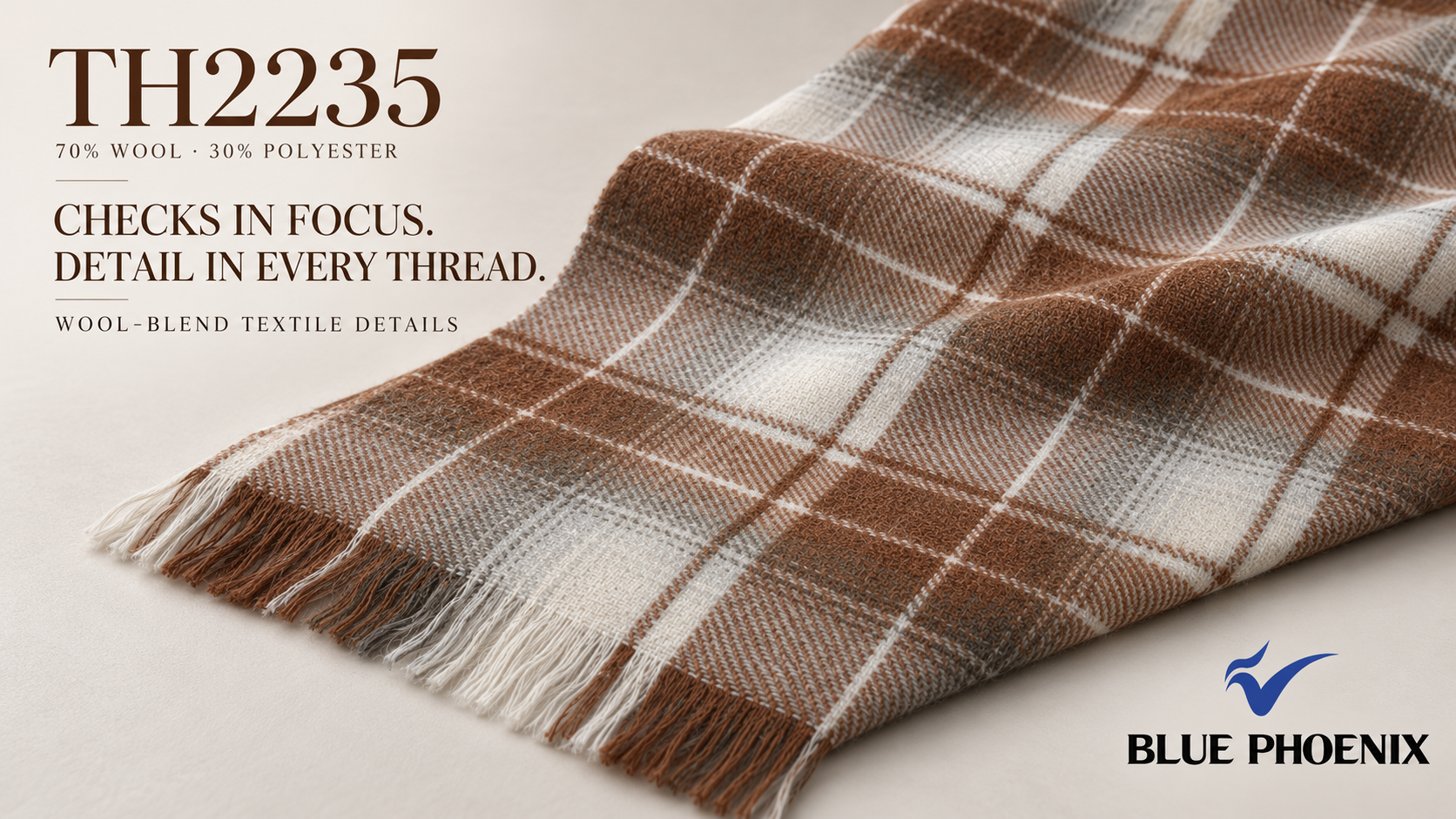
TH2235: A Wool-Polyester Plaid ReferenceTH2235 is a woven scarf featuring brown, ivory and taupe-grey checks with short loose fringe.
Its listed composition is 70% wool and 30% polyester, with reference dimensions of 37 × 163 cm and an approximate piece weight of 144 g.
The checked layout combines broad color areas with finer crossing lines. The diagonal woven texture and short-fringed ends form part of its appearance.
For sampling, review the complete scarf rather than only a folded section. Check the pattern sequence, color balance, dimensions, edges and fringe against the approved reference.
When a Wool Blend May Fit the BriefA wool blend is worth evaluating when the collection permits blended materials and the finished sample meets the intended product requirements.
Begin with the target retail position and required purchasing cost. Then compare samples that provide similar coverage and styling.
A blend may form one part of a broader accessory range alongside all-wool and cashmere products. Each item should have a clear material description and its own role in the collection.
For TH2235, the plaid design and compact scarf format provide a starting point for reviewing an everyday neck accessory.
Do not assume a particular price saving or performance advantage from the composition alone. Confirm these through the quotation and agreed evaluation.
When an All-Wool Scarf May Fit the BriefAn all-wool scarf is appropriate to consider when 100% wool is part of the brand’s material requirements or product positioning.
Buyers can compare different formats within that category: narrow scarves, wider wraps, striped designs, checks and textured finishes.
The words “100% wool” do not establish a single quality level. Compare the actual surface feel, drape, workmanship and relevant material information.
If the brief specifies merino wool, lambswool or a particular fiber fineness, communicate that requirement before sampling.
Compare Hand Feel and Drape DirectlyReview both products under similar conditions.
First, handle the fabric without folding it tightly. Assess the surface, flexibility and thickness.
Next, style each scarf around the neck using a similar arrangement. Check how it sits under a coat collar and how the ends hang.
Finally, compare the intended retail fold. A scarf that appears substantial in a photograph may have different dimensions or a different surface finish from another sample.
Record the observations that matter to the collection rather than reducing the decision to wool percentage.
Evaluate Durability and Care as Product RequirementsIf the collection requires a defined level of pilling resistance, colorfastness, dimensional stability or seam strength, agree on the relevant test methods and acceptance criteria.
Adding polyester does not establish a guaranteed result for every finished scarf. Likewise, an all-wool composition does not by itself determine durability.
Care instructions should follow the approved finished product. If a particular cleaning method is essential, raise it during development so the required assessment can be discussed.
Approve the care wording before labels and packaging are produced.
Keep the Design Comparison FairMaterial comparisons become less useful when the products differ substantially in size, weight or construction.
A narrow scarf and a wide shoulder wrap serve different purposes. A lightly finished woven scarf and a heavily brushed product may also feel different for reasons beyond composition.
When possible, compare samples with similar:
• Body dimensions
• Finished-piece weight
• Woven or knitted construction
• Surface-finishing direction
• Pattern complexity
• Edge treatment
• Labels and packaging
Where the samples differ, record those differences before drawing conclusions about price or performance.
Compare Complete QuotationsRequest quotations against the same purchasing brief.
Include quantity by color, product dimensions, composition, design, finishing, labels, packaging and delivery destination.
Review whether sample development, testing and additional packing are included or quoted separately. Compare the same trade terms and named destination or location.
For TH2235, distinguish an order following the existing sample from a custom development. Changes to the blend, check layout, size or finishing require their own review.
Sample and courier charges apply. Confirm MOQ, pricing and production timing in the current quotation.
Prepare Your Private-Label Scarf BriefA useful brief should state:
• Selected model or design reference
• Complete fiber composition
• Required dimensions and fringe allowance
• Target piece weight
• Color standards and plaid layout
• Surface and edge finishing
• Quantity by design and color
• Brand, composition and care labels
• Packaging requirements
• Delivery destination and required arrival date
Approve the physical sample and written specification together. Retain both for production inspection and repeat orders.
Choose the Scarf That Meets the Collection BriefThe choice between 70% wool blend and 100% wool should follow the intended product and its verified characteristics.
TH2235 provides a wool-polyester plaid option. All-wool scarves provide alternatives for collections requiring an all-wool composition. Other blends, including wool and cashmere, represent separate material directions.
Send BLUE PHOENIX your target composition, quantity, design and packaging requirements to compare suitable samples and prepare a wholesale quotation.
1. What is the main difference between a 70% wool blend scarf and a 100% wool scarf?
The first contains wool and another fiber, while the second has an all-wool composition. Confirm the complete blend before comparing finished products.
2. What is TH2235 made from?
TH2235 contains 70% wool and 30% polyester. Its reference dimensions are 37 × 163 cm, with an approximate piece weight of 144 g.
3. Is a wool-polyester scarf always more durable?
Durability depends on the finished construction and the performance being assessed. Agree on relevant testing rather than assuming a result from the blend percentage.
4. Is a 100% wool scarf always softer or warmer?
Composition alone does not establish softness or warmth. Compare the physical samples, dimensions, construction and finishing.
5. Can BLUE PHOENIX develop private-label scarves?
Yes. Send your composition, design, dimensions, labels and packaging requirements for feasibility review, sampling and quotation.
6. How can I request samples and prices?
Provide the selected models, quantity, customization requirements and destination. Sample and courier charges apply. MOQ, price and production timing are confirmed in the quotation.
1. Does “70% wool” describe the complete material?
No. The remaining fiber or fibers must also be identified with their percentages.
2. Are all wool blends the same?
No. Wool-polyester, wool-cashmere and other blends have different compositions and should be evaluated separately.
3. How should TH2235 be described?
Use “70% wool and 30% polyester plaid scarf” consistently across the quotation, labels and retail information.
4. Can TH2235 be labeled as 100% wool?
No. Its complete wool-polyester composition should be stated accurately.
5. Does 100% wool automatically mean merino wool?
No. Merino is a more specific material description and requires separate confirmation.
6. Can photographs establish how soft a scarf feels?
Photographs show appearance. Evaluate hand feel, flexibility and drape through a physical sample.
7. What influences the warmth of a scarf?
Review the finished construction, thickness, coverage and intended use alongside the material composition.
8. Can polyester content prove pilling resistance?
No. A specific pilling claim should be supported by relevant testing of the finished product.
9. Is a wool blend automatically machine washable?
No. Confirm the approved care instructions for the finished scarf.
10. How should scarf dimensions be specified?
Record body width, body length and any fringe allowance separately, with agreed measurement methods.
11. Is piece weight the same as GSM?
No. Piece weight measures the complete scarf; GSM describes fabric weight per square meter.
12. What should be checked on a plaid scarf?
Review color balance, band sequence, fine crossing lines, check scale, alignment and weave.
13. What fringe details matter during approval?
Check the original fringe length, construction, density and color arrangement.
14. How can buyers make a fair material comparison?
Compare samples with similar dimensions, weight, construction and finishing, or clearly record the differences.
15. Is a wool blend always cheaper?
Request comparable quotations. Yarn, design, finishing, quantity, packaging and delivery scope also affect price.
16. What should a private-label brief contain?
Include composition, dimensions, design references, quantities, labels, care information and packaging requirements.
17. Can the TH2235 composition be changed?
A different composition can be discussed as a separate development with its own sample, specification and quotation.
18. What tests can be discussed for bulk orders?
Buyers can specify relevant composition, colorfastness, pilling or dimensional-change requirements and agree on methods and acceptance criteria.
19. What should be approved before production?
Approve the reference sample, written specification, colors, labels, packaging and inspection requirements.
20. How can buyers choose between wool and wool blend?
Match the material brief, sample evaluation and complete quotation to the intended collection.
Wool Scarves
Explore all-wool designs for neck scarves, wraps and coordinated accessory collections.
Blended Scarves
Compare complete fiber blends against your material and collection requirements.
Cashmere Scarves and Shawls
Review cashmere products as a separate material direction.
Silk Scarves
Explore additional accessory options for range development.
TH2235 Wool-Polyester Plaid Scarf
The featured 70% wool and 30% polyester design with brown, ivory and taupe-grey checks and short fringe.
TH2116 100% Wool Scarf
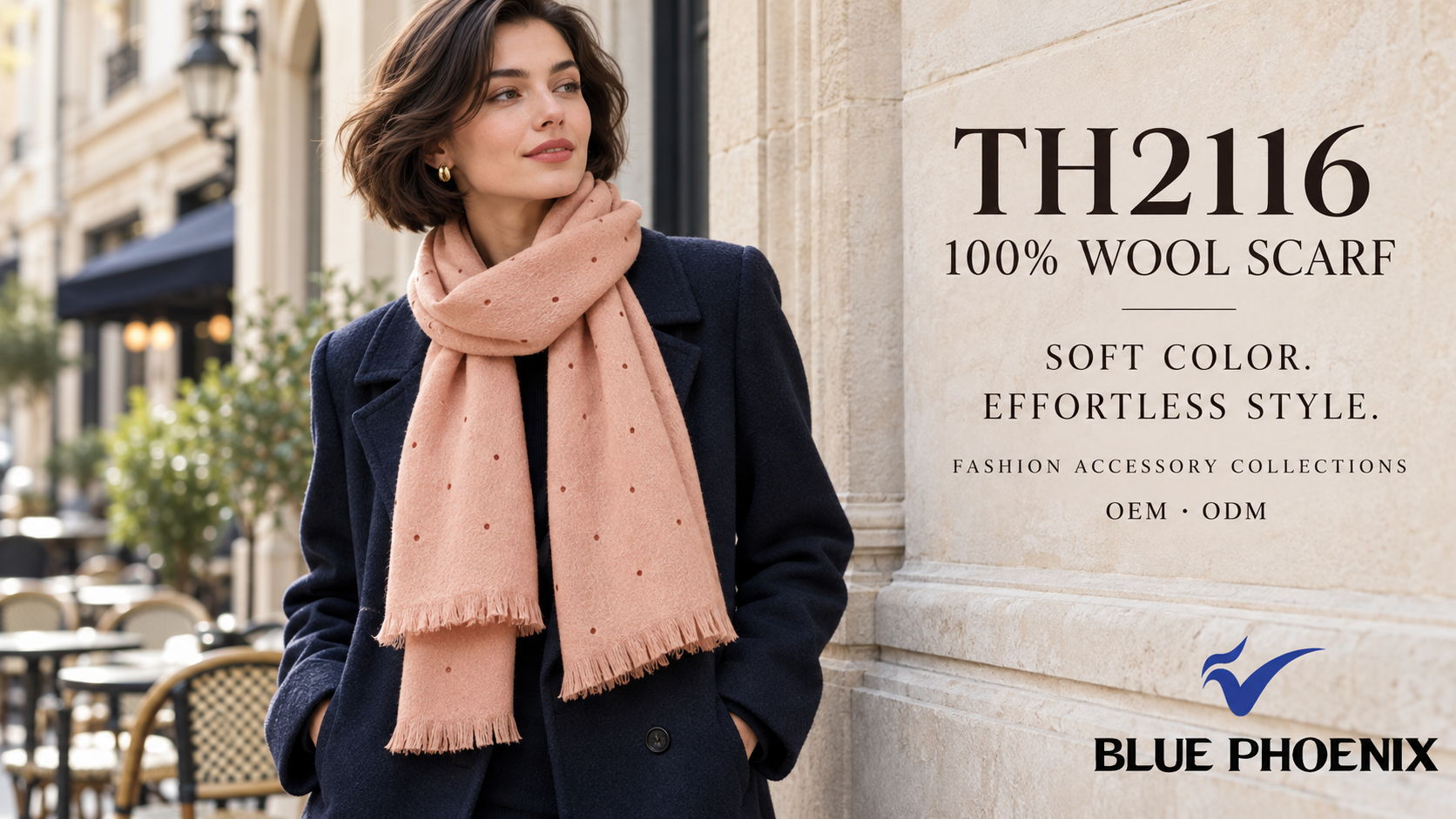
Compare an all-wool design featuring peach-pink fabric, small perforations and short fringe.
TH2008 100% Wool Stripe Scarf
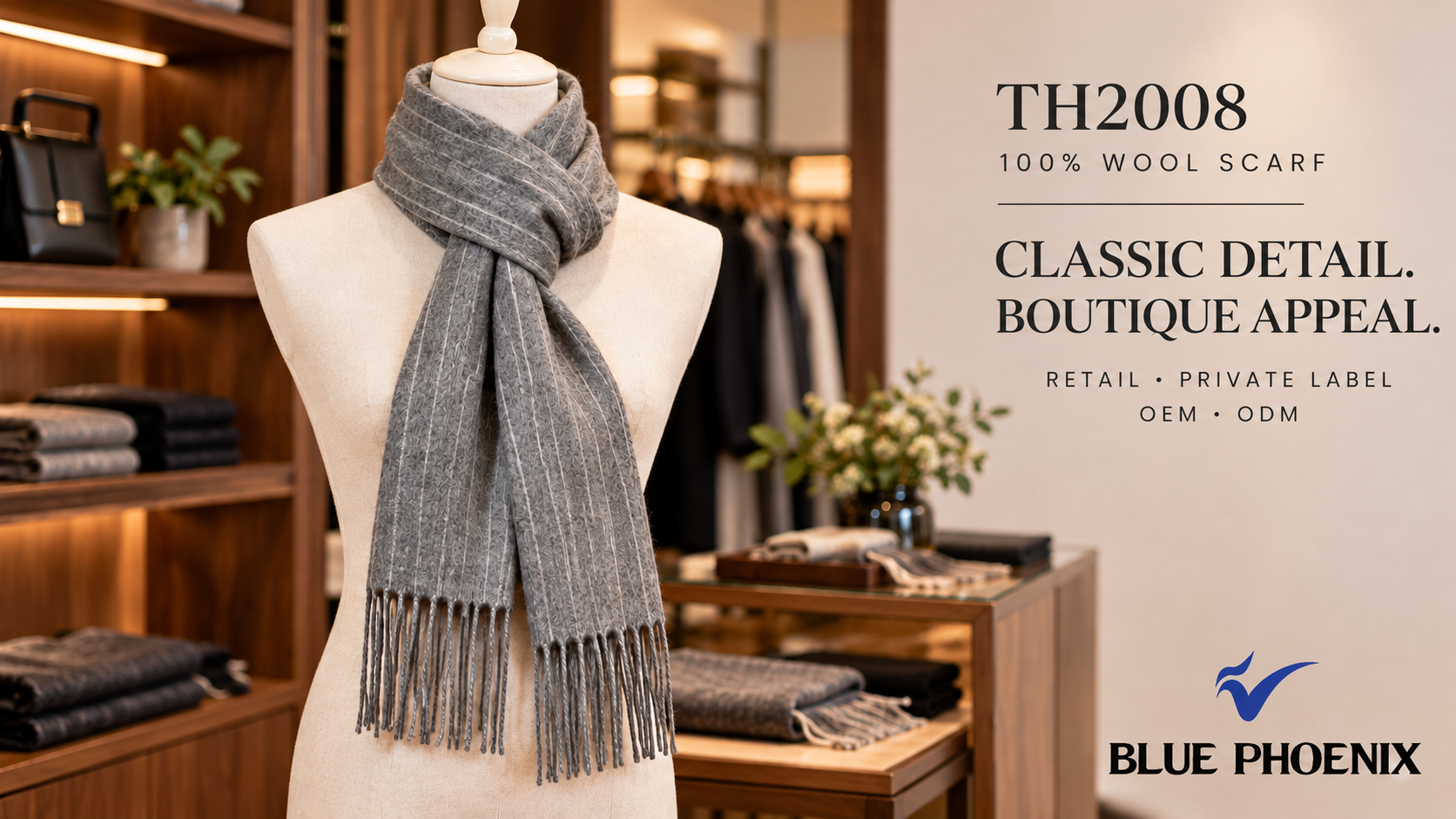
Explore a grey striped wool scarf for a restrained accessory direction.
WAZ1906-A Wool Plaid Scarf
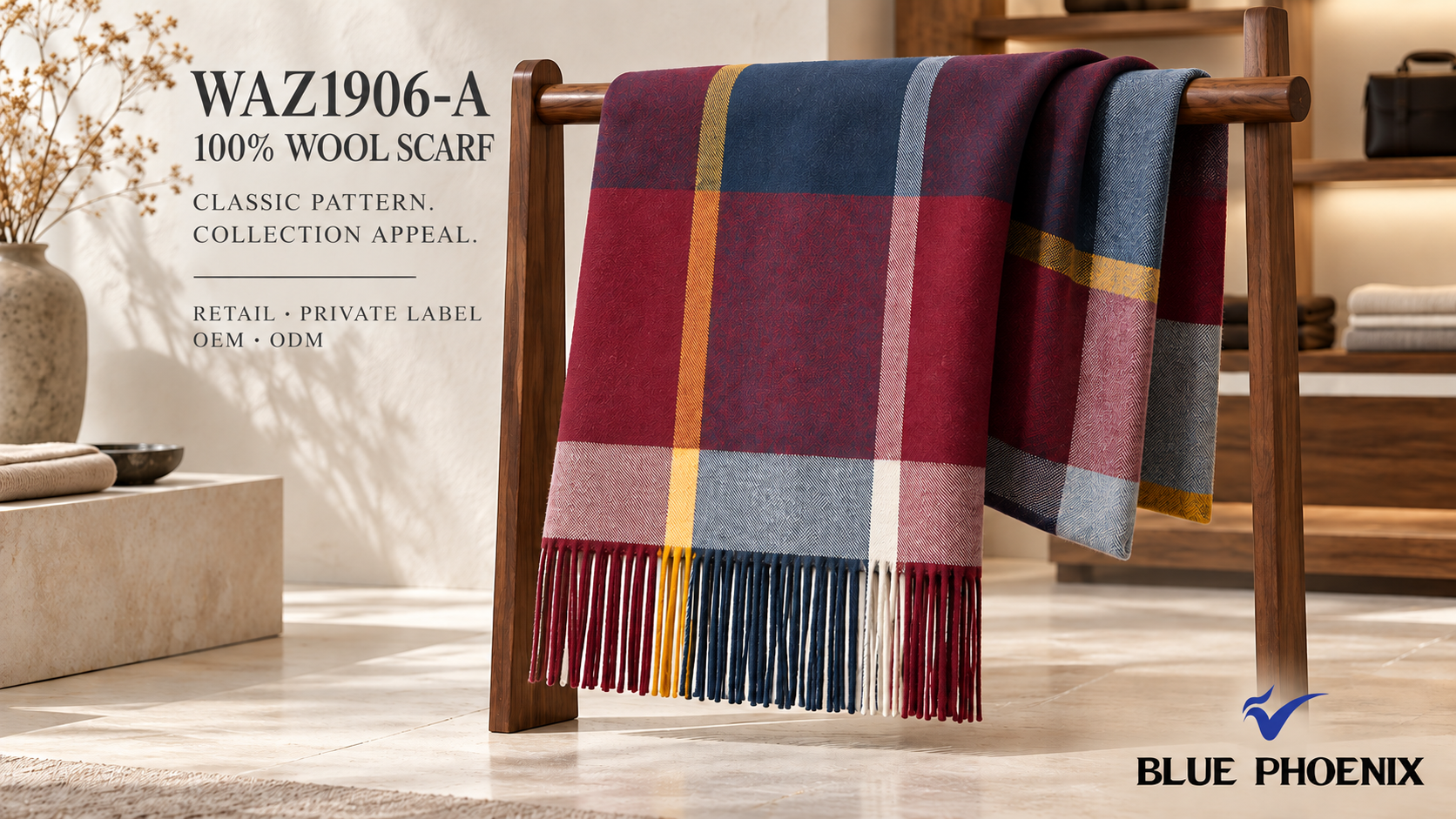
Review a multicolored all-wool plaid design as a separate sample option.
WAZ1902-A Wool Stripe Scarf
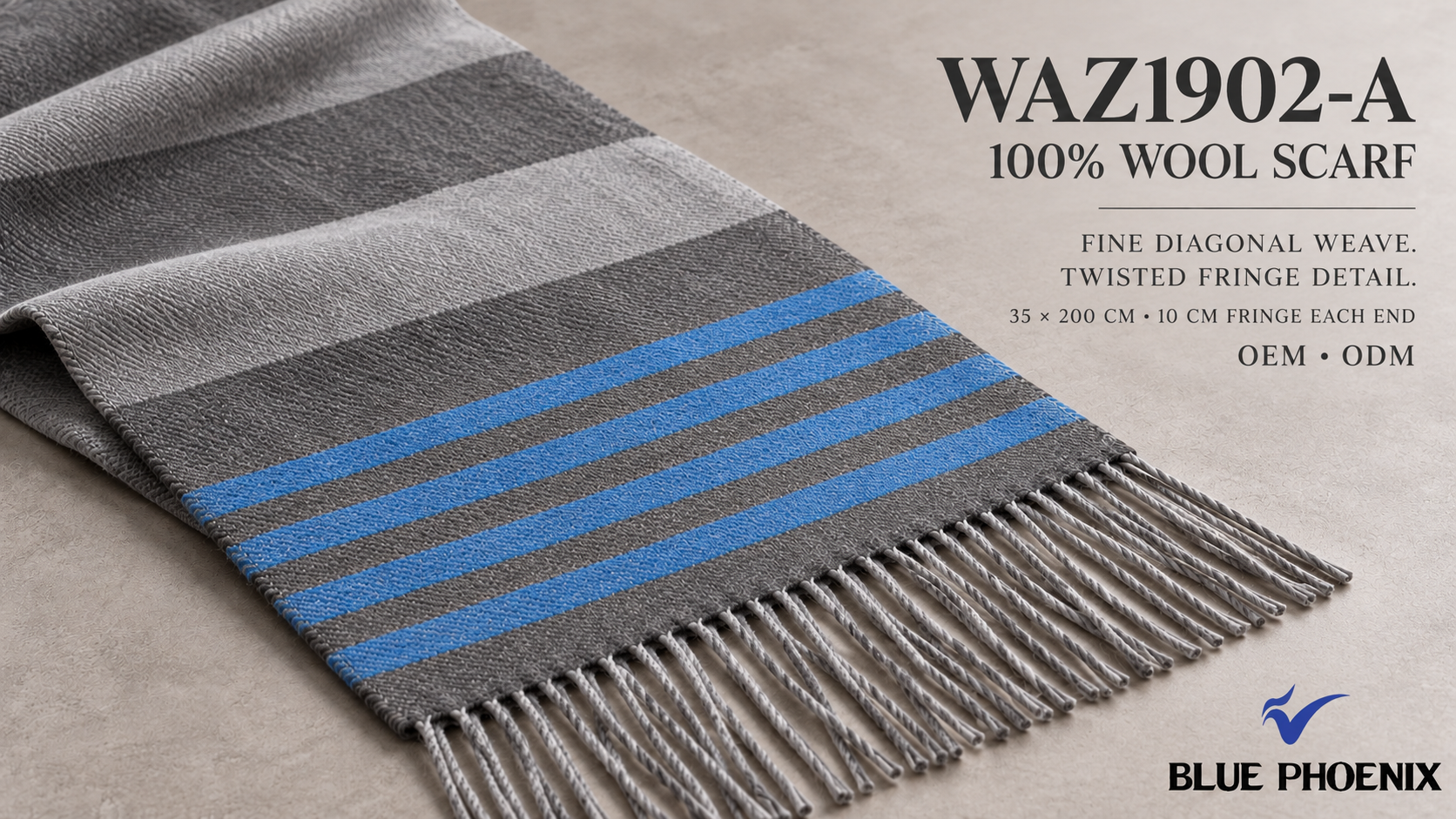
Compare a grey-and-blue striped all-wool accessory.
TH1965 Cashmere-Wool Scarf
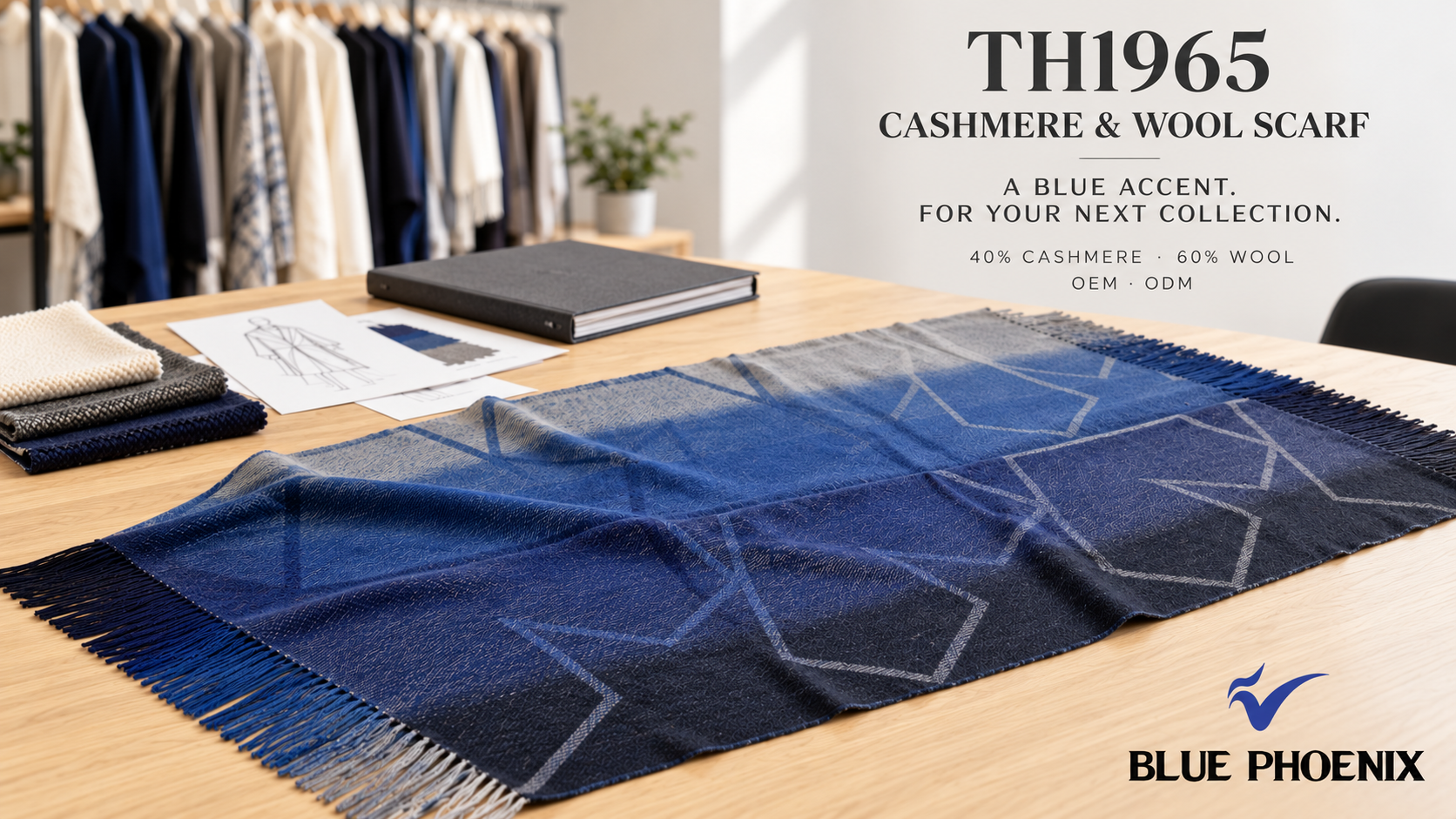
Explore a different blend containing 40% cashmere and 60% wool, with a blue gradient and outlined star motifs.
Comparing wool and wool-blend scarves for your collection? Send James your target composition, dimensions, quantity, design references, labels, packaging and delivery destination for a quotation and sample discussion.
Email: jamesli@shbluephoenix.com
WhatsApp: +86 18017830390
WeChat: bluephoenix66
Website: https://www.shbluephoenix.com/

Blue Phoenix Blankets dedicated to strict quality control of blankets and scarves products and thoughtful customer service, our custom blankets wholesale products are exported to clients in such countries and regions as United states, Europe, Australia, Russia, Germany, Japan.
Copyright © 2026 Shanghai Rainbow Enterprise Development Co., Ltd. - All Rights Reserved.