Blog Posts
High-Quality Wholesale Blankets Manufacturer & Supplier in China with custom design service - Blue Phoenix Blankets
Language
High-Quality Wholesale Blankets Manufacturer & Supplier in China with custom design service - Blue Phoenix Blankets
A patterned cashmere blanket needs a clear design story as well as a material description. Buyers should be able to understand what makes the motif distinctive, how the two faces relate to each other and where the blanket fits within a collection.
The TDC2602 reversible cashmere blanket introduces that story through a connected geometric design. Its maze-like lines and interlocking hexagon structure give the woven surface a recognizable identity, while the reversible presentation offers another way to display the same textile.
For home textile brands, retailers and private label buyers, this guide explores how to assess the design, plan product photography and develop a coherent collection around a geometric jacquard cashmere blanket.
A Geometric Pattern That Gives the Blanket Its IdentityThe defining feature of TDC2602 is its geometric maze pattern. Connected lines and interlocking shapes create a continuous visual repeat across the blanket.
This structure provides a different design direction from a plain cashmere throw, a traditional check or a knitted texture. Instead of relying only on color or surface softness, the blanket introduces a motif that can be recognized in a room photograph, a folded display or a fabric close-up.
When evaluating the pattern, consider its appearance at several distances. A close view explains the lines and intersections. A full blanket view reveals the repeat. A room photograph shows how the design relates to furniture and surrounding textiles.
These views should present the same motif scale and proportions.
What Reversible Jacquard Adds to the PresentationA reversible jacquard blanket invites the buyer to consider both faces as part of the product.
For TDC2602, the relationship between the main face and reverse should be reviewed through the actual sample. Check how the pattern and color balance appear on each side, then decide how they should be shown in the listing and packaging.
A turned-back corner is a useful way to introduce the reverse in photography. Keep the connecting fold visible so that customers can see they are looking at two faces of one continuous blanket.
The term “reversible” does not, by itself, explain the number of fabric layers. Describe the approved construction accurately rather than assuming a separate lining or two blankets joined together.
Place the Pattern Within a Cashmere CollectionA jacquard cashmere blanket can give a collection a more expressive patterned position alongside quieter designs.
For example, a range might combine a plain cashmere blanket, a textured throw and a geometric jacquard. Each item then offers a different visual reason for selection.
TDC2602 can occupy the geometric position. Its connected motif can be shown prominently in a collection photograph, while plain textiles provide a calmer surrounding surface.
For a private label cashmere collection, define that role before requesting changes. Decide whether the blanket should be the main patterned product, a coordinated companion to existing designs or the starting point for a new motif family.
Style a Geometric Cashmere Throw on SeatingTo present TDC2602 as a cashmere sofa throw, allow a broad section of the geometric pattern to remain visible. A narrow fold may show too little of the repeat to explain the design.
A plain sofa or armchair provides a useful background. Choose accompanying cushions after checking the physical sample, and repeat a selected blanket color rather than introducing several competing motifs.
For a more compact display, drape the blanket over the chair back with a natural fold revealing the reverse. Keep the edges visible so that customers can understand the finishing as well as the pattern.
The aim is to show the product clearly at its actual scale.
Use Bedroom Styling to Explain CoverageA geometric cashmere throw can be presented across the foot of a bed or on a bedroom reading chair.
The reference dimensions of TDC2602 are 135×175 cm. Compare those measurements with the selected bed before arranging the photograph. Show it as an accent layer where appropriate, rather than suggesting full mattress coverage.
Plain bedding helps the maze-like motif remain visible. A turned-back section can introduce the reverse without requiring another blanket or additional patterned accessories.
For hospitality projects, assess the intended placement and approved care routine before selecting the product. Decorative suitability and operational care requirements should both be considered.
Read the Specifications TogetherThe reference TDC2602 specification lists 100% cashmere, 15.5-micron fiber fineness, a reversible jacquard construction, dimensions of 135×175 cm and an approximate piece weight of 860 g.
These figures describe different aspects of the blanket. Fiber fineness is separate from fabric weight, and neither replaces a physical assessment of the finished product.
Open the sample fully, handle both faces and review its drape, surface, edges and corners. Confirm measurements and acceptable tolerances before approving a bulk order.
For a custom version, document any changes rather than assuming the reference weight or dimensions will remain applicable.
Develop Custom Jacquard Artwork with Both Faces in MindFor a custom jacquard cashmere blanket, begin with a clear artwork brief. Specify the intended repeat, motif scale, color references and finished dimensions.
Review how the design meets the edges and corners. A motif that looks balanced in a small artwork tile may need further consideration when displayed across the whole blanket.
Both faces should be included in sample approval. If the reverse is intended to feature in product photography or retail folding, explain that requirement at the development stage.
BLUE PHOENIX can review pattern, color, dimension, label and packaging requirements. Development feasibility, MOQ and costs depend on the final brief.
Prepare Photography and Packaging Around the DesignA useful image set for a reversible cashmere throw should include the full patterned face, the reverse, a connecting fold, a close-up and the edge finishing.
Add a room image to show proportion and placement. Keep the original colors, motif geometry and product scale consistent throughout the set.
For packaging, approve the blanket inside the proposed pack. Decide which face should be visible, how much of the repeat should be shown and where labels should sit.
Sample charges and courier costs are quoted separately. Request a current quotation for any custom artwork, labels or packaging before confirming the project.
Explore TDC2602 Product DetailsReview the reference specification, product photographs and customization information before preparing your sourcing brief.
View the TDC2602 reversible jacquard cashmere blanket:
https://www.shbluephoenix.com/tdc2602-luxury-15-5-micron-cashmere-blanket
Conclusion: Build the Collection Around a Clear Geometric IdentityThe value of TDC2602 as a collection design starts with its recognizable geometric repeat and the relationship between its two faces.
Clear photography, accurate dimensions and an approved sample help buyers communicate that identity. For brands developing wholesale or private label cashmere blankets, the next step is to define the product’s role, confirm both faces and align the artwork, finishing and packaging with the intended collection.
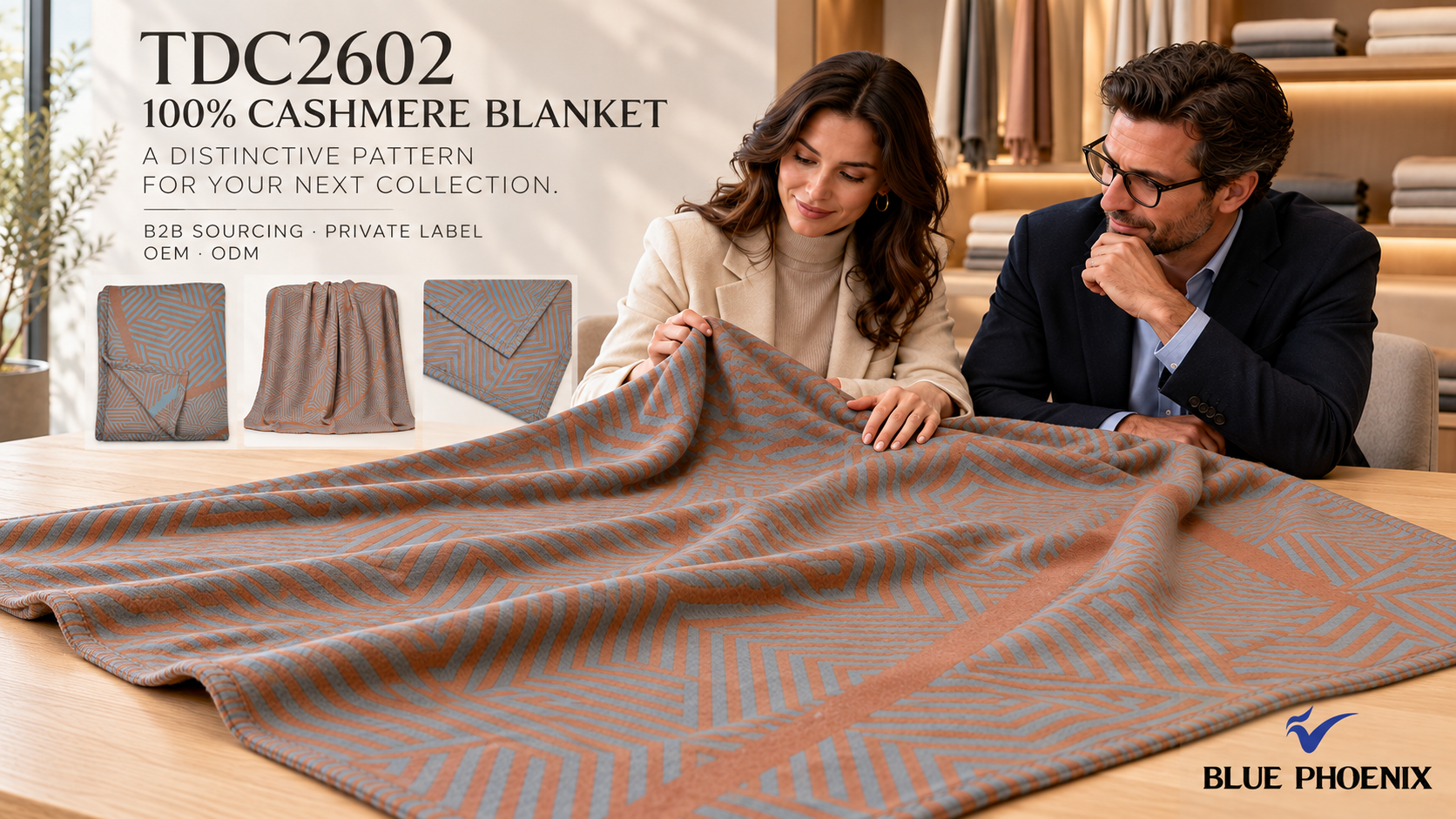
TDC2602 Reversible Jacquard Cashmere Blanket
A 100% cashmere blanket featuring a reversible geometric maze design. Explore patterned cashmere options for wholesale and private label collections.
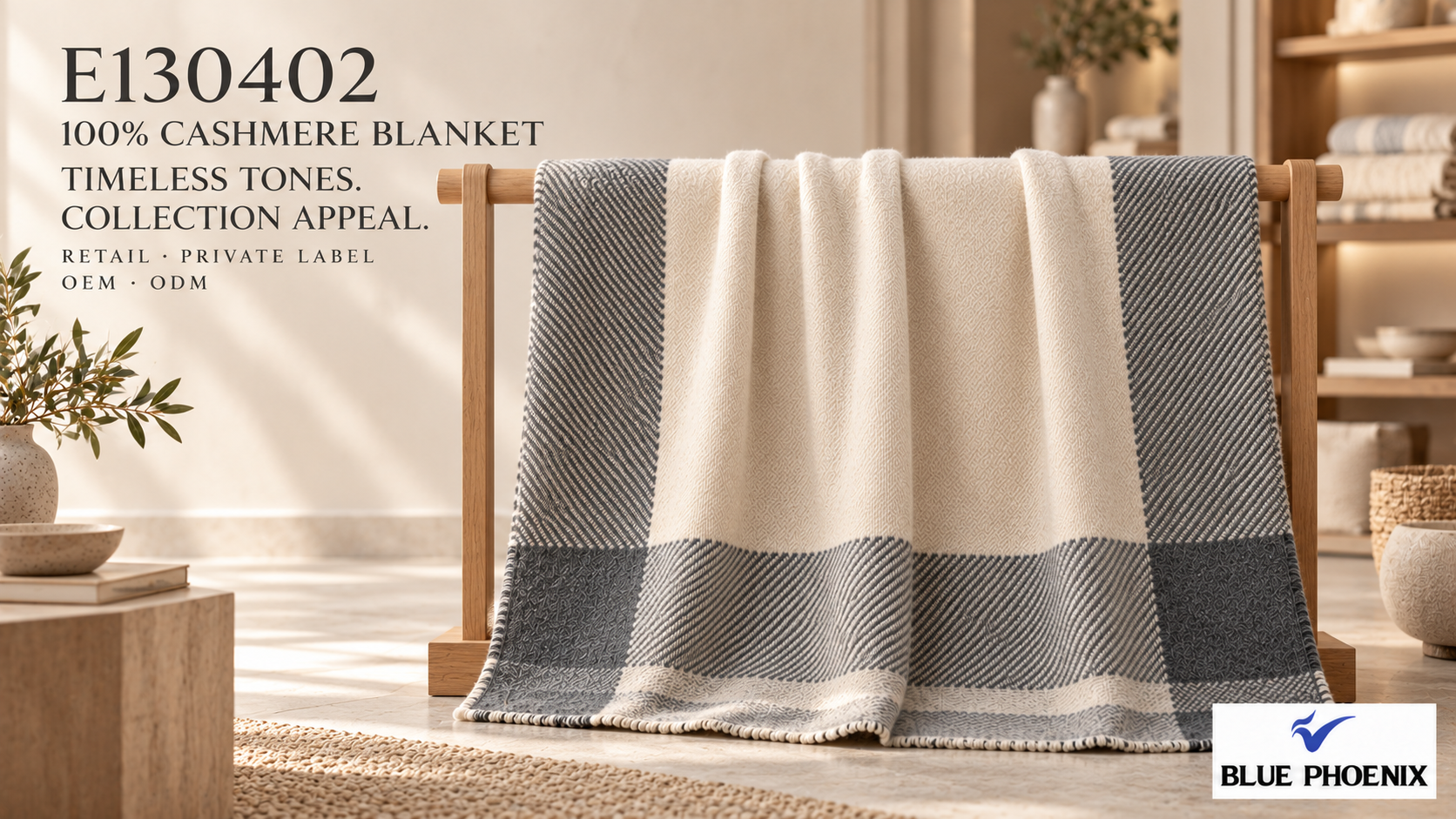
E130402 Cashmere Blanket with Rectangular Border Checks
A 100% cashmere woven blanket combining ivory and melange-grey rectangular border checks with short fringe for coordinated home textile collections.
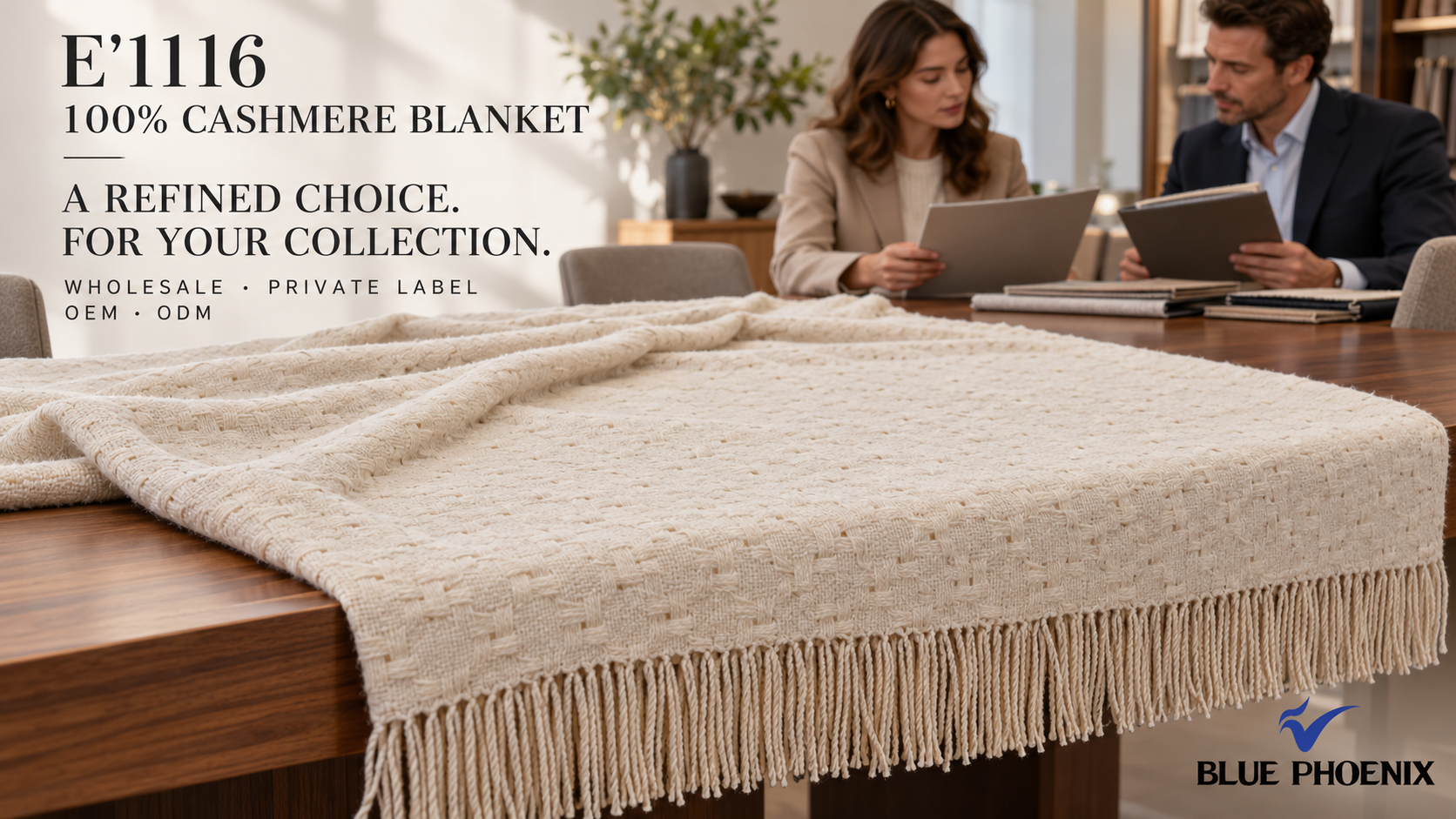
E1116 Cashmere Waffle Throw Blanket
A cashmere throw featuring a woven waffle texture and fringed ends. Explore a textured option for premium home, gift and private label collections.
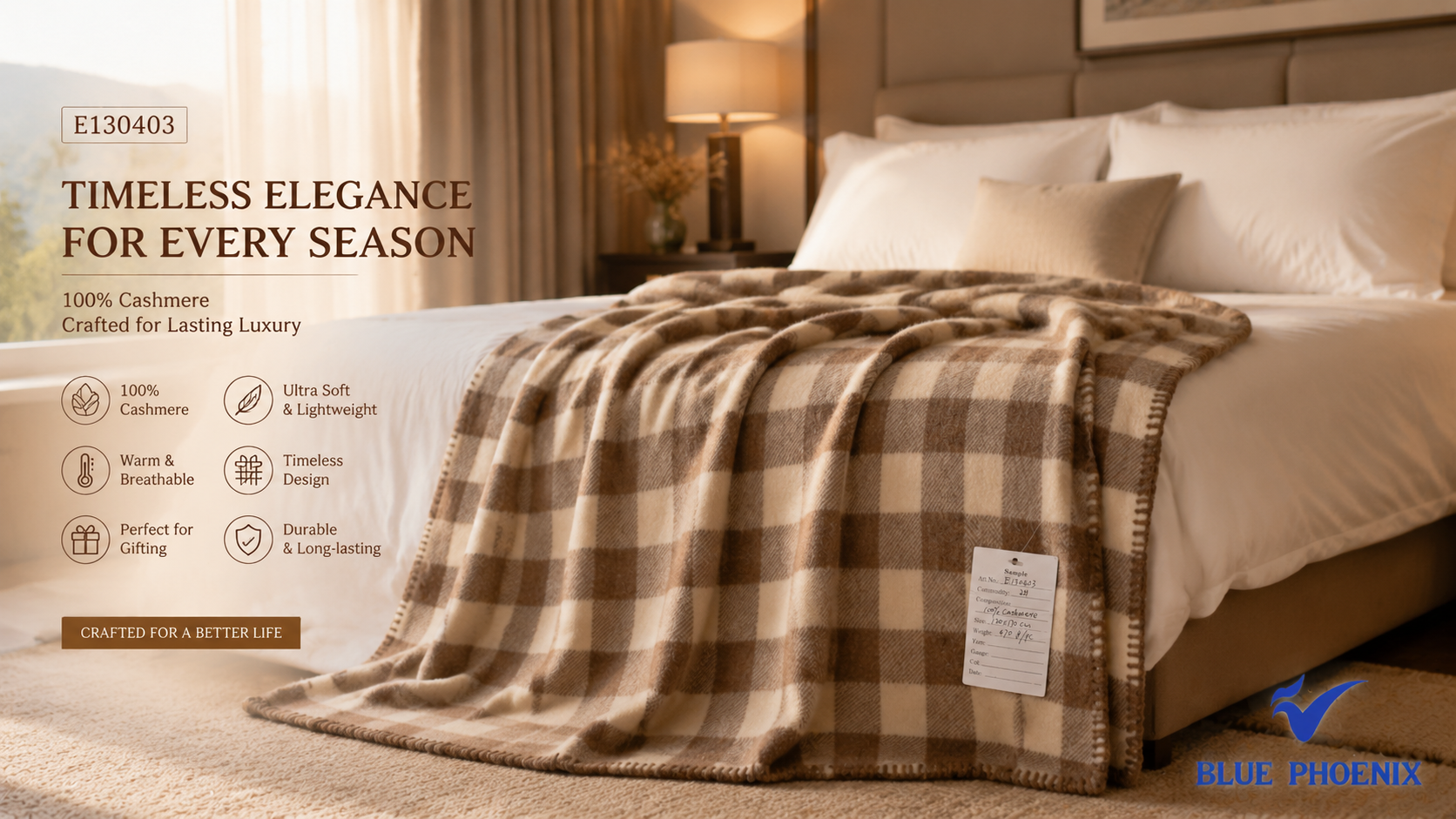
E130403 Natural Undyed Cashmere Check Blanket
A 100% cashmere blanket with two natural undyed fiber colors forming a checkerboard pattern, finished with decorative whip stitching.
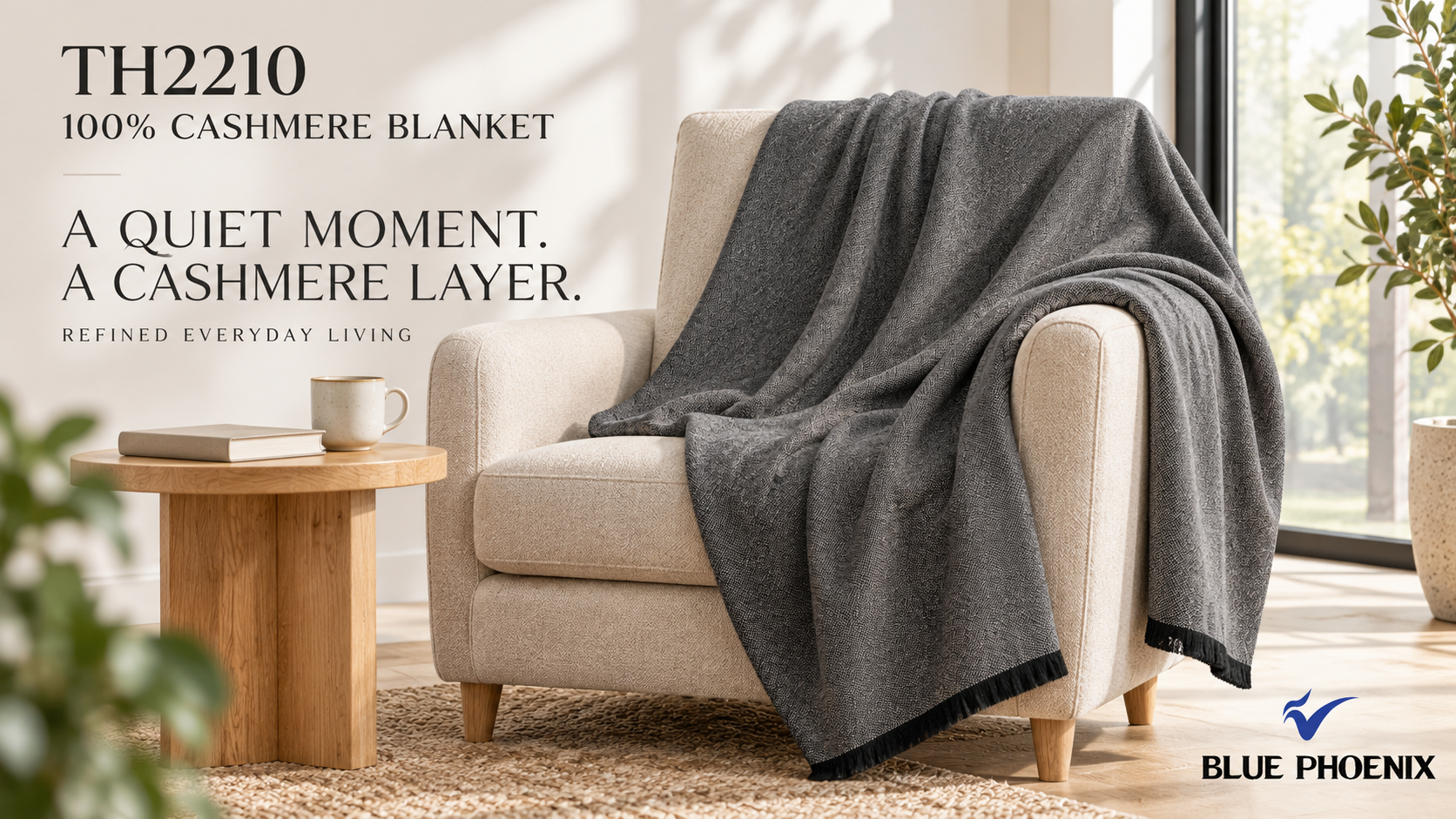
TH2210 Dark Grey Cashmere Blanket
A 100% cashmere blanket with a fine dark-grey woven surface and short black fringe. A restrained option for home textile and gift collections.
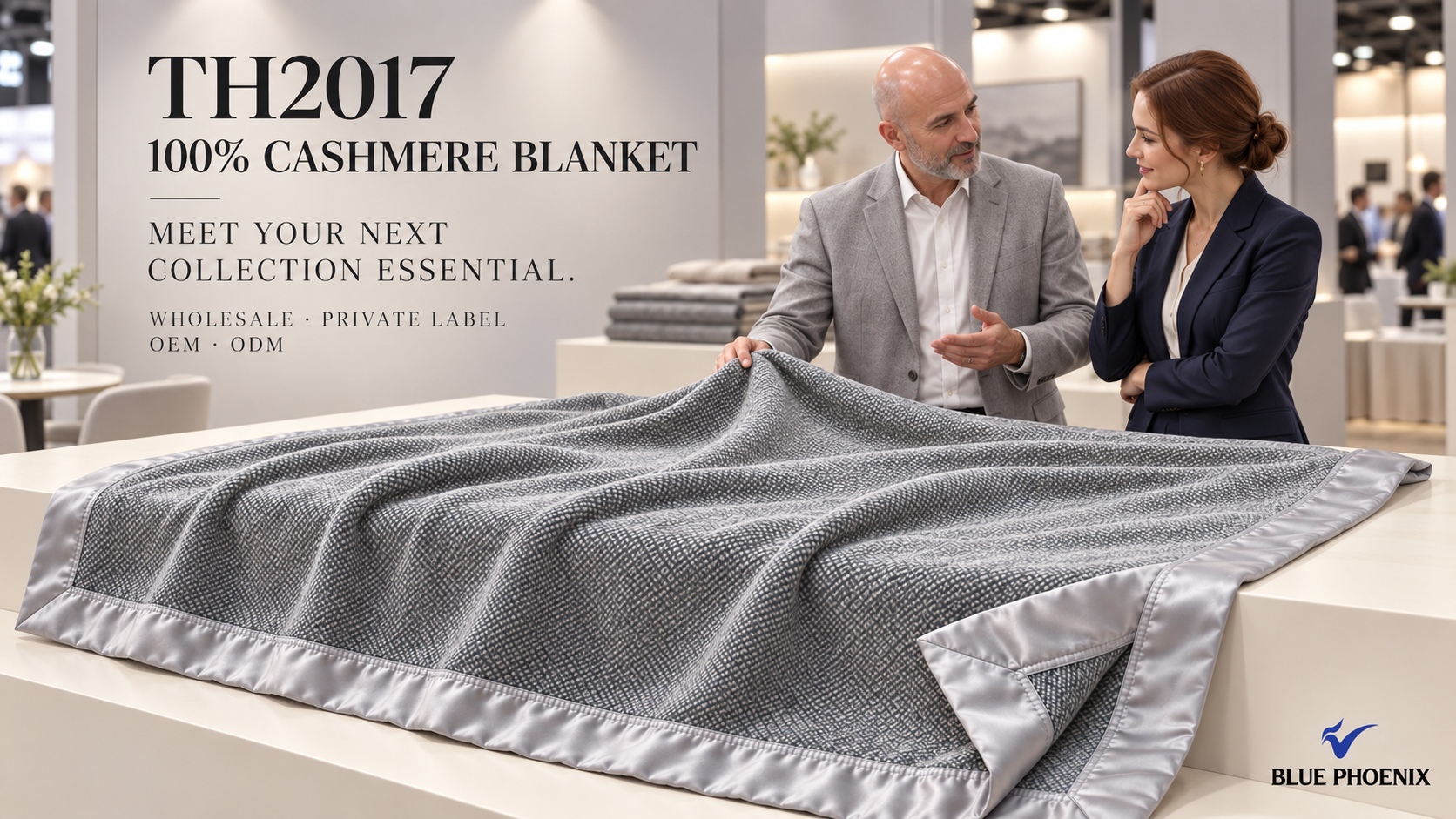
TH2017 Cashmere Blanket with Satin Binding
A 100% cashmere blanket combining a grey woven body with silver-grey satin binding. Explore a plain alternative to patterned cashmere designs.
Its jacquard design uses connected maze-like lines and an interlocking hexagon structure. The continuous repeat gives the blanket a distinct patterned identity for collection development and interior presentation.
Open the sample and inspect both faces under consistent lighting. Review pattern definition, color relationships, surface appearance and edge finishing. Approve both faces before preparing photography or packaging.
Not necessarily. Reversible describes the presentation or use of both faces. Confirm the actual construction through the supplier's specification and physical sample rather than assuming a separate lining or joined layers.
TDC2602 is listed as 100% cashmere with 15.5-micron fiber fineness, dimensions of 135×175 cm and an approximate weight of 860 g per piece. Confirm the final specification and tolerances for your order.
Submit the proposed artwork, repeat size, colors, dimensions, labels and packaging requirements. BLUE PHOENIX can review development feasibility, sampling, MOQ and pricing before production approval.
Confirm the approved sample, both faces, measurements, finishing, quantity, labels, packaging and commercial terms. The reference MOQ is 300 pieces and bulk production time is approximately 50 days, subject to approval and scheduling. Samples and courier services are charged separately. Reference payment terms are 30% deposit and 70% before shipment.
The geometric motif, two-sided presentation and collection role of TDC2602. These details help buyers assess how the blanket can be presented within a coordinated cashmere range.
A decorative arrangement of connected lines and shapes that creates a maze-like visual repeat. Buyers should review the actual artwork and sample to understand the motif.
A close-up explains individual details, while the full view shows the repeat and its relationship to the blanket edges. Both views are useful during design approval.
It changes how much of the pattern remains visible when the blanket is folded, draped or packaged. Approve the repeat at the intended finished size.
No. TDC2602 is specified as a woven jacquard. Its decorative construction should be described accordingly in quotations, product listings and packaging.
No. Review and describe the actual relationship between the approved main face and reverse. Do not assume identical appearance from the word reversible.
Use a natural turned-back corner that reveals both faces and the connecting fold in one image. Keep the original pattern, colors and product proportions consistent.
Yes. Include an image showing the actual edge and corner construction. This helps buyers understand the finishing rather than seeing only the central pattern.
It can provide a recognizable geometric option alongside plain, checked or textured designs. Define its intended role before requesting custom artwork or colors.
Leave a broad patterned section visible and use plain surrounding textiles to keep the motif easy to see. A natural fold can introduce the reverse appearance.
Yes. A chair-back drape can display the pattern, reverse and natural fall of the blanket. Keep its actual dimensions and edge construction clear.
No. Compare the blanket measurements with the mattress and intended drape before describing coverage. It can also be presented as a decorative bedroom layer.
Review the intended placement, handling, care routine, dimensions and any project-specific performance requirements. Approve the sample against the property's actual needs.
No. Fiber fineness and finished blanket thickness are different specifications. Review the complete product rather than using one figure to describe all its characteristics.
No. Inspect the finished blanket for appearance, hand feel, drape and finishing as well as measurements. Agree acceptable tolerances before bulk production.
Provide the intended repeat, motif dimensions, colors, finished size and reference presentation. State which elements must remain unchanged during development.
Yes. Review the reverse as part of development, particularly when it will appear in photography or packaging. Record both faces in the sample approval reference.
Use the actual sample and a reference photograph showing the intended face, visible pattern area and label position. Include the folding instructions in the packing brief.
Submit the package format and artwork for feasibility review, sampling and a separate quotation. Check the proposed packaging with the actual blanket inside.
Send the model number, target quantity, customization brief, destination and required date to BLUE PHOENIX. Sample charges and courier costs are quoted separately.
Cashmere Blankets — Explore additional cashmere designs for your collection.
Woven and Knitted Blankets — Compare different construction and texture directions.
Wool Blankets — Review wool alternatives for separate product briefs.
Blended Blankets — Discover other fiber combinations and design options.
TDC2602 Reversible Jacquard Cashmere Blanket — Review the featured geometric blanket and reference specification.
E130402 Cashmere Woven Blanket — Compare a rectangular border check design.
E1116 Cashmere Waffle Throw Blanket — Explore a different surface texture within a cashmere range.
Natural Undyed Cashmere Blanket — Review an option centered on natural cashmere colors.
TH2210 Luxury Cashmere Blanket — Discover another cashmere model for collection planning.
TH2017 100% Cashmere Blanket — Compare a plain cashmere design with satin edging.
Contact BLUE PHOENIX to discuss TDC2602 samples, wholesale sourcing or private label jacquard development. Include your target quantity, artwork or color references, dimensions, labels, packaging, destination and required delivery date. Sample charges and courier costs are quoted separately.
Email: jamesli@shbluephoenix.com
WhatsApp: +86 18017830390
WeChat: bluephoenix66
Website: https://www.shbluephoenix.com/

Blue Phoenix Blankets dedicated to strict quality control of blankets and scarves products and thoughtful customer service, our custom blankets wholesale products are exported to clients in such countries and regions as United states, Europe, Australia, Russia, Germany, Japan.
Copyright © 2026 Shanghai Rainbow Enterprise Development Co., Ltd. - All Rights Reserved.