Blog Posts
High-Quality Wholesale Blankets Manufacturer & Supplier in China with custom design service - Blue Phoenix Blankets
Language
An emergency blanket supply project continues beyond choosing the material and approving a sample. Buyers also need to plan how the blankets will be packed, identified, received, stored and distributed.
These decisions connect the finished product with the people handling it. A clearly marked carton helps a warehouse team identify its contents. An agreed packing quantity supports stock counting. Suitable individual packaging helps organise the blanket before issue.
The BLUE PHOENIX TBH2605 FR polyester blanket provides a reference for this planning. Its listed specification is 100% polyester, 150 × 200 cm, approximately 1500g per piece and 500 GSM, with a sand-beige surface and overlocked edges.
This guide explains what emergency-relief buyers, institutional procurement teams and distributors should agree before preparing a bulk blanket order for storage and distribution.
1. Connect the Blanket Specification with the Packing PlanA packing plan should describe the same product as the quotation and approved sample.
For TBH2605 emergency blankets, use a consistent reference:
The dimensions, weight and folding method affect the packed format. Any changes to the blanket specification should therefore be reviewed alongside packaging.
Where a project specifies flame-performance requirements, confirm the applicable finished-product test method, acceptance criteria and supporting documentation separately. Packaging and product identification should use the approved wording.
2. Approve the Folding Method Before Individual PackagingFor bulk emergency blankets, folding is part of the supply specification.
Review a physical sample in the proposed folded format. Check whether it fits the intended individual packaging, how it will be removed and whether the product identification remains visible.
Confirm which blanket face should be presented outward and where attached labels will sit after folding. The fold should be practical for the proposed packing and handling method.
Avoid selecting packaging dimensions solely from an unfolded product photograph. The packed sample provides a clearer basis for approving bag dimensions, inserts and carton arrangements.
If compression packing is requested, evaluate it with the actual sample. Review its effect on unpacking, presentation and any agreed recovery expectations before approving the method.
3. Use Individual Packaging to Support Identification and IssueIndividual packaging should follow the buyer’s distribution plan.
Some projects require one blanket per individual pack. Others may have a different unit-of-issue requirement. Confirm this before production rather than assuming that one packing format suits every order.
For a relief blanket supply project, discuss:
The number of blankets in each individual pack.
Packaging material and closure method.
Product identification and required languages.
Barcode or item-code requirements, where applicable.
Inserts or instructions.
How the pack will be opened during distribution.
The wording on packaging should match the approved blanket and purchase documents. Claims about performance or certification should be included only when supported and relevant to the supplied product.
4. Agree on Carton Quantities and MarkingsA consistent carton format helps connect purchasing quantities with warehouse records.
Before confirming the TBH2605 bulk packing specification, agree on the quantity per carton, carton dimensions, net weight and gross weight. Review whether the packed carton is suitable for the planned handling arrangements.
Useful carton identification may include:
Buyer or project reference.
Model and product description.
Quantity per carton.
Carton number or numbering sequence.
Batch or order reference, where required.
Destination or delivery reference.
Agreed handling information.
Use the information required by the project. If several models or versions are being supplied, make their identification easy to distinguish.
Approve a carton-marking layout before bulk packing so wording and placement can be checked.
5. Calculate Product Weight Separately from Shipping WeightThe approximately 1500g piece weight of TBH2605 is useful for preliminary order planning.
For example:
1,000 blankets × 1.5kg = approximately 1,500kg of blankets.
This excludes individual packaging, cartons, pallets and other packing materials. It is not the final shipment gross weight.
Freight planning also requires confirmed carton dimensions and total shipment volume. Blanket weight alone does not establish how much warehouse or transport space an order will occupy.
Ask for the final packing list based on the agreed packing plan. If the order changes, update the quantity, weight and volume calculations together.
6. Prepare the Receiving and Storage ProcessA blanket warehouse receiving plan should identify what the receiving team will check when the shipment arrives.
Compare carton counts and markings with the packing list. Record visible damage and review any cartons that appear wet, crushed or opened. Follow the agreed inspection procedure when deciding which packs to examine.
For storage, use a clean, dry area and protect cartons from water exposure and contamination. Follow the packaging supplier’s stacking guidance and the facility’s handling procedures.
Keep order or batch identification available in the stock records. If packaging is opened for inspection, record the action and restore suitable protection before returning the goods to storage.
The appropriate storage and stock-review arrangements depend on the packaging, facility and programme. Agree on any project-specific conditions before shipment.
7. Organise Distribution Around a Defined Unit of IssueFor humanitarian blanket distribution and institutional issue, define what one recipient or location should receive.
The unit of issue might be one individually packed blanket or another project-defined quantity. Make sure purchase quantities, packing quantities and distribution records use compatible units.
If cartons are being divided among several destinations, prepare the allocation before dispatch. Clear destination references can help teams distinguish goods intended for different locations.
Where cartons are opened and blankets repacked, review the replacement packaging and identification. Important product and care information should remain with the blanket as required by the programme.
Delivery quantities and recipient allocations should follow the organisation’s actual distribution plan.
8. Include Packaging and Logistics in the Quotation BriefA useful emergency blanket quotation request includes more than the required number of blankets.
Provide BLUE PHOENIX with:
Model and product specification.
Order quantity and any version breakdown.
Folding and individual-pack requirements.
Carton quantities and marking instructions.
Pallet requirements, where applicable.
Testing and inspection requirements.
Delivery destination and required arrival date.
Required shipment documents.
Custom labels and packaging are subject to review and confirmation. Sample and courier charges apply.
Confirm the final quotation, production schedule and transport arrangements against the approved order. Allow time for packaging artwork, sample review and revisions where needed.
Conclusion: Prepare the Blanket for Its Complete Supply JourneyThe TBH2605 FR polyester blanket offers a defined product reference for emergency-relief and institutional sourcing: 100% polyester, 150 × 200 cm, approximately 1500g and 500 GSM, with a sand-beige surface and overlocked edges.
A complete supply plan connects this specification with folding, individual packaging, carton identification, shipment information, receiving checks and distribution requirements.
For bulk relief blankets and institutional projects, BLUE PHOENIX can review the product and packing requirements together. Share the destination, quantity and distribution brief so the quotation reflects how the blankets will actually be handled.
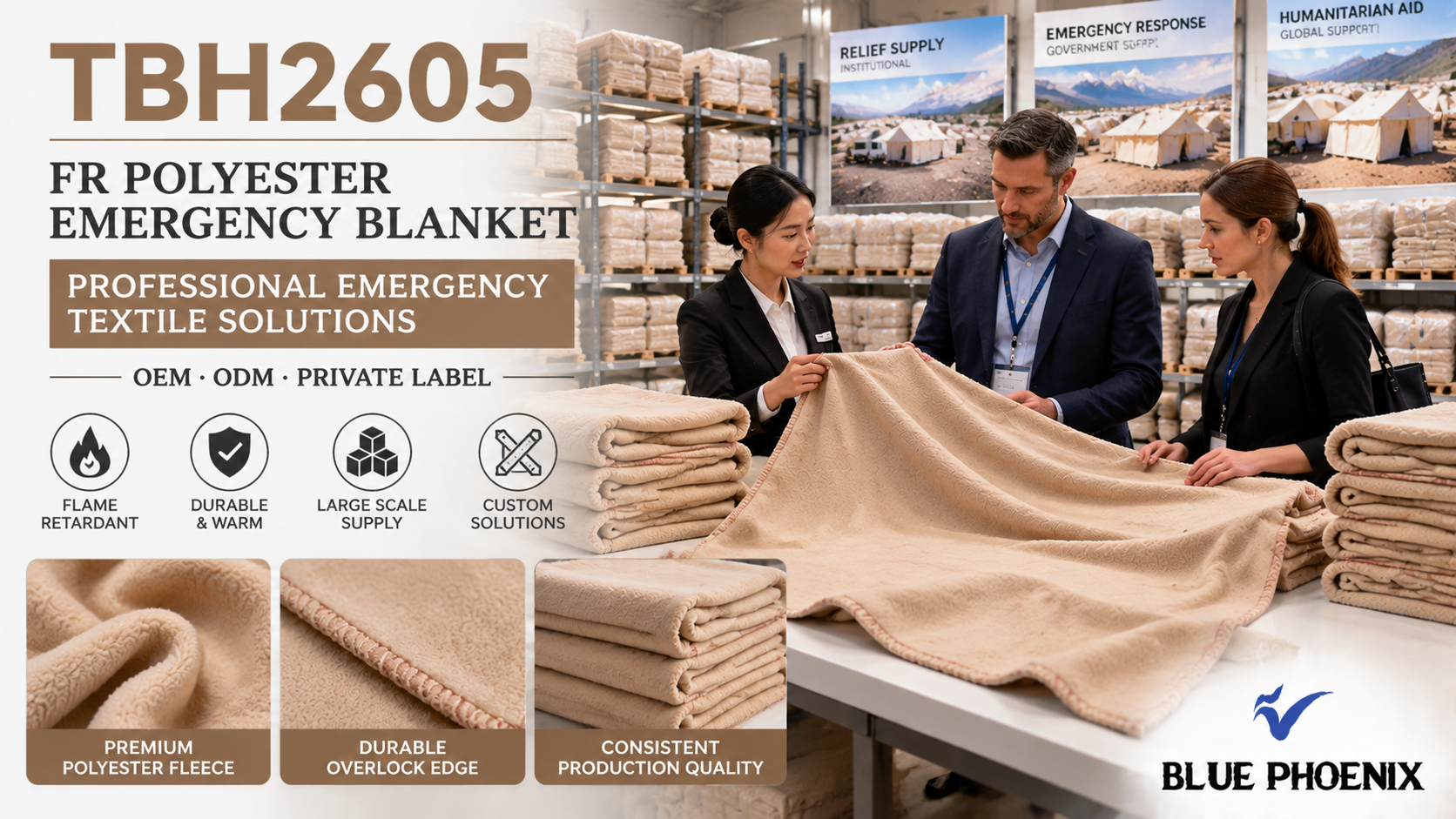
TBH2605 FR Polyester Emergency Blanket
Sand-beige polyester blanket with overlocked edges for emergency-relief and institutional sourcing. Reference specification: 150 × 200 cm, approximately 1500g and 500 GSM.
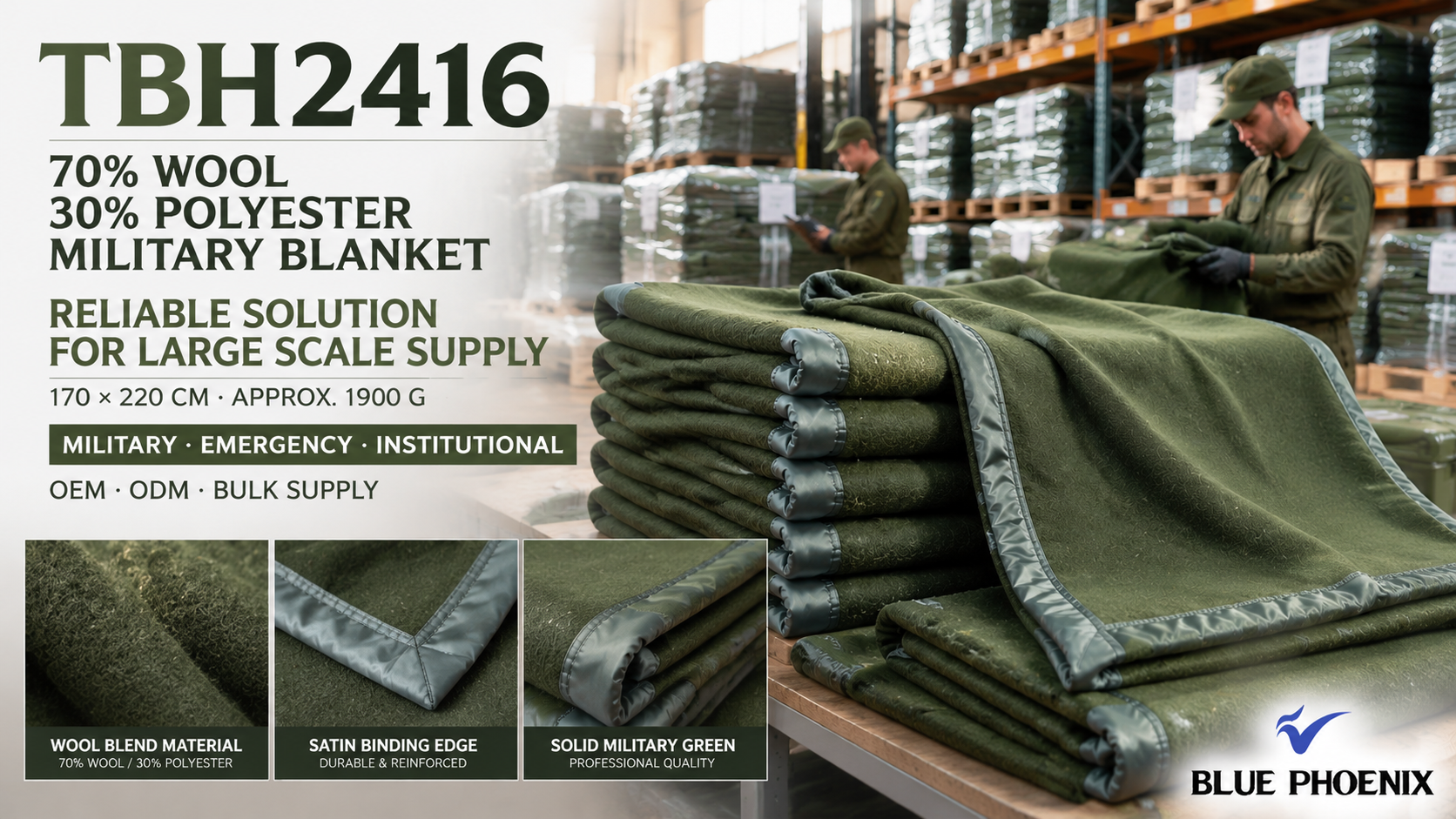
TBH2416 Wool-Blend Military Blanket
A military-green wool-blend blanket with satin binding, providing another material and finishing reference for bulk accommodation supply.
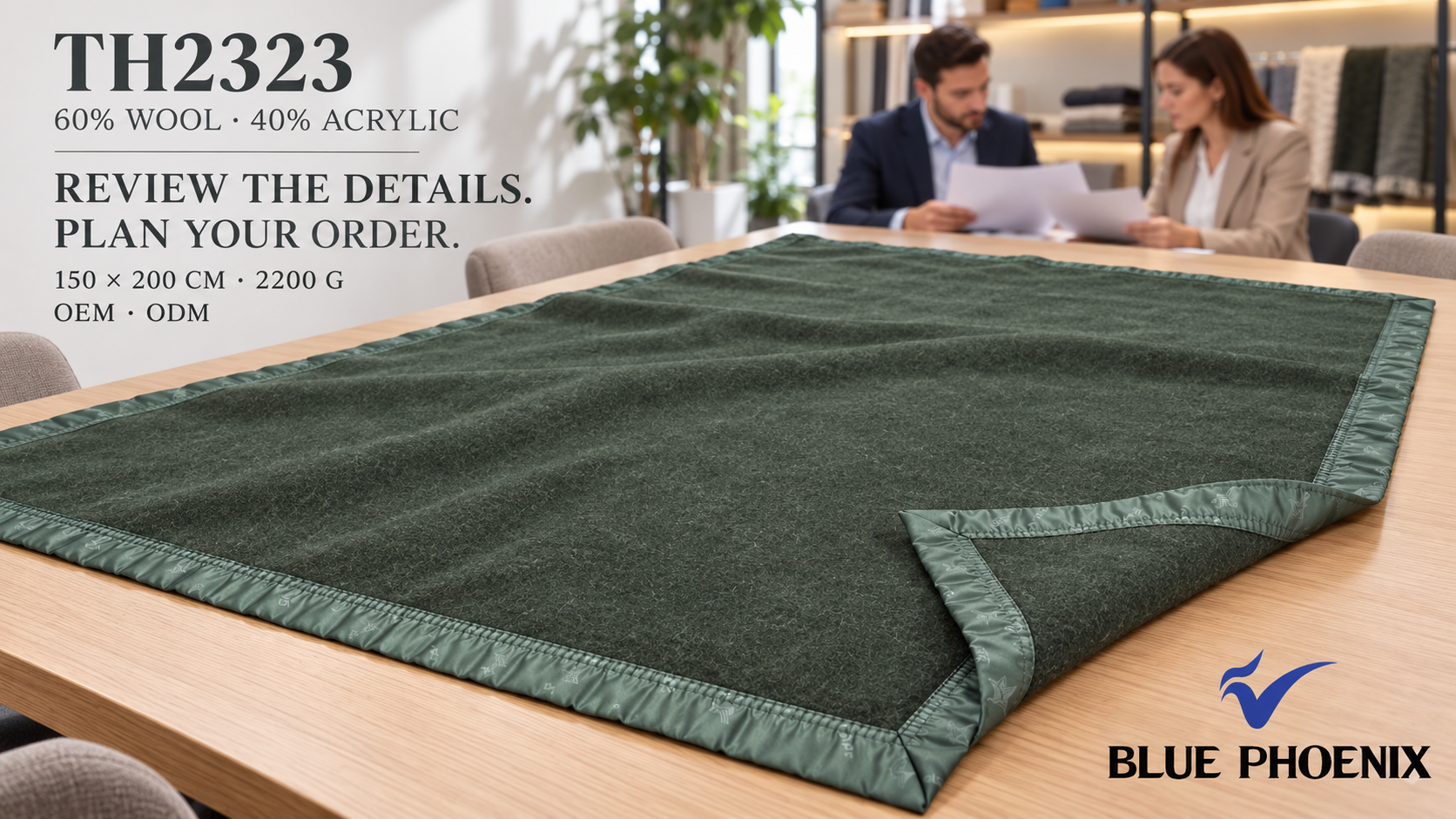
TH2323 Wool-Acrylic Blanket
A green wool-acrylic blanket with satin edging for buyers comparing bedding options for staff and institutional accommodation.
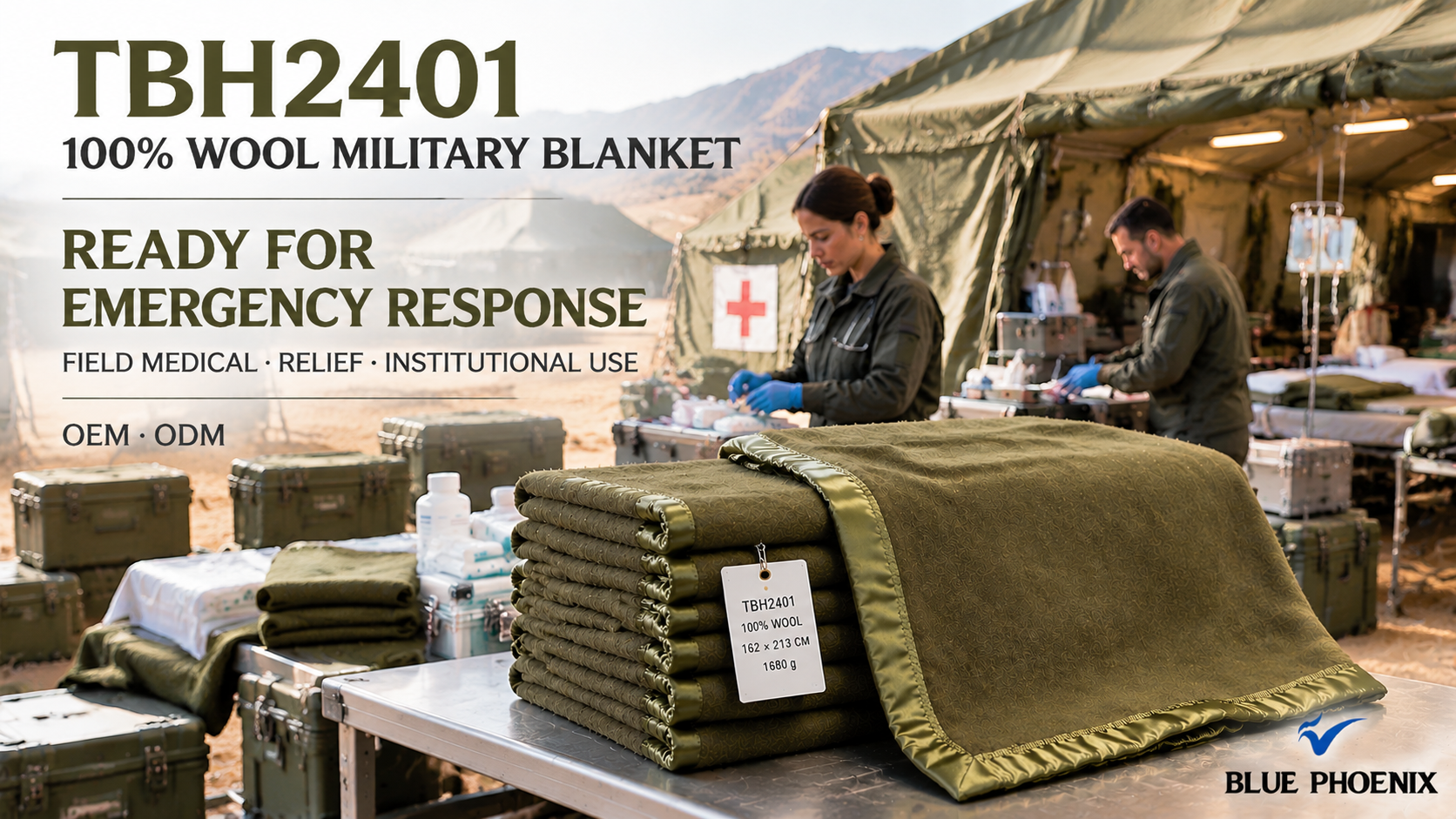
TBH2401 100% Wool Military Blanket
An olive wool blanket with matching satin binding for buyers reviewing natural-fibre options alongside polyester and blended blankets.
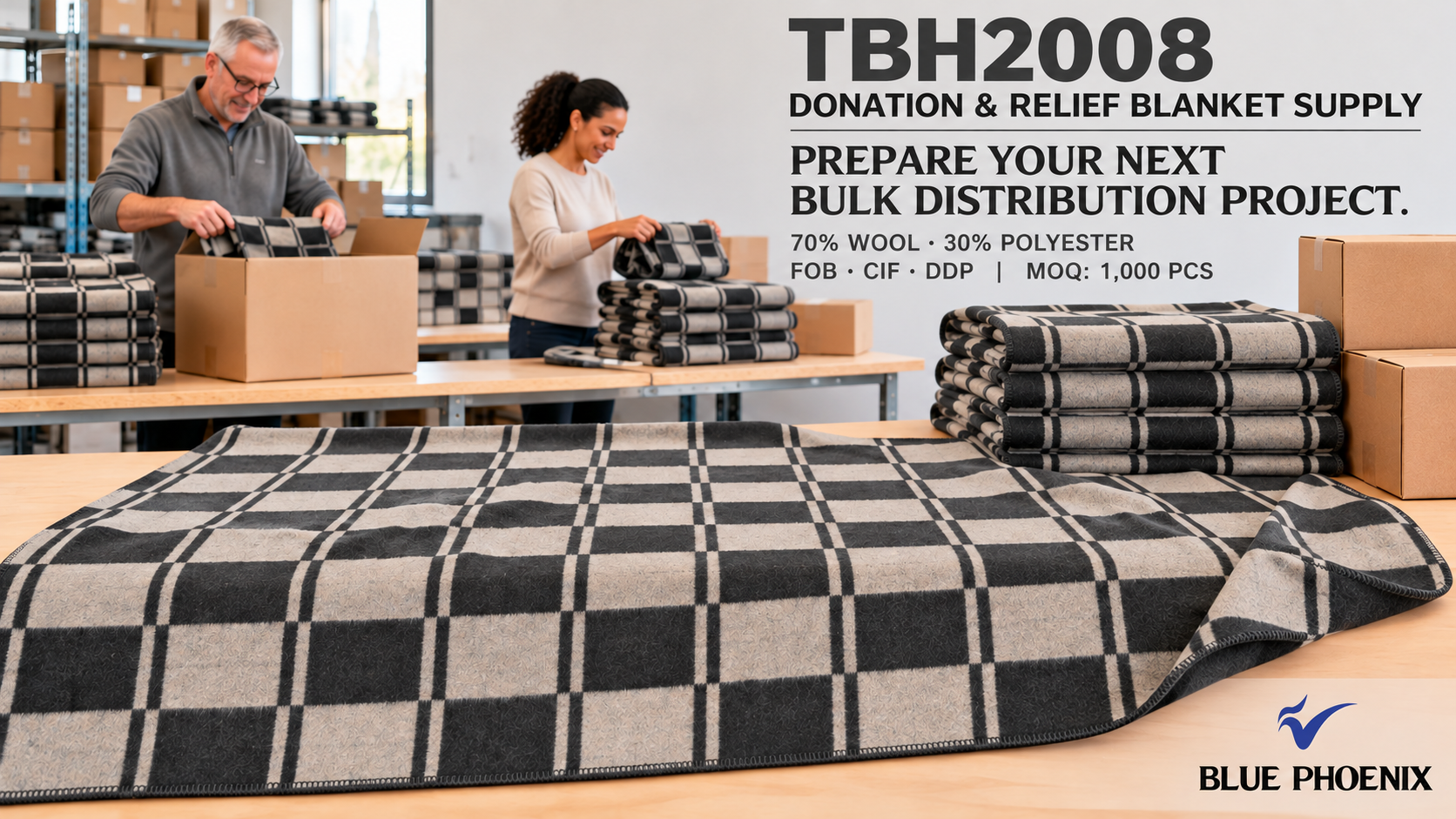
TBH2008 Checked Wool-Blend Blanket
A checked wool-blend blanket with overlocked edges, offering a different design reference for relief and institutional bedding collections.
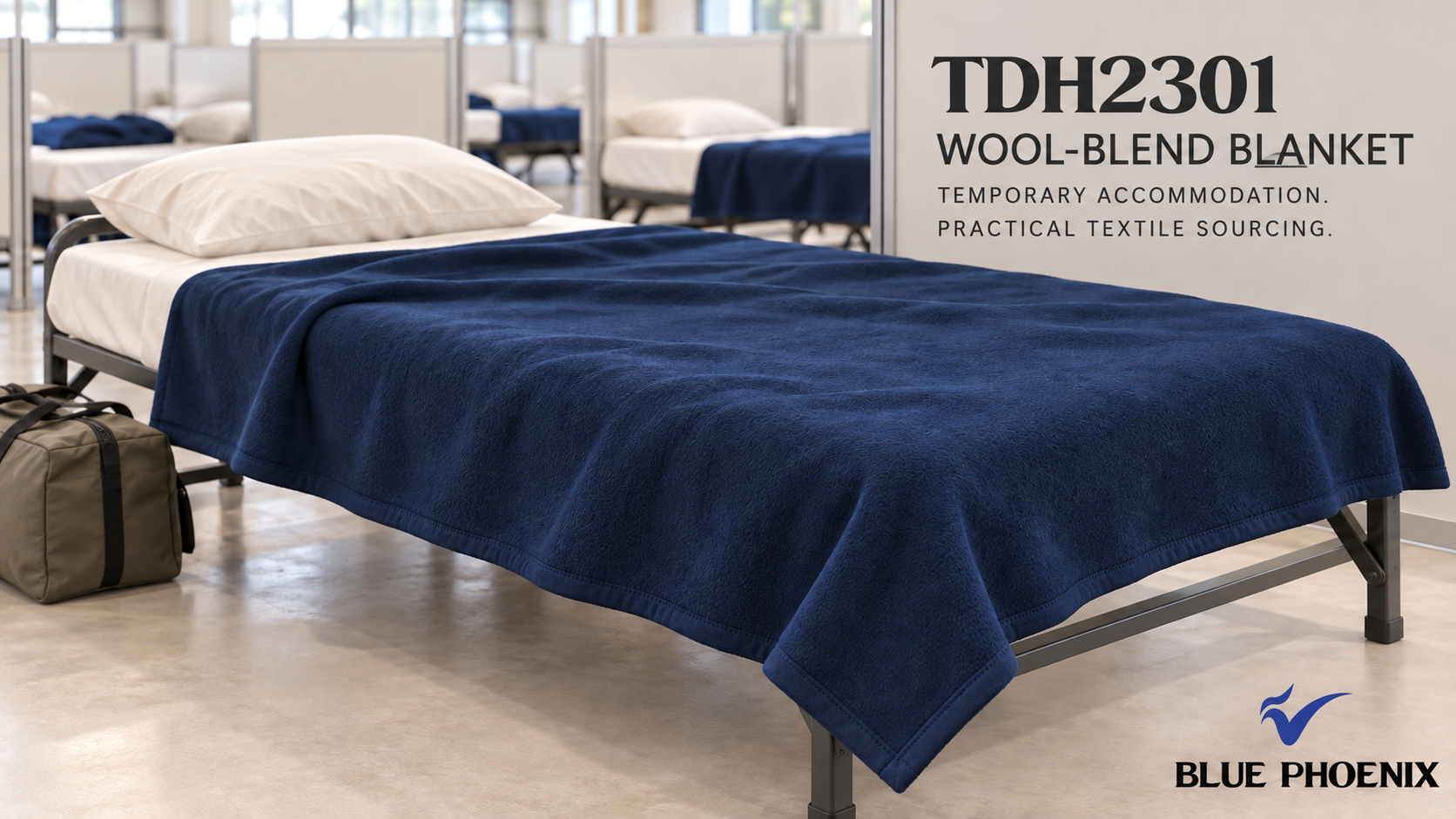
TDH2301 Navy Wool-Blend Blanket
A plain navy wool-blend blanket with folded hems for buyers comparing institutional textile specifications and presentation.
TBH2605 is an FR polyester blanket specified as 100% polyester, 150 × 200 cm, approximately 1500g per piece and 500 GSM, with a sand-beige surface and overlocked edges.
Yes. Provide the required folding method, individual-pack format, carton identification and delivery requirements for review.
The quantity must be confirmed against the approved folding method, packaging and handling requirements. Do not assume a carton quantity from the unfolded blanket dimensions.
No. Shipment gross weight also includes individual packaging, cartons, pallets where used and other packing materials.
Use a clean, dry storage area, protect the goods from water exposure and contamination, and follow the agreed packaging and facility-handling procedures.
A packing sample can be discussed during development so folding, labels and individual packaging can be reviewed together. Sample and courier charges apply.
Packing affects product presentation, handling, shipment measurements and the requirements of the receiving and distribution teams.
It should show the intended fold, outward-facing surface, label position and fit within the proposed individual packaging.
Confirm the packing format according to the buyer’s unit-of-issue and distribution plan rather than assuming one format suits every project.
It can be reviewed with the actual sample. Agree on the method and evaluate unpacking and presentation before approval.
Use the buyer-approved product identification, quantity and any required language, care or traceability information.
Provide the required code, artwork, format and placement for review as part of the packaging brief.
They may identify the product, quantity, order reference, carton number, destination and other project-required information.
Approval allows wording, numbering and placement to be checked before the markings are applied to the bulk order.
At approximately 1.5kg per piece, 1,000 blankets weigh approximately 1,500kg before packaging is included.
No. Confirm carton dimensions, quantities and the final packing arrangement to establish shipment volume.
Yes. Provide any pallet format, handling or destination requirements so the proposed packing can be reviewed.
Compare carton counts and markings with the packing list, record visible damage and follow the agreed inspection procedure.
Record the condition and follow the organisation’s receiving and inspection process before releasing the affected goods into available stock.
It connects stored goods with purchasing documents, inspection records and any subsequent distribution enquiries.
Record the inspection and restore suitable protection before returning the goods to storage.
Prepare the allocation and identification requirements before dispatch, using clear destination references where required.
It is the project-defined quantity supplied to a recipient or location, such as one individually packed blanket.
Check replacement protection, product identification and the information required to remain with each blanket.
No. Any required finished-product testing and documentation must be reviewed separately against the purchasing specification.
Provide the product specification, quantity, packing requirements, documentation, destination and required arrival date.
For product-selection considerations before preparing the packing plan, read the TBH2605 FR Polyester Blanket Sourcing Guide. Review the specification, samples, finishing and project requirements before bulk ordering.
The following models offer different materials, designs and finishing options. Each should be evaluated against the buyer’s intended use, care process and documentation requirements.
TBH2605 FR Polyester Blanket — The sand-beige, overlocked-edge reference discussed in this guide.
TBH2416 Wool-Blend Military Blanket — A military-green option with satin binding.
TH2323 Wool-Acrylic Blanket — A green blanket for accommodation textile sourcing.
TBH2401 100% Wool Military Blanket — An olive natural-fibre option with satin binding.
TBH2008 Checked Wool-Blend Blanket — A checked design with overlocked edges.
TDH2301 Navy Wool-Blend Blanket — A plain navy design with folded hems.
Send BLUE PHOENIX your required specification, quantity, folding method, individual packaging, carton markings, documentation and delivery destination.
We can review the blanket and packing requirements together before preparing the quotation. Custom requirements are subject to confirmation. Sample and courier charges apply.
Email: jamesli@shbluephoenix.com
WhatsApp: +86 18017830390
WeChat: bluephoenix66
Website: www.shbluephoenix.com

Blue Phoenix Blankets dedicated to strict quality control of blankets and scarves products and thoughtful customer service, our custom blankets wholesale products are exported to clients in such countries and regions as United states, Europe, Australia, Russia, Germany, Japan.
Copyright © 2026 Shanghai Rainbow Enterprise Development Co., Ltd. - All Rights Reserved.