High-Quality Wholesale Blankets Manufacturer & Supplier in China with custom design service - Blue Phoenix Blankets
Language
The border of a blanket is a small part of its overall area, but it deserves close attention during sampling. Binding, stitching and corners affect how a finished blanket looks and how clearly its workmanship can be assessed.
For buyers evaluating TBH2401, a satin bound wool blanket provides several visible details to review alongside composition, dimensions and weight. A structured inspection helps turn an attractive sample into a clear purchasing reference.
This guide focuses on the practical checks buyers can make before approving a sample and arranging a bulk blanket inspection.
Start with the Correct Product Reference
TBH2401 is a 100% wool military blanket with an olive-colored woven body and matching satin binding. Its reference dimensions are 162 × 213 cm, with an approximate finished weight of 1680 g per piece.
Use these details as the starting point for the inspection brief. Confirm the final specification and tolerances before production rather than relying on a photograph or an earlier quotation.
Keep the model number visible in the inspection documents. This helps distinguish the approved product from similar-looking wool and wool-blend blankets.
The TBH2401 product page provides the product reference for sample and quotation discussions.
Check the Satin Binding Along Each Side
Begin the wool blanket inspection with the blanket laid flat. Examine the border along each side, including areas that may be hidden when the product is folded.
Look for an even presentation and compare the visible binding width with the approved sample. Check whether the border lies smoothly and whether it pulls or gathers the adjacent fabric.
Review both faces of the binding. A satisfactory appearance on one side should not replace inspection of the other.
If your purchasing brief requires a defined binding width, specify how it will be measured and what variation is acceptable. Record this before approval so that the inspection team uses the same method.
Examine Stitching and Corner Construction
For wool blanket edge finishing, inspect the stitching that attaches the border to the blanket. Look for skipped stitches, loose thread ends, open sections or uneven attachment.
Corners deserve separate attention because several layers of material may meet there. Unfold each corner and compare its shape, alignment and finishing with the approved reference.
Do not assume that every acceptable corner must have the same construction as another blanket model. The agreed TBH2401 sample should establish the reference for this order.
If a particular stitch specification or seam test is required, include it in the inspection brief. A visual check can identify visible workmanship issues, but it does not replace a defined performance test.
Measure the Finished Blanket Consistently
Measurements are useful only when the method is clear. For a military blanket sample, agree on how the blanket should be positioned and whether the recorded dimensions include the finished border.
Lay the product flat without deliberately stretching it. Use the agreed measurement points and record the results against the purchasing specification.
Check the finished weight separately. Confirm whether the stated piece weight includes labels and whether packaging must be removed before weighing.
Avoid treating a finished piece-weight calculation as a verified fabric GSM specification. Binding and other components can contribute to total weight, so the meaning of each figure should be established before comparison.
Review the Wool Surface and Color
Examine the main textile area under consistent lighting. Check the visible surface, color presentation and any marks or damage.
Compare the sample with the agreed color reference rather than judging it from a screen alone. Photography, display settings and lighting can change how olive tones appear.
For hand feel, use a physical reference that both buyer and supplier can identify. General descriptions such as “soft” or “premium” do not define an inspection tolerance.
Where composition verification, pilling assessment or another test is required, agree on the method and acceptance criteria separately. Military blanket quality control should distinguish visual checks from laboratory testing.
Inspect Labels and Packing as Part of the Product
A private label military blanket order includes more than the textile. Check the label wording, artwork, placement and attachment against the approved brief.
Review the care information before labels are printed. Confirm the final wording and any destination-specific requirements during order preparation.
Then inspect the individually packed product. Check that the correct model and quantity are used, and that any required identification is legible.
For export cartons, agree on the packing quantity, shipping marks and the information that should appear on the outside. These details help receiving teams identify and count the shipment.
Create a Shared Sample Approval Record
The most useful inspection reference combines the approved sample with written requirements and photographs of important details.
Include the composition, dimensions, finished weight, color, binding, corners, labels and packaging. Record any changes requested after the first sample so that the final approval is unambiguous.
For wholesale wool blankets, discuss the inspection scope before production. Agree on how many units will be checked, which criteria apply and how any findings will be handled.
Third-party inspection can be discussed when required. Confirm its scope, timing and costs as part of the order plan.
Conclusion: Approve the Details Before Bulk Production
A satin bound wool blanket should be evaluated as a complete finished product. The wool surface, border, stitching, corners, measurements and packing all contribute to the purchasing reference.
For TBH2401, begin with the correct sample and document the requirements that matter to your project. Share them with your military blanket supplier before production so that sample approval and inspection follow the same criteria.
Contact BLUE PHOENIX with your quantity, destination and inspection requirements to discuss chargeable samples and a quotation.
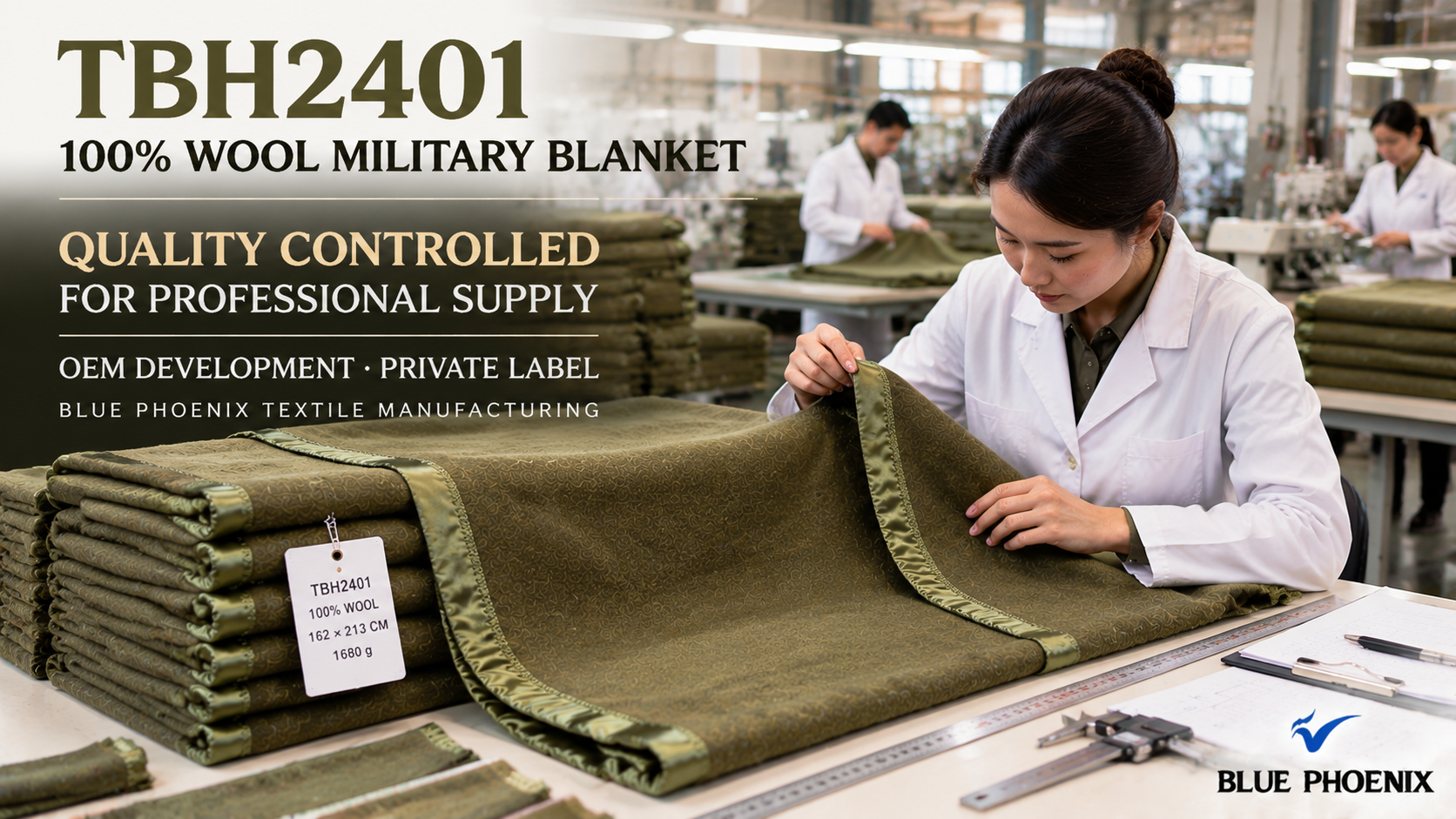
TBH2401 100% Wool Military Blanket
Review an olive wool blanket with matching satin binding, with sample checks covering the surface, stitching and corner construction.
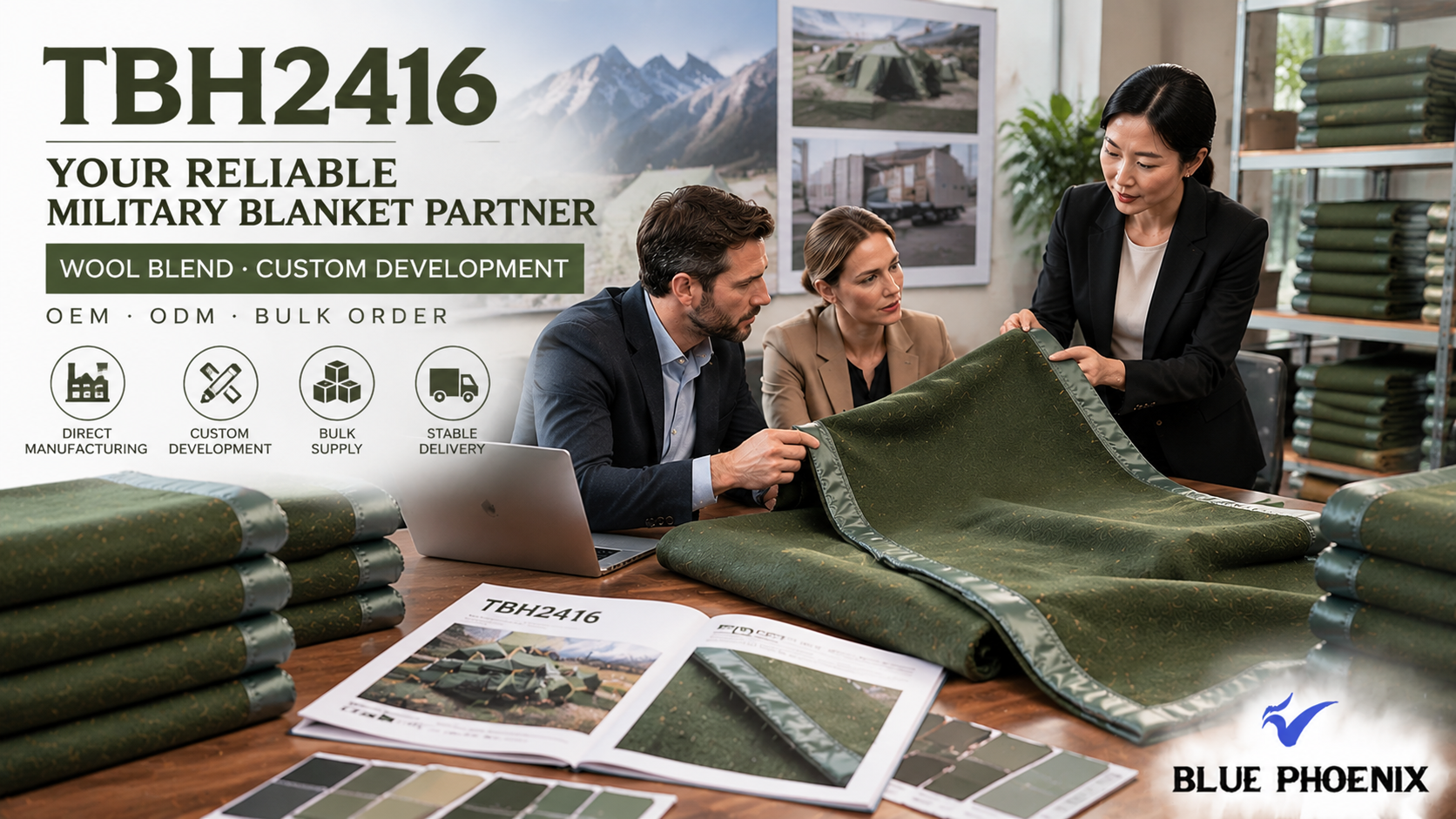
TBH2416 Wool Blend Military Blanket
Compare a wool blend blanket with satin binding for military procurement, sample evaluation and private label development.
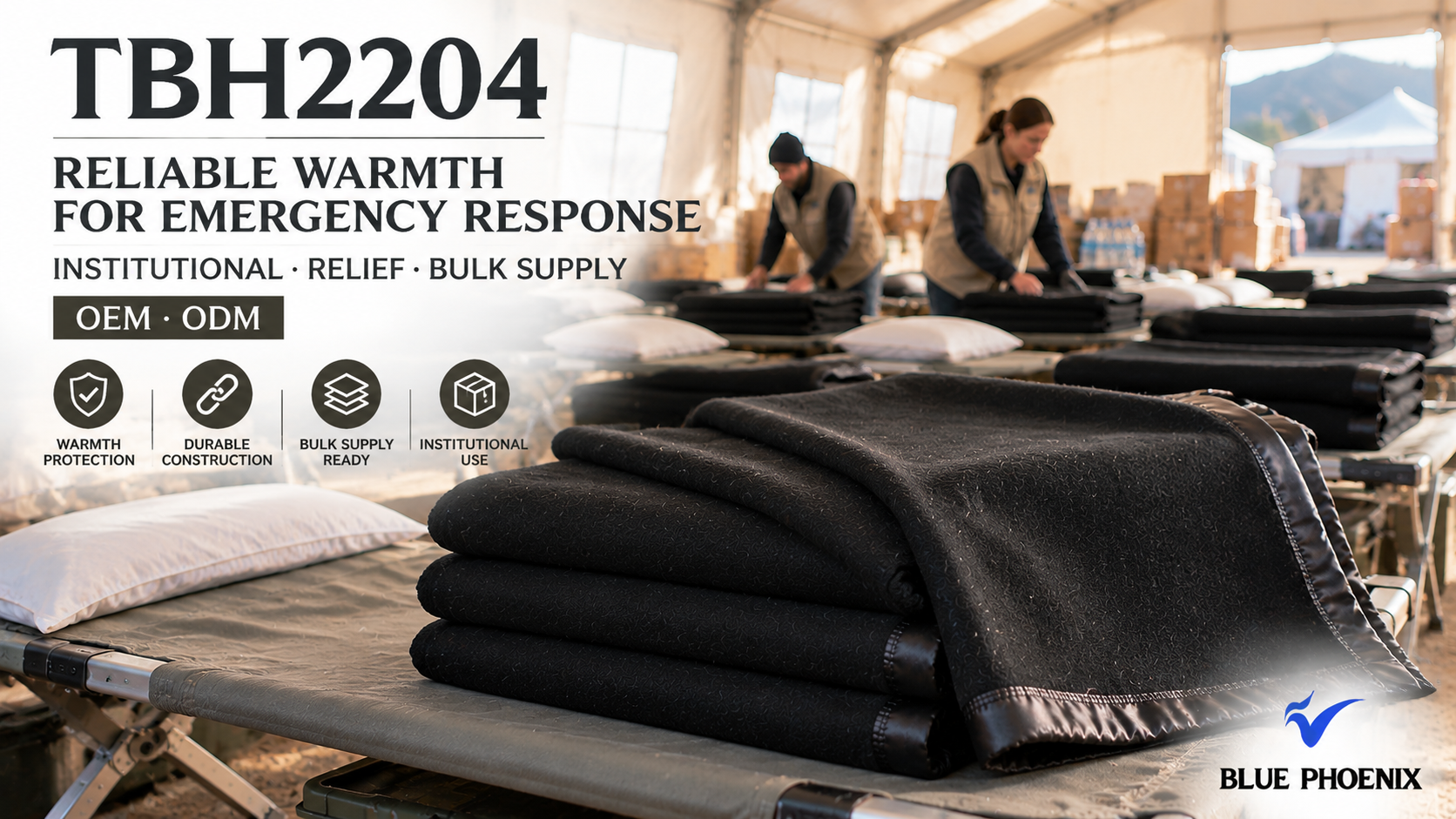
TBH2204 Wool Blend Military Blanket
Explore a heavyweight wool blend blanket with satin binding for emergency accommodation and bulk supply projects.
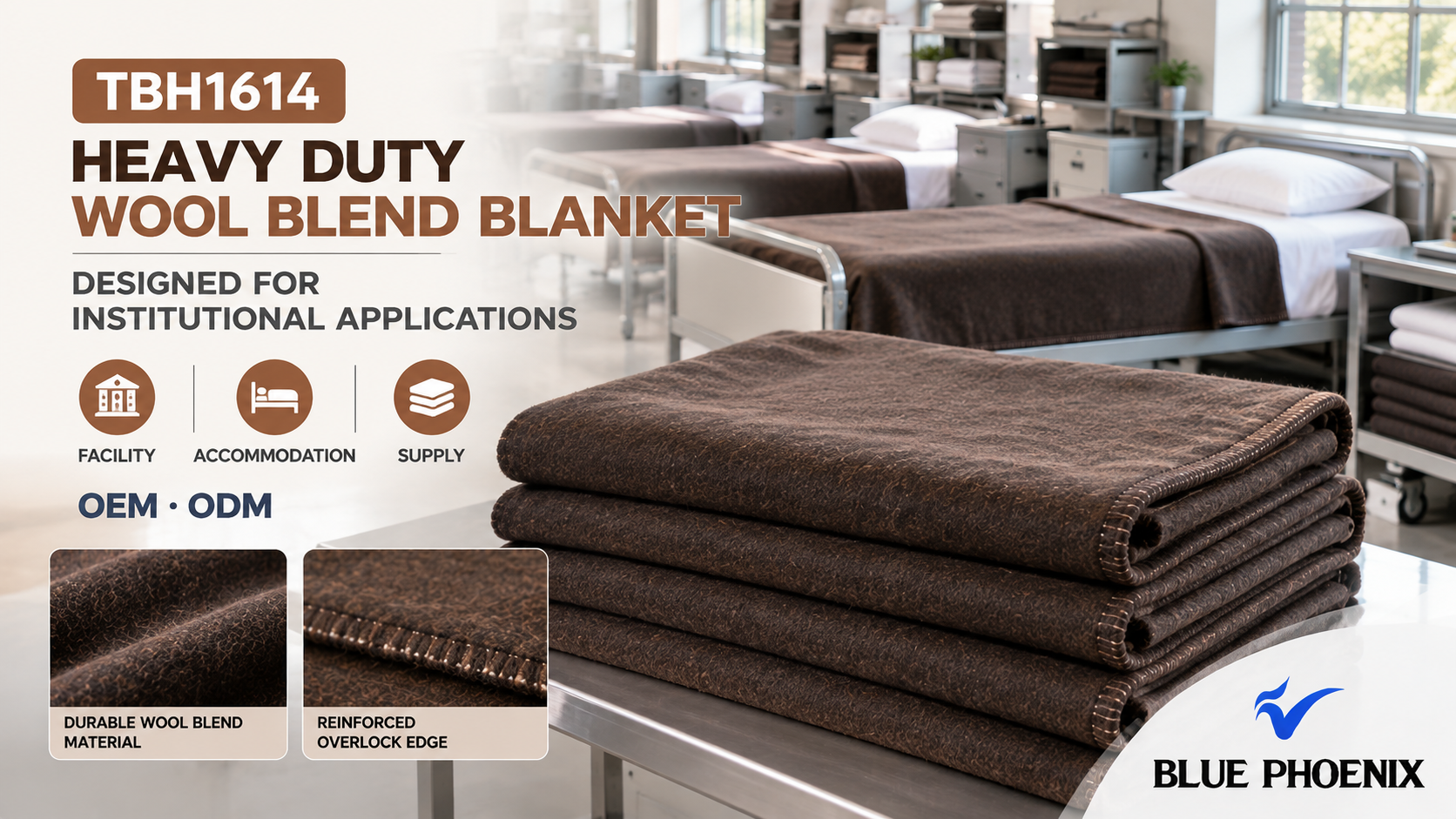
TBH1614 Heavyweight Institutional Blanket
Review a brown melange wool blend blanket with overlock edges for institutional bedding and finishing comparisons.
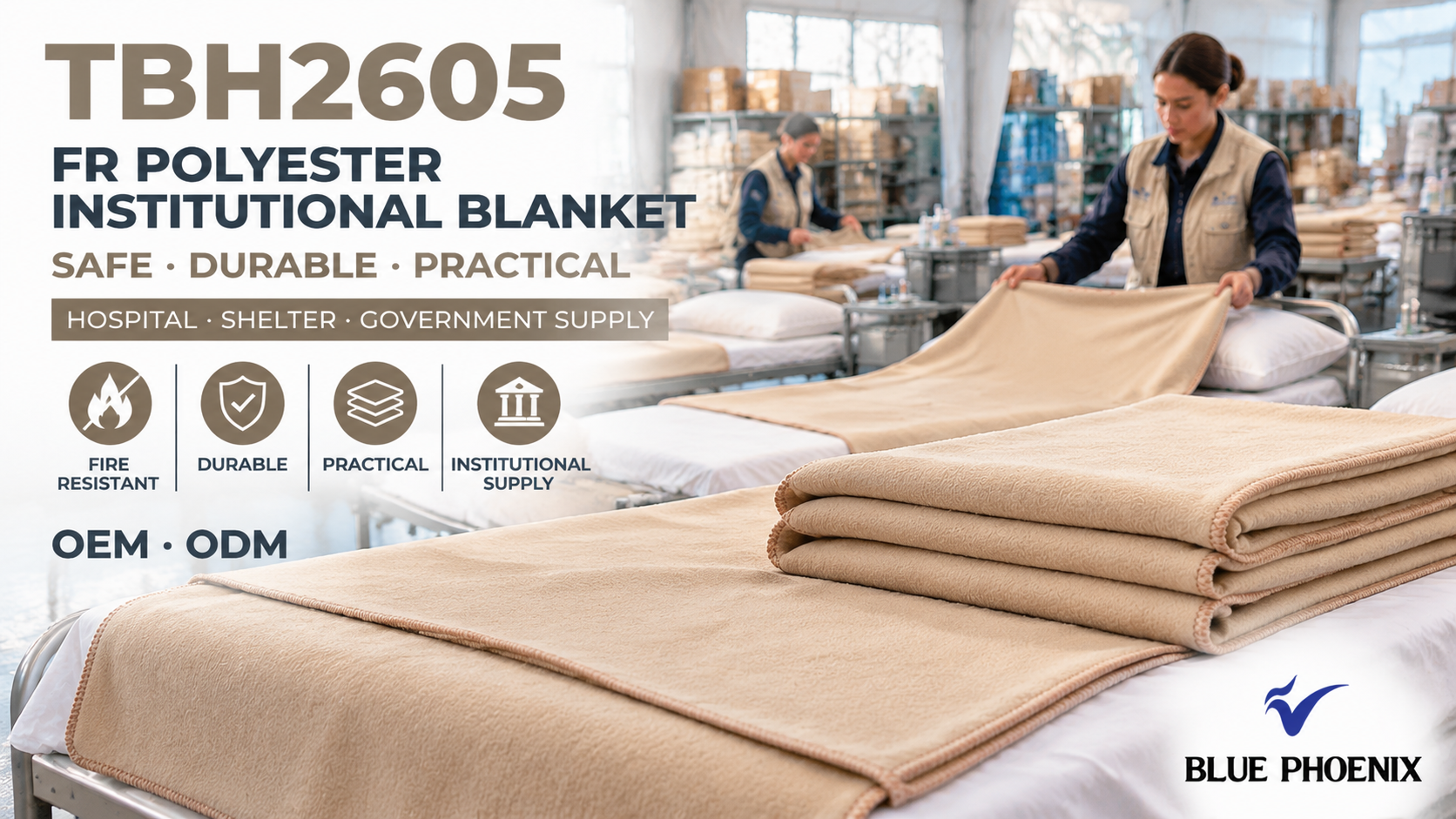
TBH2605 FR Polyester Blanket
Compare a sand-beige flame-retardant polyester blanket for institutional projects, with required testing confirmed for each order.
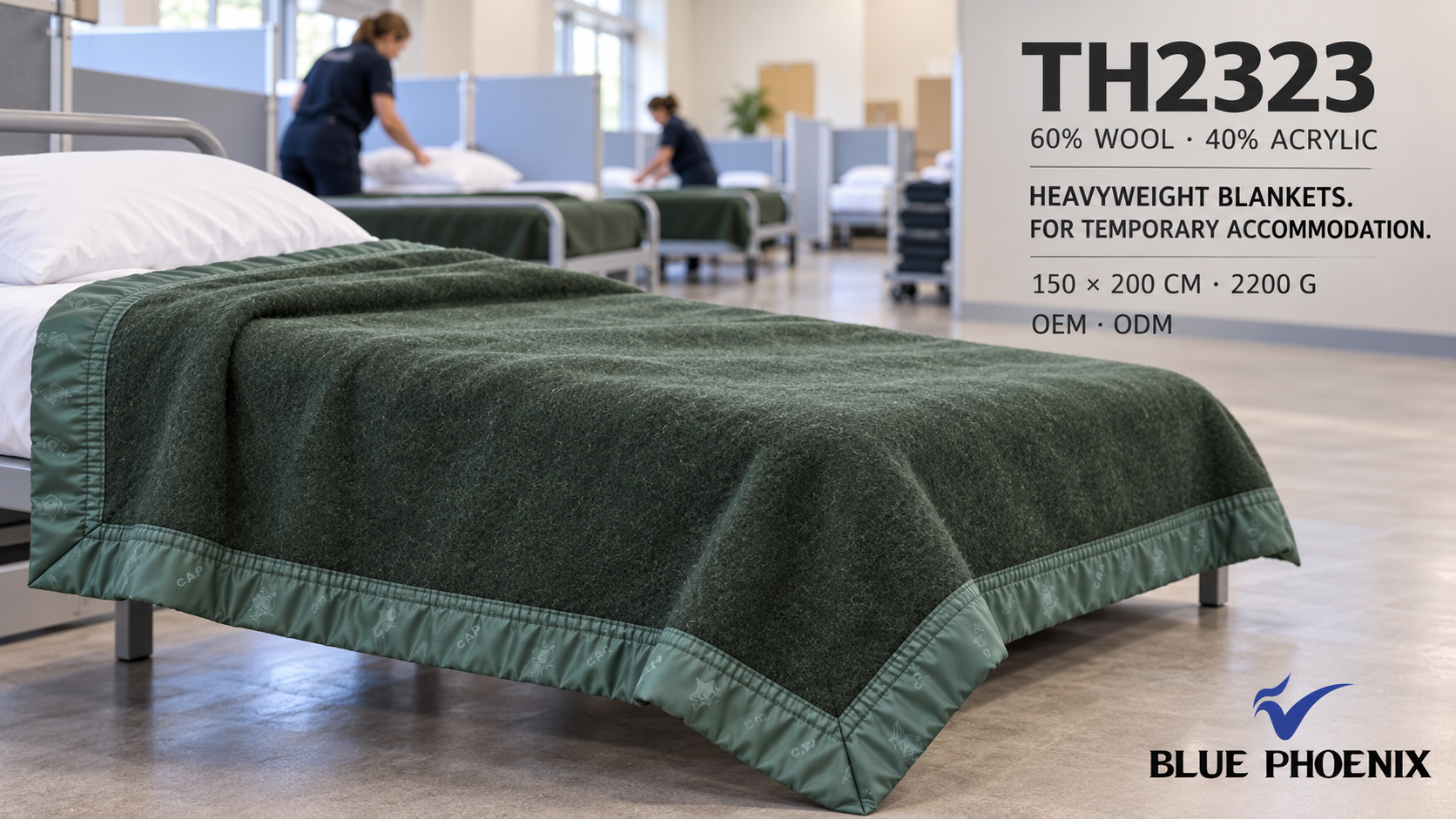
TH2323 Wool Acrylic Military Blanket
Explore an olive-green 60% wool and 40% acrylic blanket with matching satin binding for temporary accommodation supply.
Review the appearance along each side, visible width, attachment stitching and corners. Compare both faces with the approved sample and written specification.
Agree on the measurement method before approval. Lay the blanket flat without deliberately stretching it and clarify whether the dimensions include the finished border.
No. Visual inspection assesses visible characteristics. If composition verification is required, agree on the relevant testing method and documentation separately.
It should provide a reference for the wool surface, color, dimensions, weight, binding, stitching, corners, labels and packaging, together with agreed written requirements.
Third-party inspection can be discussed. Confirm the inspection scope, sampling approach, acceptance criteria, timing and costs before production.
Contact BLUE PHOENIX with the model, quantity and destination. Samples and courier delivery are chargeable. Availability, costs and preparation time will be confirmed before the sample order.
A separate border check helps identify workmanship details that may be overlooked when reviewing only the main fabric.
Yes. Inspect both faces and compare them with the approved reference.
Use the measurement method and tolerances agreed in the purchasing specification.
Visible checks can include skipped stitches, loose thread ends, open sections and uneven attachment.
Unfolding exposes the corner construction and areas that may be hidden in the packaged product.
No. Inspect each model against its own approved construction and specification.
No. If a defined seam performance is required, agree on the appropriate test method and criteria.
Record them using agreed measurement points, positioning and tolerances.
Follow the agreed method and clearly distinguish product weight from packed weight.
No. Piece weight and fabric GSM describe different measurements, and binding or other components may affect total weight.
Compare the physical product with the approved reference under consistent lighting.
Photographs support communication, but screen and lighting differences make a physical reference useful for final approval.
Review the visible appearance, marks, damage and consistency with the approved sample.
Retain an identifiable physical reference rather than relying only on general descriptive words.
Check the wording, artwork, placement and attachment against the approved brief.
Approve the product-specific wording before labels or inserts are printed.
Confirm the correct product, packing format and any required identification.
Check the agreed packing quantity, shipping marks and external identification.
Agree on an inspection sampling approach and acceptance criteria appropriate to the order before production.
Keep the approved sample reference, written specification, relevant photographs, artwork and packing instructions together.
Military Blankets — Compare blanket references for military procurement and custom development.
Wool Blankets — Explore wool products with different designs and edge finishes.
Relief and Refugee Blankets — Review additional products for emergency inventory purchasing briefs.
Institutional Blankets — Compare products for accommodation and institutional textile programs.
TBH2401 100% Wool Military Blanket — Review the featured satin-bound product and request its sample and specification.
TBH2416 Wool Blend Military Blanket — Compare another satin-bound option against its own material and finishing specification.
TBH2204 Wool Blend Military Blanket — Explore a further wool-blend reference for sample comparison.
TBH1614 Heavyweight Institutional Blanket — Review an overlock-edge construction as an alternative finishing direction.
TBH2605 FR Polyester Blanket — Compare a polyester option and confirm any required performance testing for the project.
TH2323 Wool Acrylic Military Blanket — Explore another olive-green blanket with coordinated satin binding.
Review the TBH2401 product specification and send BLUE PHOENIX your quantity, destination and inspection requirements. Samples and courier delivery are chargeable. Standard payment terms are a 30% deposit and 70% balance before shipment. FOB, CIF and DDP quotations can be requested, with production timing confirmed per order.
Email: jamesli@shbluephoenix.com
WhatsApp: +86 18017830390
WeChat: bluephoenix66
Website: https://www.shbluephoenix.com/

Blue Phoenix Blankets dedicated to strict quality control of blankets and scarves products and thoughtful customer service, our custom blankets wholesale products are exported to clients in such countries and regions as United states, Europe, Australia, Russia, Germany, Japan.
Copyright © 2026 Shanghai Rainbow Enterprise Development Co., Ltd. - All Rights Reserved.