Blog Posts
High-Quality Wholesale Blankets Manufacturer & Supplier in China with custom design service - Blue Phoenix Blankets
Language
An animal-pattern silk shawl brings several visual elements into an outfit at once: pattern, color contrast, surface texture and movement. The arrangement matters because a narrow fold can hide much of the design.
The CTW1205004 100% silk shawl combines tan and golden-brown animal motifs with red areas, charcoal edge details and red twisted fringe. Its 135 × 192 cm body, plus 7 cm fringe at each short end, provides a generous rectangular format for shoulder draping.
This guide explores ways to present the shawl clearly in outfits, boutique displays and product photographs.
1. Start with Plain ClothingA plain garment provides space for the animal pattern and red contrast to remain visible.
Try the shawl over a black dress, an ivory knit top or a charcoal jacket. Each creates a different background for the tan, brown and red areas.
Before adding a patterned bag or other accessories, review the outfit as a whole. For product-focused photography, a simple base makes the shawl easier to assess.
2. Use a Broad Shoulder DrapeOpen the shawl across the upper back and allow the ends to fall toward the front.
Keep a generous area of the animal pattern visible across the shoulders. Adjust the folds so that the red contrast and one or both fringed ends can also be seen.
The reference sample weighs approximately 809 g, so assess the arrangement on the wearer rather than treating it like a very lightweight silk neck scarf. Let the fabric settle naturally without pulling it tightly into position.
3. Try an Open Front WrapFor an open front presentation, place the shawl around the shoulders and bring both sides forward without tying a knot.
Use the garment underneath to frame the center of the outfit. Allow the red areas to form visible accents along the drape.
Check that the ends sit comfortably and do not interfere with the wearer’s hands or bag. The goal is to show the textile while keeping the arrangement practical.
4. Explore an Asymmetric ArrangementAn asymmetric drape can reveal a different relationship between the pattern and the red areas.
Let one side fall slightly farther forward while the other rests more broadly across the shoulder. Avoid sharp pulling or a tight fastening that distorts the fabric.
Photograph the arrangement from the front and at a slight angle. Compare the results to see which view shows the original design most clearly.
5. Coordinate with the Red ContrastThe red areas and red twisted fringe offer a useful starting point for outfit coordination.
A restrained red accessory can echo the shawl, while neutral shoes and a plain bag keep attention on the textile. Compare actual colors rather than assuming that every red shade will match.
For boutique styling, prepare one neutral outfit and one outfit with a small coordinating accent. This gives shoppers more than one way to understand the design.
6. Keep the Fringe Part of the PresentationThe 7 cm red twisted fringe is a visible finishing detail. Include it in at least one worn photograph and one close-up.
Allow the strands to fall naturally. Check that they are not caught under the fabric, concealed by hands or compressed against a display surface.
A full product view and a fringe detail serve different purposes: one explains the overall design, while the other shows the finish.
7. Create a Clear Boutique DisplayUse a broad display rail or a suitable mannequin to show the shawl without reducing it to a narrow folded strip.
Leave enough of the animal-patterned area open for the motif scale to be recognized. Keep the red contrast and charcoal edge details visible where the arrangement allows.
A folded sample can sit nearby for closer viewing. If the physical display conceals part of the layout, supplement it with an open product photograph.
8. Present Decorative Draping SeparatelyThe original product photographs also show CTW1205004 over a chair. A lifestyle retailer can use this type of arrangement to demonstrate its decorative appearance.
Let a broad patterned section rest over the chair back or arm, with the original fringe visible. Keep the surrounding upholstery plain so the textile remains clear.
Present this as a styling example. Buyers considering regular furniture use should review the physical sample and discuss the care and performance requirements of that application.
9. Build an Informative Image SetA useful product presentation includes:
An open view showing the complete layout.
A worn view showing the shoulder drape and proportions.
A close-up showing the textile surface and fringe.
Keep colors consistent across the set. Avoid editing that changes the animal motifs, red areas or charcoal details.
Describe each image accurately. A caption such as “broad shoulder drape over a black dress” communicates more than a list of unrelated fashion keywords.
10. ConclusionStyling an animal-pattern silk shawl works best when the fabric has enough space to show its original design. Plain garments, broad shoulder arrangements and visible finished ends help present the pattern and color contrast clearly.
CTW1205004 offers several presentation options, from an open front wrap to an asymmetric shoulder drape. For boutiques and accessory collections, combining worn styling with open product views gives customers a clearer understanding of the textile.
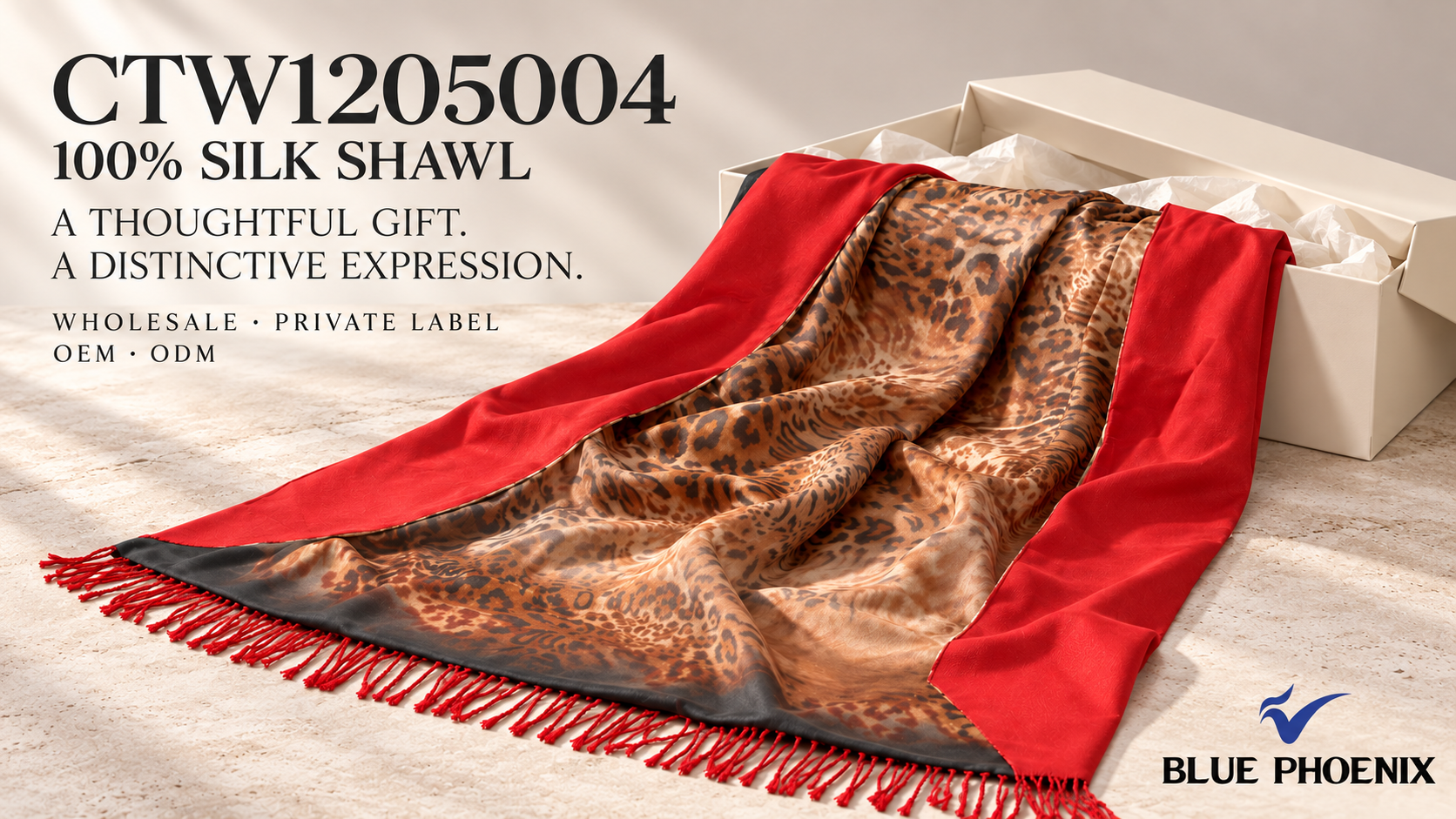
CTW1205004 silk shawl with a brown animal pattern, red panels, charcoal edge details and red twisted fringe arranged beside an open ivory gift box.
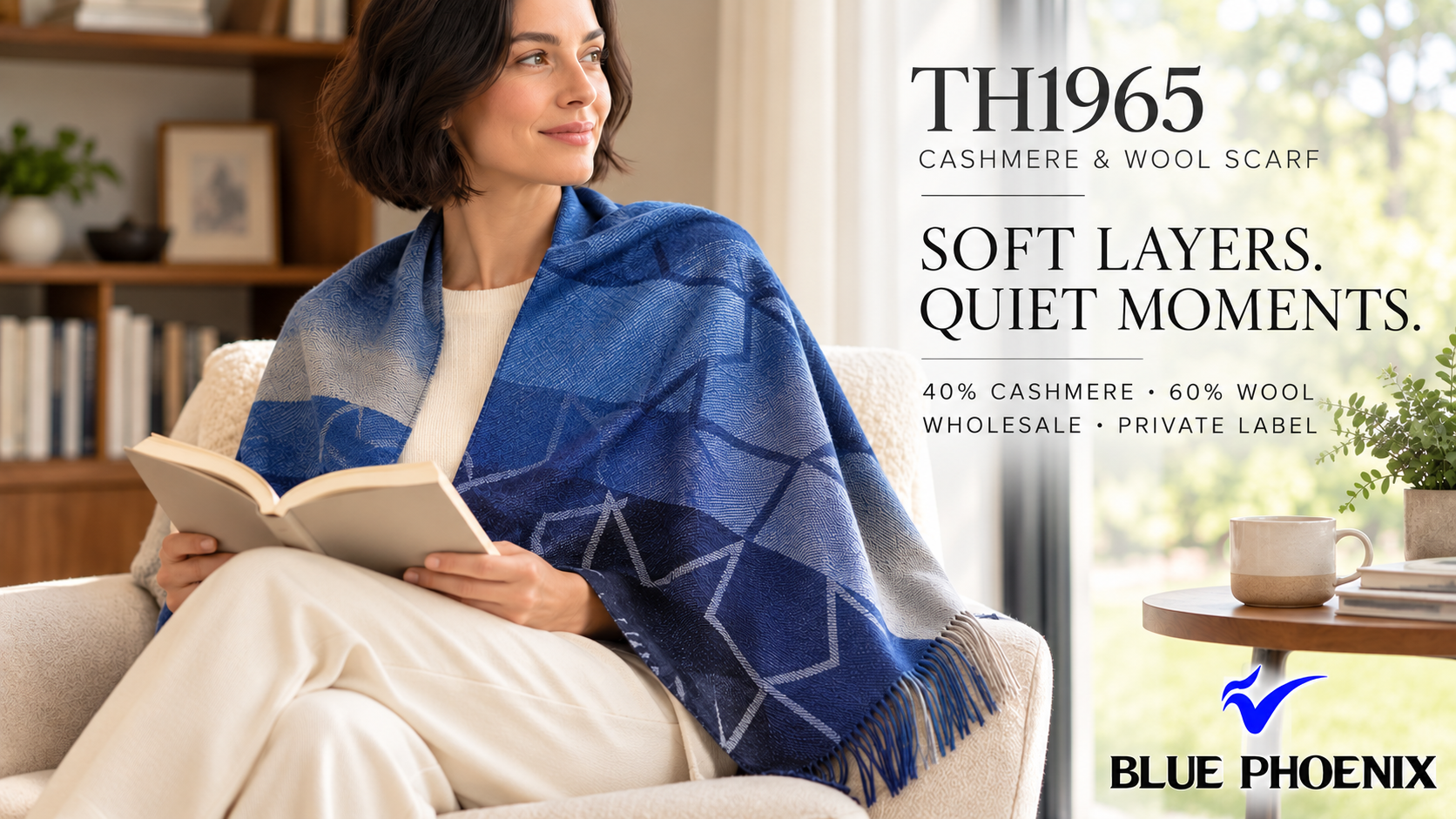
Woman reading in an armchair with a blue gradient TH1965 cashmere wool scarf draped across her shoulders, showing outlined star motifs and fringe.
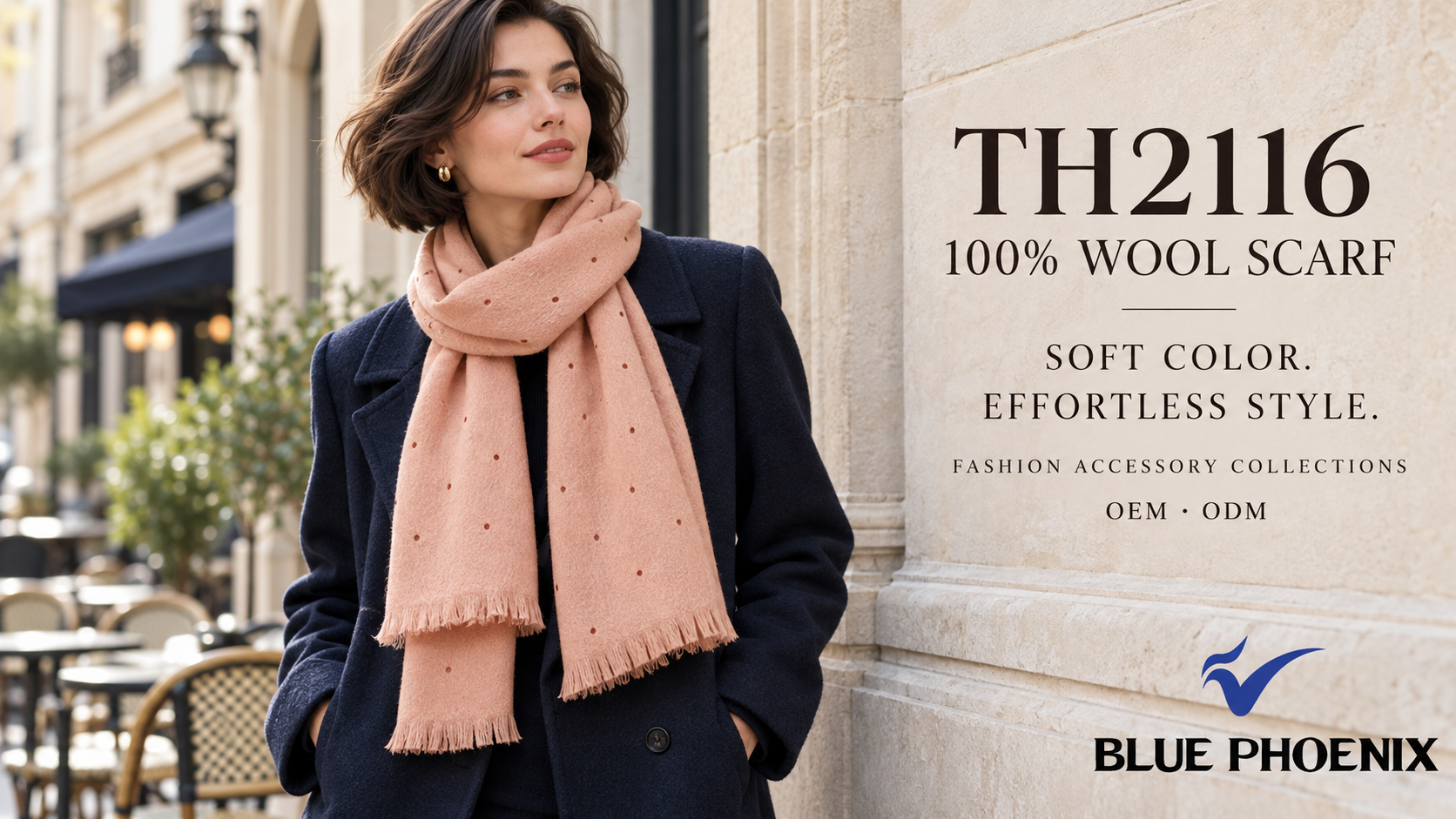
Woman wearing a peach-pink TH2116 wool scarf with small perforated details and short fringe over a navy coat on a city street.
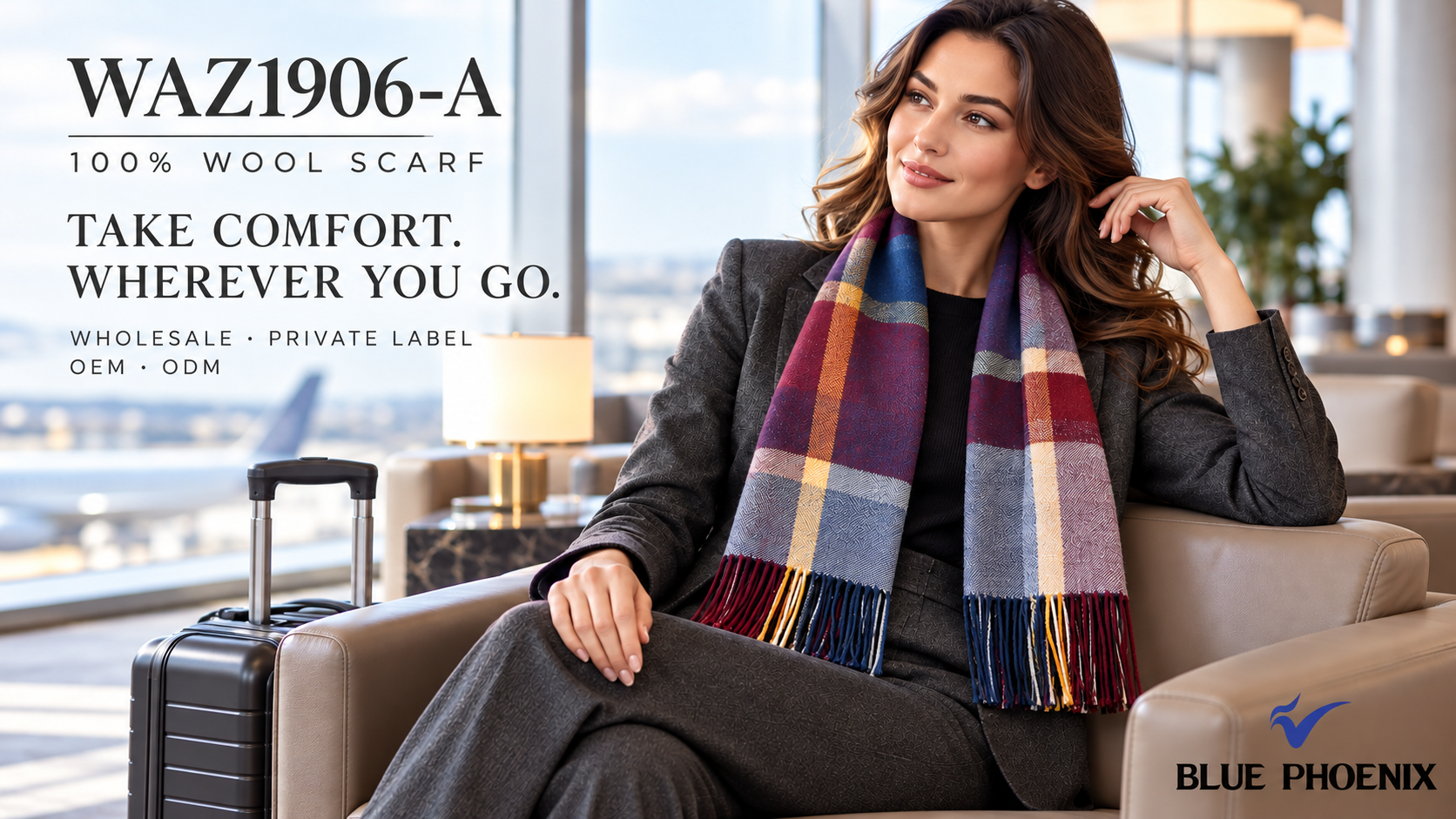
Woman wearing a multicolored WAZ1906-A plaid wool scarf with twisted fringe while seated beside luggage in an airport lounge.
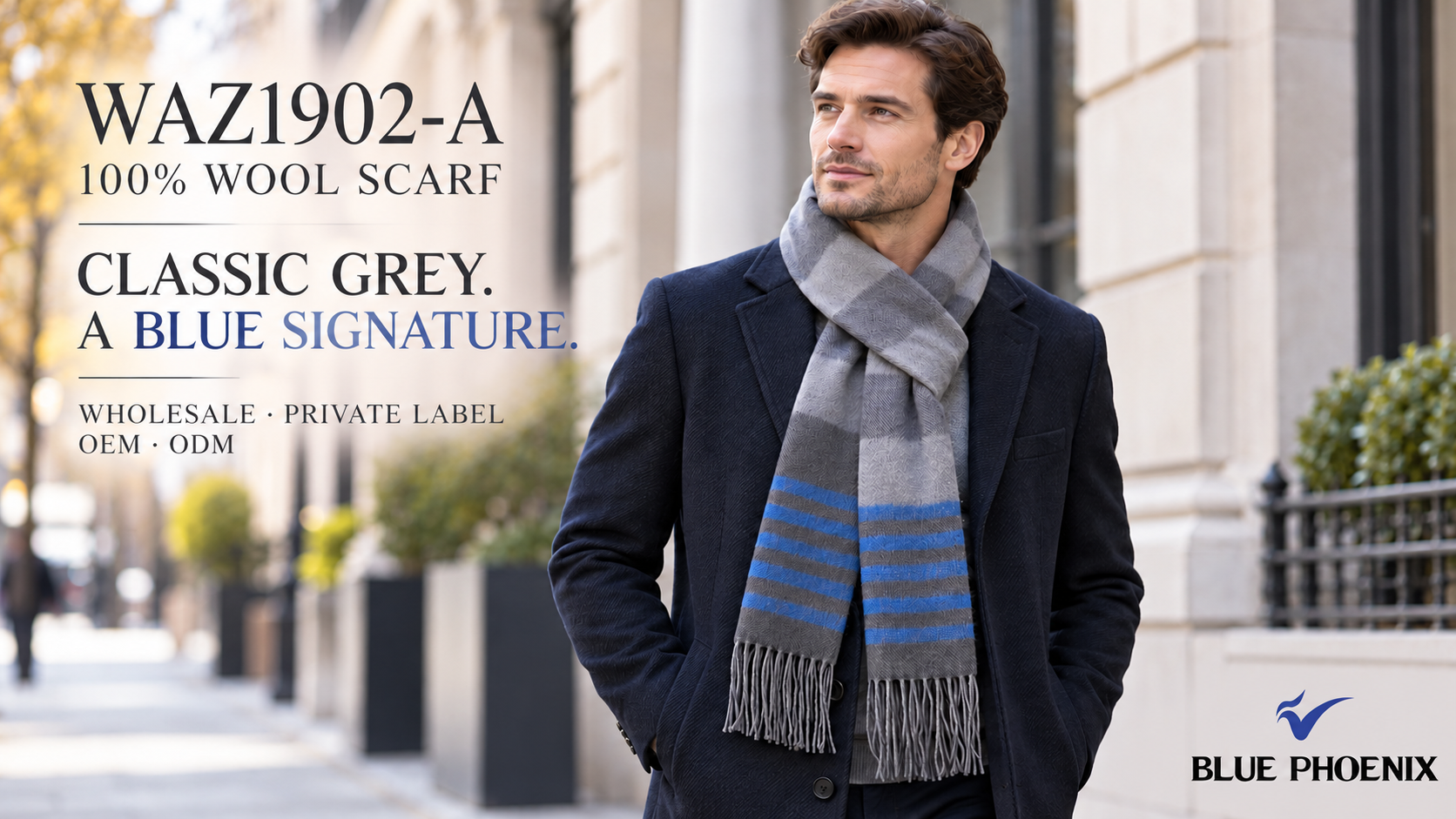
Man wearing a grey WAZ1902-A wool scarf with broad grey bands, blue end stripes and grey fringe over a navy coat on a city street.
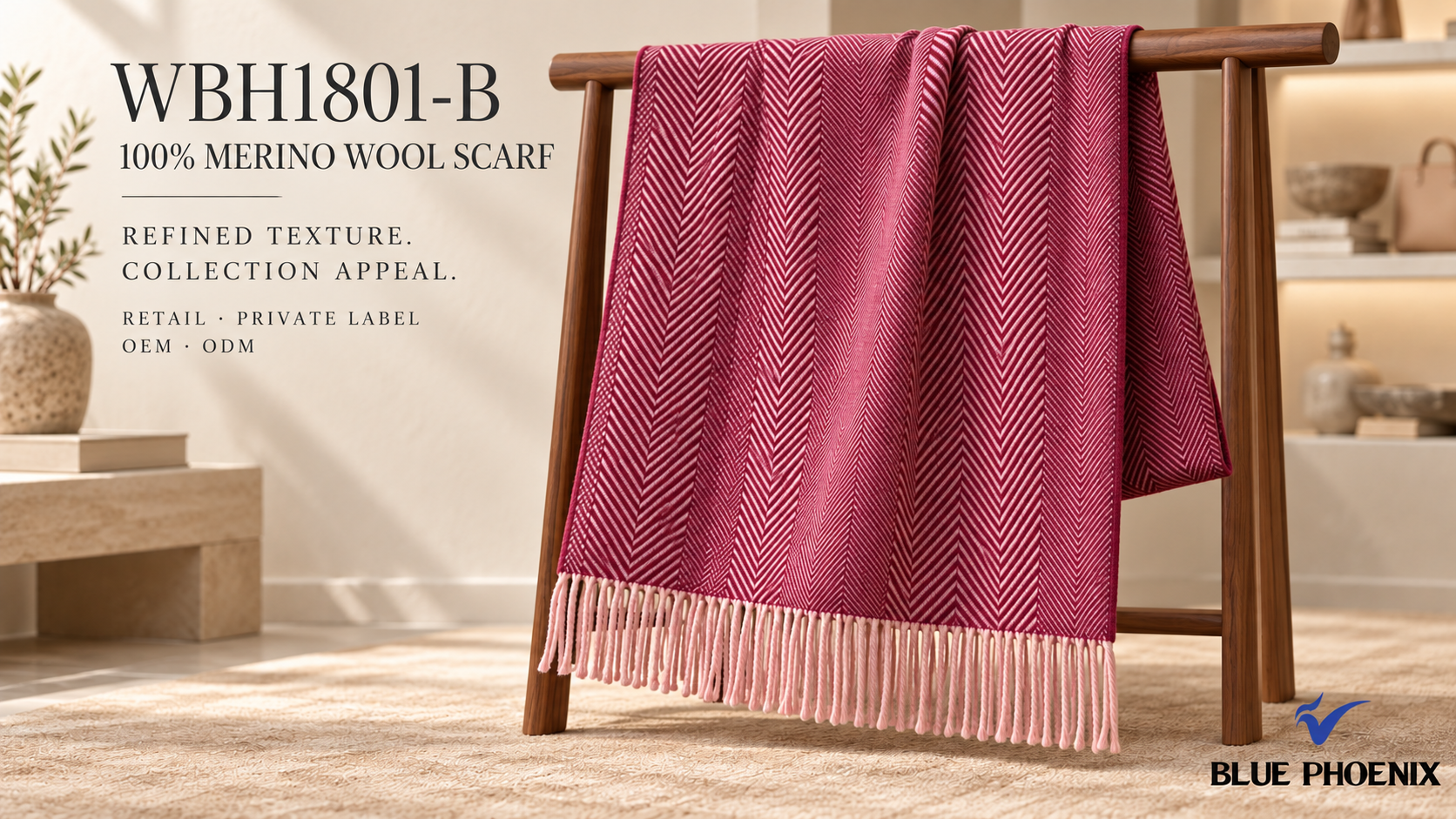
Burgundy and blush-pink WBH1801-B merino wool herringbone scarf with pale-pink twisted fringe draped over a wooden display stand.
1. What can I wear with an animal-pattern silk shawl?
Start with plain black, ivory, charcoal or other neutral garments. Review the actual combination before adding more patterned accessories.
2. What is a simple way to style CTW1205004?
Open it broadly across the shoulders and let the ends fall forward, keeping a generous patterned section visible.
3. Is it a very lightweight silk neck scarf?
No. The reference sample weighs approximately 809 g and has a broad body. Assess its drape on the wearer.
4. How can I show the red contrast?
Adjust the shoulder folds so the red areas remain visible alongside the animal-patterned field.
5. How should boutiques display the shawl?
Use a broad open drape on a suitable rail or mannequin, supported by a folded sample or product photograph.
6. Where can I view its specifications?
Use the CTW1205004 product link in Recommended Products for the product description and inquiry details.
1. Why use a plain garment underneath?
It helps viewers distinguish the animal pattern, red contrast and charcoal details.
2. Can the shawl be styled with a black dress?
Yes. Try a broad shoulder drape and check how the patterned and red areas sit against the dress.
3. What does an ivory top contribute?
It provides a lighter background against which the darker markings and red areas can be compared.
4. Should both ends hang evenly?
Either a balanced or asymmetric arrangement can work. Choose a comfortable position that keeps the design visible.
5. How can I avoid hiding the animal pattern?
Use broad folds rather than rolling the entire shawl into a narrow strip.
6. Should the fabric be pulled tightly over the shoulders?
Let it settle naturally and adjust the folds without stretching or distorting the textile.
7. How can accessories coordinate with the shawl?
Compare a small red accent or neutral accessories with the actual product before finalizing the outfit.
8. What should be checked in a side-angle photograph?
Check that the drape, edge details and visible pattern remain clear.
9. How should the fringe appear?
Let the red twisted strands fall naturally without catching them under the fabric or a fastening.
10. Does every image need to show the whole shawl?
No. Combine a complete view with worn images and close-ups that explain different details.
11. What should an open product view communicate?
Show the rectangular shape, pattern placement, contrasting areas and finished ends.
12. What belongs in a detail image?
Include a recognizable patterned area, the textile surface and an original edge or fringe section.
13. How can a retail rail show the design?
Choose a suitable rail and drape a broad area over it, leaving part of a fringed end visible.
14. Can a chair display be used in lifestyle photography?
Yes. The original photographs show decorative chair draping. Review suitability separately for any intended regular-use application.
15. Why keep the furniture background simple?
Plain upholstery helps the shawl's artwork remain easy to see.
16. How should the material be described?
Use 100% silk, matching the supplied sample tag.
17. What dimensions should a listing show?
List the 135 × 192 cm body separately from the 7 cm fringe at each short end.
18. Can screens establish the exact color?
No. Photography and display settings affect appearance. Use a physical reference for purchasing color approval.
19. What care advice should accompany the product?
Follow the care instructions approved for the supplied textile.
20. How can product captions support styling images?
Describe the visible garment, arrangement and product details directly and accurately.
CTW1205004 100% Silk Animal-Pattern Shawl — The featured textile in this styling guide.
TH1965 Cashmere Wool Gradient Star Scarf — Blue gradient with outlined star motifs.
TH2116 Perforated Pink Wool Scarf — Peach-pink wool with small openings and short fringe.
WAZ1906-A Plaid Wool Scarf — A multicolored plaid accessory.
WAZ1902-A Grey Wool Scarf with Blue Stripes — Grey banding with blue terminal accents.
WBH1801-B Merino Wool Herringbone Scarf — Burgundy and blush-pink herringbone with fringe.
Contact BLUE PHOENIX to discuss CTW1205004 samples, wholesale quantities, private labels and packaging. Samples and courier delivery are chargeable.
Email: jamesli@shbluephoenix.com
WhatsApp: +86 18017830390
WeChat: bluephoenix66
Website: www.shbluephoenix.com

Blue Phoenix Blankets dedicated to strict quality control of blankets and scarves products and thoughtful customer service, our custom blankets wholesale products are exported to clients in such countries and regions as United states, Europe, Australia, Russia, Germany, Japan.
Copyright © 2026 Shanghai Rainbow Enterprise Development Co., Ltd. - All Rights Reserved.