High-Quality Wholesale Blankets Manufacturer & Supplier in China with custom design service - Blue Phoenix Blankets
Language
A blue gradient scarf can add pattern and tonal variation to a simple outfit without requiring several competing accessories. The way it is folded and draped determines which shades and motifs remain visible.
The TH1965 cashmere wool scarf combines 40% cashmere and 60% wool, outlined star motifs and fringed ends. Its 60 × 200 cm body, with 10 cm fringe at each short end, provides room for both neck styling and shoulder draping.
This guide explores practical ways to wear and display the design while keeping its gradient and pattern visible.
1. Begin with a Plain Base
Start with a plain coat, jacket or knitwear piece. This makes it easier to see the scarf’s blue tones and outlined stars.
An ivory top brings the darker sections into focus. A charcoal coat provides a quieter setting for the lighter grey-blue areas. Navy outerwear creates a tonal combination in which the contrast depends on how the scarf is arranged.
Before adding other patterned accessories, check the overall outfit with the scarf in place.
2. Use a Loose Front Drape
Place the scarf around the back of the neck and allow both ends to hang down the front.
Keep the fabric relatively open rather than twisting it into a narrow strip. This exposes more of the gradient color transition and leaves space for the star outlines to be recognized.
Adjust the ends so they sit comfortably with the coat opening. They do not need to be perfectly symmetrical, but the arrangement should look intentional and avoid catching the fringe in fastenings.
3. Try a Relaxed Single Wrap
For another look, pass one end loosely around the neck and let both ends fall forward.
Keep the wrap relaxed enough to preserve the fabric’s natural folds. Position a patterned section toward the front and allow the fringed ends to remain visible below it.
The result will vary depending on the wearer’s proportions and the thickness of the outerwear. Use a mirror to assess the balance rather than following a fixed end length.
4. Open It Across the Shoulders
The 60 cm body width allows TH1965 to be presented as a shoulder wrap.
Open the scarf across the upper back, then bring the ends forward. Leave a broad section visible over the shoulders so the design reads as a continuous textile.
This styling is useful when photographing the scarf with a simple dress, fine-knit top or plain jacket. Check that the fabric sits naturally and does not conceal the garment details you want to show.
5. Show Different Parts of the Gradient
A gradient scarf can look different depending on which section faces outward.
Before photographing an outfit, try a few folds to compare how the lighter and darker areas sit against the garment. Keep enough fabric open to show that the color changes across the scarf.
For a product listing, include at least one broad view so customers can understand the overall design rather than seeing only a small section.
6. Keep the Fringe Visible
The fringed ends form part of the scarf’s appearance. Let them fall naturally rather than hiding both ends inside a coat.
For a neat display, gently arrange the fringe without stretching or pulling it. When photographing the scarf on a model, check that hands, bags and coat closures do not obscure every finished edge.
A close-up can help show the fringe separately from the full outfit photograph.
7. Build a Useful Boutique Display
A boutique display should help shoppers understand both the pattern and the wearing options.
Use an open drape on a mannequin or textile rail to show a generous patterned section. A nearby folded presentation can show the fabric at closer range.
Avoid folding every scarf so tightly that the gradient and stars disappear. If space is limited, a worn photograph can supplement the physical display.
8. Prepare a Balanced Image Set
For an online product page or wholesale catalog, consider three complementary views:
An open product view showing the overall design.
A worn view showing proportions and drape.
A detail view showing the fabric, star outlines and fringe.
Keep the lighting and color treatment consistent. Avoid editing that changes the blue shades or makes the textile surface look different from the supplied product.
For wholesale buyers, photographs should support sample review rather than replace physical color approval.
9. Describe the Product Clearly
A useful description identifies the cashmere wool blend, the blue gradient, the star motifs and the dimensions without adding unsupported claims.
Keep the body measurements separate from the fringe length. Use the same composition wording across the product page, labels and collection materials.
For styling copy, explain what the photograph actually shows. “Loosely draped over a charcoal coat” gives a clearer picture than a string of broad fashion adjectives.
10. Conclusion
Styling a blue gradient cashmere wool scarf starts with giving its color and pattern enough space to be seen. Plain garments, loose folds and visible fringed ends help present the design clearly.
TH1965 can be arranged as a front drape, a relaxed neck wrap or an open shoulder layer. For boutiques and fashion collections, combining these wearing ideas with consistent product photography provides a useful presentation of the scarf.
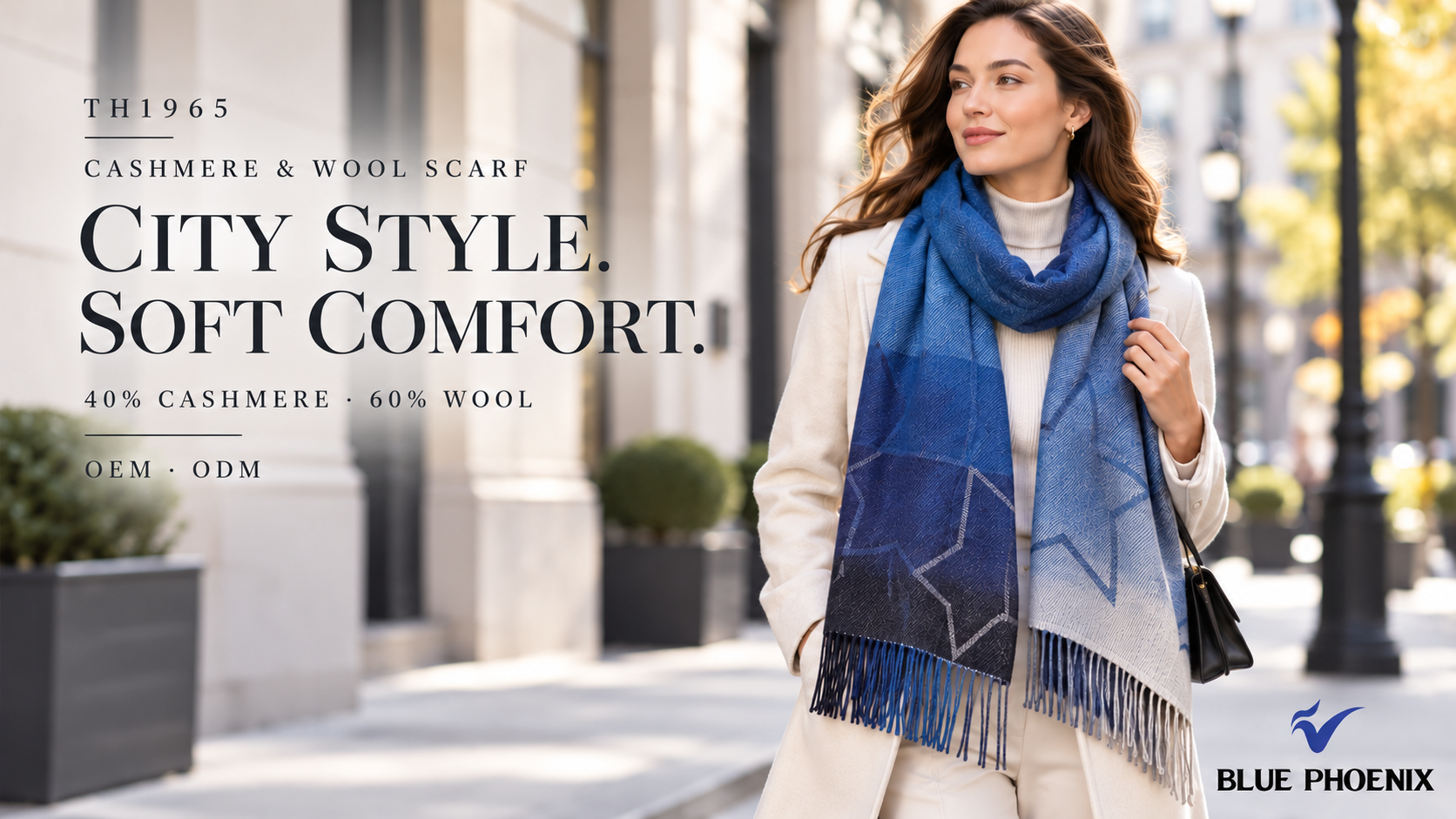
Woman wearing a blue gradient TH1965 cashmere wool scarf with outlined star motifs and fringe over an ivory coat on a city street.
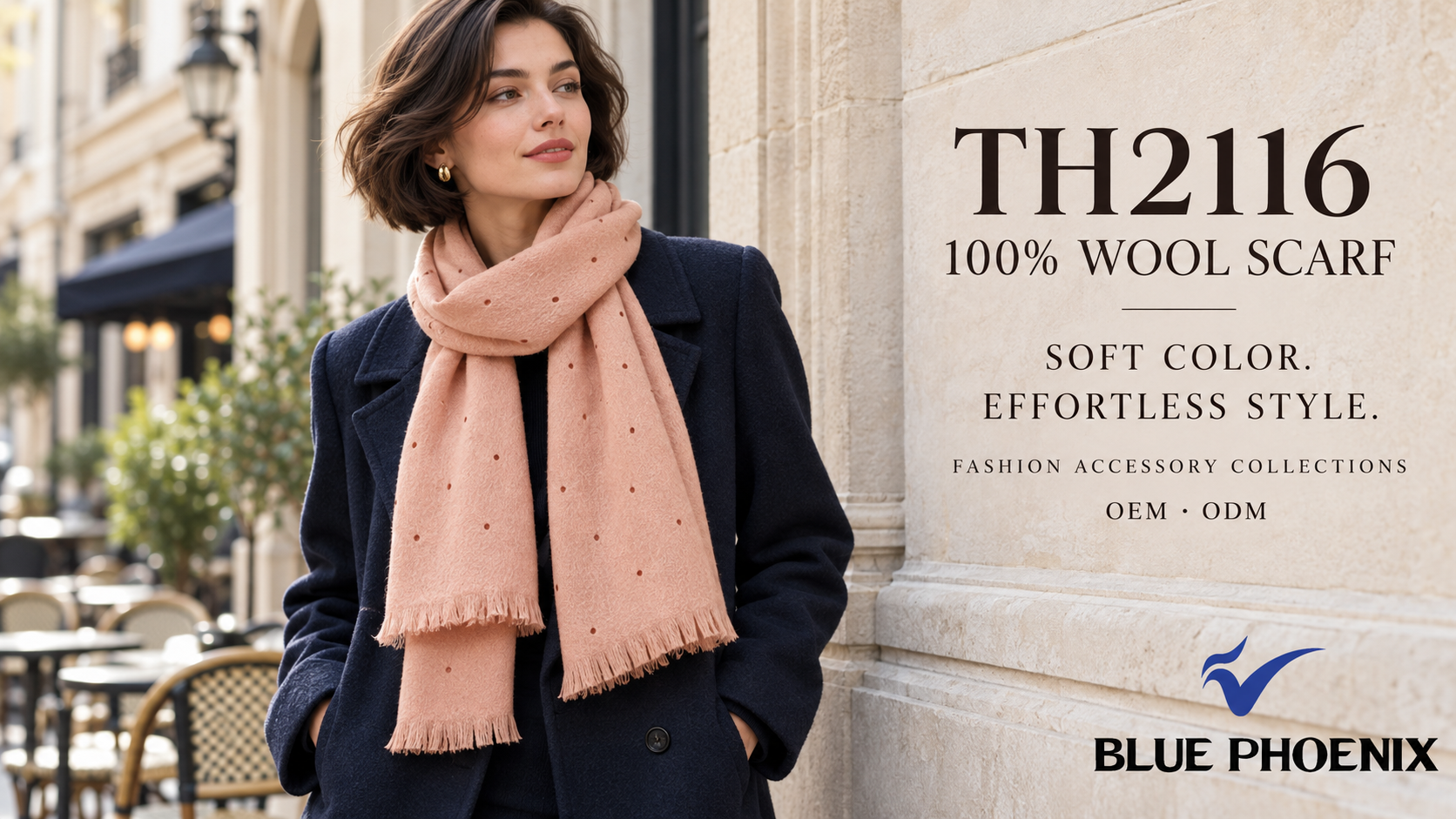
Woman wearing a peach-pink TH2116 wool scarf with small perforated details and short fringe over a navy coat.
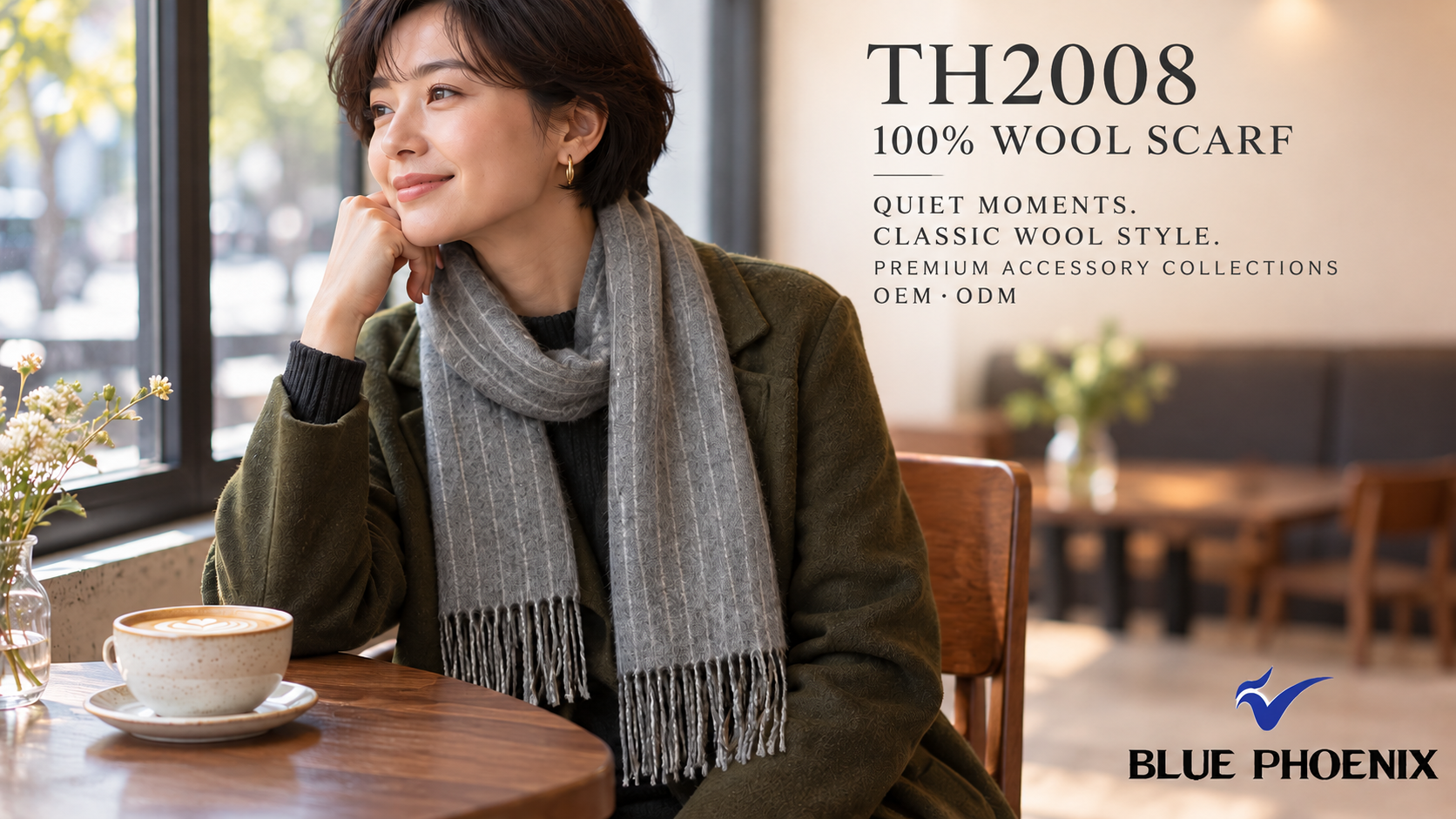
Woman wearing a grey TH2008 wool scarf with fine light stripes and twisted fringe while seated beside a café window.
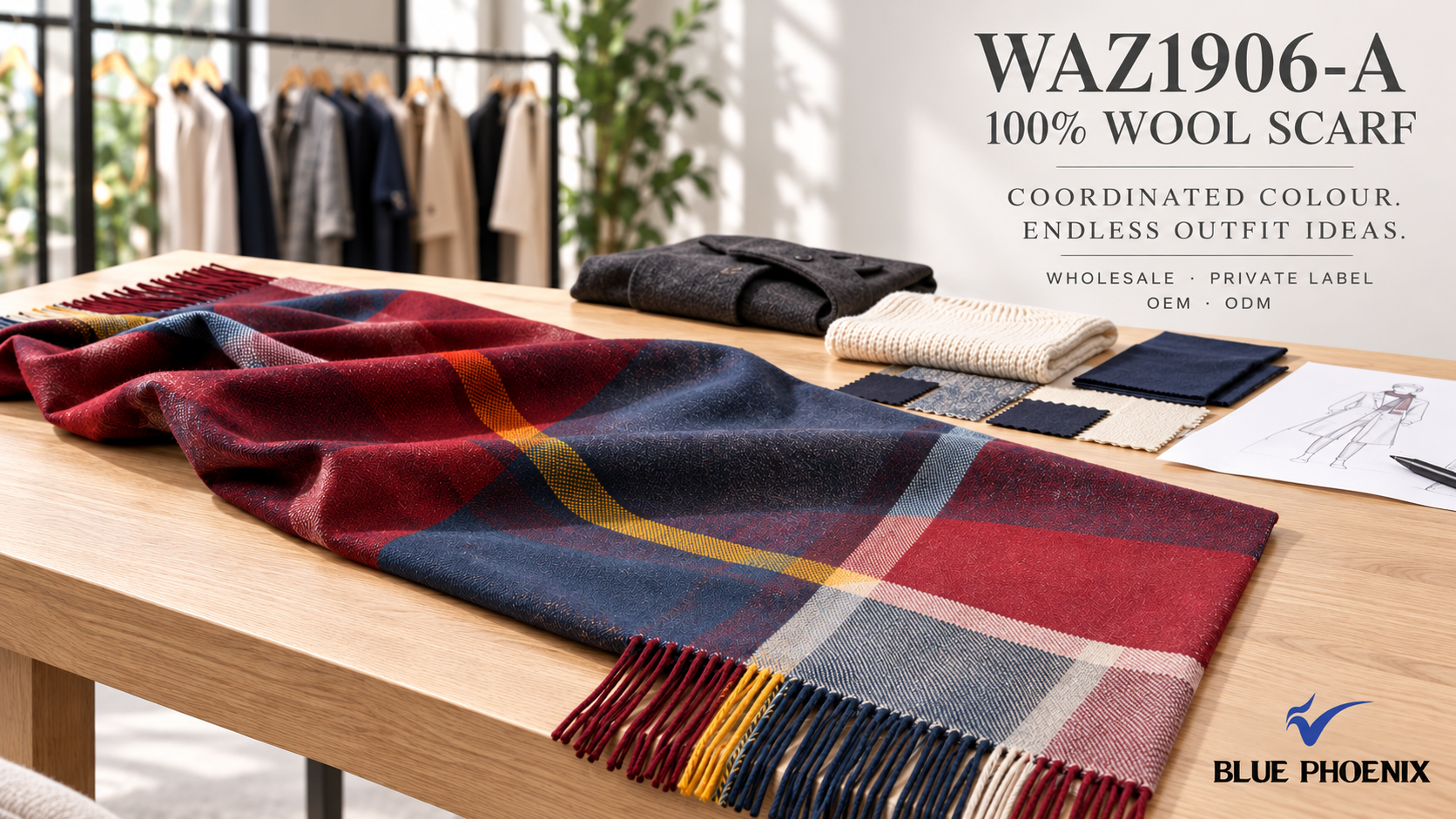
WAZ1906-A wool scarf with red, navy, cream and mustard plaid spread across a wooden design table beside garment samples.
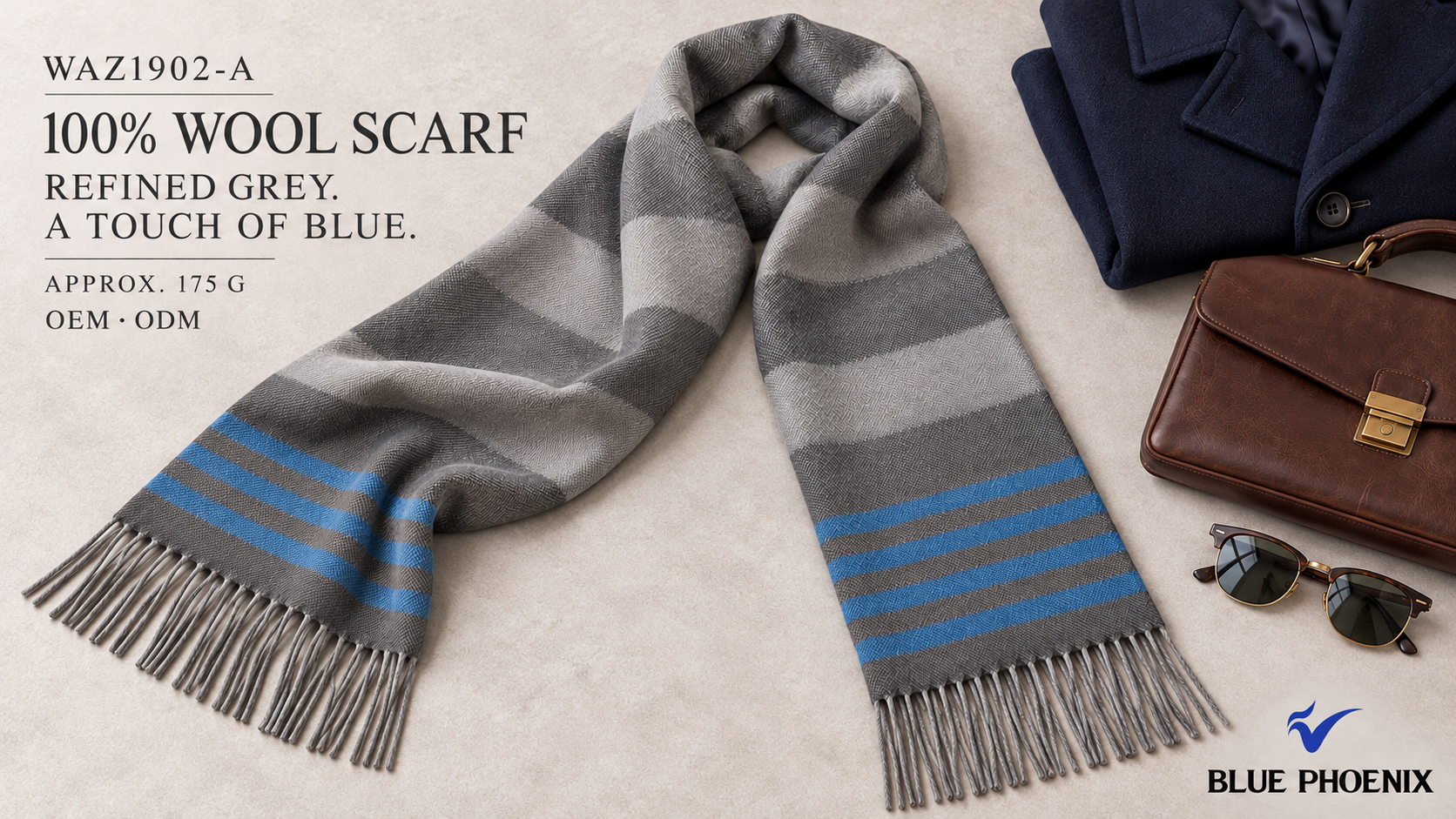
Grey WAZ1902-A wool scarf with broad grey bands, blue end stripes and twisted fringe arranged beside a navy jacket and brown leather bag.
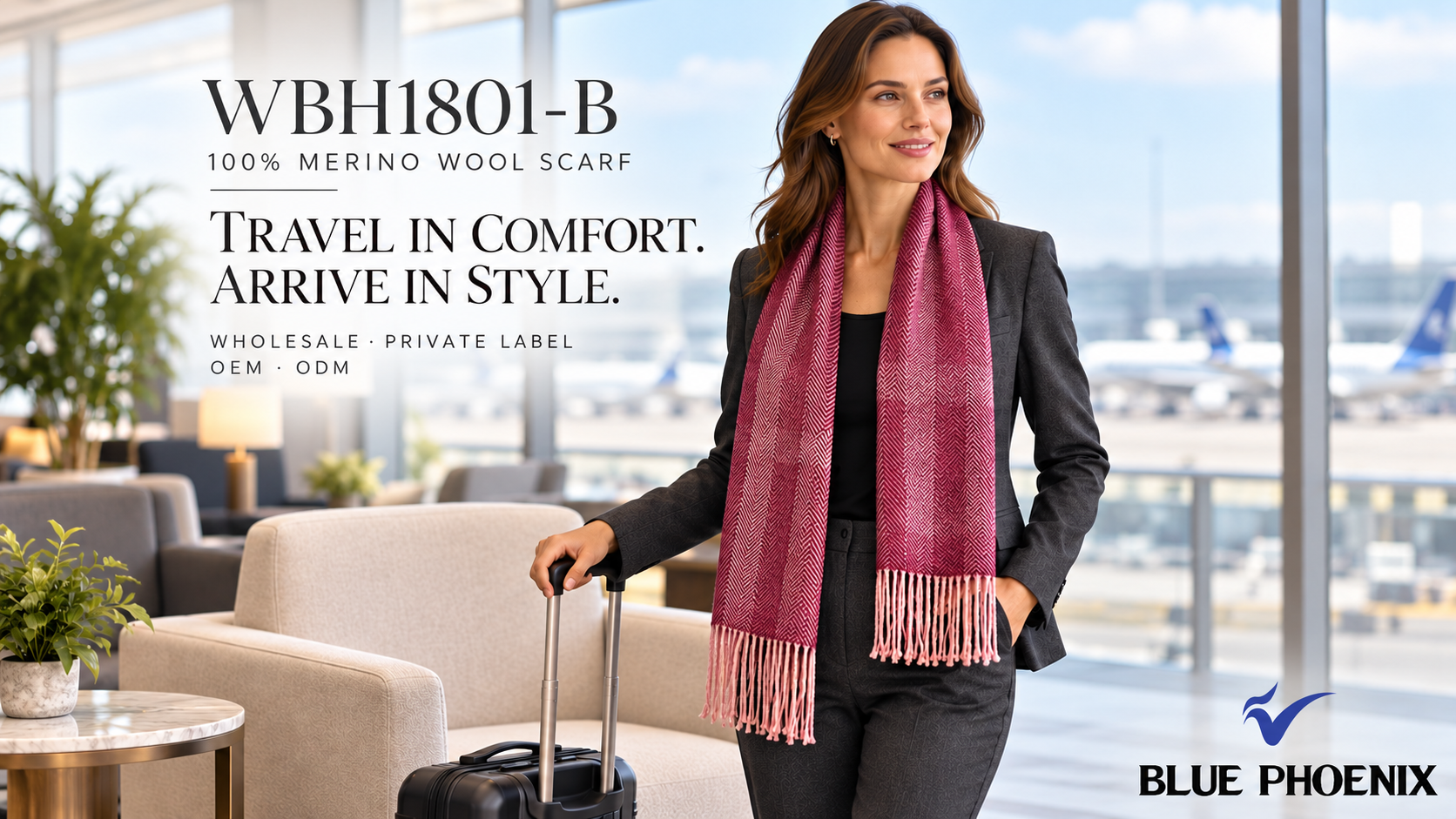
Woman wearing a burgundy and blush-pink WBH1801-B merino wool herringbone scarf with pale-pink fringe beside luggage in an airport lounge.
1. What colors can I pair with a blue gradient scarf?
Ivory, grey, charcoal, navy and black provide useful starting points. Compare the actual scarf with your garment under natural lighting.
2. What is a simple way to wear TH1965?
Use a loose front drape with both ends visible. Keep a broad section open to display the gradient and star motifs.
3. Can TH1965 be worn across the shoulders?
Yes. Open the rectangular scarf across the upper back and bring the ends forward for a shoulder-wrap presentation.
4. How can I show the star design more clearly?
Avoid twisting the scarf into a narrow strip. Leave an open section visible at the front or across the shoulders.
5. What photographs should a boutique prepare?
Use an open product view, a worn image and a detail photograph showing the textile and fringe.
6. Where can buyers view the product details?
Visit the TH1965 product link in Recommended Products for specifications and inquiry information.
1. How do I keep a scarf visible over a dark coat?
Position a lighter section toward the front and leave it open against the coat.
2. Can a blue scarf be worn with navy clothing?
Yes. Compare the shades and use the gradient to create visible tonal variation.
3. What should I check when styling with ivory knitwear?
Assess the contrast, neckline and position of the fringed ends together.
4. How can a scarf work with a patterned garment?
Try the combination on the wearer and assess whether both patterns remain clear. A plain garment is easier for product-focused photography.
5. Should both scarf ends be the same length?
Either arrangement can work. Choose the balance that suits the garment and keeps the textile visible.
6. How can I avoid hiding the gradient?
Use wider folds and include a broad view rather than showing only the neck wrap.
7. How should a shoulder wrap sit?
Let the fabric follow the shoulders naturally and check that the ends are comfortable and unobstructed.
8. Can a mannequin show more than one wearing option?
Yes. Photograph different arrangements separately so each view communicates one clear styling idea.
9. How can a textile rail display the design?
Drape a broad section over the rail and leave part of the fringed end visible below it.
10. What should a flat product image show?
Show the rectangular shape, overall gradient, pattern arrangement and finished ends.
11. What belongs in a textile close-up?
Include enough area to show the woven surface and a recognizable part of the star motif.
12. Should the fringe appear in every image?
No, but include clear finished-edge views within the complete image set.
13. Why use consistent lighting?
It helps viewers compare the blue shades across different photographs.
14. Can photographs confirm the exact color?
They provide a visual reference, but physical samples are needed for purchasing color approval.
15. How should online styling captions be written?
Describe the visible outfit and drape directly rather than repeating unrelated keywords.
16. What dimensions should appear in a listing?
For TH1965, list the 60 × 200 cm body separately from the 10 cm fringe at each short end.
17. How should the material be described?
Use the full composition: 40% cashmere and 60% wool.
18. Can boutiques use the same scarf in several outfit photographs?
Yes. Vary the garment and drape while preserving the actual product design and color.
19. What care advice should a product page provide?
Refer to the care instructions approved for the supplied scarf.
20. How can retailers prepare a coordinated display?
Review the scarf alongside the intended garments, product signage and packaging before finalizing the arrangement.
TH1965 Cashmere Wool Gradient Star Scarf — The featured scarf in this styling guide.
TH2116 Perforated Pink Wool Scarf — Peach-pink wool with small openings and short fringe.
TH2008 Grey Wool Scarf — Fine stripes in a neutral palette.
WAZ1906-A Plaid Wool Scarf — A multicolored plaid design.
WAZ1902-A Grey Wool Scarf with Blue Stripes — Grey banding with blue terminal accents.
WBH1801-B Merino Wool Herringbone Scarf — Burgundy and blush-pink herringbone with fringe.
Contact BLUE PHOENIX to discuss TH1965 samples, wholesale quantities, labels and packaging. Samples and courier delivery are chargeable.
Email: jamesli@shbluephoenix.com
WhatsApp: +86 18017830390
WeChat: bluephoenix66
Website: www.shbluephoenix.com

Blue Phoenix Blankets dedicated to strict quality control of blankets and scarves products and thoughtful customer service, our custom blankets wholesale products are exported to clients in such countries and regions as United states, Europe, Australia, Russia, Germany, Japan.
Copyright © 2026 Shanghai Rainbow Enterprise Development Co., Ltd. - All Rights Reserved.