Blog Posts
High-Quality Wholesale Blankets Manufacturer & Supplier in China with custom design service - Blue Phoenix Blankets
Language
A wholesale silk shawl inquiry becomes more useful when the buyer and supplier share a clear specification. Composition, dimensions, weight and finishing all affect what is being quoted and approved.
The CTW1205004 reference sample is tagged 100% silk, with a 135 × 192 cm body, 7 cm fringe at each short end and a recorded weight of 809 g. Its visible design combines brown animal motifs, red areas, charcoal edge details and red twisted fringe.
This guide explains how to turn those product details into a purchasing brief for wholesale and private-label development.
1. Define the Intended Product and MarketBegin by describing how the product will sit within your range.
For a fashion accessory collection, identify the intended shoulder-wrap presentation and retail positioning. For a lifestyle assortment, explain any decorative use you want to assess.
State the destination, approximate quantity and packaging requirements early. If a particular use requires performance assessment, include that requirement before asking for a final quotation.
2. Record the Composition PreciselyThe supplied CTW1205004 tag states 100% silk.
Use this wording consistently in the purchasing brief, specification and label artwork. Do not add fiber variety, origin, fineness or certification details without supporting information.
If composition testing is required, agree on the method, sample requirements and charges. A photograph of a textile can show its appearance, but it cannot independently establish fiber content.
3. Separate Body Dimensions and FringeWrite the dimensions as 135 × 192 cm body, plus 7 cm fringe at each short end.
This separates the rectangular body from the finished fringe. It also helps prevent suppliers from interpreting the same overall measurement differently.
Agree on how the sample will be laid flat and measured without stretching. Record the accepted tolerances in writing rather than relying on a photograph alone.
4. Distinguish Sample Weight from a Production GuaranteeThe reference tag records 809 g for the supplied sample.
Use this as the starting point for discussion. Before confirming an order, agree on the production target, weighing method and acceptable tolerance.
For this product, the weight is also relevant to positioning. Buyers should assess it as a substantial textile and confirm that its handle and drape suit the intended collection.
5. Approve the Complete Artwork LayoutA small close-up does not show the entire design.
Review an open sample so the animal-patterned field, red areas and charcoal edge details can be assessed together. Record the motif scale, orientation and placement that the approved sample represents.
For a custom design, provide a clear artwork file and layout instructions. Identify any required changes explicitly instead of assuming that a general reference image communicates them.
6. Review Color and Surface AppearanceCompare the red, tan, brown and charcoal areas under agreed lighting.
Retain the physical reference used for approval. Supporting photographs are useful for communication, but screen settings and exposure can alter the apparent color and sheen.
Review the actual fabric surface as well as the color. If a different finish or surface appearance is requested, approve the revised sample before proceeding.
7. Inspect Edges and Red Twisted FringeTreat the red twisted fringe as a separate specification item.
Check its length, appearance and consistency against the approved sample. Review the edge areas at the same time, including how they look when the textile is folded or draped.
Document any agreed finishing requirements and tolerances. Avoid substituting a generic fringe description for the actual reference finish.
8. Coordinate Labels and PackagingFor private-label silk shawls, provide brand-label artwork, care-label requirements, hangtags and packaging instructions together.
Confirm the label placement on the sample and assess it against the intended retail fold. Check that packaging dimensions accommodate the approved product without an unsuitable folding arrangement.
Include barcode information, carton quantities and shipping marks where required. Changes to packaging can affect the quotation and shipment plan.
9. Compare Quotations on Equivalent TermsReview the quoted composition, dimensions, weight, artwork, finishing, quantity and packaging before comparing prices.
Ask which development, inspection, testing and freight charges are included. Different delivery terms do not describe the same cost basis.
For BLUE PHOENIX projects, samples and courier delivery are chargeable. FOB, CIF or DDP quotations can be discussed according to the destination and shipment requirements.
10. Confirm Approval Records and Commercial TermsStandard payment terms are 30% deposit and 70% before shipment.
Confirm the minimum quantity, production schedule, development costs and final price for the specific project. If SGS inspection or testing is required, agree on the scope, timing and charges in advance.
Retain the approved sample, final specification, quotation, label artwork and packaging instructions. Review them together before order confirmation so they describe the same product.
11. ConclusionReliable silk shawl sourcing begins with a specification that connects the material description to the physical sample. Dimensions, fringe, weight, artwork and packaging should all refer to the same approved reference.
CTW1205004 provides a practical example of this process. By documenting the details before a wholesale or private-label order, buyers can compare quotations more clearly and communicate changes with fewer ambiguities.
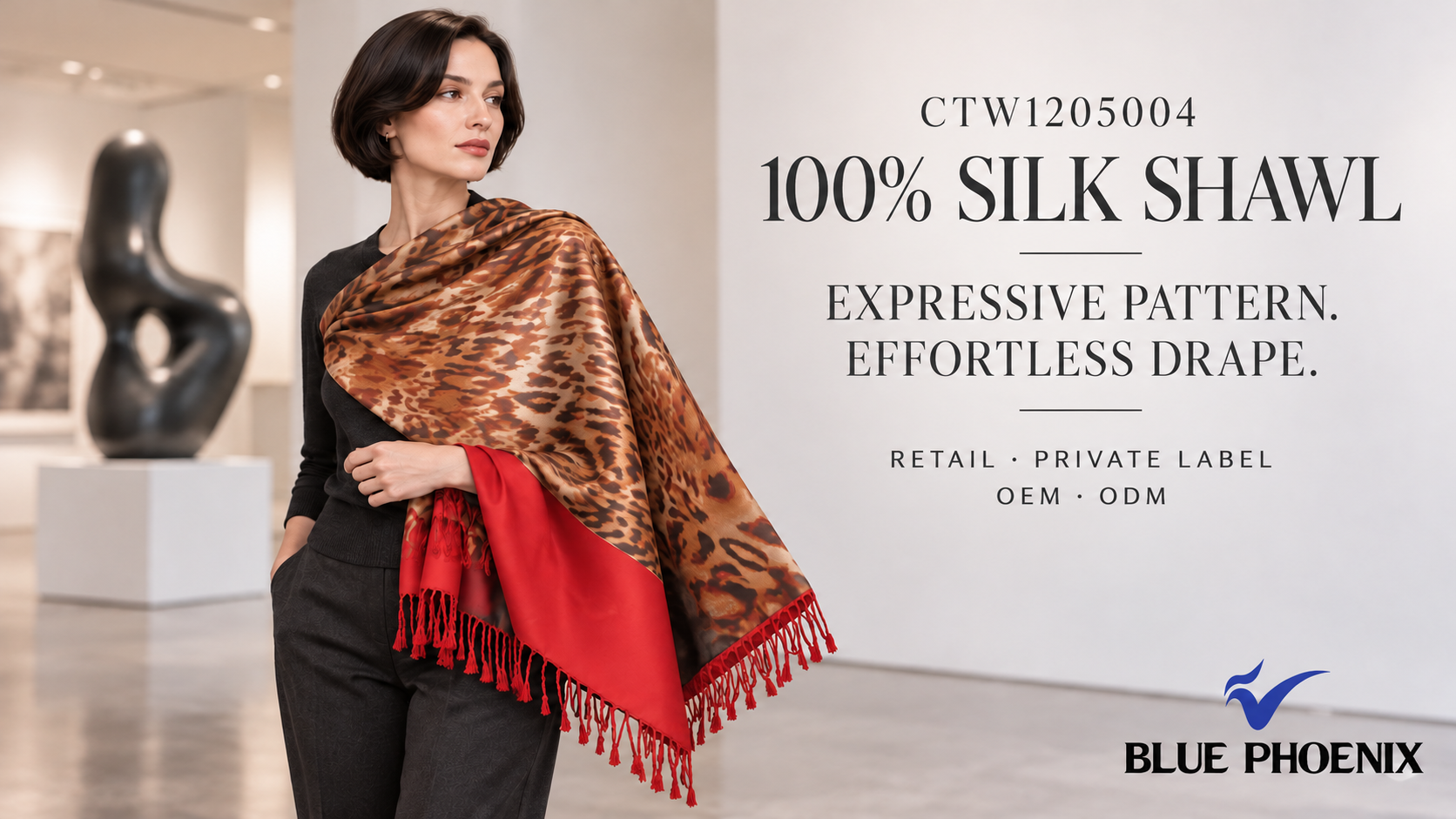
Woman wearing a CTW1205004 silk shawl with a brown animal pattern, contrasting red areas and red twisted fringe over a black outfit in an art gallery.
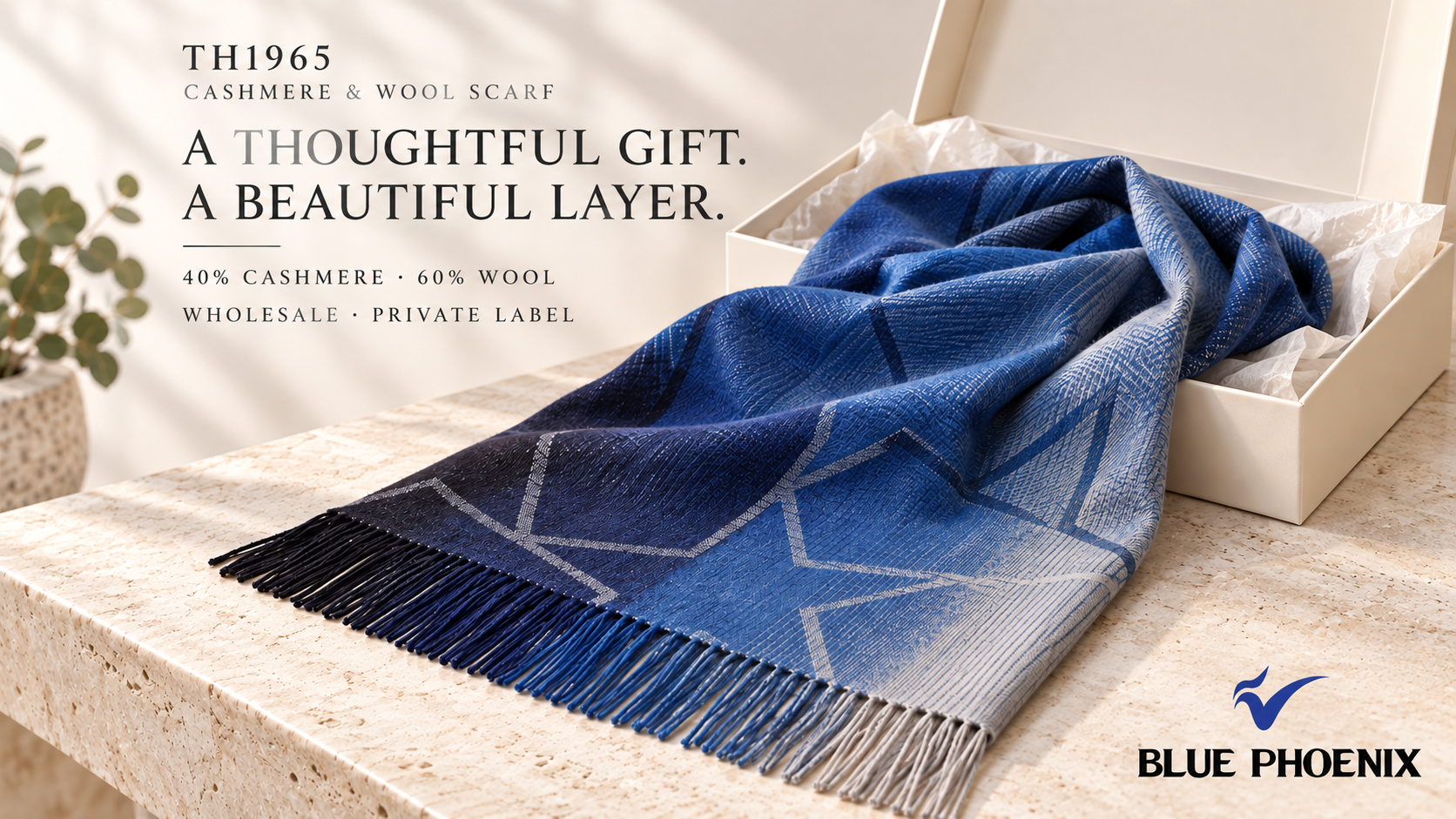
Blue gradient TH1965 cashmere wool scarf with outlined star motifs and fringed ends draped from an open ivory gift box.
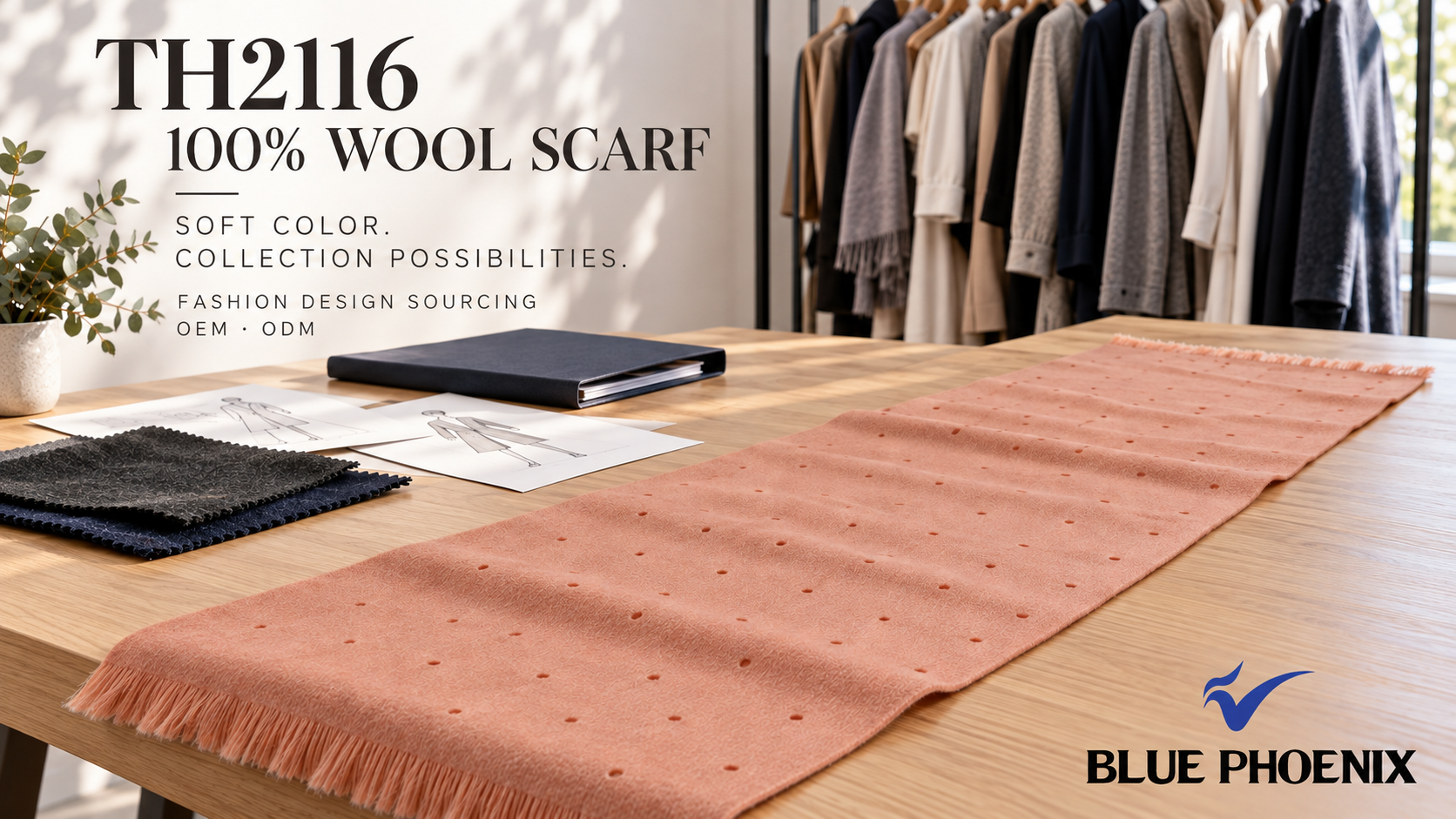
Peach-pink TH2116 wool scarf with small perforated details and short fringe spread across a wooden design table beside fabric swatches and sketches.
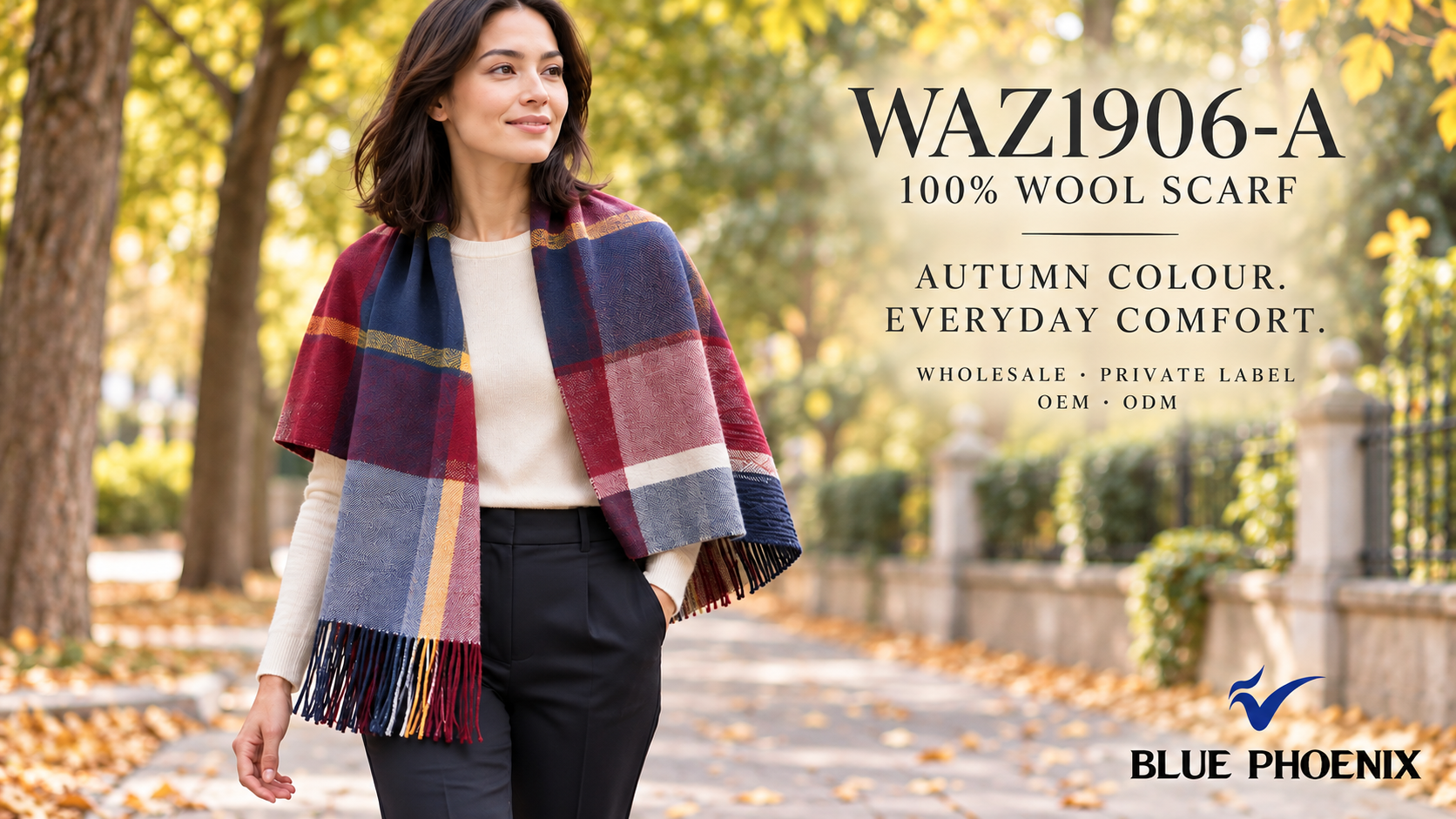
Woman wearing a multicolored WAZ1906-A plaid wool scarf across her shoulders over an ivory top while walking through an autumn park.
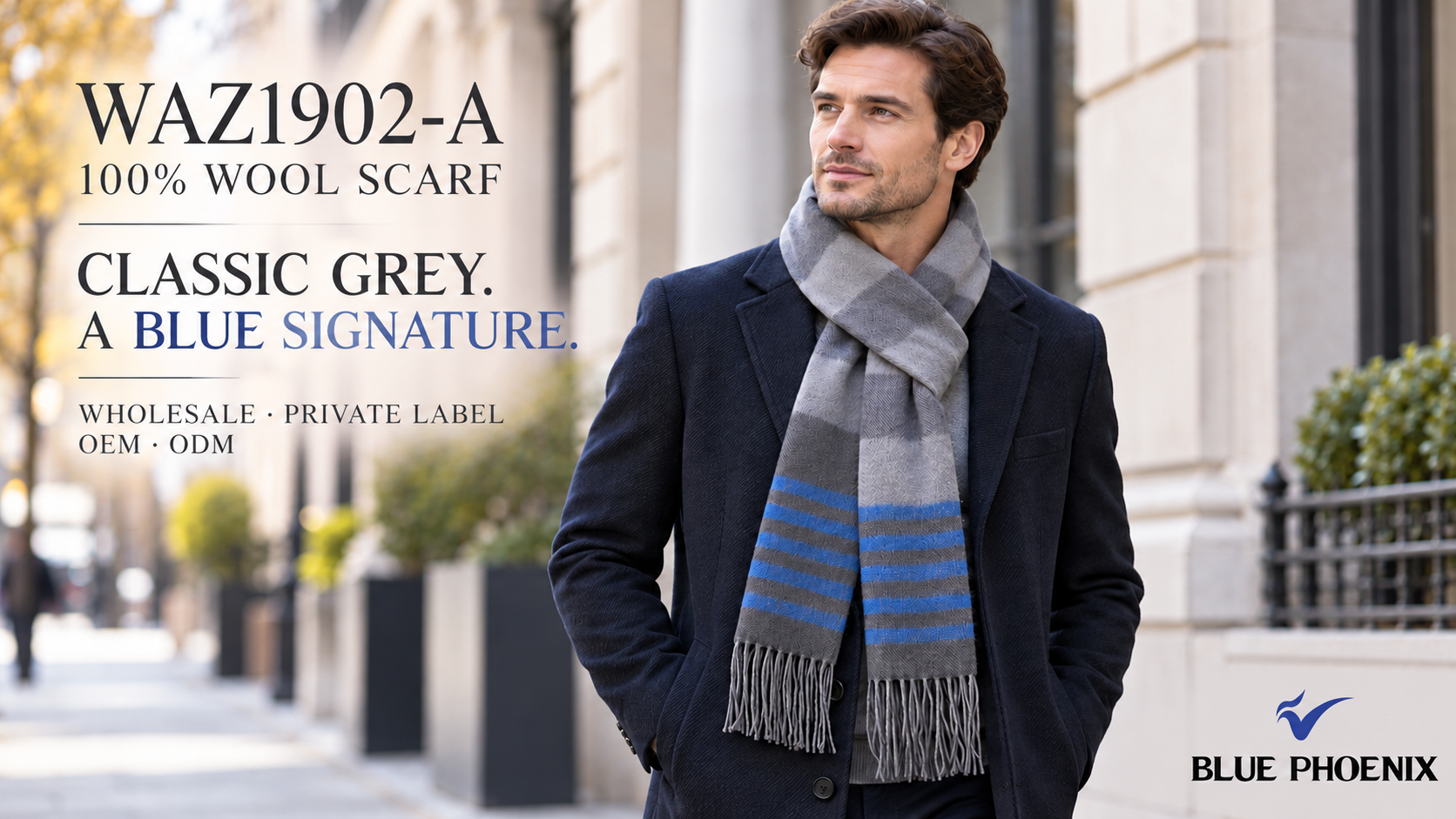
Man wearing a grey WAZ1902-A wool scarf with broad grey bands, blue end stripes and twisted fringe over a navy coat on a city street.
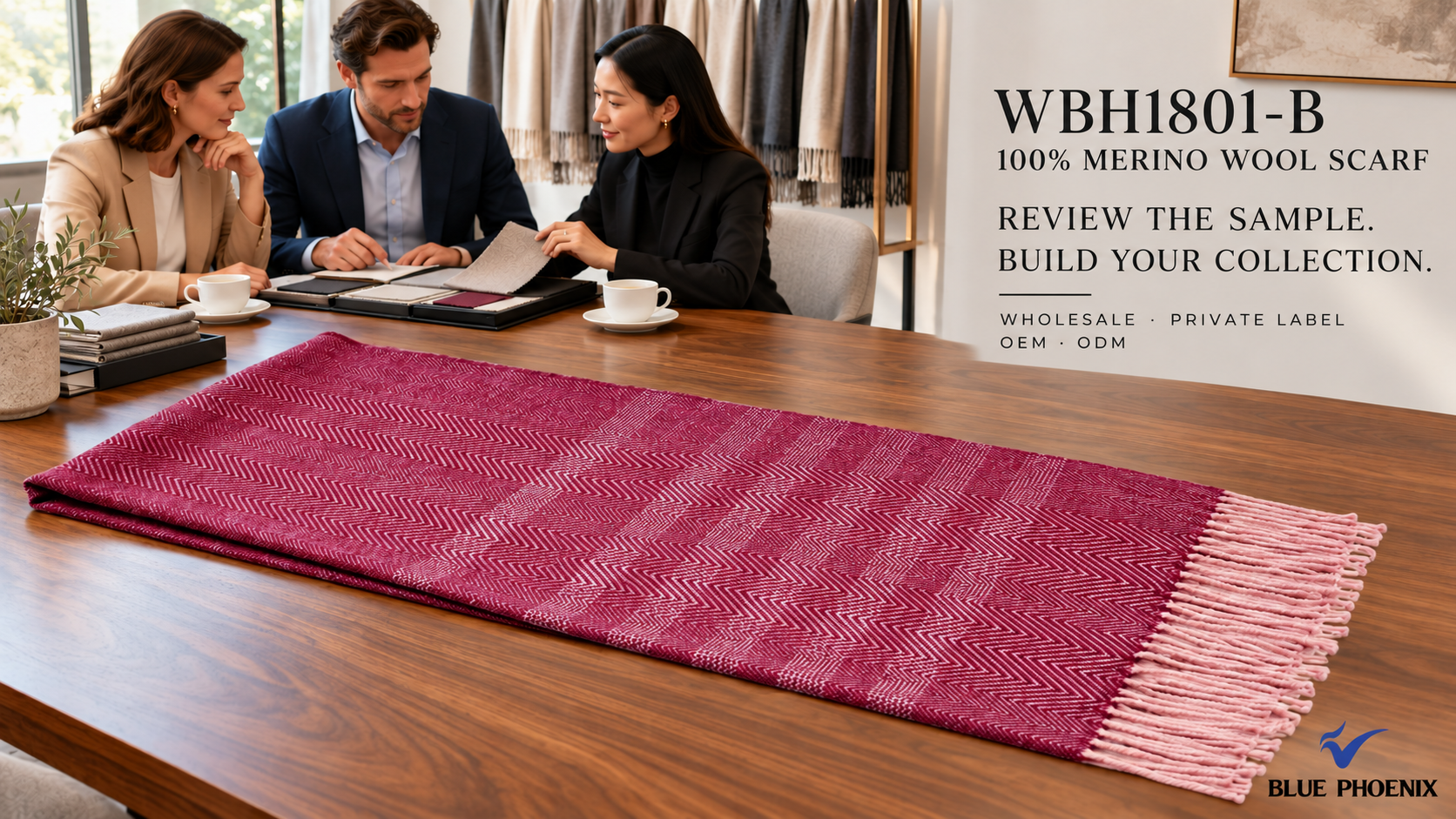
Burgundy and blush-pink WBH1801-B merino wool herringbone scarf with pale-pink fringe spread across a conference table during a buyer sample review.
1. What should a silk shawl sourcing inquiry include?
Include the model, quantity, composition, dimensions, destination, artwork requirements, labels and packaging brief.
2. What is the reference specification for CTW1205004?
The supplied tag states 100% silk, a 135 × 192 cm body, 7 cm fringe at each short end and a sample weight of 809 g.
3. How should buyers approve the pattern?
Review the open physical sample and record the approved layout, motif scale, colors and finishing.
4. Can labels and packaging be customized?
Requests can be discussed. Provide artwork and requirements so feasibility, costs and sample approvals can be reviewed.
5. Are samples and courier delivery chargeable?
Yes. Samples and courier delivery are chargeable.
6. What are the standard payment terms?
BLUE PHOENIX's standard terms are 30% deposit and 70% before shipment. Confirm all order terms in the quotation.
1. Why define the intended application first?
It helps the supplier understand the required presentation, care expectations and any performance assessment needed.
2. Can the fiber content be confirmed from a product photograph?
No. Use the agreed specification and any required testing arrangements.
3. Should “mulberry silk” be added automatically?
No. The supplied tag states 100% silk. Any more specific material claim needs supporting information.
4. What should be agreed if composition testing is required?
Confirm the method, sample requirements, timing, laboratory and charges.
5. Why separate fringe from body measurements?
It prevents different interpretations of the woven body and overall finished length.
6. How should the sample be measured?
Lay it flat without stretching and follow the measurement method agreed with the supplier.
7. Is the recorded 809 g weight an exact guarantee for every piece?
It is the reference sample weight. Confirm the production target and tolerance separately.
8. What design information does an open sample provide?
It shows how the animal pattern, red areas and charcoal details are arranged across the full textile.
9. What is needed for a custom artwork request?
Provide a usable artwork file, layout dimensions, color references and clearly identified changes.
10. Can a close-up replace the complete layout reference?
No. It explains local detail but does not establish the whole design arrangement.
11. How should color approval be documented?
Identify and retain the agreed physical reference, with supporting approval notes.
12. What should be reviewed besides color?
Assess the surface appearance, handle, thickness, drape, edges and fringe.
13. Which fringe details should enter the specification?
Record the length, red color, twisted appearance and agreed finishing reference.
14. When should label placement be approved?
Approve it on the sample before production, together with the retail fold and attachment instructions.
15. What packaging details should buyers provide?
State the individual pack format, dimensions, artwork, folding method, labels and carton requirements.
16. How can buyers compare quotations fairly?
Use equivalent product specifications, quantities, packaging and delivery terms.
17. Which shipment terms can be discussed?
FOB, CIF or DDP can be discussed according to the destination and shipment requirements.
18. Can SGS inspection or testing be arranged?
It may be arranged. Agree on the scope, methods, schedule and charges beforehand.
19. When should the production schedule be confirmed?
Confirm it after reviewing the complete specification, approvals, materials and order requirements.
20. What should be retained for a repeat order?
Keep the approved sample, specification, quotation, artwork and packaging instructions, and document any requested changes.
CTW1205004 100% Silk Animal-Pattern Shawl — The reference product for this sourcing guide.
TH1965 Cashmere Wool Gradient Star Scarf — Compare a cashmere and wool blend design.
TH2116 Perforated Pink Wool Scarf — Review a different material and finishing approach.
WAZ1906-A Plaid Wool Scarf — Consider a multicolored plaid for your assortment.
WAZ1902-A Grey Wool Scarf with Blue Stripes — Review its banded design and fringed ends.
WBH1801-B Merino Wool Herringbone Scarf — Compare a burgundy and blush-pink herringbone design.
Send BLUE PHOENIX your quantity, destination, model selection and private-label requirements. Samples and courier delivery are chargeable. FOB, CIF and DDP quotations can be discussed for your project.
Email: jamesli@shbluephoenix.com
WhatsApp: +86 18017830390
WeChat: bluephoenix66
Website: www.shbluephoenix.com

Blue Phoenix Blankets dedicated to strict quality control of blankets and scarves products and thoughtful customer service, our custom blankets wholesale products are exported to clients in such countries and regions as United states, Europe, Australia, Russia, Germany, Japan.
Copyright © 2026 Shanghai Rainbow Enterprise Development Co., Ltd. - All Rights Reserved.