High-Quality Wholesale Blankets Manufacturer & Supplier in China with custom design service - Blue Phoenix Blankets
Language
A camel and white cotton throw can introduce pattern into a room without requiring a strong change of color. The key is to show enough of the textile to make its design visible while keeping the arrangement suited to the furniture.
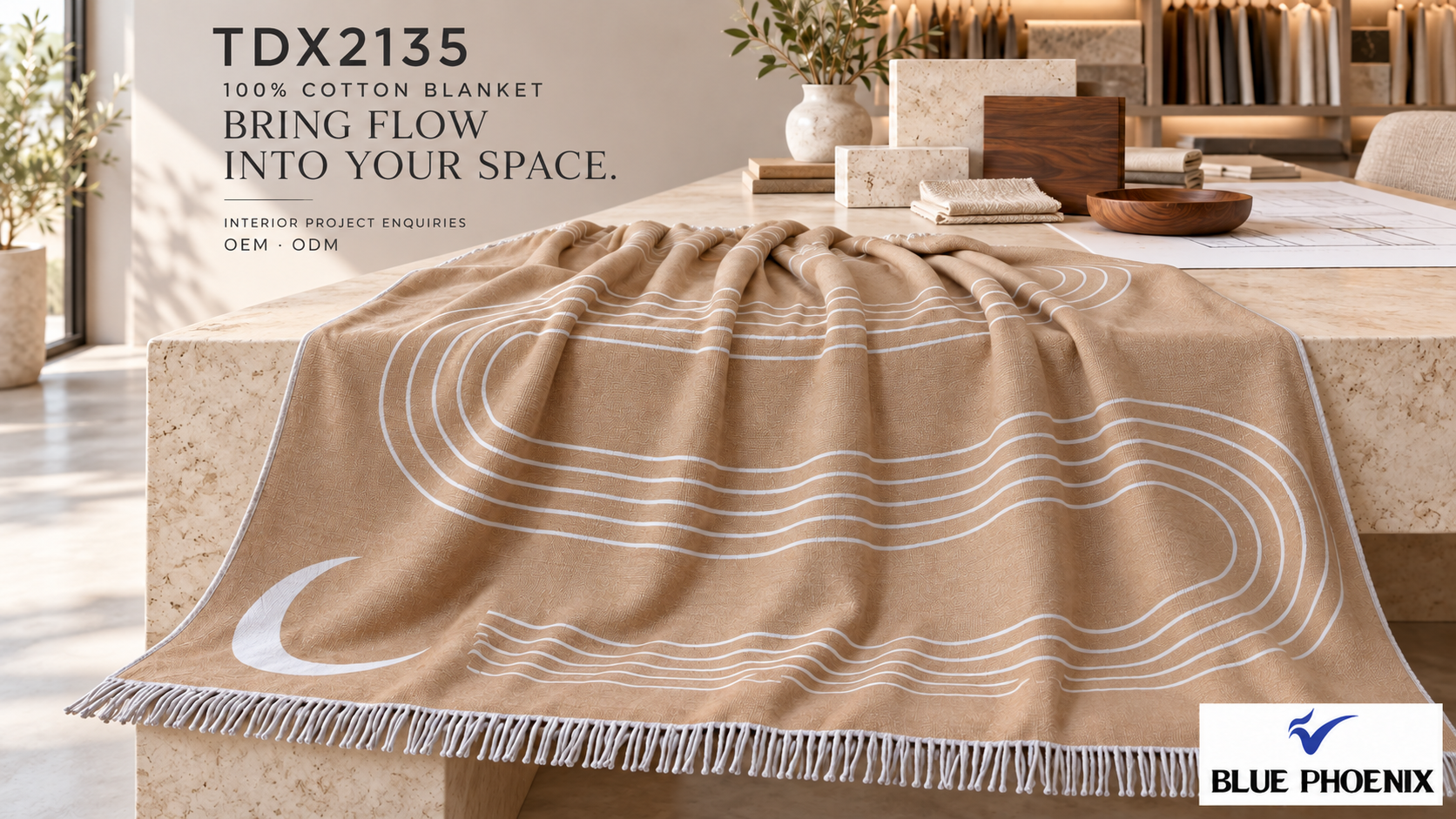
BLUE PHOENIX TDX2135 combines a camel-colored field with white curved lines, celestial motifs and pale fringe. Its woven jacquard construction gives the pattern a clear role in sofa, reading-chair and bedroom styling.
This guide explores practical ways to present the throw at home, in a showroom or within an interior collection.
1. Begin with the Throw’s Actual Dimensions
TDX2135 is specified as 100% cotton, with a 140 × 178 cm body and approximately 5 cm fringe at each of two opposing ends. Its listed fabric weight is 300 GSM.
Use the body dimensions to plan the arrangement. A lifestyle photograph can suggest a setting, but it should not replace measurements when assessing coverage.
For a large bed or sofa, consider the throw as an accent layer rather than assuming it will cover the entire surface.
2. Create a Broad Drape over a Sofa Arm
For a relaxed sofa arrangement, place the throw over one arm and allow part of it to extend onto the seat. Leave a broad section open so the white curved lines remain visible.
A very narrow fold can hide the distinctive design. Begin with a wider fold, then adjust the length to suit the sofa’s proportions.
Place a fringed end where it can be seen clearly, and keep it from bunching beneath cushions. If the sofa already has patterned upholstery, use fewer additional patterned accessories.
3. Use an Armchair to Show the Pattern Vertically
A reading chair offers a useful setting for displaying the throw from the chair back toward the seat and front edge.
Keep the fabric supported by the furniture and allow natural folds to form. Position the throw so at least one celestial motif and a section of the curved lines can be seen.
Cream upholstery creates a gentle contrast with the camel field. Pale wood, a plain side table and a small number of accessories can keep attention on the textile.
4. Treat It as a Bed-End Accent
On a bed, try a broad fold across the lower section or an offset arrangement near one corner. Compare both orientations with the actual mattress and bedding.
Show a recognizable part of the pattern rather than folding the throw into an anonymous strip. A turned-back edge can introduce the paler reverse, provided the face and fringe remain easy to understand.
The 140 × 178 cm body should not be presented as guaranteed full coverage for every queen- or king-size bed.
5. Build a Simple Color and Texture Palette
Start with ivory, cream, warm grey or natural wood, then decide whether the room needs an additional accent color.
Plain cushions can help the curved pattern remain the main decorative feature. If another patterned textile is included, compare the scale and spacing of the two designs together.
The throw can also be assessed alongside smooth upholstery, woven cushions or textured rugs. Review the complete arrangement in the room’s lighting before finalizing a coordinated collection.
6. Show Both Design and Construction in Retail Displays
For a showroom or retail presentation, combine one open display with a folded sample. The open arrangement shows the pattern, while the folded sample makes the reverse and fringe easier to inspect.
A useful image set includes:
A full view of the design.
A furniture-scale presentation.
A reverse detail.
A close-up of the fringed end.
Preserve the original motif arrangement, proportions and colors in product photography. Avoid stretching the textile digitally to create coverage that the actual sample cannot provide.
7. Match Styling Plans with Product Care
Before selecting the throw for an interior or hospitality project, confirm the finished-product care instructions and the intended maintenance routine.
For commercial collections, approve the appearance, dimensions, labels and packaging alongside any required care evaluation. Cotton composition alone does not establish organic certification, allergy-related performance or commercial laundering suitability.
Conclusion
TDX2135 works best visually when enough of its camel-and-white pattern remains open to view. A broad sofa-arm drape, a vertical chair arrangement or a measured bed-end accent can each show a different aspect of the design.
Begin with the actual dimensions, keep the fringe and motifs visible, and review the arrangement on the intended furniture. For wholesale collections, connect the approved presentation with an accurate product specification.
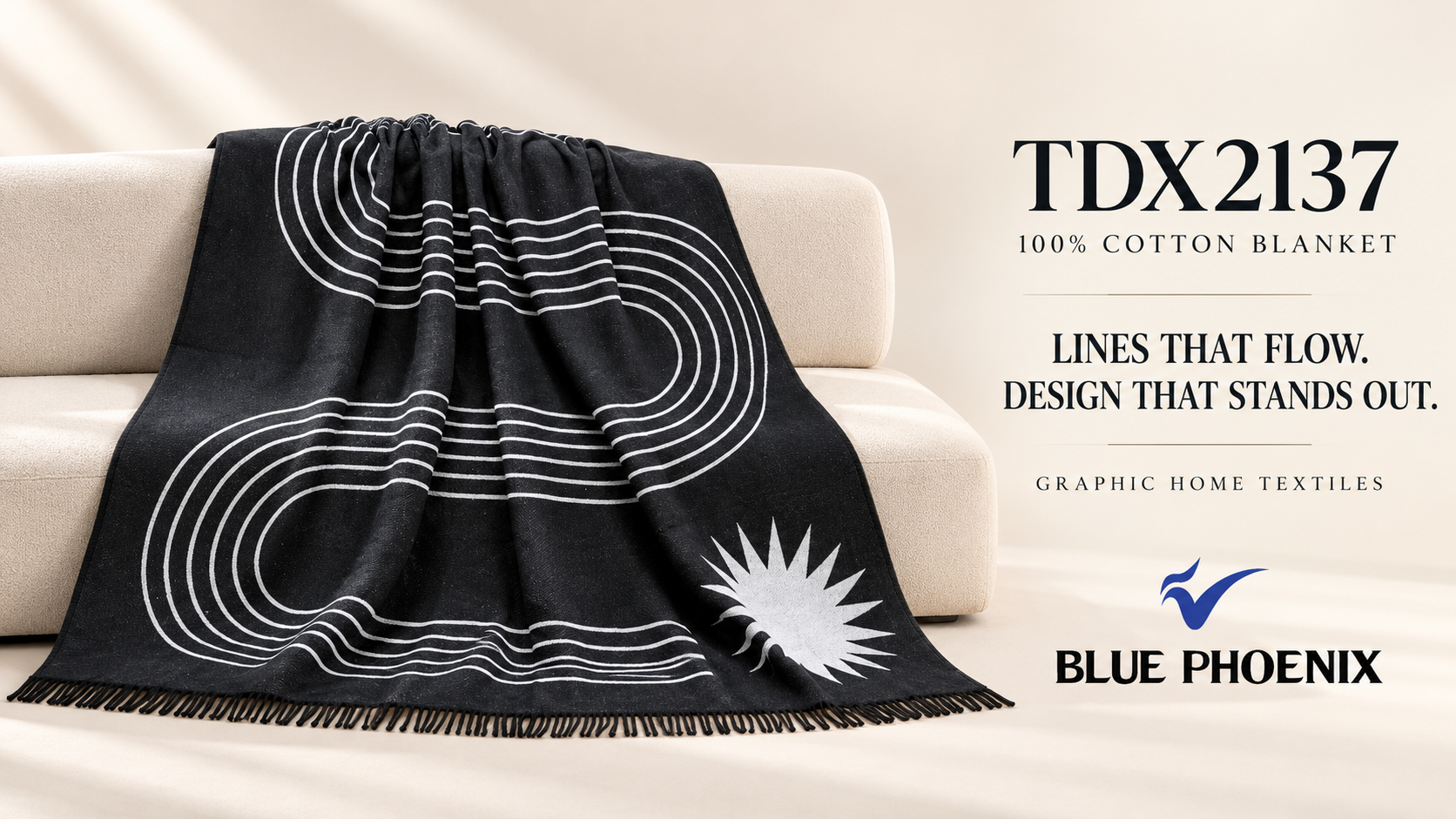
TDX2137 Graphic Cotton Throw
Black and white curves with a star motif for a contrasting interior accent.
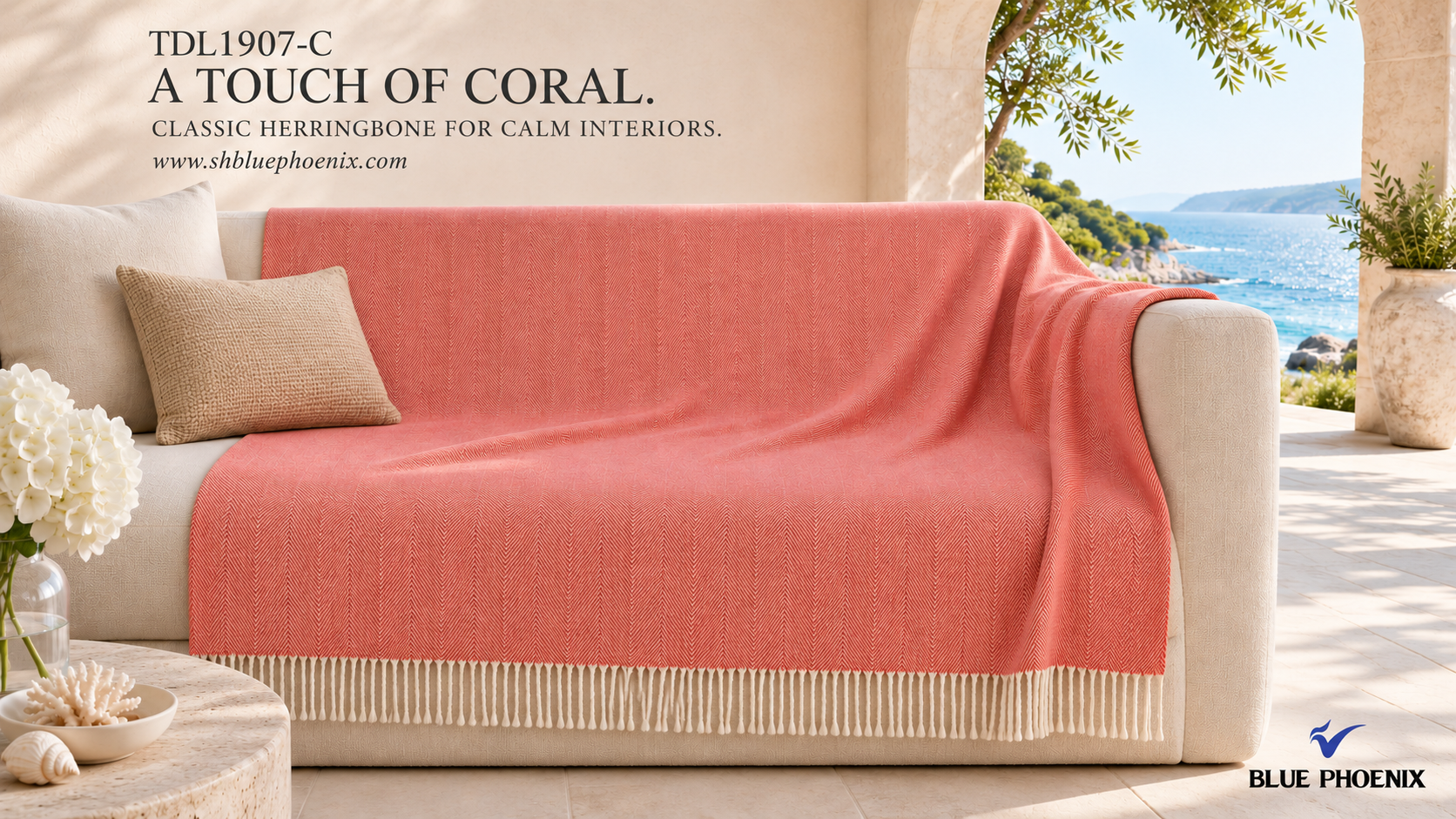
TDL1907-C Coral Herringbone Throw
Coral and ivory herringbone with long ivory fringe for a warm color accent.
Try a broad drape over one arm and part of the seat. Keep enough fabric open to show the curved lines and a fringed end.
Yes. A vertical arrangement from the chair back toward the seat can show the pattern clearly. Adjust it to the actual furniture.
Do not assume full coverage. Its listed body measures 140 × 178 cm. Compare this with the mattress and desired presentation.
Ivory, cream, warm grey and natural wood provide useful starting points. Review the complete palette in the intended room.
A small turned-back section can show the contrasting reverse while preserving a clear view of the main pattern.
Include the complete design, furniture-scale presentation, reverse, fringe and fabric detail. Preserve the actual dimensions and pattern.
What is TDX2135 made from?
The confirmed starting specification is 100% cotton.
Does camel refer to the fiber?
No. It describes the color.
What is the listed body size?
140 × 178 cm.
How is the fringe specified?
Approximately 5 cm at each of two opposing ends, separate from the body dimensions.
What does 300 GSM describe?
Fabric mass per square meter, rather than finished piece weight.
Is this a knitted design?
It is presented as a woven jacquard throw.
Which decorative elements define it?
White curved lines, celestial motifs and pale fringe on a camel-colored field.
Will a narrow fold show the full pattern?
It may hide important details. Compare a broader fold or open drape.
Should all cushions also be patterned?
Plain cushions are an option when the throw is intended as the main patterned accent.
Can it be styled with wood furniture?
Compare the camel tone with the furniture's actual color and finish.
How should the fringe be positioned?
Keep it visible and avoid bunching it beneath cushions.
What should a bed-end trial assess?
Orientation, coverage, overhang and how much of the design remains visible.
Can a photograph establish final color?
Use a physical sample under the intended lighting.
Should both sides appear in a retail display?
Showing the face and reverse helps buyers understand the complete textile.
Can digital editing change the blanket proportions?
Product images should preserve the actual dimensions and pattern scale.
Does cotton composition establish organic certification?
No. Any such claim needs relevant supporting documentation.
Are all recommended products cotton?
No. Some are wool or blended alternatives and should retain their own material descriptions.
Can custom colors be discussed?
Provide references for feasibility review, quotation and sampling.
What should hospitality buyers confirm?
Intended use, coverage, care process and any project-specific requirements.
What should a repeat order reference?
The approved sample, written specification and agreed product presentation.
TDX2135 Cotton Jacquard Throw Blanket
Review the product reference and discuss samples for your interior or retail collection.
How to Specify a Cotton Jacquard Throw for Retail Collections: TDX2135
Move from styling ideas to a purchasing specification covering dimensions, fringe, GSM and sample approval.
BLUE PHOENIX Blanket Blog
Explore more material, selection and sourcing guides.
Cotton Blankets
Compare woven and knitted cotton designs.
Woven and Knitted Blankets
Explore different surface textures and constructions.
Blended Blankets
Review alternative material combinations for your collection.
Wool Blankets
Explore wool patterns and finishing as a separate textile direction.
These designs offer different colors, patterns and materials. Confirm the specification and care instructions for each product.
TDX2135 Cotton Jacquard Throw
Camel and white curved lines with celestial details and pale fringe.
TDX2137 Graphic Cotton Throw
Black and white patterning for a stronger visual contrast.
TDW1905 Cotton Knit Blanket
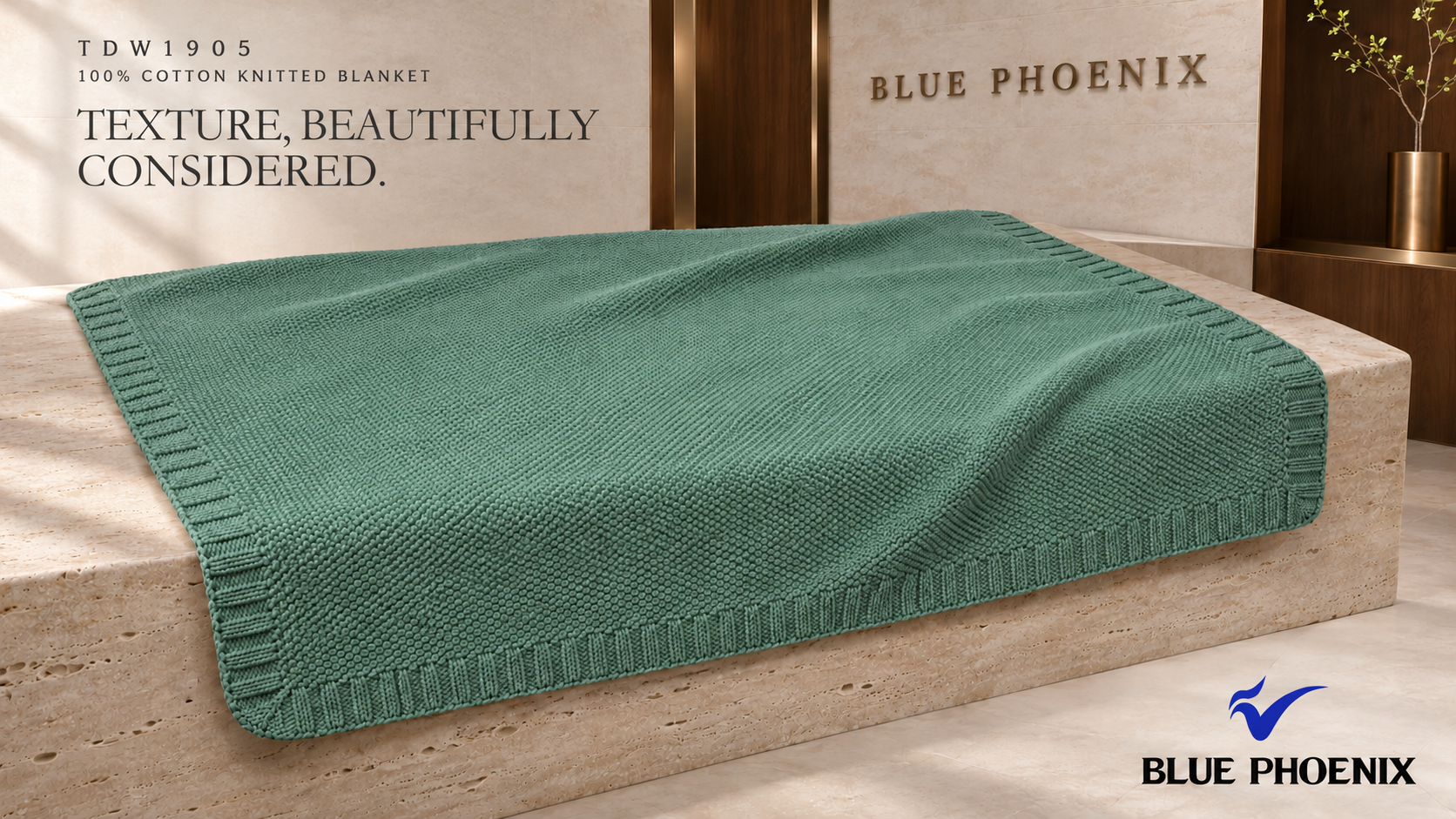
A knitted cotton texture for a different decorative approach.
TDL1907-C Cotton-Acrylic Herringbone Throw
Coral and ivory herringbone with long ivory fringe.
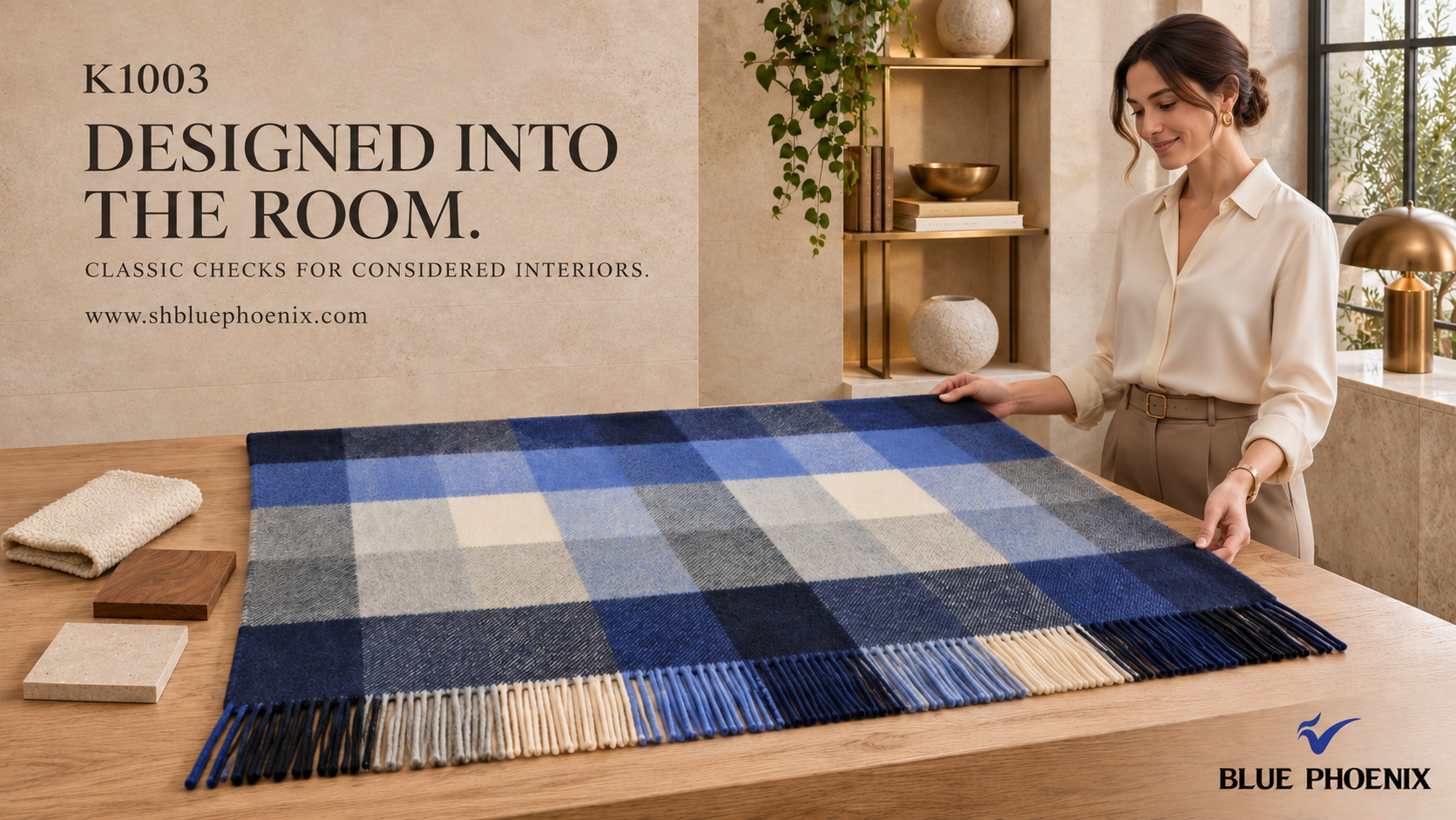
K1003 Blue Checked Wool Blanket
Navy, blue, grey and cream checks with multicolored fringe.
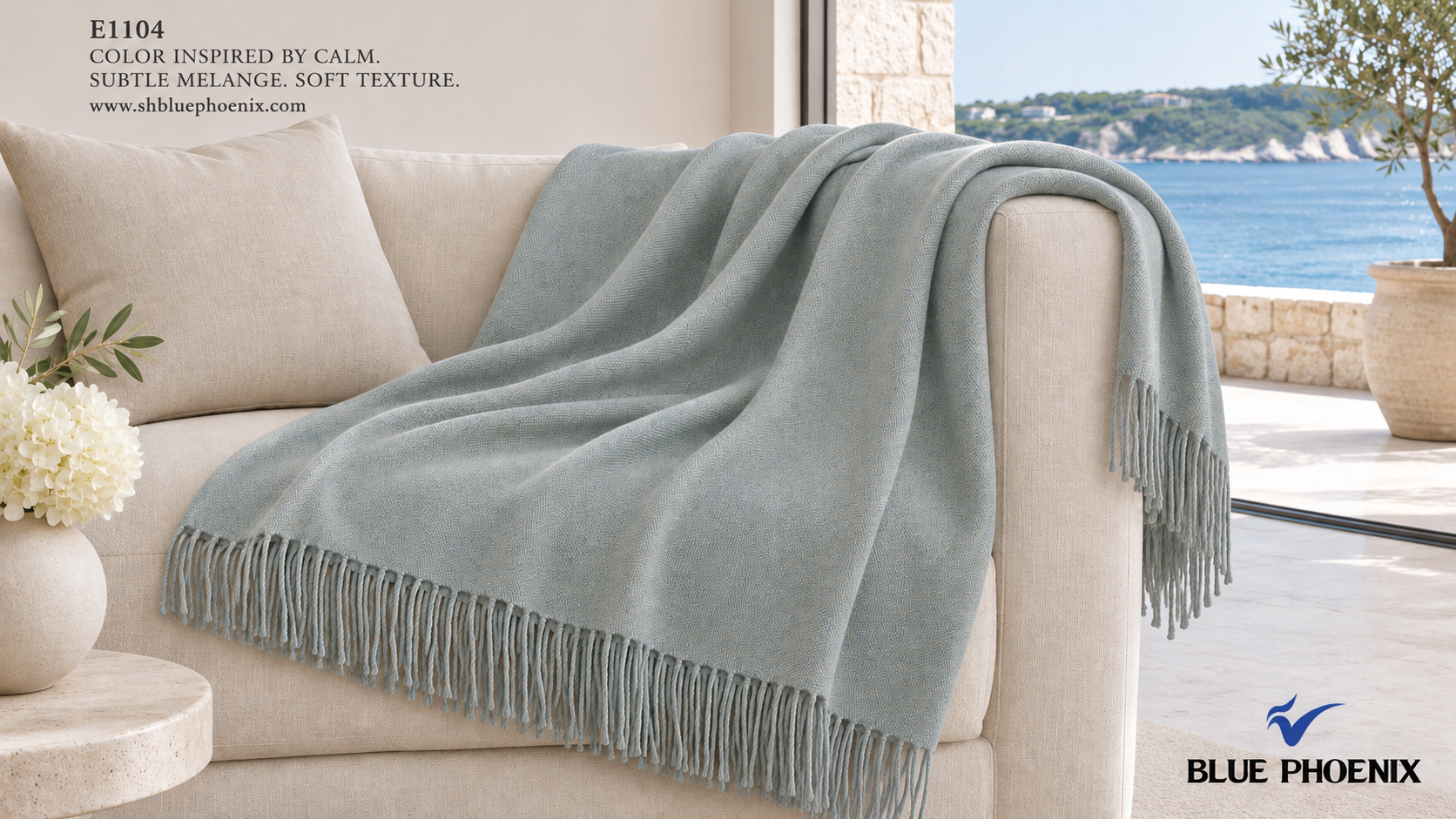
E1104 Cashmere-Wool Mélange Throw
A blue mélange option in a different material category.
BLUE PHOENIX welcomes enquiries from importers, wholesalers, retailers, interior suppliers and private-label home textile brands.
Tell us how you intend to present and use the throw. For a relevant proposal, please include:
Your company, destination market and intended application.
Preferred model and estimated order quantity.
Required body dimensions, fringe allowance and target fabric weight.
Color references and any proposed artwork changes.
Brand labels, care labels and packaging requirements.
Required testing, inspection scope and delivery schedule.
For interior projects, include furniture dimensions or presentation references. For freight pricing, provide the destination port or full delivery address and postcode.
We can review samples, customization feasibility and a quotation based on the agreed requirements. Approve the physical sample and written specification before bulk production.
Email:jamesli@shbluephoenix.com
WhatsApp:+86 180 1783 0390
WeChat: bluephoenix66
Website:www.shbluephoenix.com

Blue Phoenix Blankets dedicated to strict quality control of blankets and scarves products and thoughtful customer service, our custom blankets wholesale products are exported to clients in such countries and regions as United states, Europe, Australia, Russia, Germany, Japan.
Copyright © 2026 Shanghai Rainbow Enterprise Development Co., Ltd. - All Rights Reserved.