High-Quality Wholesale Blankets Manufacturer & Supplier in China with custom design service - Blue Phoenix Blankets
Language
A wool blanket can smell because of its natural wool character, trapped moisture, everyday soiling or odors from the surrounding environment. A mild sheep-like scent and a persistent musty odor should not be treated as the same issue. Before washing or applying a cleaning product, inspect the blanket and read its care label.
Understanding the source of wool blanket odor helps households choose appropriate care and gives wholesale buyers a more useful approach to sample inspection. This guide explains what to check, when airing may help and which details matter before approving a bulk blanket order.
Some people notice a mild earthy or sheep-like scent when a wool blanket is first unpacked. Natural wool character and residual wool grease can contribute to this impression. The intensity varies with processing, finishing, packaging and storage.
A new wool blanket smell should be evaluated after opening the packaging in a clean, dry environment. Note whether the smell is faint or strong, whether it changes after airing and whether the blanket shows any signs of moisture or staining.
Do not use scent to judge fiber purity. A strong smell does not prove a higher wool percentage, and the absence of smell does not establish product quality or chemical compliance.
Moisture can make an existing scent more noticeable. If a blanket smells different after washing, humid weather or storage, assess it again once it is fully dry.
For a wet wool smell, first consider the blanket’s recent history: Was it washed according to the label? Was it packed before drying completely? Was it exposed to condensation during transportation?
Smell alone cannot identify the exact cause. If the odor remains unusual after drying, inspect the fabric, folded sections and packaging before deciding on further treatment.
A musty wool blanket warrants a closer inspection of storage conditions. Check for damp folds, discoloration, damaged packaging, leaks or condensation.
Do not assume that every musty smell is ordinary wool character. Where visible mold or contamination is suspected, separate the blanket from clean items and seek appropriate professional advice. Airing alone does not establish that a contaminated blanket is suitable for use.
For warehouses and institutional stockrooms, inspect more than one carton and record where affected goods were stored. This helps distinguish an isolated packaging issue from a wider storage problem.
Food spills, body oils, smoke, pets and strongly scented storage materials may be relevant when investigating wool blanket odor. Check whether the smell is concentrated in one area or spread across the blanket.
A localized odor may correspond to a spill or stain. A more general odor may require checking the room, cupboard, protective bag and nearby materials as well as the textile.
Address the source before returning the blanket to storage. Cleaning the textile without correcting damp or strongly scented surroundings can leave the underlying problem unresolved.
For a dry, otherwise clean blanket, gentle airing can be a useful first step. Choose a clean, shaded location with good airflow and support the blanket adequately.
Reassess afterward rather than promising that every odor will disappear within a fixed time. The result depends on the source of the smell, the textile and the surrounding conditions.
If the blanket is visibly soiled or the odor persists, use the care label to guide the next step. Airing is a refreshment method, not a substitute for necessary cleaning.
Wool blanket care is specific to the finished product. Composition alone does not establish whether a blanket can be machine washed. Dyes, finishing, construction and edge materials also need consideration.
Washing: follow the method stated on the care label.
Detergent: where washing is permitted, select a suitable mild wool detergent; avoid enzyme-containing biological detergents and bleach.
Drying: follow the stated instructions and support the blanket’s weight.
Professional cleaning: use a qualified cleaner where required by the label or where the treatment is uncertain.
Do not apply vinegar-and-baking-soda mixtures, perfume sprays or repeated soaking as universal treatments. If the care label is missing, ask the supplier or a qualified textile cleaner before proceeding.
Inspection should cover the complete blanket. Open the folds and examine the center, edges, corners and any attached binding.
For a satin bound wool blanket, check the border attachment, stitching and corner construction. For a hemmed blanket, examine the folded edge and seam appearance. These details should also be reviewed during an approved cleaning trial.
The description “military blanket” does not automatically establish commercial washability, a particular cleaning temperature or suitability for tumble drying. Confirm military wool blanket care requirements for the selected model.
Before storage, confirm that the blanket is clean and completely dry. Use suitable protective packaging and a clean, dry storage area. Avoid sealing moisture inside a bag or container.
For bulk stock, keep cartons away from damp floors and walls, inspect for leaks and condensation, and separate textiles from strongly scented chemicals or materials.
A practical wool blanket storage routine includes periodic inspections, particularly after transport or changes in warehouse conditions.
For wholesale wool blankets, odor observations should form part of a wider sample and shipment inspection. Agree on requirements before production rather than relying on a general promise of an “odor-free” product.
Identification: record the model, batch and carton details.
Packaging: inspect for moisture, damage and unfamiliar odors.
Comparison: evaluate samples under similar conditions against an approved reference.
Construction: check dimensions, finished weight, surface, edges and corners.
Care: confirm instructions for the exact ordered specification.
Follow-up: document persistent concerns and agree on investigation or testing where needed.
If formal odor evaluation is required, agree on the method, conditioning procedure and acceptance criteria. A subjective smell check does not replace laboratory testing or other required quality checks.
The answer to “Why does my wool blanket smell?” depends on the blanket’s condition and history. A mild natural scent, a recent spill and damp storage call for different responses.
Start with inspection, follow the care label and investigate persistent or unusual odors rather than masking them. For procurement teams, combine these observations with sample approval, packaging checks and clear care requirements before accepting a bulk order.
The products below provide different references for material, edge construction and intended application. Open a product page to review its specification and discuss sample evaluation. Care requirements should be confirmed separately for each selected model.
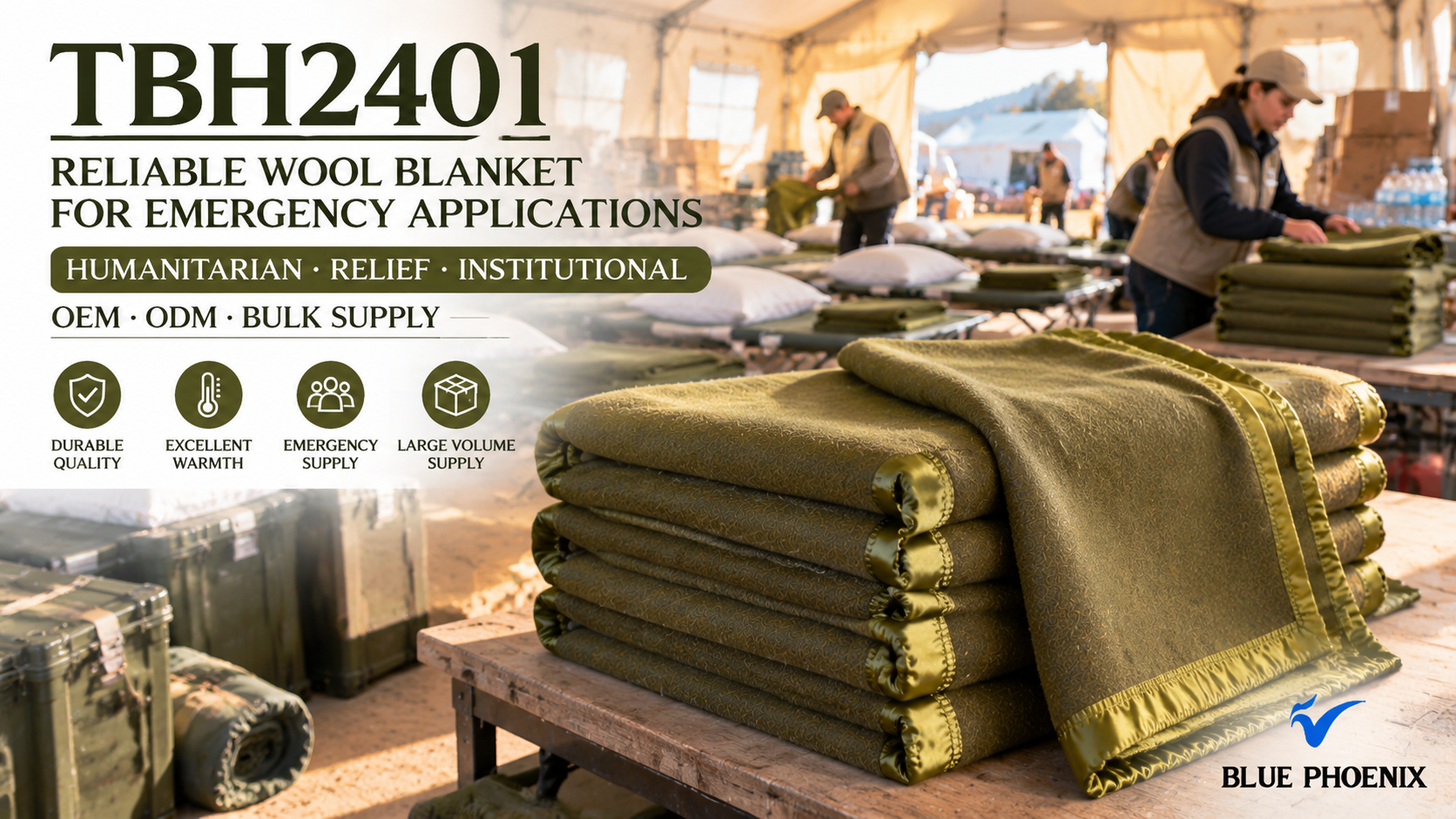
TBH2401 100% Wool Military Blanket
Olive wool blankets stacked in a relief supply setting, showing the woven surface and matching satin binding. Review the complete sample and care requirements before bulk purchasing.
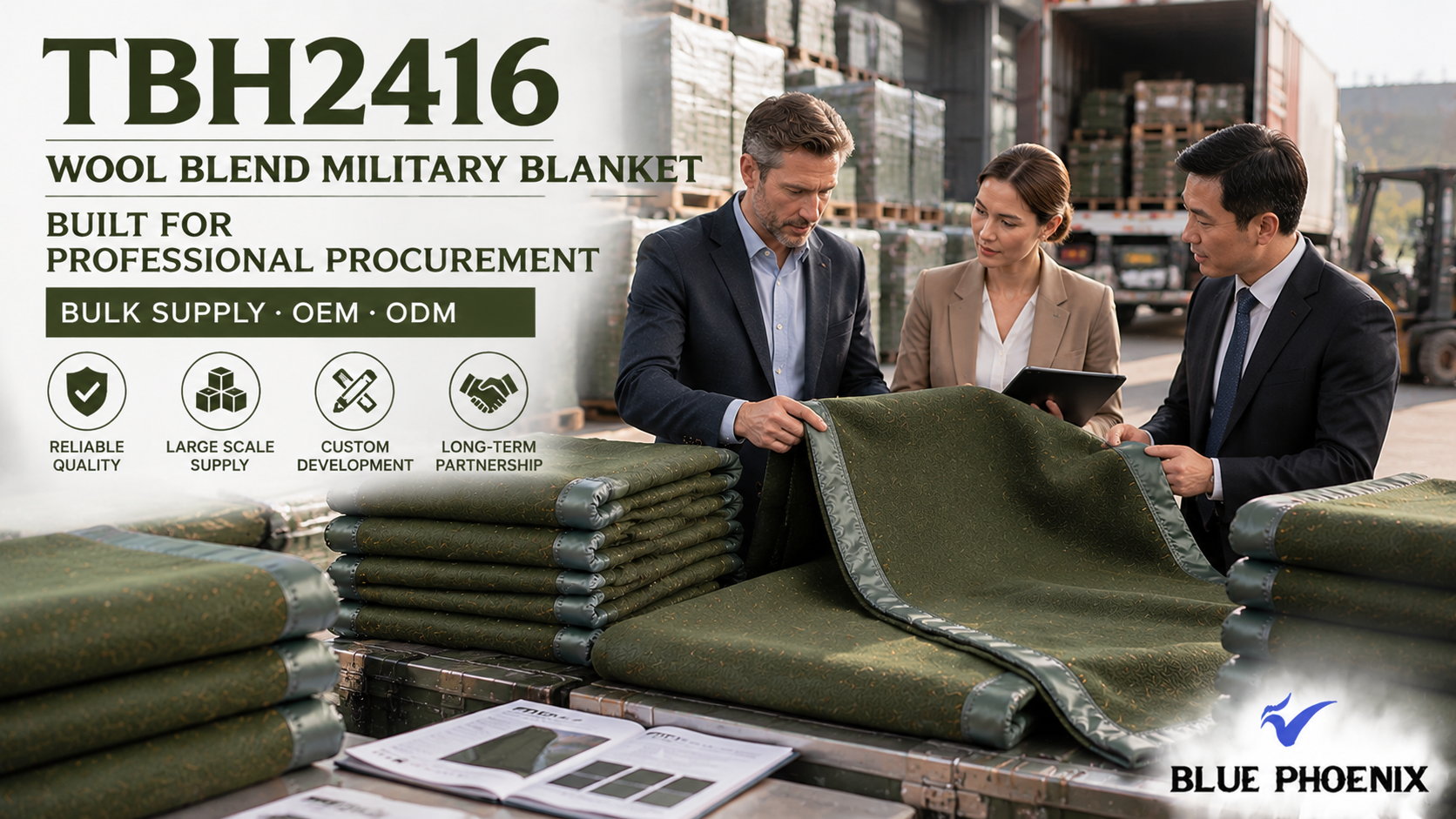
TBH2416 Wool Blend Military Blanket
Buyers review a military-green wool blend blanket beside packed stock. Compare the fabric, satin-bound edges and purchasing specification during sample approval.
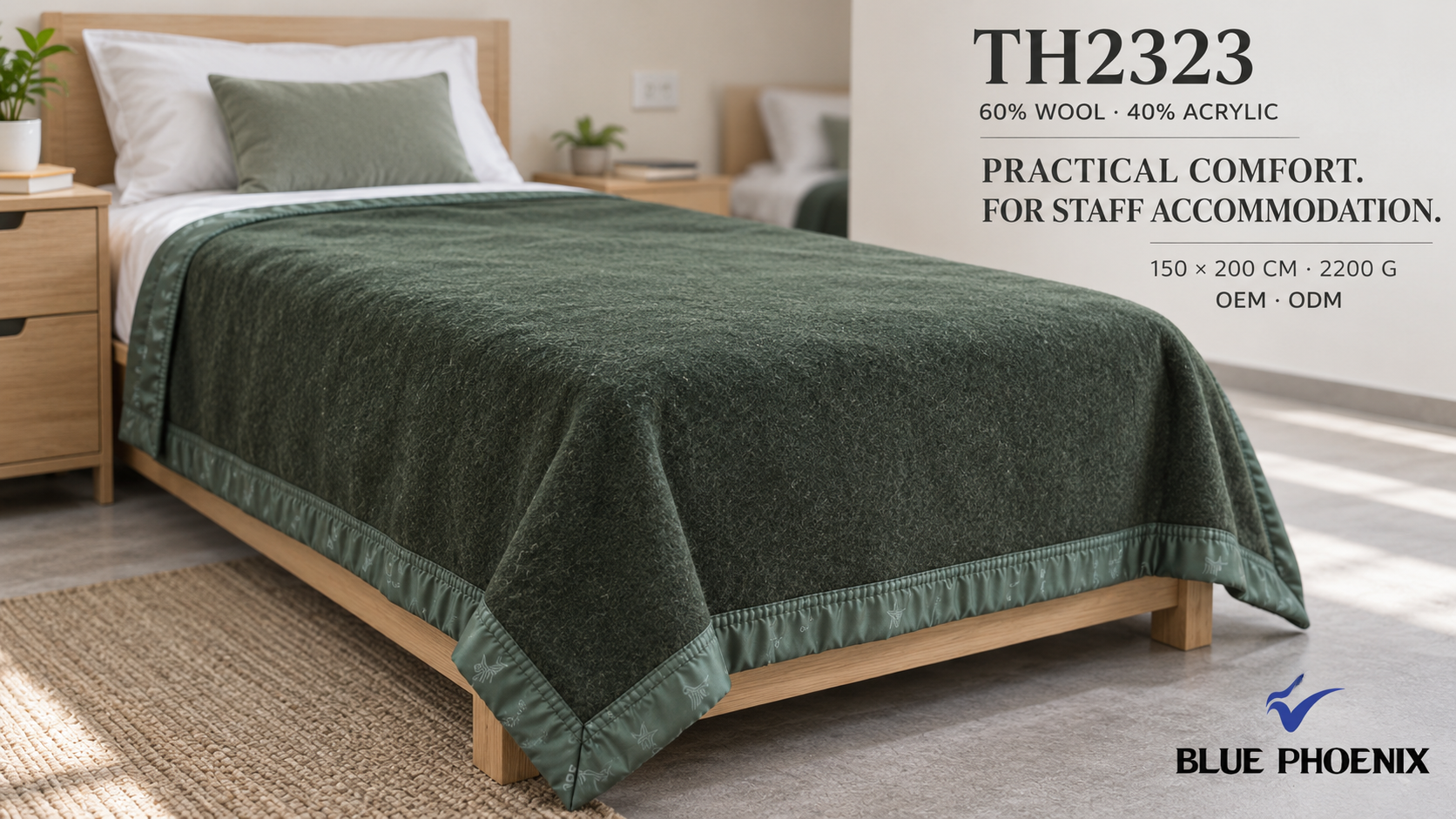
TH2323 Wool Acrylic Military Blanket
An olive-green wool acrylic blanket displayed across an accommodation bed, showing its coordinated satin border. Confirm the intended laundry process when evaluating this model.
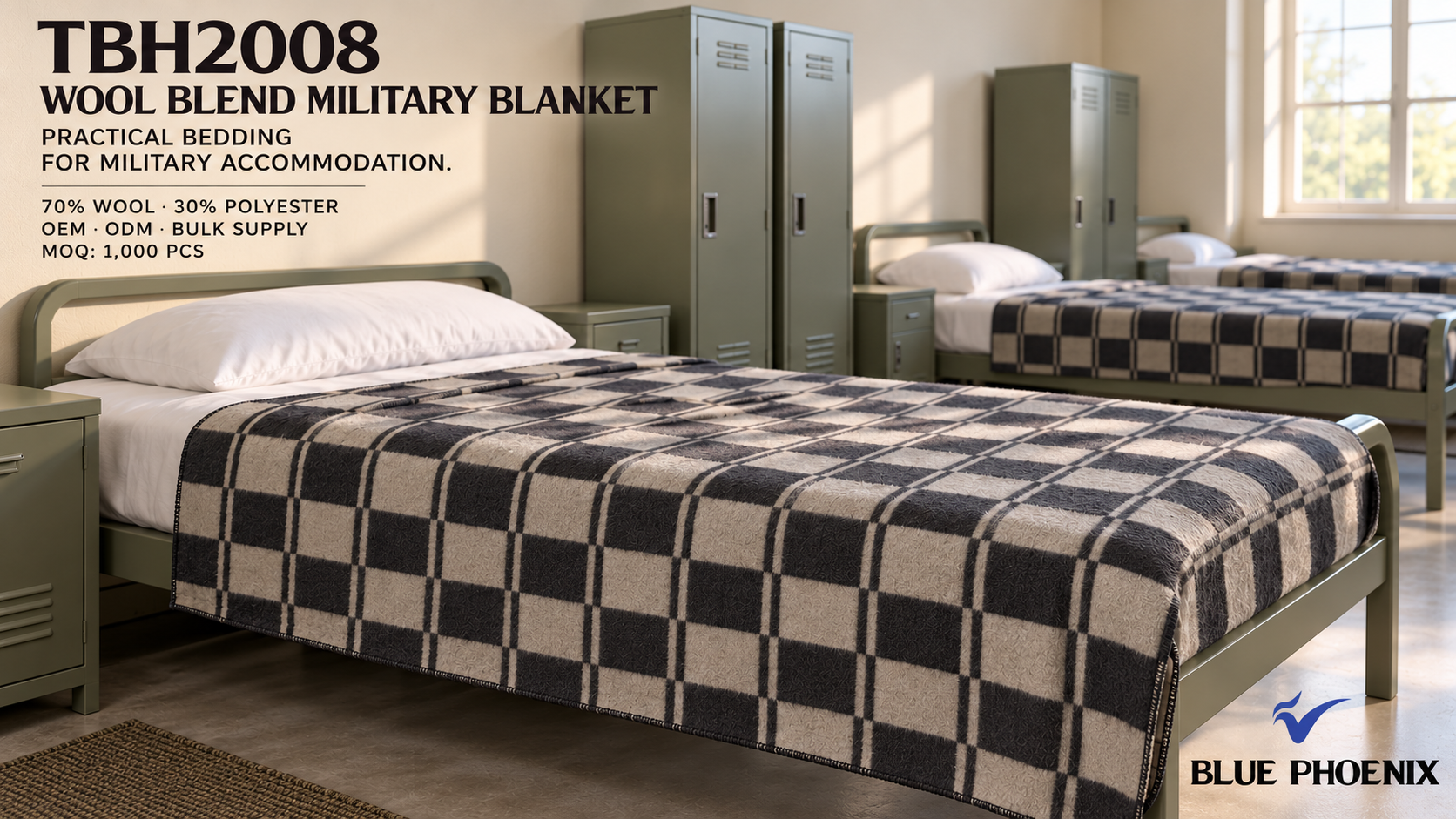
TBH2008 Wool Blend Institutional Blanket
A contrasting checked wool blend blanket displayed on a bed in shared accommodation. Review the complete product, care documentation and packing requirements for institutional orders.
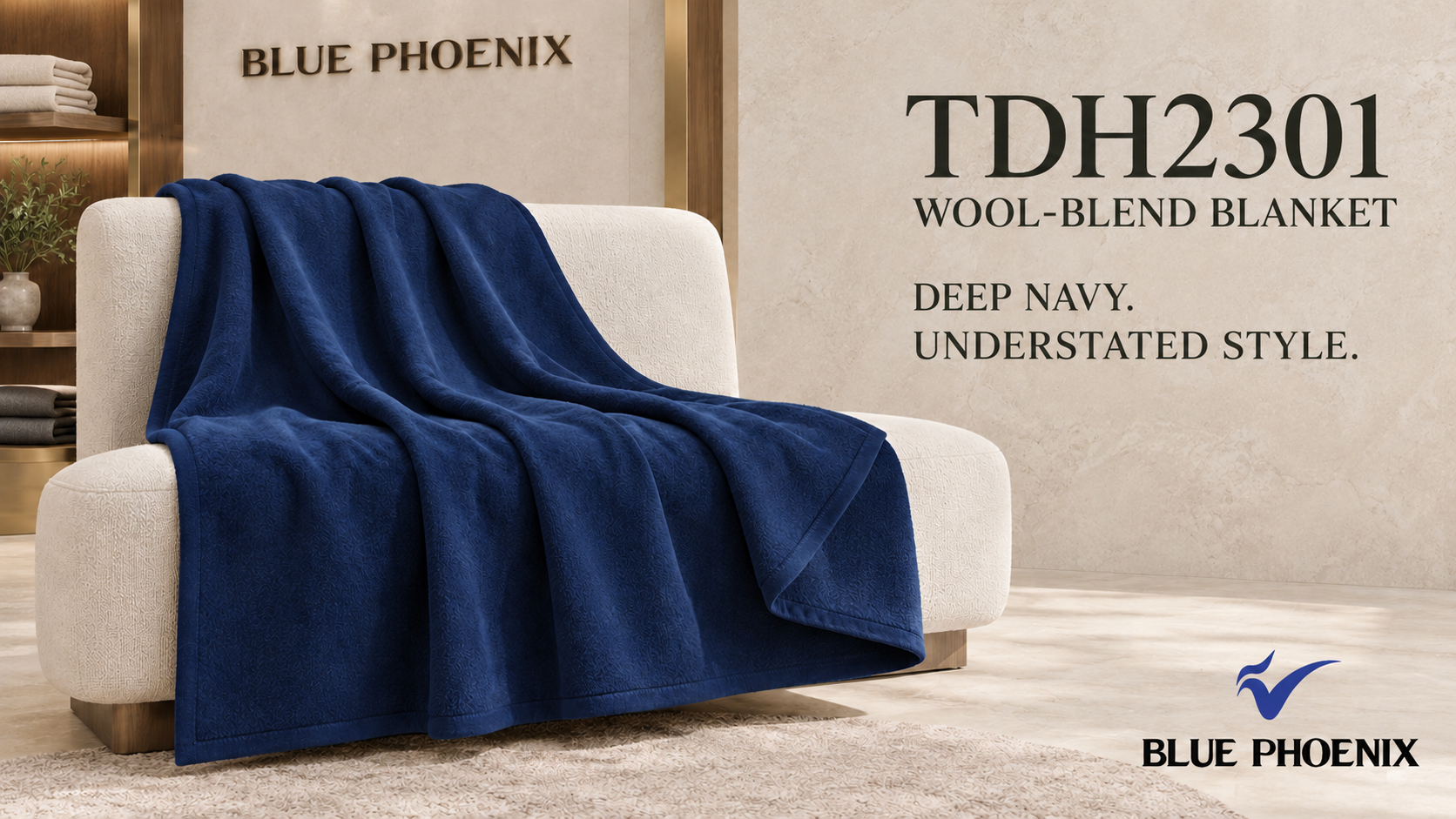
TDH2301 Wool Blend Military Blanket
A deep navy wool blend blanket draped over an ivory showroom chair, revealing its plain woven design and folded hems. Confirm product-specific care instructions during sample review.
.
A mild natural scent can occur in wool products, although it varies with processing and storage. Strong, musty or persistent unfamiliar odors require further investigation.
Moisture can make an existing scent more noticeable. Follow the drying instructions and reassess the fully dry blanket. Smell alone cannot identify the cause.
For a dry, otherwise clean blanket, try gentle airing in a clean, shaded location with good airflow. Inspect persistent odors before selecting further treatment.
Only if the care label permits machine washing. A wool blend or military-style construction does not automatically establish machine washability.
Use a suitable mild wool detergent according to the care instructions. Avoid enzyme-containing biological detergents and bleach.
Document the condition, inspect packaging and samples from multiple cartons, and contact the supplier before distributing or treating the stock.
No. Verify composition through the agreed specification and appropriate testing where required.
No. Odor observations cannot establish compliance with chemical requirements.
Yes. Record observations alongside dimensions, weight, appearance and construction.
Yes. Look for moisture, damage and unfamiliar odors as part of the inspection.
One blanket cannot establish the condition of every carton. Agree on a suitable sampling plan.
Provide the model, batch, carton numbers, photographs, storage history and a clear description of the issue.
Yes. Record the location, packaging condition and time after unpacking to make comparisons more useful.
Fragrance can obscure evaluation. Any scented treatment should be explicitly agreed before production.
Yes. Identify it clearly and store it under suitable conditions for later comparison.
No. Confirm compatibility with the intended cleaning process for the exact finished product.
Yes. Evaluate the complete blanket, including the binding, attachment stitches and corners.
No. Odor evaluation and cleaning trials address different purchasing requirements.
Check moisture exposure, leaks, condensation, nearby materials and the condition of protective packaging.
Confirm that blankets are completely dry before protective packaging and storage.
Agree on the evaluation method, sample conditioning, reference and acceptance criteria before ordering.
When required by the purchasing specification or when a particular concern needs further investigation.
No. Finishing, construction, dyes and other components must also be considered.
Yes. Record the issue and agree on the next steps before issuing the affected stock.
Use accurate composition and care instructions suitable for the finished product and destination market.
Provide the intended use, composition, dimensions, weight, edge finish, laundry requirements, quantity, destination and packaging brief.
#WoolBlanket #WoolBlanketOdor #WoolBlanketCare #WoolBlanketStorage #NaturalWool #BlanketInspection #MilitaryBlanketCare #WholesaleWoolBlankets #TextileSourcing #BluePhoenix
Recommended CategoriesWool Blankets— Explore wool blanket designs for sample comparison and collection development.
Military Blankets— Review blanket options against military accommodation and bulk purchasing requirements.
Relief & Refugee Blankets— Compare product and packing options for relief and temporary accommodation projects.
Institutional Blankets— Review materials, construction and product-specific care requirements for facility purchasing.
TBH2401 100% Wool Military Blanket— A pure-wool reference for evaluating the woven body and satin-bound edges.
TBH2416 Wool Blend Military Blanket— A wool and polyester blend option for reviewing composition, finishing and purchasing requirements.
TH2323 Wool Acrylic Military Blanket— Compare its wool acrylic composition and coordinated satin binding during sampling.
TBH2008 Wool Blend Institutional Blanket— Explore a checked design and confirm care and packaging requirements for the intended application.
TBH2507 100% Wool Striped Blanket— Review its oatmeal-grey body, red stripe design and overlocked edge construction.
TDH2301 Wool Blend Military Blanket— Compare a plain navy-blue woven design with folded hems.
Planning a wholesale wool blanket, private label or institutional sourcing project? Send BLUE PHOENIX your intended application, preferred composition, dimensions, finished weight, edge construction, quantity, destination and packaging requirements.
Include the proposed cleaning process and any inspection or testing requirements in your inquiry. These details help define the sample evaluation and quotation scope before order approval.
Samples and courier delivery are chargeable.Sample availability, development requirements, costs and production timing will be confirmed for the project. Standard payment terms are 30% deposit and 70% balance before shipment, subject to the agreed quotation.
Email:jamesli@shbluephoenix.com
WhatsApp:+86 18017830390
WeChat: bluephoenix66
Website:www.shbluephoenix.com

Blue Phoenix Blankets dedicated to strict quality control of blankets and scarves products and thoughtful customer service, our custom blankets wholesale products are exported to clients in such countries and regions as United states, Europe, Australia, Russia, Germany, Japan.
Copyright © 2026 Shanghai Rainbow Enterprise Development Co., Ltd. - All Rights Reserved.