High-Quality Wholesale Blankets Manufacturer & Supplier in China with custom design service - Blue Phoenix Blankets
Language
High-Quality Wholesale Blankets Manufacturer & Supplier in China with custom design service - Blue Phoenix Blankets
Pendleton, Faribault Mill and John Hanly offer wool blanket or throw collections worth comparing. However, a brand name alone does not establish which individual blanket will suit your requirements. Compare the specific product’s composition, construction, size, weight, care instructions and finishing, rather than assuming every blanket from one company has the same qualities.
For retailers, hospitality buyers and private-label brands, choosing a wool blanket manufacturer also involves sample development, specification control, packaging and bulk-order consistency. This guide explains how to evaluate both the blanket and the company supplying it.
Pendleton offers patterned wool blankets, including jacquard designs woven at its Oregon mill. Its collection provides a reference for buyers interested in recognizable decorative patterns and branded wool bedding. Check the individual listing for composition, dimensions, finishing and care requirements before choosing a particular blanket.
Faribault Mill offers wool bed blankets and throws. Buyers can compare its available products by size, color and intended application. Review the selected product’s specification rather than treating its entire collection as one material or blanket type.
John Hanly produces Irish-designed and woven textiles, including throws in wool and other natural fibers. Its range offers another reference for buyers comparing woven patterns and decorative throws. Confirm the composition of the individual item; the company’s collections are not limited to one wool type.
These examples are starting points for comparison, rather than a universal ranking. A suitable choice should match the actual use, budget, dimensions and care process.
Start with the material label. A 100% wool blanket and a wool-blend blanket have different compositions. Neither description alone tells you everything about softness, weight, construction or finished quality.
For blends, ask for the percentage of each fiber. “Wool blanket” should not replace a clear composition statement in a quotation or purchasing specification. Where a product is described as merino wool or lambswool, confirm that description for the particular blanket being ordered.
Wool blankets can feel noticeably different from one another. Fiber diameter influences softness and the sensation of prickle. Finer wool fibers generally feel softer than coarser fibers, which helps explain why two blankets with the same broad “wool” description may feel different.
Evaluate a physical sample rather than relying entirely on words such as “luxury,” “premium” or “super soft.” Touch the main surface and the finished edges. Consider whether the blanket will be used over bedding, across clothing or in closer contact with the user.
Examine how the blanket is made. A plain weave, twill, jacquard or knitted construction creates a different visual and tactile result. Check the pattern definition, surface consistency and appearance of both sides.
For patterned wool blankets, review the design when the blanket is fully opened and when it is folded. A pattern that looks attractive in a close-up photograph may appear different across a large bed. Construction should support the intended product and presentation.
Always compare finished dimensions and weight together. A sofa throw should be assessed for seated coverage and convenient handling. A bed blanket should be checked against the mattress dimensions and desired overhang.
GSM means grams per square meter. It allows buyers to compare fabric weight relative to area:
GSM = blanket weight in grams ÷ blanket area in square meters.
For example, a 150 × 200 cm blanket has an area of 3 square meters. At 900 g, its calculated fabric weight is 300 GSM. When comparing fringed products, confirm whether the stated dimensions include fringe.
GSM describes mass per unit area. It should not be treated as a complete quality score or a tested temperature rating.
The perimeter is an important part of the finished blanket. Inspect the stitching, binding, hems or fringe according to the chosen design. Look for consistent finishing, tidy corners and an appearance that matches the approved sample.
Fringe and binding are different design choices. A fringed throw is not automatically better than a bound bed blanket. Choose the finish that suits the collection, presentation and intended handling.
Read the care label before selecting the blanket. Do not assume that every wool blanket can be machine washed, tumble dried or processed through the same commercial laundry system.
For hospitality projects, discuss the intended laundering process during product development. The finished blanket should be evaluated against that process before it is approved for use.
The purchasing route depends on the project. For a finished branded blanket, compare the available retail products and select the item whose specification meets your needs.
For a private-label wool blanket collection, additional questions become important:
Can the supplier develop the required size and weight?
Can colors and patterns be reviewed through sampling?
What labeling and packaging options are available?
What minimum quantities apply to the selected specification?
How will the approved sample be recorded for production?
Which testing and inspection requirements need to be agreed?
A company that suits a single finished-product purchase may offer a different service from a supplier developing a customized bulk order. Confirm the service you need before comparing suppliers.
Ask suppliers to quote against the same requirements. Include the fiber composition, dimensions, target weight, construction, color, edge finish, quantity, labels and packaging. Comparing quotations with different specifications can make one option appear cheaper without showing what has changed.
Inspect the sample for material feel, design, dimensions, weight and finishing. For patterned blankets, check the repeat scale and color arrangement. For fringed designs, review the fringe length and appearance. For bound blankets, inspect the binding and corners.
Record any changes before approving production. Keep the approved sample and written specification aligned so that both describe the product being ordered.
Discuss the checks that matter to your project. These may include finished dimensions, weight tolerances, workmanship, labeling and packaging. Where performance testing is required, identify the applicable methods and acceptance criteria before ordering.
A supplier’s general description should not replace documentation for the specific product or order.
Review what the quotation includes. Samples, testing, customized packaging, freight and other project requirements can affect the total purchasing cost. Confirm the delivery terms and production schedule alongside the blanket specification.
BLUE PHOENIX supports B2B wool blanket sourcing and customization for retailers, importers, hospitality buyers and private-label collections. Buyers can discuss product requirements covering material composition, dimensions, weight, patterns, edge finishing, labels and packaging.
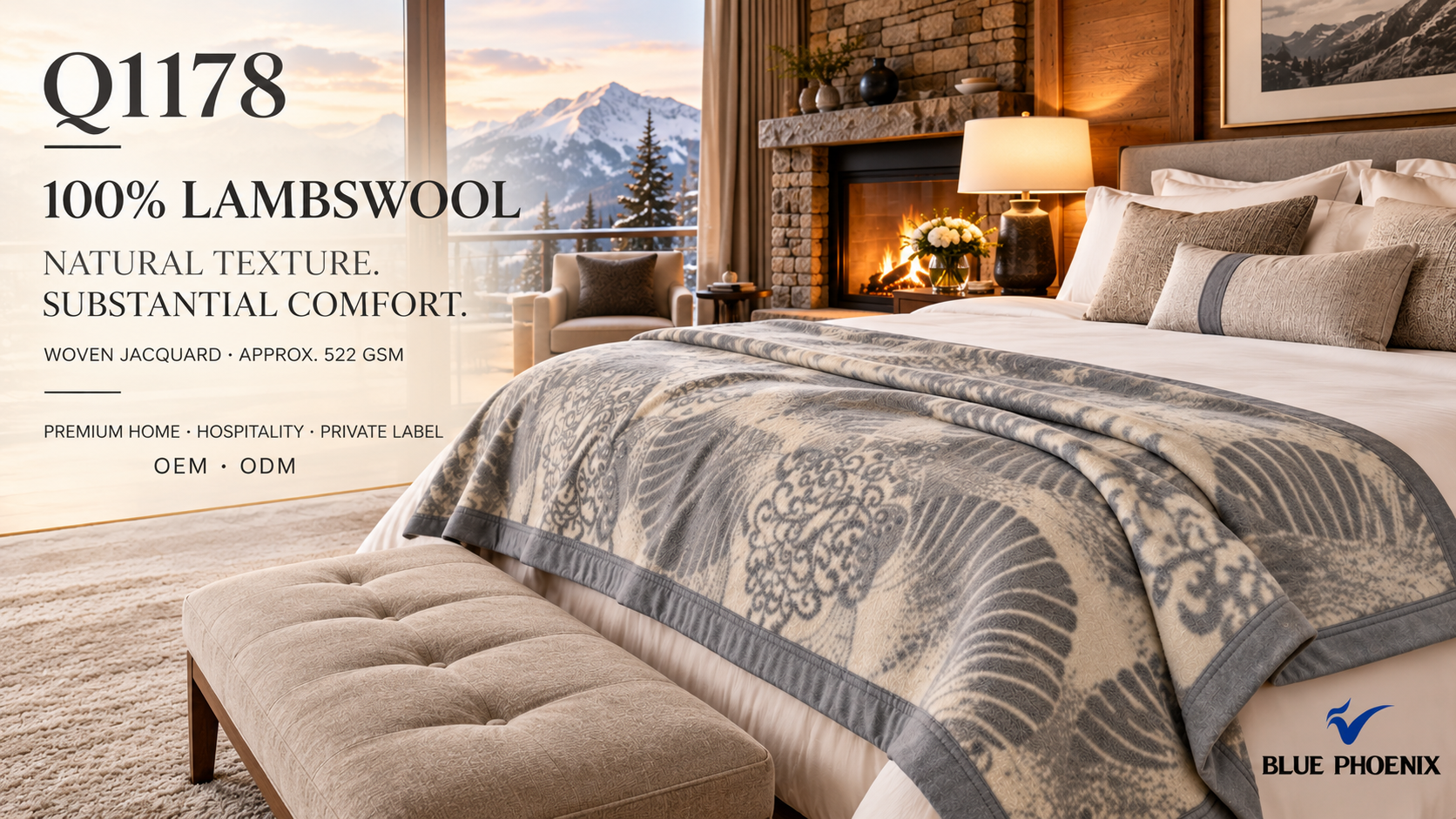
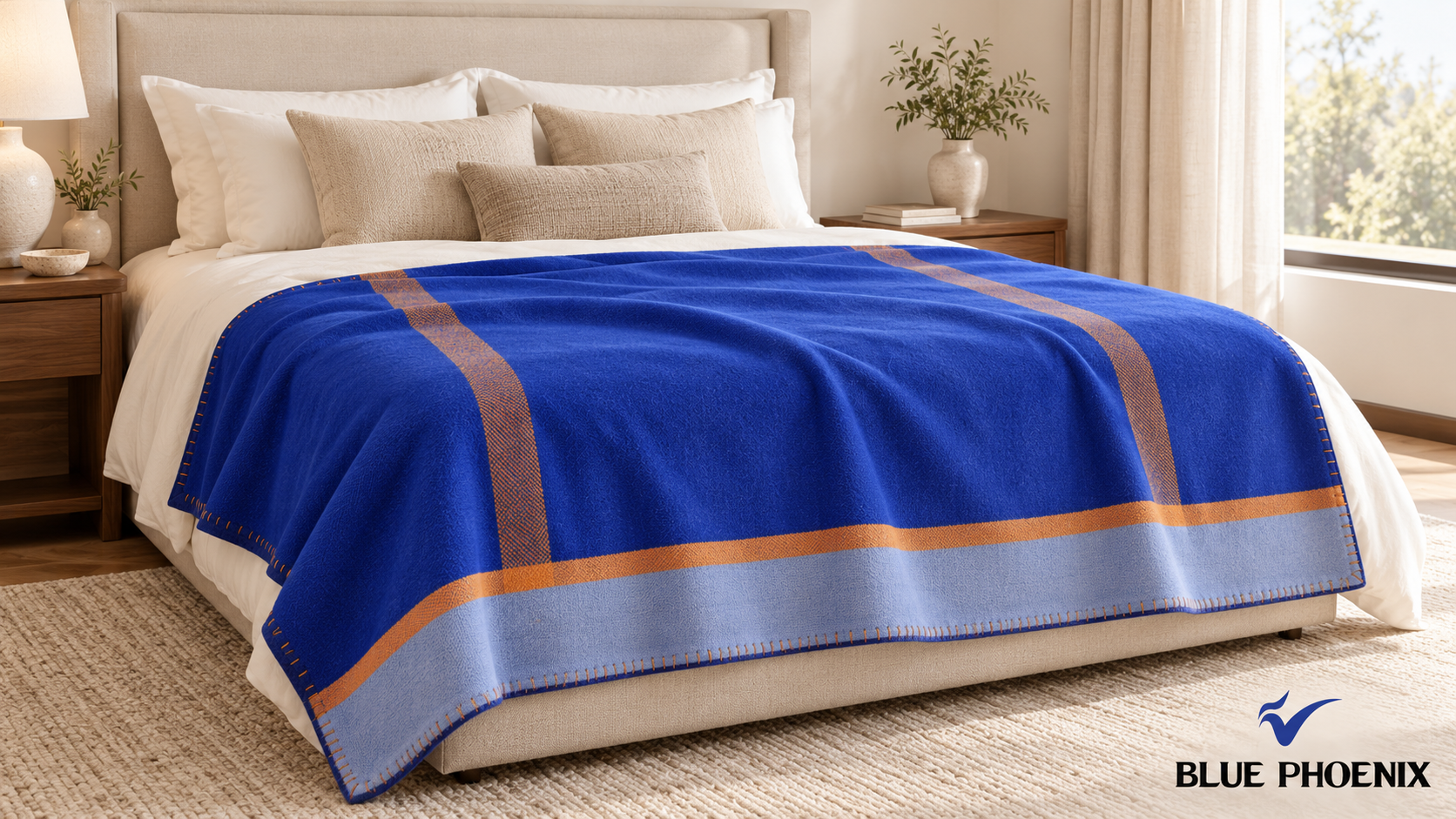
For example, Q1178 provides a reference for a lambswool jacquard bed blanket with binding, while TH15B1206 offers a wool plaid throw with fringe. These represent different product formats rather than interchangeable blanket specifications.
Selecting a reference product helps establish the design direction. Sample evaluation and a confirmed specification then provide the basis for a customized order.
Who makes the best wool blankets? The most useful answer depends on the individual blanket and your purchasing requirements.
Compare established brands through their specific products. For wholesale and private-label projects, also evaluate the supplier’s ability to develop samples, confirm specifications and deliver the agreed product.
A well-chosen wool blanket combines an appropriate material, suitable dimensions and weight, consistent construction, careful finishing and practical care requirements.
Contact BLUE PHOENIX to discuss samples and specifications for your next wool blanket collection.
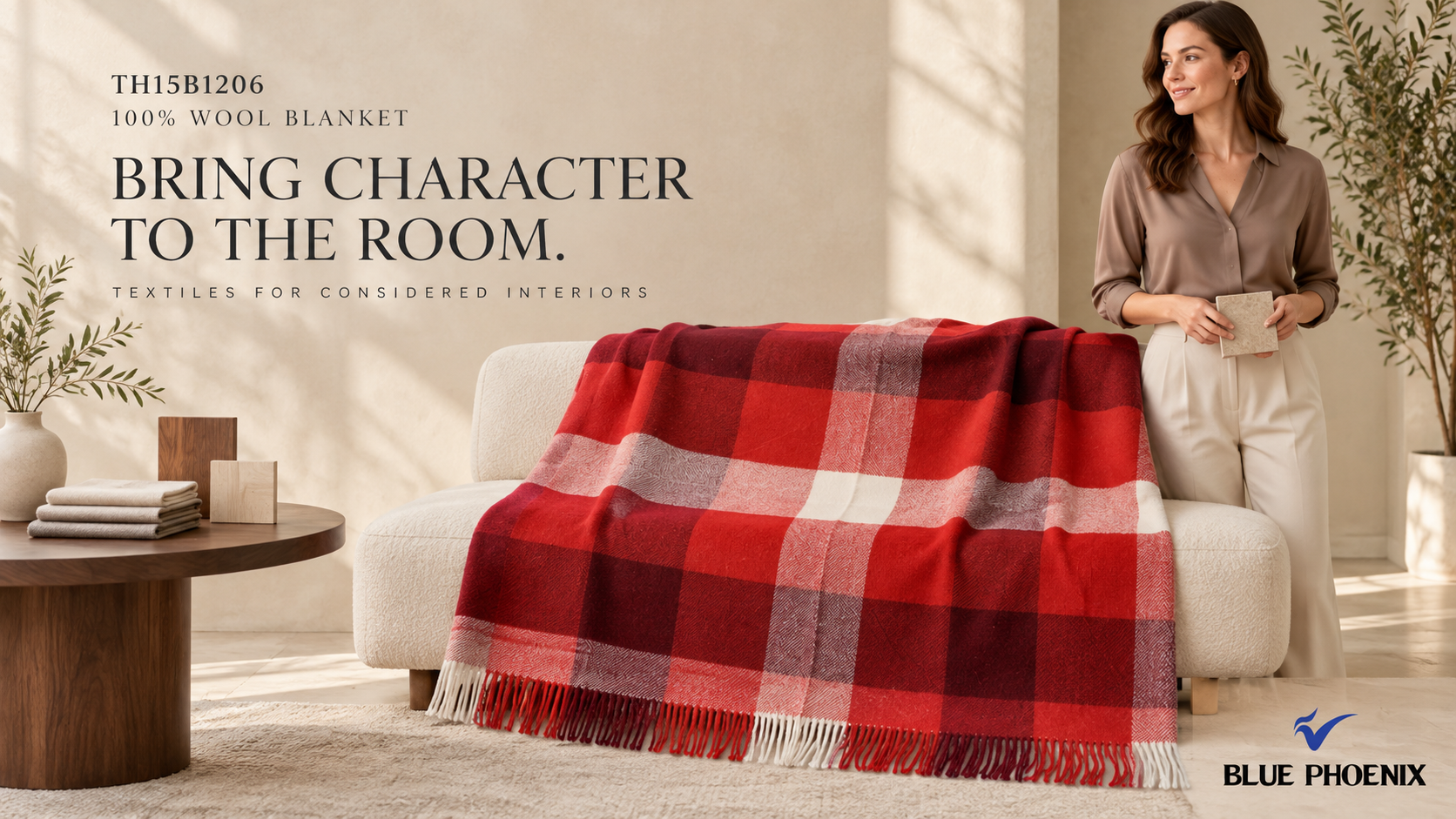
TH15B1206 Red Plaid Wool Throw
A red plaid wool throw with coordinating fringe, displayed over an ivory sofa.
There is no single best company for every requirement. Compare the specific blanket's composition, construction, size, weight, finishing and care instructions. Wholesale buyers should also review sampling, customization and bulk-order requirements.
Not necessarily. The appropriate choice depends on the intended application and the finished construction. Request a clear composition statement and compare physical samples rather than choosing on wool percentage alone.
GSM measures weight per square meter. It helps buyers compare fabric weight relative to area, but does not independently establish softness, workmanship, durability or thermal performance.
Confirm composition, dimensions, finished weight, construction, colors, edge finishing, quantity, labels and packaging. Review a representative sample and agree on any required testing, inspection and acceptable tolerances before production.
Buyers can discuss custom dimensions, colors, patterns, labels and packaging. Availability, minimum quantities, development costs and production timing depend on the confirmed specification and sample approval.
Assess coverage, appearance, handling, care requirements and the hotel's intended laundry process. Evaluate the finished sample against the project's purchasing and testing requirements before approving it.
It means a blanket whose material, construction, dimensions, feel and care requirements suit the intended user and application.
A brand can help identify a collection, but the individual product's specification and sample should guide the final choice.
Throws are commonly selected for seated coverage or decoration. Bed blankets should be assessed against mattress dimensions and the desired overhang.
It states the fiber composition. It does not, by itself, describe the blanket's fiber fineness, weight, construction or finishing.
It should identify the constituent fibers and their percentages, consistent with the approved product specification and applicable labeling requirements.
No. Compare physical samples because fiber characteristics, construction and finishing can produce different surface feels.
No. Photography shows appearance, but a physical sample is needed to assess hand feel and handling.
GSM means grams per square meter, a measure of fabric mass relative to its area.
Divide the finished weight in grams by the blanket area in square meters. Confirm whether stated dimensions include fringe.
No. Consider the required coverage, handling, storage, care process and intended product positioning alongside weight.
Check pattern scale, alignment, color arrangement, surface consistency and the appearance of both sides.
They serve different design preferences. Assess the workmanship and suitability of the chosen finish rather than ranking one above the other.
Examine binding width, stitch consistency, corner construction and the overall appearance against the approved sample.
Do not assume so. Follow the finished product's approved care label and confirm the intended laundering process before purchasing.
The agreed product specification, quantity, price, packaging, delivery terms, payment arrangements and production schedule.
It provides a physical reference for the agreed material, appearance, dimensions, weight and finishing before bulk production.
Custom dimensions can be discussed with BLUE PHOENIX. Feasibility, minimum quantities and pricing require confirmation.
Buyers can discuss label artwork, positioning, folding and packaging requirements during product development.
No. Where testing is required, agree on the relevant methods, acceptance criteria and documentation for the selected product.
Send your intended application, quantity, dimensions, target weight, material preferences, packaging brief and destination to BLUE PHOENIX.
WoolBlankets, BestWoolBlankets, WoolBlanketBrands, WoolBlanketManufacturer, WholesaleWoolBlankets, LambswoolBlanket, WovenWoolBlanket, PrivateLabelBlankets, BlanketQuality, BluePhoenix
Before comparing suppliers, learn which material information to check: How Can You Tell If a Blanket Is Wool?
Explore additional material, selection and sourcing articles in the BLUE PHOENIX Blanket Blog .
Wool Blankets — Compare wool blankets and throws for different applications.
Blended Blankets — Review alternative fiber combinations for your collection.
Cashmere Blankets — Explore another natural-fiber direction for premium ranges.
Woven & Knitted Blankets — Compare constructions, textures and finishing options.
A reference for buyers comparing a grey-and-ivory jacquard bed blanket with four-sided binding. View Q1178 .
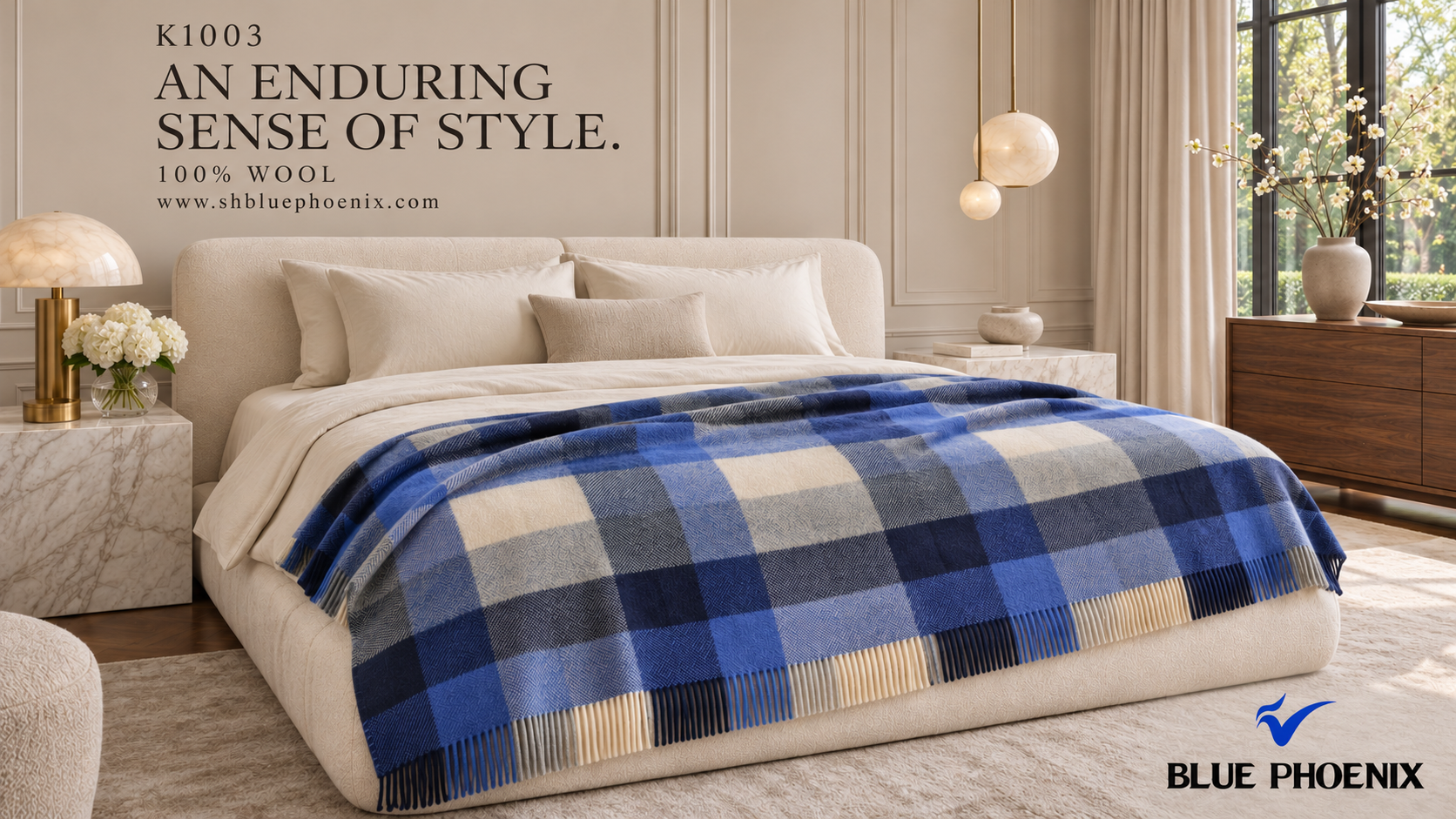
Compare a blue-toned tartan design and fringed presentation for coordinated home-textile collections. View K1003 .
Explore a red plaid wool throw with fringe for decorative home, seasonal retail and private-label collection development. View TH15B1206 .
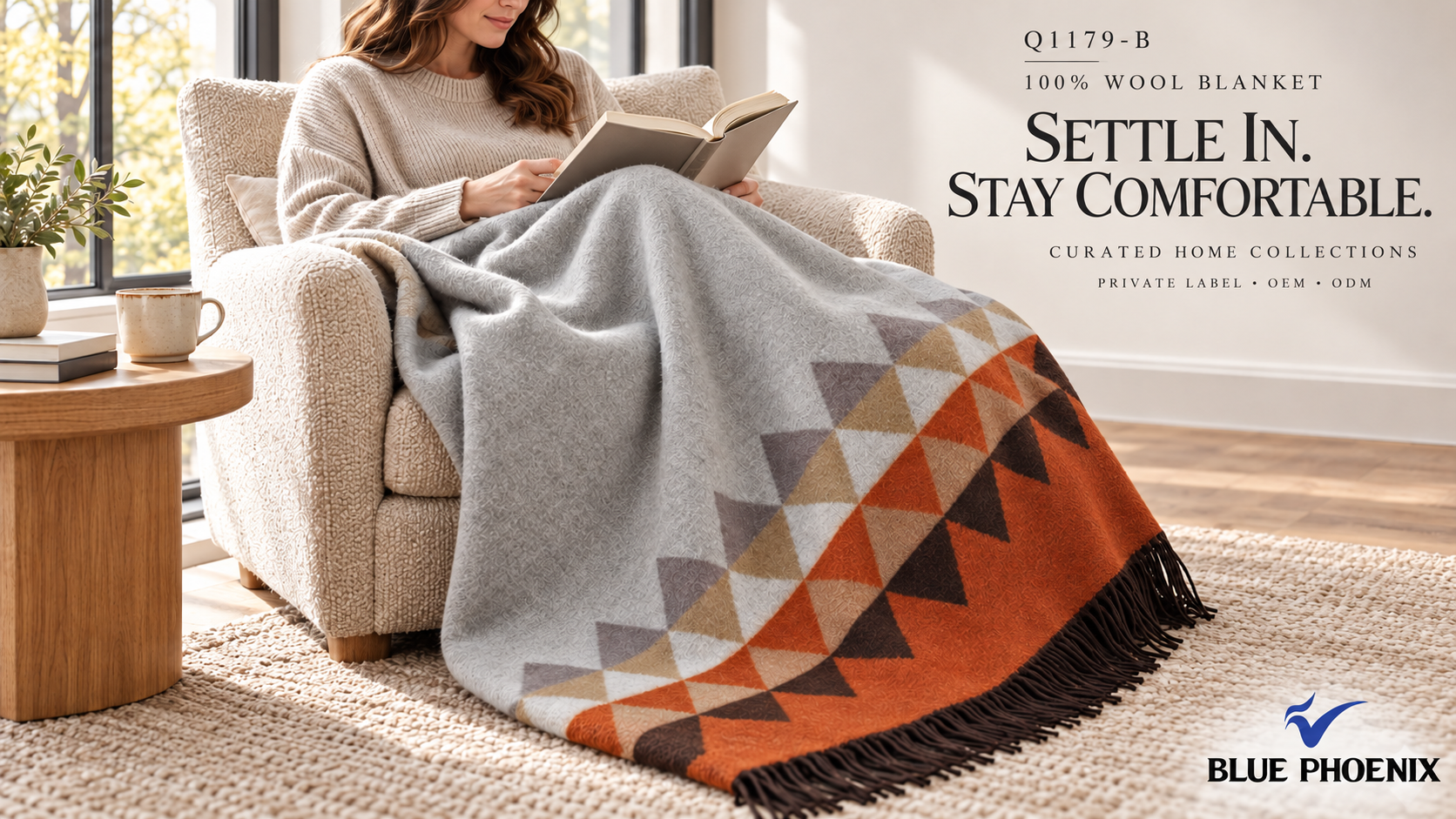
Consider a geometric wool throw when reviewing patterned alternatives to traditional checks and plain designs. View Q1179-B .
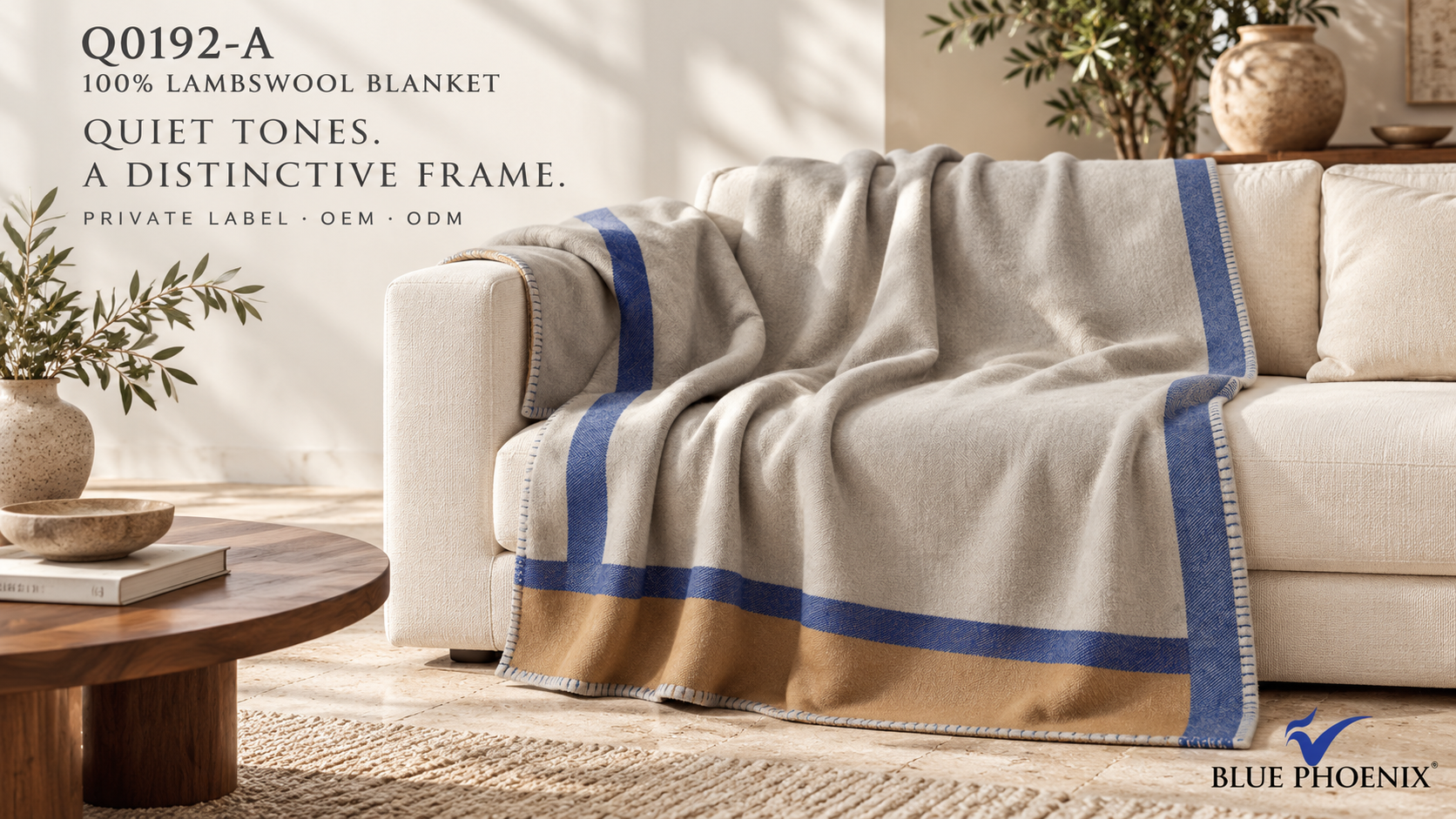
Review another lambswool bed-blanket option when comparing dimensions, appearance and finishing for your purchasing brief. View Q0192-A .
Explore a further lambswool reference for wholesale and private-label sample comparison. View Q0192-B .
Looking for a wool blanket manufacturer for retail, hospitality, wholesale distribution or a private-label project? Contact BLUE PHOENIX to discuss samples and product development.
Please include your quantity, dimensions, target weight, material preferences, design requirements, packaging and delivery destination.
Website:
www.shbluephoenix.com
Email:
jamesli@shrainbow.cn
WhatsApp:
+86 180 1783 0390
WeChat: bluephoenix66

Blue Phoenix Blankets dedicated to strict quality control of blankets and scarves products and thoughtful customer service, our custom blankets wholesale products are exported to clients in such countries and regions as United states, Europe, Australia, Russia, Germany, Japan.
Copyright © 2026 Shanghai Rainbow Enterprise Development Co., Ltd. - All Rights Reserved.