High-Quality Wholesale Blankets Manufacturer & Supplier in China with custom design service - Blue Phoenix Blankets
Language
Acrylic blankets can be knitted, woven, brushed or combined with a separate backing. The fibre name alone does not establish a washing temperature, machine cycle or drying method. Always check the instructions for the complete blanket.
Check whether domestic washing is allowed and whether the label specifies hand washing, a particular machine process or professional cleaning. Read the drying and ironing instructions separately; permission to wash does not automatically mean permission to tumble dry.
If the label is missing or unclear, ask the supplier for the correct instructions before wet cleaning. Keep a photograph of the label for future reference.
For a backed blanket, the instructions must cover the face, reverse, joining method and edge finish. A knitted acrylic face and a polyester fleece reverse should not be treated as an unbacked acrylic throw.
Examine the surface for loose fringe, pulled loops, open seams and local stains. Address damage before washing rather than allowing loose sections to catch during handling.
Keep the blanket away from exposed hooks, zips and rough items. Check that the machine can accommodate it without tightly packing the drum. For a large blanket, use the appliance maker’s loading guidance as well as the textile care instructions.
Check where the blanket will dry before starting the wash. A heavy wet textile needs enough support and space.
If machine washing is permitted, use the specified cycle and stay within the labelled temperature limit. Choose a suitable laundry detergent and dose it according to its instructions, the load size, soil level and local water conditions.
More detergent is not a reliable way to make a blanket softer. If a washed blanket feels coated or stiff, review dosing and rinsing before adding extra products.
Where hand washing is specified, support the blanket, handle it gently and avoid forceful rubbing or wringing. Follow the labelled method rather than substituting an aggressive soak or scrub.
Use bleach, softener or other laundry additives only where compatible with both the blanket instructions and the treatment product. These are not compulsory steps for every acrylic blanket.
Lift away loose material and blot a fresh spill with a clean cloth. Choose any further treatment according to the stain, dye, surface structure and care instructions.
Try a permitted stain treatment on a concealed area first. Avoid vigorous scrubbing, especially on raised knits, brushed surfaces and fringe. For an uncertain stain on a valuable blanket, consult a professional cleaner.
Use the drying method shown on the blanket’s label. If flat drying is specified, spread the blanket on a clean, suitable support and arrange it without pulling. Do not suspend a wet knit by its corners.
If tumble drying is permitted, follow the specified setting and avoid extending the cycle unnecessarily. Even a low-heat setting is unsuitable where the label prohibits tumble drying.
Check thicker folds, edging and any backing before reuse or storage. Drying balls, brushing, ironing and steaming should not be added automatically to the routine.
Pilling occurs when surface fibres become entangled into small balls, often in areas exposed to rubbing. It can occur during normal use and is not always evidence of one washing mistake.
Reduce avoidable abrasion during washing and everyday use. Remove loose lint with a method suitable for the surface. Ask the manufacturer before using a fabric shaver or comb on a raised knit or delicate weave.
Do not pull off pills or cut a projecting loop without understanding the construction. Cutting a structural yarn can create a hole. Where needed, have a suitable textile repairer assess the damage.
Static cling can be more noticeable with synthetic textiles, especially when overdried. If tumble drying is allowed, avoid unnecessary drying time. Any anti-static treatment should be compatible with the finished blanket.
When a blanket feels rough, consider detergent residue, surface wear, pilling and the recent care process. Extra washing or added softener will not necessarily correct the cause. Permanently damaged or stretched fabric cannot be assumed to return to its original condition.
Fold the blanket loosely and keep fringe and loops from catching on fasteners or shelving. Choose a clean, dry storage location protected from dust and prolonged direct sunlight.
Use clean, suitable storage packaging and avoid sealing in moisture. Check stored blankets periodically for dampness, odour or damage before returning them to use.
| Issue | What to review | Next step |
|---|---|---|
| Stiff or coated feel | Detergent dose and rinsing | Review the care process before adding treatments. |
| Pilling or loose lint | Surface wear and abrasion | Use a surface-compatible removal method. |
| Stretched knit | Wet handling and drying support | Avoid pulling; seek product-specific advice. |
| Tangled fringe | Loose knots and items that catch | Separate gently and inspect attachment. |
| Dampness after storage | Drying completeness and storage conditions | Follow the care instructions before reuse. |
Agree the intended maintenance process before approving a blanket for a collection. Review samples before and after the proposed cleaning cycle for dimensions, appearance, fringe, seams and hand feel.
Approve the composition statement, care wording and customer instructions for the exact construction. Claims about washability, pilling or repeated laundering should relate to that finished product and the agreed test conditions.
Good acrylic blanket care combines correct cleaning with gentle handling and complete drying. Start with the finished-product label, reduce avoidable friction, protect textured surfaces and fringe, and investigate changes in feel before adding treatments. For wholesale collections, confirm care requirements through sampling and clear product documentation.
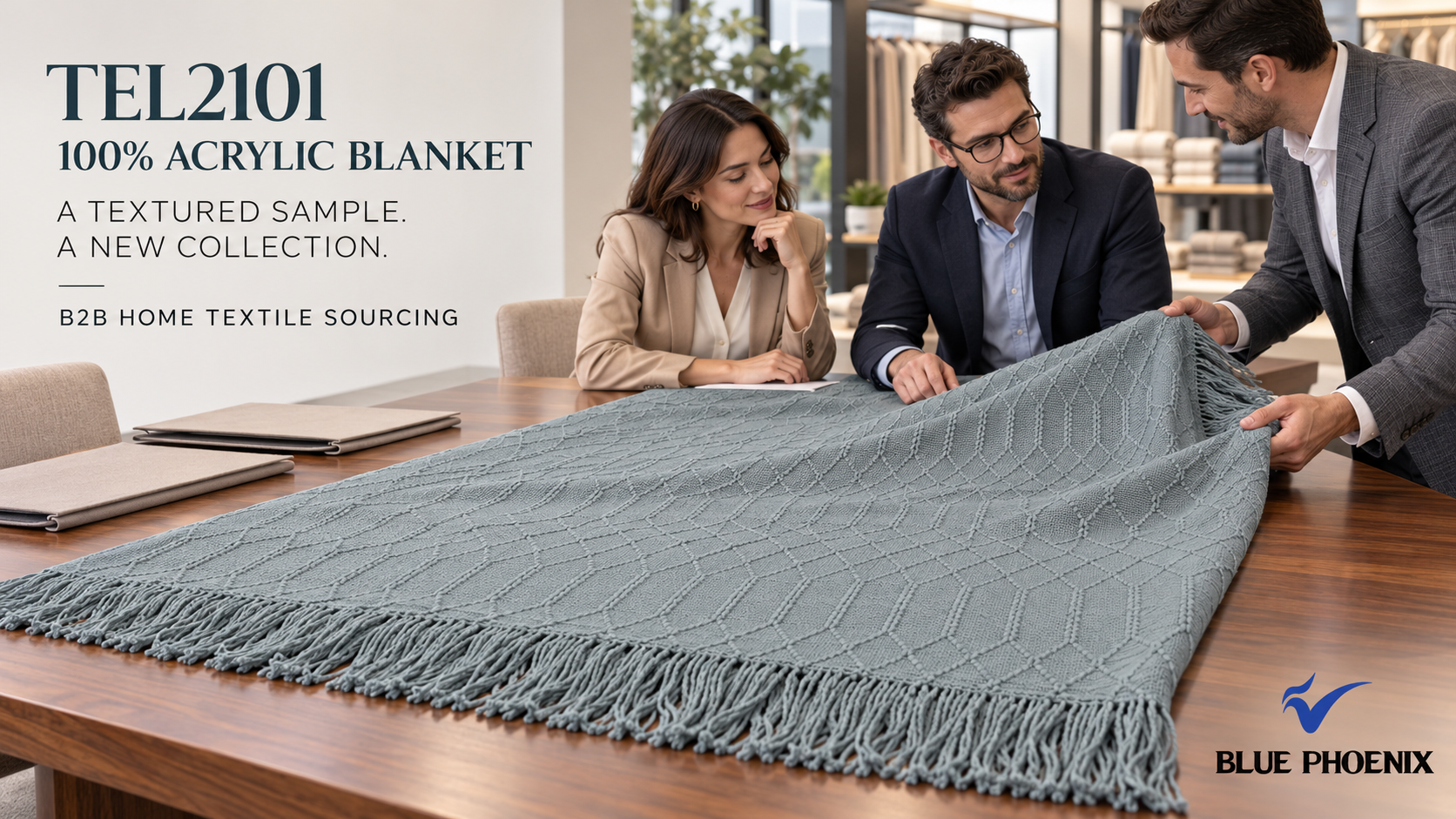
TEL2101 Textured Acrylic Knit Blanket
A 100% acrylic knitted blanket for textured home collections. Review the knit structure and fringe alongside the approved care instructions.
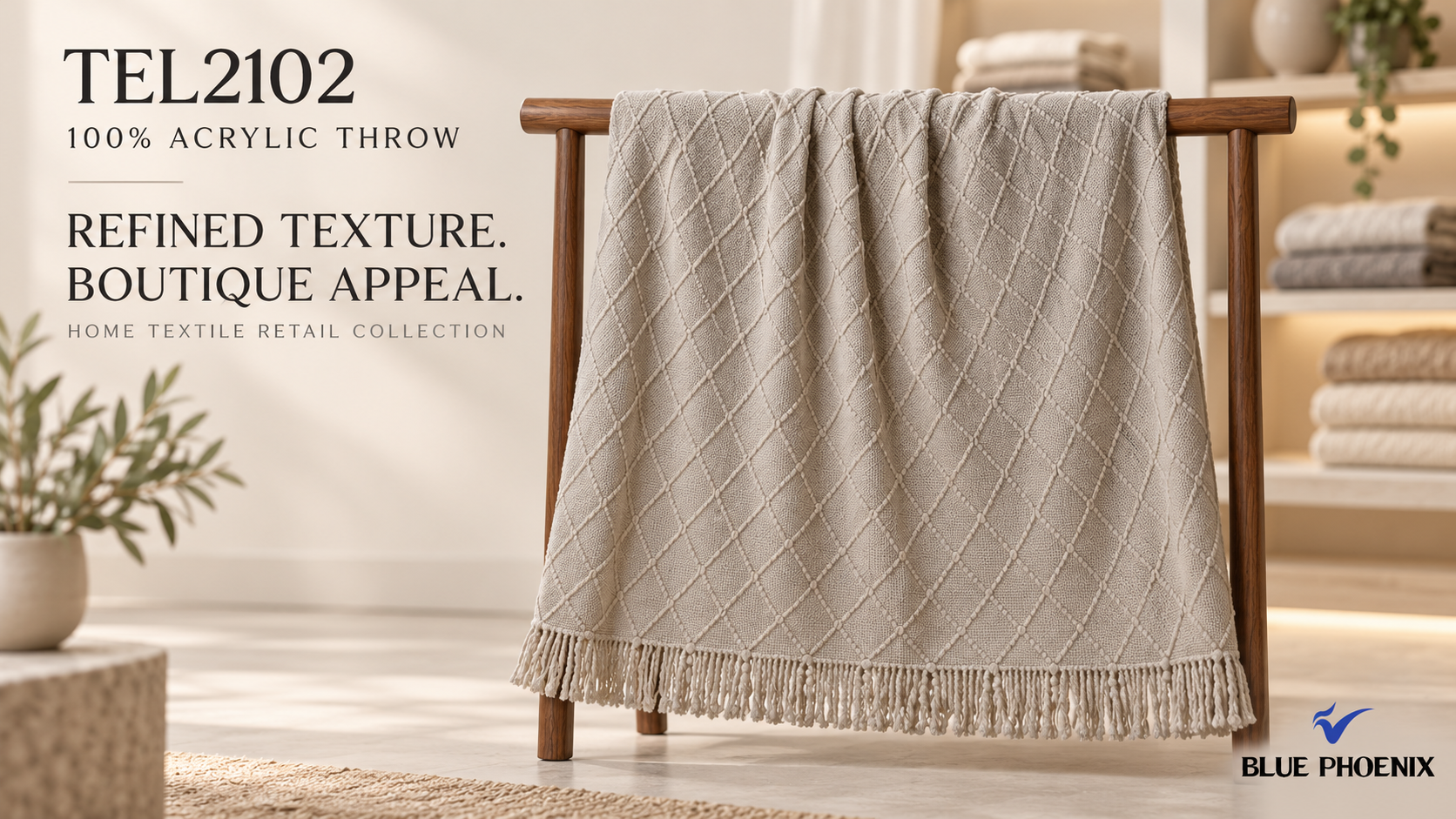
TEL2102 Diamond Knit Acrylic Throw
A 100% acrylic knitted throw with a diamond motif and knotted fringe, offering a reference for handling decorative loops and edge details.
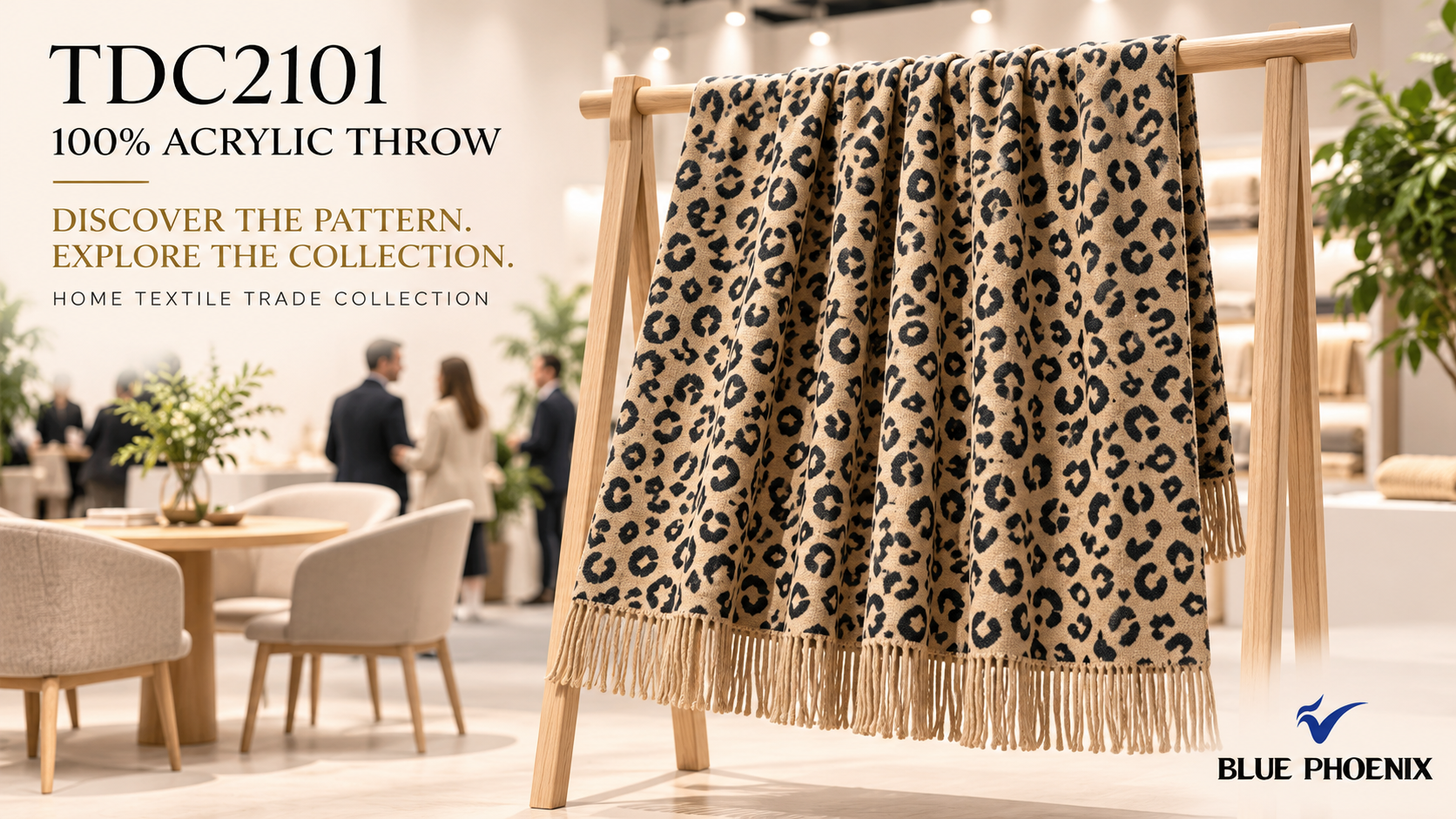
TDC2101 Leopard Acrylic Jacquard Throw
A camel-beige and black acrylic jacquard throw with coordinating fringe, presented for patterned home and private-label collections.
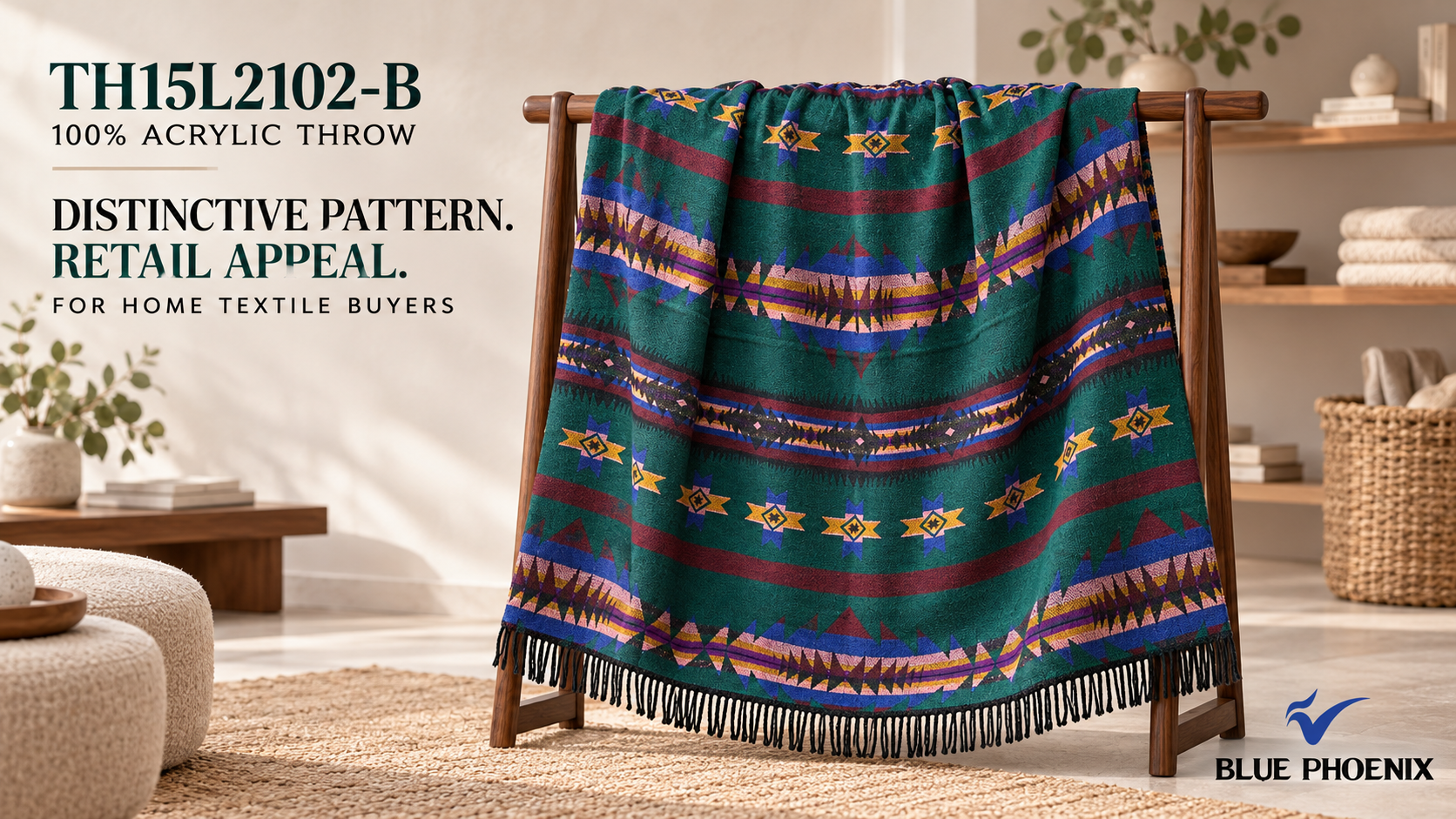
TH15L2102-B Geometric Acrylic Jacquard Throw
A 100% acrylic woven throw with a deep-green ground, multicoloured geometric bands and black fringe for distinctive decorative assortments.
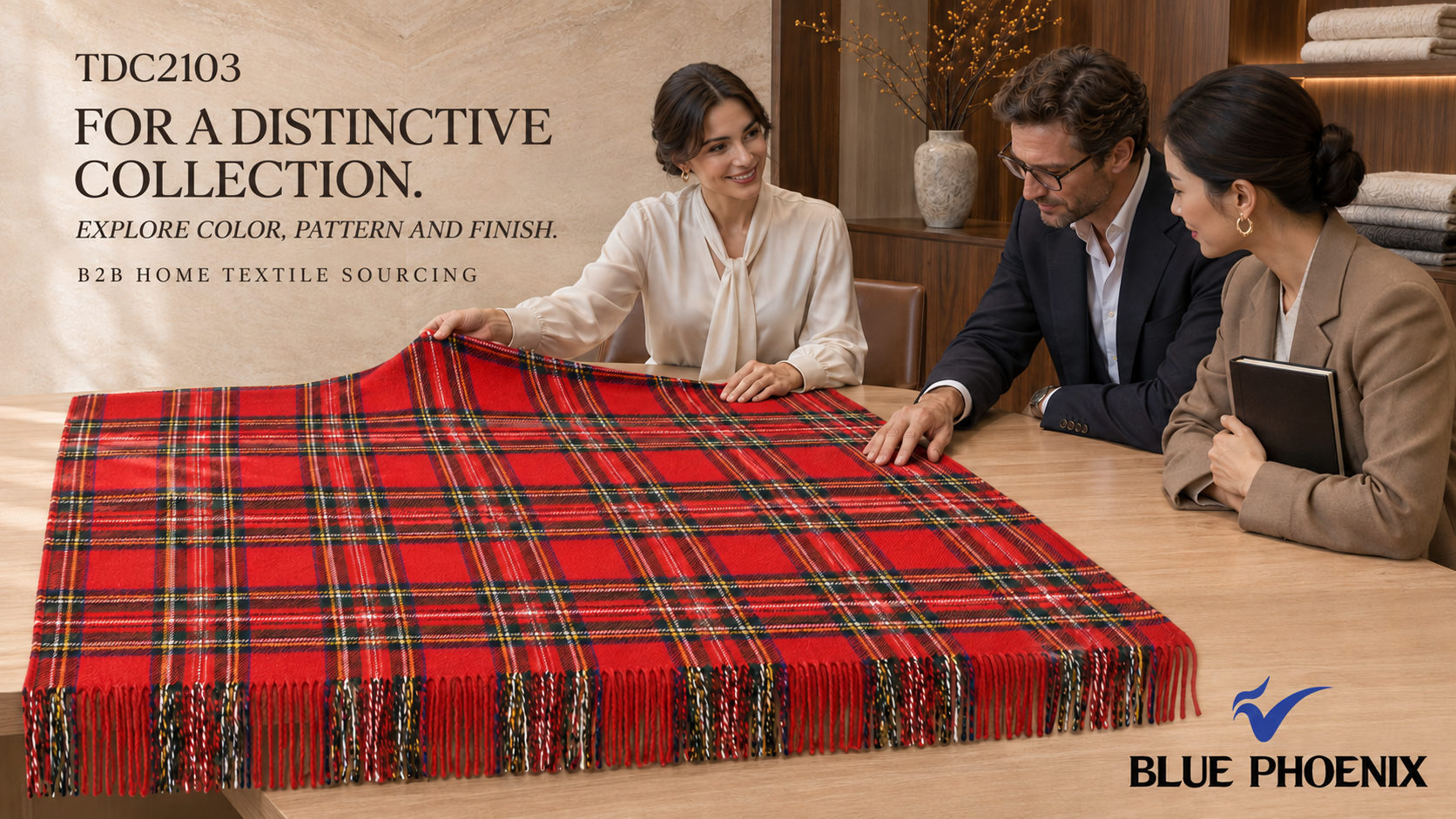
TDC2103 Red Tartan Acrylic Throw
A red tartan acrylic throw with fringed ends, providing a classic patterned option for sofa styling and seasonal retail collections.
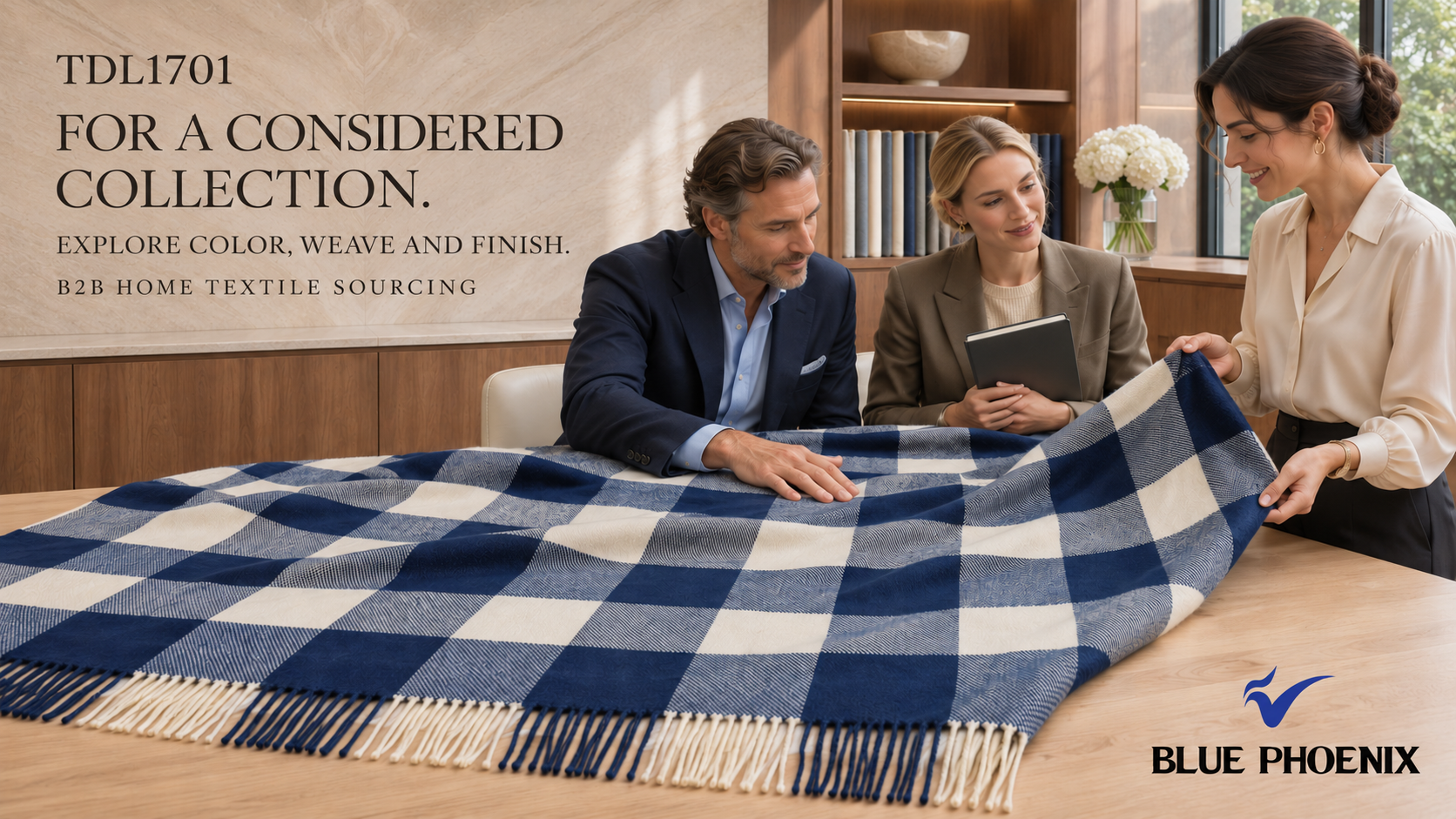
TDL1701 Blue-and-White Plaid Acrylic Throw
A 100% acrylic throw with a blue-and-white checked design and fringed ends, suited to coordinated home-textile displays.
.
Only if its finished-product label permits machine washing. Use the specified process and temperature; a hand-wash or professional-care instruction should not be replaced with a machine cycle.
Only if tumble drying is permitted. Low heat does not override a do-not-tumble-dry instruction.
Use the approved cleaning process, correct detergent dose and adequate rinsing. Limit unnecessary rubbing and investigate residue or wear if the feel changes.
No. Additives are not a universal requirement. Use only products compatible with the finished blanket and follow their directions.
First identify whether the surface can tolerate the intended tool. Avoid pulling pills or cutting raised yarns. Ask the manufacturer about suitable treatment for delicate constructions.
No. Knit structure, woven fabric, fringe, surface finishing and any backing can change the appropriate treatment.
1. Where should acrylic blanket care start?
With the care label for the complete finished blanket.
2. Does acrylic content alone determine washing temperature?
No. Use the labelled limit and process for the actual product.
3. Does washable mean tumble-dryable?
No. Washing and drying instructions must be checked separately.
4. What if the care label is missing?
Ask the supplier for the correct instructions before wet cleaning.
5. Can a large blanket go into any washing machine?
No. Check the permitted textile process and the appliance loading guidance.
6. Why should I separate blankets from exposed zips and hooks?
They can catch on the textile and damage loops or fringe.
7. Does more detergent produce a softer blanket?
Not necessarily. Review the recommended dose and rinsing.
8. Should a wet knit be hung by its corners?
Avoid concentrating the wet weight at a few points; follow the labelled drying method.
9. What if the blanket says dry flat?
Support it on a clean, suitable surface without pulling it into shape aggressively.
10. Is extra drying time helpful?
Avoid unnecessary drying time, particularly when static or texture changes are a concern.
11. Can all acrylic throws be ironed?
No. Check the ironing instruction separately.
12. Is steam a reliable way to restore a blanket?
Do not assume so. Use it only if the manufacturer’s instructions allow it.
13. Are lint and pilling identical?
No. Loose fibres and attached fibre balls require different assessment.
14. Does pilling always indicate incorrect washing?
No. Rubbing during normal use can also contribute.
15. Can I cut a pulled loop?
Do not cut it casually; it may be part of a structural yarn.
16. Will softener repair a stretched blanket?
It should not be assumed to reverse structural damage.
17. How should fringe be handled?
Avoid pulling, separate tangles gently and inspect loose attachment points.
18. When is a blanket ready for storage?
When it is clean and completely dry, including folds and thicker edges.
19. Do backed blankets need separate care review?
Yes. The approved instructions must account for both faces and the joining construction.
20. What should B2B buyers approve?
The sample, material statement, construction, intended care process, care label and any supported performance claims.
AcrylicBlanketCare, AcrylicBlankets, BlanketWashing, BlanketDrying, CareLabels, KnittedThrows, JacquardThrows, FringedBlankets, HomeTextiles, PrivateLabelBlankets
Wholesale Leopard Throw Blankets: A Private Label Buying Guide
Review material, construction, fringe and sample approval for acrylic jacquard sourcing.
Leopard Throw Blanket Styling: Animal Print Ideas for Neutral Interiors
Explore display ideas that keep the original pattern and fringe visible.
Acrylic Blankets
Explore acrylic blanket designs and confirm care for the selected construction.
Woven & Knitted Blankets
Compare textile structures and finishing details across blanket collections.
Blended Blankets
Review blended constructions with their own finished-product instructions.
Cotton Blankets
Explore an additional material category without transferring acrylic care instructions to it.
A 100% acrylic knitted blanket for textured home collections. Review the knit structure and fringe alongside the approved care instructions.
A 100% acrylic knitted throw with a diamond motif and knotted fringe, offering a reference for handling decorative loops and edge details.
A camel-beige and black acrylic jacquard throw with coordinating fringe, presented for patterned home and private-label collections.
A 100% acrylic woven throw with a deep-green ground, multicoloured geometric bands and black fringe for distinctive decorative assortments.
A red tartan acrylic throw with fringed ends, providing a classic patterned option for sofa styling and seasonal retail collections.
A 100% acrylic throw with a blue-and-white checked design and fringed ends, suited to coordinated home-textile displays.
GINETEX: Care Symbols
Understand washing, drying, ironing and professional-care instructions.
American Cleaning Institute: Laundry Basics
Review general laundry preparation, sorting and product-use guidance.
American Cleaning Institute: Laundering Problems and Solutions
Background on residue, pilling, abrasion, static and other laundry problems.
BLUE PHOENIX supports wholesale, OEM, ODM and private-label blanket development. Share your target construction, dimensions, colours, fringe or edge finish, quantity, packaging and intended care process so we can review suitable samples and product documentation.
Website:www.shbluephoenix.com
Email:jamesli@shrainbow.cn
WhatsApp:+86 180 1783 0390
WeChat: bluephoenix66

Blue Phoenix Blankets dedicated to strict quality control of blankets and scarves products and thoughtful customer service, our custom blankets wholesale products are exported to clients in such countries and regions as United states, Europe, Australia, Russia, Germany, Japan.
Copyright © 2026 Shanghai Rainbow Enterprise Development Co., Ltd. - All Rights Reserved.