High-Quality Wholesale Blankets Manufacturer & Supplier in China with custom design service - Blue Phoenix Blankets
Language
High-Quality Wholesale Blankets Manufacturer & Supplier in China with custom design service - Blue Phoenix Blankets
For one adult, two blankets are a practical starting point: one for regular use and one clean spare. A third blanket may be useful for seasonal layering or a separate sofa. This is a household planning suggestion, not a universal requirement. Your room temperature, existing duvet, laundry routine and available storage matter more than reaching a particular number.
The most useful collection gives each blanket a clear job. Instead of buying several similar blankets, consider how your bedding changes between warm nights, cool evenings and laundry days.
| Role | Suggested Quantity | Purpose |
|---|---|---|
| Everyday bed blanket | 1 | The blanket you normally use for sleeping or as an adjustable bed layer. |
| Clean replacement | 1 | Available while the everyday blanket is being cleaned or dried. |
| Seasonal blanket | Optional: 1 | A different weight or construction for changing room temperatures. |
| Sofa or reading throw | Optional: 1 | A separate blanket for living-room use. |
A compact setup might contain two blankets; a collection with separate bed, seasonal and sofa functions might contain three or four. Guest blankets should be counted separately according to the sleeping spaces you actually provide.
Having three blankets does not mean you need to sleep under all three. Keep unused blankets clean and stored, and add or remove layers according to comfort.
If your duvet already provides enough warmth, your blanket may serve as an occasional extra layer. In a warm room, a single lighter blanket may be enough. In a cooler room, combining suitable layers can make your bedding easier to adjust.
There is no blanket count that guarantees comfortable sleep. Fabric construction, coverage, room conditions and the rest of your bedding all influence the result.
A useful collection does not need every fiber type. Compare the finished blanket, its care label and its intended use.
Cotton blankets: consider these for a cotton bedding layer or an everyday throw. Compare weave, weight, dimensions and care instructions.
Wool blankets: consider woven wool options for seasonal bedding or layering. Check the finished texture and required cleaning method.
Acrylic throws: consider these for decorative knit textures, color choices and living-room collections. Verify the individual product's care requirements.
Blended blankets: compare the stated fiber percentages, finish and construction rather than judging by the word “blend” alone.
Cashmere blankets: consider these when a premium hand-feel is part of the brief and the owner can follow the specified care routine.
Two blankets with different practical roles may be more useful than several duplicates. For example, a bed-size blanket and a smaller sofa throw solve different coverage needs.
A spare is especially useful when a blanket takes time to clean and dry. Before purchasing, consider whether you can wash it at home, whether your machine can accommodate it and whether professional cleaning is required.
Follow the product's care label. Do not assume that every cotton, wool or acrylic blanket uses the same washing program. Allow the blanket to dry fully before returning it to use or storage.
If you have a short laundry turnaround, one spare may cover your needs. If cleaning takes several days, a separate replacement can make the rotation easier.
Guest bedding should reflect your actual arrangements. A guest bed, sofa bed and occasional floor mattress may require different blanket dimensions.
As a planning exercise, prepare suitable bedding for each guest sleeping space, then decide whether your cleaning schedule justifies a shared spare. Two people sharing a bed may prefer one larger blanket or separate blankets; ask about comfort rather than assuming one arrangement suits everyone.
Only keep as many blankets as you can store clean and dry. Fold blankets after they are fully dry and place them in a suitable storage area away from damp conditions. Check stored textiles periodically and follow material-specific storage advice.
A simple rotation can help you keep track of what is in use, what needs cleaning and what is ready for guests. Repair small defects when practical, and replace blankets according to their condition rather than an arbitrary annual schedule.
For home textile retailers, build collections around different customer needs: an everyday blanket, a decorative throw and an optional seasonal layer. Clear descriptions help shoppers choose a useful combination.
For hotels and accommodation projects, calculate quantities from occupied beds, blankets issued per bed, laundry turnaround and reserve requirements. A household recommendation of two blankets should not be treated as a commercial inventory standard.
Before ordering wholesale blankets, confirm dimensions, fiber composition, weight, edge finish, care requirements, packaging and sample approval criteria. Test suitability for the intended laundry process before committing to a large program.
One everyday blanket and one clean spare make a practical starting collection for one adult. Add a seasonal blanket, sofa throw or guest set only when it fills a real need.
The right choice is a collection that fits your bedding, cleaning routine and storage space. For retail and private-label projects, use the same principle: give each blanket a clear purpose and specify the finished product carefully.
.
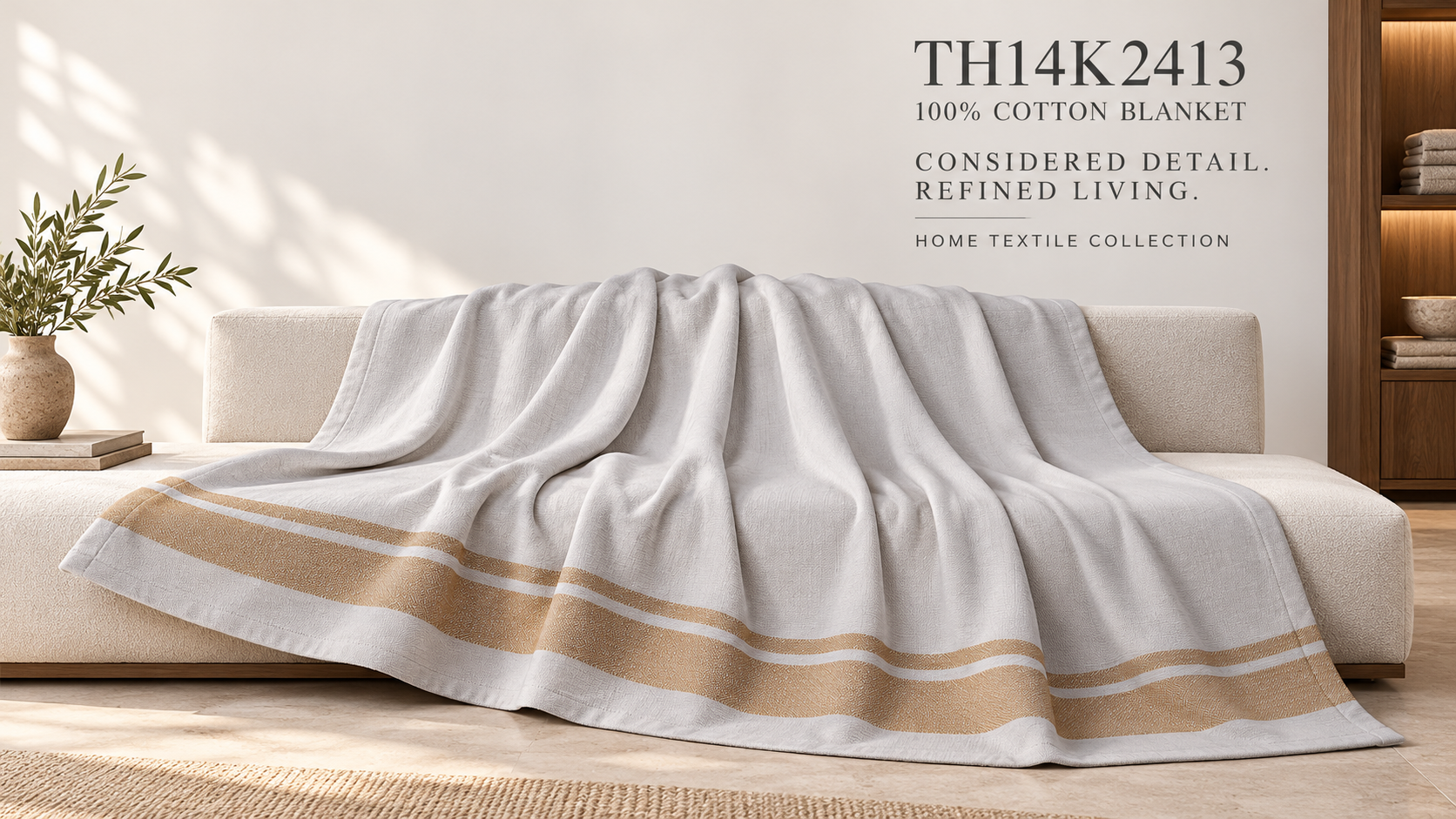
TH14K2413 Cotton Blanket
A cotton blanket with understated stripe detailing for sofa styling, bedding collections and private-label projects.
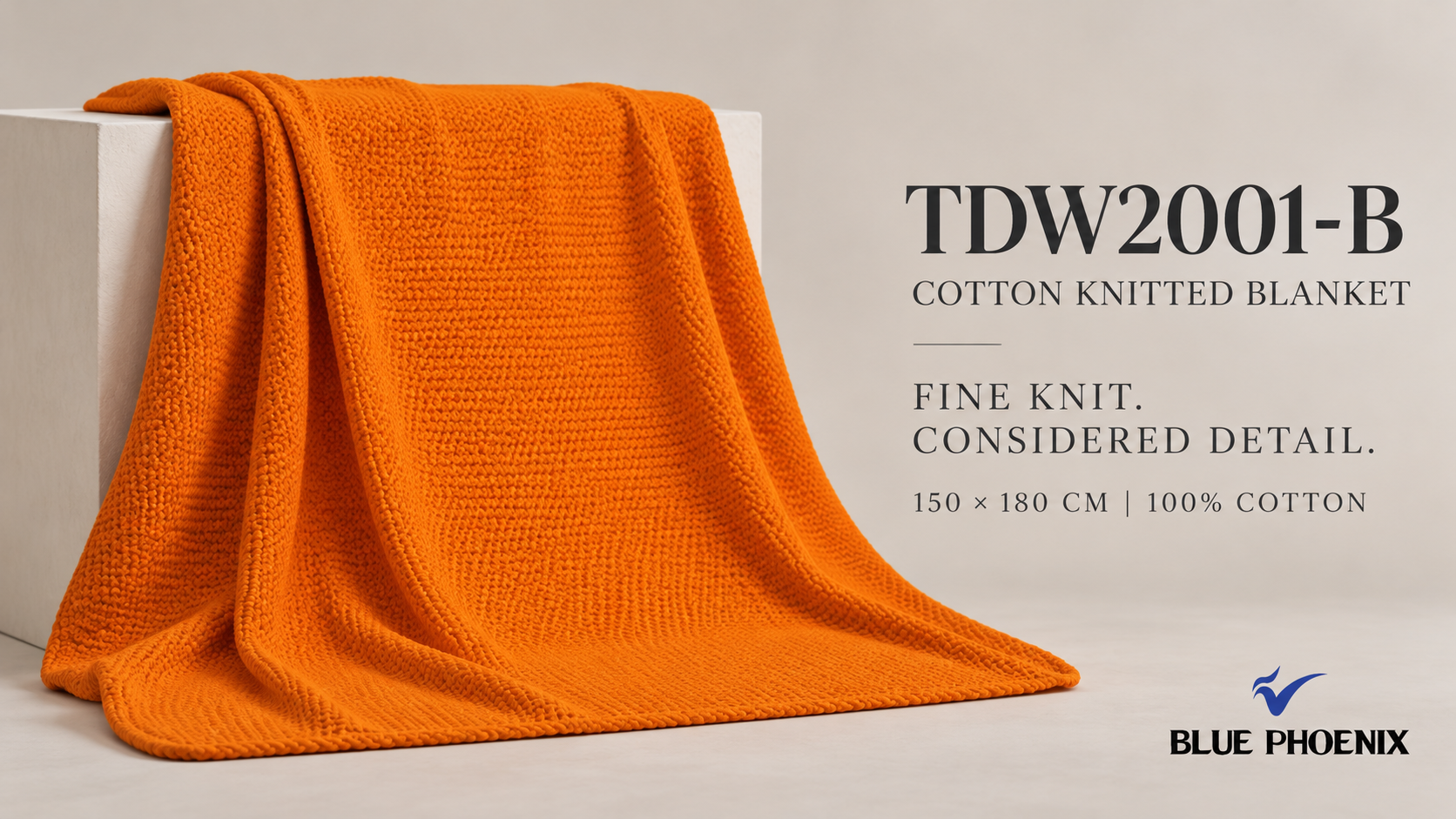
TDW2001-B Cotton Knitted Blanket
An orange cotton knitted blanket with fine textured stitches, ideal for adding color to home textile collections.
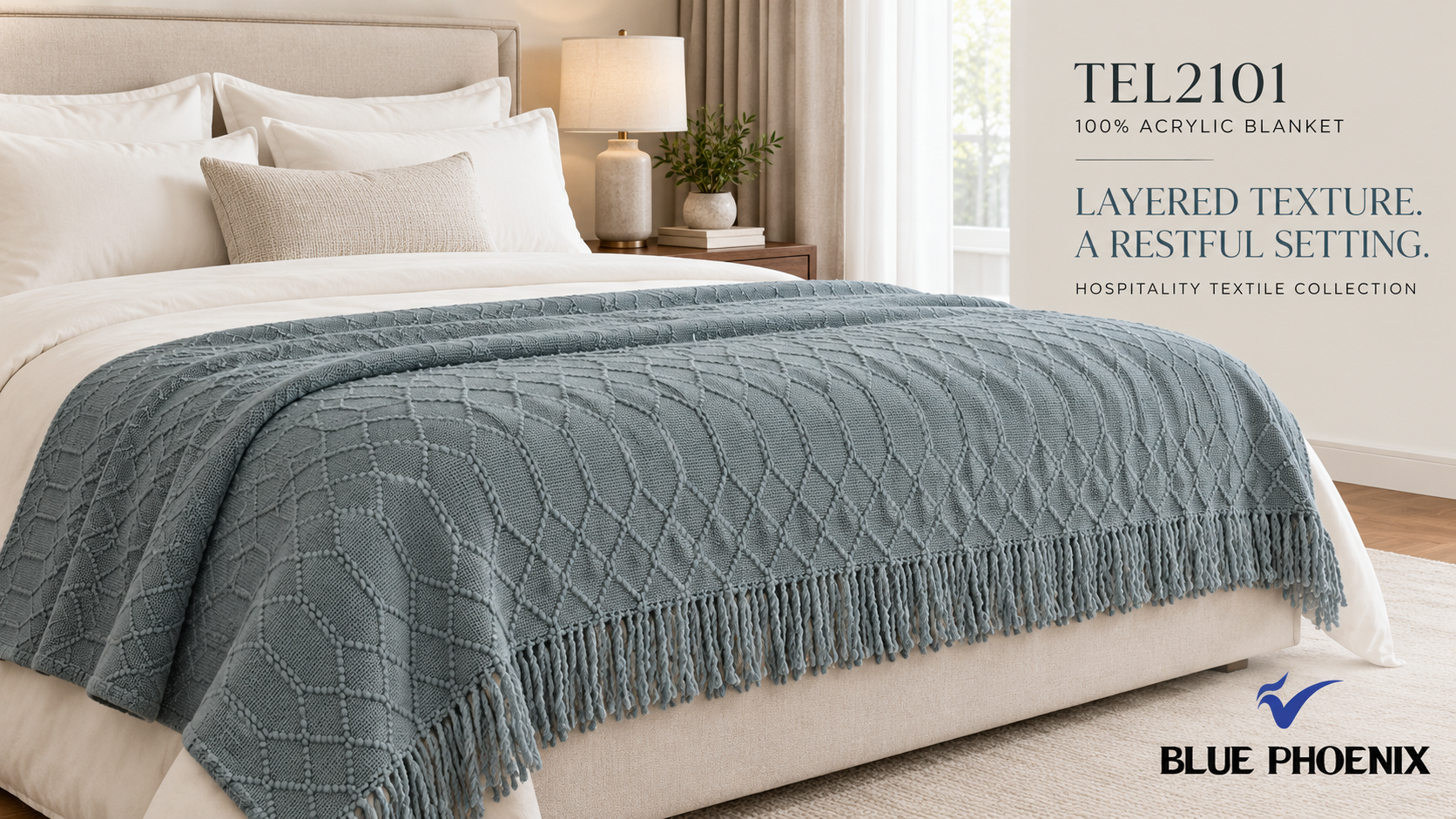
TEL2101 Acrylic Blanket
A textured acrylic blanket with lattice detailing and fringe for coordinated bedroom and hospitality collections.
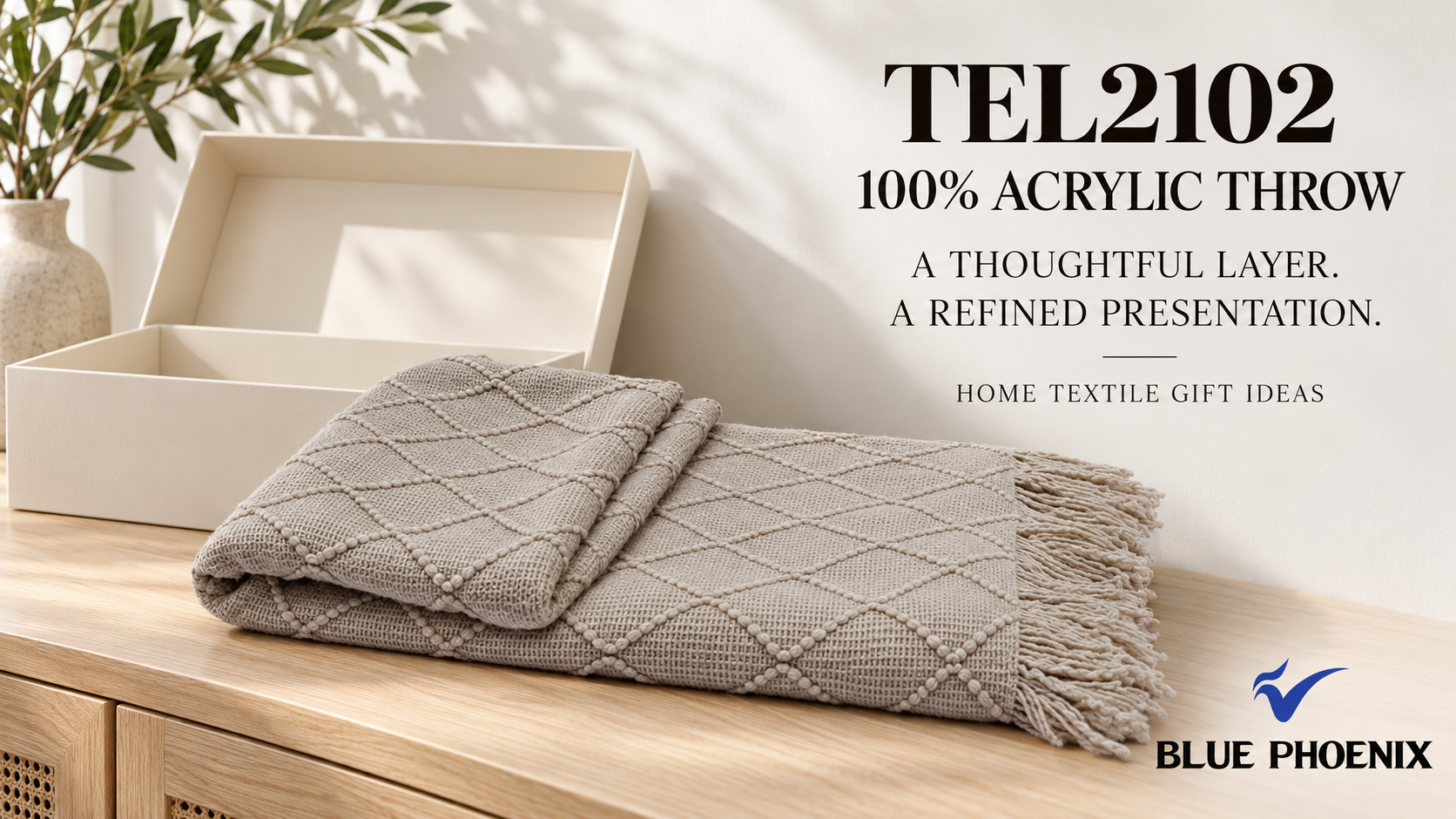
TEL2102 Acrylic Throw
A decorative acrylic throw with lattice texture and fringed ends for home accessories, gift sets and retail collections.
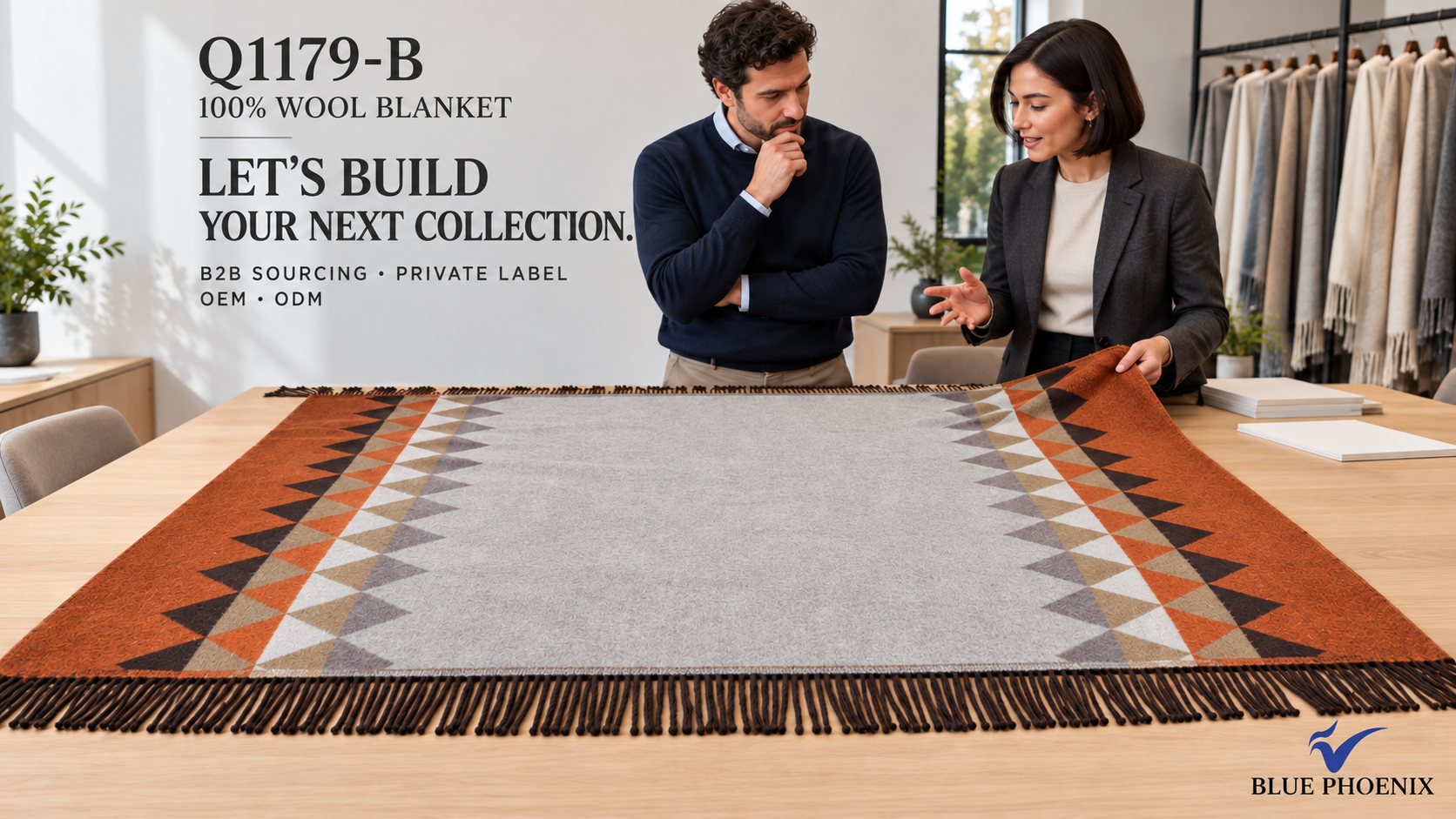
Q1179-B Wool Blanket
A wool blanket with geometric end patterns and fringe for distinctive retail ranges and private-label collections.
Two are a practical starting point: one for regular use and one clean replacement. Add more only for separate seasonal, sofa or guest needs.
It may be enough for everyday comfort, especially if you also use a duvet. However, having no spare can be inconvenient while that blanket is being cleaned.
Only if that combination feels comfortable. Owning a spare does not mean it needs to be on the bed. Adjust your layers to the room and your preferences.
Not necessarily. If your bedroom conditions remain similar throughout the year, one main blanket may work with your other bedding. A separate seasonal option is useful when conditions change substantially.
Plan around the guest sleeping spaces you actually use. Choose suitable dimensions and consider whether a spare is needed during cleaning.
There is no single replacement interval. Review the blanket's condition, including fabric wear, damaged edges and changes that affect its intended use.
What is a simple two-blanket setup?
One everyday blanket and one clean spare.
When does a third blanket make sense?
When you need a separate seasonal layer or sofa throw.
Does a duvet count as a blanket?
It is a different bedding item, but include its role when deciding how many additional blankets you need.
Can a sofa throw replace a bed blanket?
Only if its dimensions and coverage suit the intended sleeper and bed.
Should my spare match my main blanket?
It does not need to look identical, but it should provide suitable coverage and a practical replacement.
Should two people always share one blanket?
No. Shared and separate blankets are both possible arrangements, depending on preference.
Does higher GSM always mean greater warmth?
No. GSM describes mass per area; construction, fiber, loft and other bedding also matter.
How do I choose blanket dimensions?
Check mattress dimensions, desired side coverage and the intended use rather than relying on size names alone.
Do warm rooms need heavy blankets?
Choose according to actual comfort. A lighter layer may be more practical when less insulation is needed.
Should every blanket be machine washable?
Choose a care routine you can manage. Follow each finished product's label.
Why does drying time affect quantity?
A clean spare keeps bedding available while the main blanket dries.
Can blankets be stored immediately after washing?
Store them only after they are fully dry.
Is a premium fiber necessary for a spare?
No. Select a spare that meets your coverage, comfort and care needs.
What should a small apartment prioritize?
Useful coverage, manageable cleaning and compact storage.
Should guest blankets be counted separately?
Yes, when they are reserved for additional sleeping spaces.
How can retailers simplify blanket collections?
Organize products by clear uses, such as bed layers, decorative throws and seasonal bedding.
How should hotels calculate blanket stock?
Use bed count, issue quantities, laundry turnaround and a project-specific reserve.
What should wholesale buyers compare?
Composition, dimensions, weight, finish, care requirements, sample quality and packaging.
Can private-label blankets have custom packaging?
Discuss the proposed packaging, quantities and artwork with the supplier before approval.
What should be approved before bulk production?
The sample, specification, care information, labels, packaging and agreed inspection criteria.
Acrylic vs Wool Blankets: Compare Materials, Care and Buying Priorities
Compare two material options before planning your everyday blanket and additional throw.
How Do You Make a Wool Blanket Soft Again?
Explore care considerations before deciding whether an existing wool blanket needs replacing.
Cotton Blankets — Explore cotton options for bedding and home collections.
Wool Blankets — Compare woven wool blankets and throws.
Acrylic Blankets — Discover decorative knit textures and throw designs.
Cashmere Blankets — Explore premium blanket and throw collections.
A cotton bed blanket to consider when planning a larger bedding layer for home or hospitality collections.
Explore TH14K2413 Cotton Bed Blanket
A textured cotton knit throw to consider for a separate sofa, reading corner or bedroom accessory.
Explore the Cotton Moss-Stitch Throw
A fringed acrylic knit option for decorative home textile and private-label collections.
Explore TEL2101 Acrylic Knitted Blanket
A diamond-knit acrylic throw for buyers seeking a different surface texture within a coordinated collection.
Explore TEL2102 Acrylic Diamond Knit Throw
A wool throw with geometric end details for a distinctive seasonal or decorative addition.
Explore Q1179-B Wool Geometric Throw
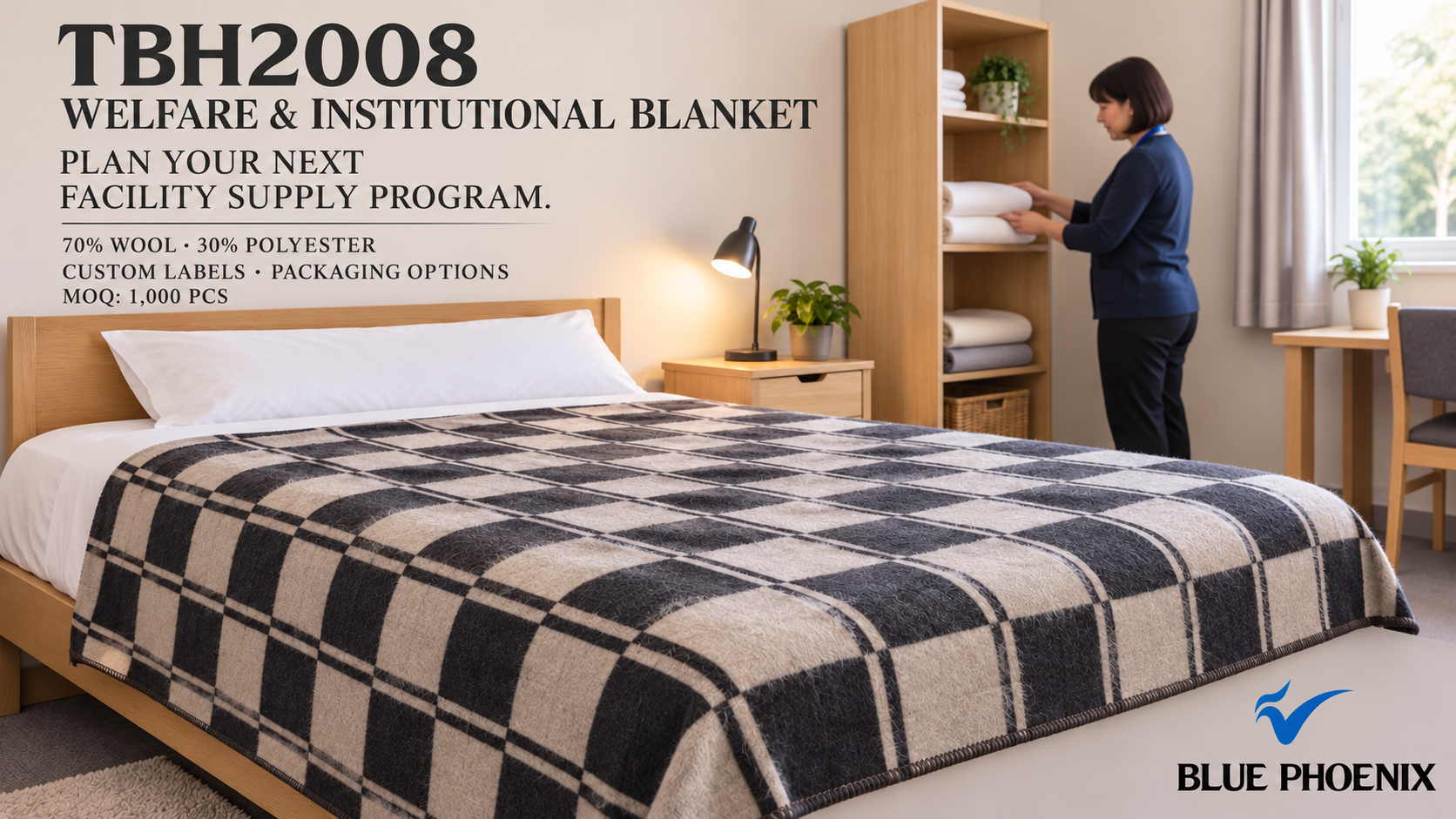
A checked wool-polyester blanket to consider for accommodation and institutional bedding programs with defined procurement specifications.
Explore TBH2008 Checked Wool-Blend Blanket
Developing a retail blanket collection, private-label range or accommodation bedding program? Share your intended market, quantities, dimensions, preferred materials and care requirements.
Contact BLUE PHOENIX to discuss samples, OEM and ODM development, labels and packaging. Final specifications, pricing and production timing are confirmed against the approved project requirements.
BLUE PHOENIX
Website: www.shbluephoenix.com
Email: jamesli@shrainbow.cn
WhatsApp: +86 18017830390
WeChat: bluephoenix66

Blue Phoenix Blankets dedicated to strict quality control of blankets and scarves products and thoughtful customer service, our custom blankets wholesale products are exported to clients in such countries and regions as United states, Europe, Australia, Russia, Germany, Japan.
Copyright © 2026 Shanghai Rainbow Enterprise Development Co., Ltd. - All Rights Reserved.